Workplace Atmosphere: Expert Insights on Organizational Culture and Sustainability
The workplace atmosphere—encompassing physical conditions, interpersonal dynamics, and organizational culture—represents a critical intersection between human wellbeing and environmental stewardship. As organizations increasingly recognize their ecological footprint, the quality of workplace environment has evolved beyond ergonomics and morale to include sustainability practices, resource management, and circular economy principles. This comprehensive analysis examines how contemporary workplace atmospherics integrate environmental consciousness with employee satisfaction, productivity metrics, and long-term organizational resilience.
Understanding workplace atmosphere requires examining multiple dimensions simultaneously: the tangible physical environment, the intangible cultural narratives, employee engagement patterns, and sustainability commitments. Research demonstrates that organizations cultivating positive workplace atmospherics while maintaining ecological responsibility experience improved retention rates, enhanced innovation, and stronger stakeholder trust. The convergence of these factors positions workplace atmosphere as a strategic asset rather than a peripheral concern.

Defining Workplace Atmosphere in Contemporary Organizations
Workplace atmosphere encompasses the collective sensory, psychological, and social conditions that characterize an organization’s internal environment. Unlike workplace culture, which refers to values and beliefs, atmosphere describes the immediate experiential reality—the air quality, lighting, noise levels, interpersonal warmth, and energy that employees encounter daily. The relationship between environment and society extends directly into organizational contexts, where ecological principles increasingly inform workplace design.
Contemporary definitions recognize workplace atmosphere as multidimensional: physical atmosphere (temperature, air quality, ergonomics), psychological atmosphere (trust, psychological safety, clarity), social atmosphere (collaboration, inclusivity, communication patterns), and environmental atmosphere (sustainability practices, resource efficiency, ecological consciousness). Organizations like Interface, Patagonia, and Unilever have demonstrated that integrating environmental values into workplace atmosphere correlates with superior financial performance and employee satisfaction metrics.
The economic implications are substantial. According to World Bank research on human capital development, workplace conditions directly influence productivity rates, with estimates suggesting that optimized atmospherics yield 15-25% productivity improvements. This aligns with ecological economics principles emphasizing that natural and social capital investments generate measurable economic returns.

Physical Environment and Ecological Integration
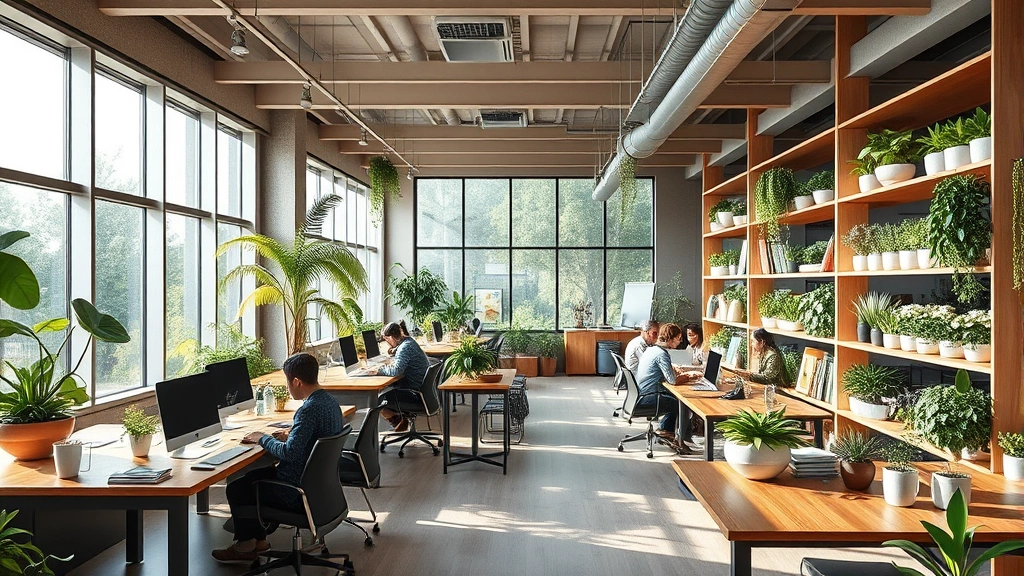
The physical workplace atmosphere encompasses architectural design, air quality, natural light exposure, thermal comfort, and acoustic properties. Progressive organizations increasingly integrate biophilic design—incorporating natural elements, living plants, water features, and nature views—which research demonstrates reduces stress hormones, improves cognitive function, and decreases absenteeism by 10-15%. These benefits extend the logic of human environment interaction into built environments.
Sustainable building practices directly enhance workplace atmosphere quality. LEED-certified facilities, featuring optimized ventilation systems, non-toxic materials, and renewable energy integration, report higher employee satisfaction scores. The connection between ecological responsibility and human wellbeing reflects deeper interdependencies: buildings with superior indoor air quality show 101% improvement in cognitive function scores, according to Harvard’s Center for Health and the Global Environment. Materials selection—avoiding off-gassing chemicals, selecting rapidly renewable resources—simultaneously improves atmospheric conditions and reduces environmental impact.
Energy-efficient lighting systems providing circadian rhythm alignment improve sleep quality, mood regulation, and seasonal affective disorder symptoms. Organizations implementing such systems report 8-12% productivity increases alongside reduced carbon emissions. Water conservation systems, renewable energy integration, and waste reduction protocols create workplace atmospheres aligned with ecological principles, reinforcing organizational commitment to sustainability to employees daily.
Organizational Culture as Atmospheric Foundation
While physical conditions form the substrate of workplace atmosphere, organizational culture provides its psychological architecture. Culture represents the shared values, beliefs, norms, and behavioral expectations that define “how we do things here.” Atmosphere represents the lived experience of that culture—the emotional tenor, relational quality, and collective energy. A stated commitment to sustainability without corresponding atmospheric conditions creates cognitive dissonance and erodes trust.
Organizations establishing strong sustainability cultures embed environmental consciousness throughout workplace atmospherics. Patagonia’s “Let My People Go Surfing” philosophy extends beyond permissive time-off policies to create an atmosphere prioritizing environmental engagement and work-life integration. Such cultural foundations generate atmospheric conditions characterized by authenticity, purpose alignment, and intrinsic motivation. Employees in purpose-driven organizations demonstrate 27% higher engagement and 40% lower turnover rates.
The blog discussions on organizational dynamics frequently highlight how transparent communication about sustainability challenges and progress shapes workplace atmosphere. When leadership acknowledges trade-offs between growth and environmental responsibility, creates inclusive problem-solving processes, and celebrates incremental progress, the resulting atmosphere fosters psychological safety, innovation, and collective efficacy. Conversely, greenwashing—claiming environmental commitments without substantive action—generates cynicism and toxic atmospherics.
Trust represents the fundamental atmospheric currency. Organizations demonstrating consistent alignment between stated values and operational practices cultivate trusting atmospheres where employees contribute discretionary effort, share ideas freely, and support organizational objectives authentically. This trust extends to stakeholders: investors increasingly evaluate organizational culture and atmospheric quality as indicators of long-term viability and risk management capability.
Employee Wellbeing and Productivity Correlation
Extensive research establishes direct correlations between workplace atmosphere quality and employee wellbeing outcomes. The United Nations Environment Programme emphasizes that healthy work environments represent essential components of sustainable development. Positive workplace atmospherics reduce stress-related illness, depression, anxiety, and burnout while enhancing resilience, job satisfaction, and psychological wellbeing.
Productivity improvements from optimized workplace atmospherics are quantifiable and substantial. Organizations reporting excellent workplace conditions demonstrate:
- 18-25% productivity gains through reduced cognitive load and improved focus
- 36% lower absenteeism from reduced illness and improved health behaviors
- 50% lower turnover costs through improved retention and institutional knowledge preservation
- 22% higher quality output from improved attention, creativity, and problem-solving capacity
- 31% greater innovation from psychological safety enabling risk-taking and experimentation
The physiological mechanisms underlying these correlations involve stress hormone regulation (cortisol, adrenaline), immune function optimization, and neuroplasticity enhancement. Positive atmospherics activate parasympathetic nervous system dominance, enabling sustained focus, creative cognition, and emotional regulation. Conversely, toxic atmospherics trigger chronic stress responses, depleting cognitive resources and impairing decision-making.
Employee wellbeing extends beyond individual health to organizational resilience. Psychologically healthy workforces demonstrate greater adaptability during disruption, faster recovery from setbacks, and stronger commitment during organizational transitions. This resilience capacity becomes increasingly valuable as organizations navigate climate impacts, supply chain disruptions, and regulatory changes requiring rapid adaptation and collective problem-solving.
Sustainability Metrics and Environmental Performance
Progressive organizations now integrate sustainability metrics directly into workplace atmosphere assessment and management. These metrics encompass carbon footprint, water consumption, waste generation, material sourcing, and supply chain environmental impact. By making environmental performance visible through workplace communications, signage, and dashboards, organizations embed ecological consciousness into daily atmospheric experience.
The relationship between workplace atmosphere and sustainability performance operates bidirectionally. Positive atmospherics facilitate voluntary participation in sustainability initiatives—employees in healthy work environments demonstrate higher engagement in carpooling programs, waste reduction challenges, and energy conservation behaviors. Conversely, demonstrated organizational commitment to sustainability improves workplace atmosphere by enhancing meaning, purpose alignment, and collective efficacy.
Ecological economics perspectives illuminate this relationship: environmental and social capital investments generate returns measurable in both economic and non-economic terms. Organizations implementing comprehensive sustainability programs report:
- 8-15% reduction in operational costs through efficiency improvements
- 12-20% improvement in employee recruitment and retention
- Higher brand value and customer loyalty premium
- Enhanced stakeholder trust and social license to operate
- Improved risk management and regulatory compliance positioning
Implementing carbon footprint reduction strategies throughout workplace operations creates multiple atmospheric benefits: improved air quality from reduced commuting, enhanced meaning from participation in environmental goals, and strengthened organizational cohesion through shared sustainability commitment. Organizations like Microsoft and Google have established ambitious net-zero targets while simultaneously improving workplace atmospherics through investments in renewable energy, sustainable transportation, and biophilic design.
Remote Work and Distributed Atmospherics
The rapid expansion of remote and hybrid work models has fundamentally transformed workplace atmosphere considerations. Distributed workforces require reimagined approaches to creating coherent organizational atmospherics across physical and digital domains. The challenge intensifies as organizations balance flexibility benefits with atmospheric cohesion needs.
Successful distributed atmospherics integrate several dimensions:
- Digital environment quality: Thoughtful platform design, communication protocols, and virtual meeting practices create coherent digital atmospherics equivalent to physical spaces
- Home office sustainability: Guidance on energy-efficient home office setups, ergonomic furniture, and natural lighting optimization extends organizational atmospheric standards to distributed locations
- Asynchronous communication norms: Clear protocols respecting temporal distribution and individual autonomy create inclusive atmospherics accommodating diverse work styles and geographies
- Intentional synchronous connection: Carefully designed in-person gatherings, strategic video meetings, and social connection opportunities maintain relational atmospherics
- Purpose reinforcement: Consistent communication about organizational sustainability commitments and progress sustains atmospheric cohesion despite physical distribution
Remote work paradoxically can enhance certain atmospheric dimensions while challenging others. Reduced commuting improves environmental sustainability and work-life integration atmospherics. However, reduced informal interaction, potential isolation, and communication ambiguity can degrade psychological and social atmospherics. Organizations excelling in hybrid contexts deliberately design both physical and digital spaces to support atmospheric quality across all dimensions.
Measuring and Optimizing Workplace Conditions
Effective workplace atmosphere management requires systematic measurement and continuous optimization. Organizations employ multiple assessment approaches:
Quantitative metrics: Temperature, humidity, CO2 levels, light intensity, noise levels, air quality indices, and energy consumption provide objective environmental data. Engagement surveys, productivity metrics, absenteeism rates, and turnover statistics quantify human experience outcomes. Environmental audits track waste, water, material consumption, and supply chain impacts.
Qualitative assessment: Focus groups, interviews, observation, and participatory design processes capture subjective experience, cultural nuance, and emerging needs. Photography, environmental scans, and ethnographic approaches reveal how employees actually experience designed spaces.
Integrated frameworks: Progressive organizations employ balanced scorecards integrating environmental, social, and economic metrics alongside employee wellbeing and engagement measures. This systems perspective reveals interdependencies: improved air quality enhances productivity; psychological safety enables sustainability innovation; purpose alignment strengthens commitment.
Optimization processes emphasize continuous improvement: measure baseline conditions → identify priority areas → engage stakeholders in solution design → implement changes → assess impact → iterate. This cyclical approach prevents top-down solutions disconnected from employee experience while building collective ownership of atmospheric quality.
Organizations like Interface have implemented comprehensive workplace atmosphere optimization, achieving simultaneous improvements in employee satisfaction, productivity, environmental performance, and financial results. Their approach integrates biophilic design, renewable energy, circular material flows, and inclusive culture development—demonstrating that atmospheric excellence and environmental responsibility reinforce rather than compromise each other.
The economic case strengthens as organizations accumulate evidence: International Energy Agency research demonstrates that building efficiency investments yield 3:1 economic returns through productivity gains and reduced operational costs. Organizational investments in workplace atmosphere increasingly appear as high-ROI strategies rather than discretionary expenditures, particularly when integrated with sustainability commitments that align organizational purpose with broader ecological and social imperatives.
FAQ
What distinguishes workplace atmosphere from workplace culture?
Workplace culture refers to underlying values, beliefs, and norms—the foundational beliefs about “what matters here.” Workplace atmosphere describes the immediate experiential reality—what employees directly perceive, feel, and experience moment-to-moment. Culture shapes atmosphere, but atmosphere represents the lived experience of that culture. Strong culture without positive atmosphere creates frustration; positive atmosphere without aligned culture feels inauthentic.
How do physical environmental conditions impact employee performance?
Physical conditions directly influence cognitive function, emotional regulation, and physiological health. Optimal temperature (68-72°F), humidity (40-60%), CO2 levels (below 1000 ppm), natural light exposure, and acoustic design enhance focus, creativity, and decision-making. Poor conditions trigger stress responses impairing cognition and increasing health problems. Research demonstrates 15-25% productivity improvements from optimized physical conditions.
Can sustainable practices genuinely improve workplace atmosphere?
Yes—when implemented authentically with employee engagement. Visible sustainability commitments create shared meaning and purpose. Participating in environmental initiatives strengthens team cohesion. Improved building efficiency, reduced toxic materials, and enhanced biophilic design simultaneously advance environmental and human wellbeing goals. However, greenwashing without substantive action damages atmosphere through eroded trust and cynicism.
How should organizations approach workplace atmosphere in remote settings?
Distributed organizations must intentionally design both digital and home office environments. Provide guidance on ergonomic home setups, energy efficiency, and natural lighting. Establish communication protocols respecting asynchronous work and temporal distribution. Create strategic opportunities for synchronous connection and in-person gatherings. Consistently reinforce organizational purpose and sustainability commitments across all channels. Recognize that remote work enables certain atmospheric benefits (flexibility, environmental sustainability) while requiring deliberate effort on other dimensions (relational connection, cultural cohesion).
What ROI should organizations expect from workplace atmosphere investments?
Research demonstrates 3:1 to 5:1 returns on comprehensive workplace atmosphere investments through productivity gains, reduced absenteeism, improved retention, and innovation enhancement. Organizations report 15-25% productivity improvements, 36% lower absenteeism, 50% lower turnover costs, and 8-15% operational cost reductions. Timeline varies: some benefits appear immediately (improved focus from better lighting), while others compound over months (cultural transformation, reputation enhancement).
How do organizations measure workplace atmosphere effectively?
Comprehensive measurement integrates quantitative metrics (environmental conditions, engagement surveys, productivity data, turnover rates) with qualitative approaches (focus groups, interviews, observation). Balanced scorecards connecting environmental, social, economic, and wellbeing metrics reveal interdependencies. Regular assessment enables continuous improvement cycles. Participatory measurement processes—engaging employees in defining and assessing atmospheric quality—build ownership while surfacing important nuances that quantitative metrics alone miss.


