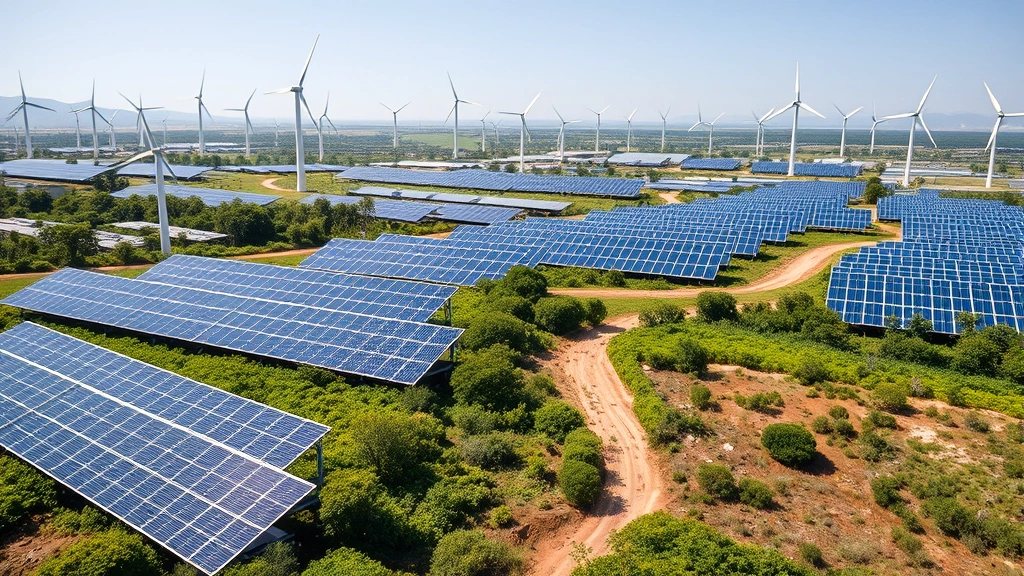
Can Green Economy Save Us? Economist Insights
The question of whether a green economy can rescue humanity from ecological collapse has moved from academic margins to mainstream policy discourse. Economists across ideological spectrums now grapple with a fundamental paradox: how do we decouple economic growth from environmental degradation when centuries of industrialization have intertwined them inseparably? The green economy framework proposes that environmental protection and economic prosperity need not be mutually exclusive—indeed, that sustainability represents the only viable long-term growth strategy.
Recent data suggests this transition is both necessary and economically rational. The World Bank estimates that environmental degradation costs developing countries approximately 4-5% of GDP annually through resource depletion and pollution damages. Simultaneously, renewable energy investments have created more jobs per dollar invested than fossil fuel industries in most developed economies. Yet skeptics question whether green economy rhetoric masks insufficient structural reform, asking whether we can truly achieve sustainability within capitalist growth paradigms.
Understanding the Green Economy Framework
The green economy represents a paradigm shift in how economists measure value and progress. Rather than treating natural capital as an infinite externality, this framework incorporates environmental costs directly into economic calculations. The United Nations Environment Programme defines it as an economy that results in improved human well-being and social equity while significantly reducing environmental risks and ecological scarcities.
This conceptual reorientation challenges fundamental assumptions embedded in twentieth-century economics. Traditional GDP measurements ignore resource depletion, treat pollution as economically neutral, and discount future environmental costs at rates that make long-term sustainability appear economically irrational. When economists began calculating human environment interaction costs systematically, they discovered that conventional economic metrics severely underestimate true social costs.
The framework encompasses several interconnected elements: renewable energy systems, circular economy principles, ecosystem service valuation, sustainable agriculture, and green finance mechanisms. Understanding these components requires recognizing that environmental economics has evolved substantially from Pigouvian taxation models toward sophisticated systems thinking that acknowledges feedback loops, tipping points, and irreversible changes in natural systems.
Leading economists like Partha Dasgupta argue that natural capital should be treated with the same rigor as financial and human capital in national accounting systems. This perspective fundamentally reframes the green economy not as a constraint on growth but as a prerequisite for sustained prosperity. The question becomes not whether we can afford environmental protection, but whether we can afford its absence.
Economic Arguments for Environmental Transition
The economic case for transitioning toward green systems rests on several empirically grounded arguments. First, renewable energy costs have declined exponentially—solar photovoltaic costs dropped 90% between 2010 and 2020, making clean energy cheaper than fossil fuels in most markets without subsidies. This cost curve trajectory renders continued fossil fuel dependence economically irrational from a pure investment perspective.
Second, stranded asset risks pose genuine financial threats. Economists increasingly recognize that carbon-intensive infrastructure faces demand destruction as climate policies tighten and renewable alternatives become economically superior. A renewable energy for homes transition simultaneously protects household finances from volatile fossil fuel prices while reducing exposure to regulatory risk.
Third, employment data contradicts narratives portraying green transitions as economically destructive. Clean energy jobs now outnumber fossil fuel employment in most developed economies, with higher average wages and greater geographic distribution. The International Labour Organization estimates green transitions could create 24 million new jobs globally by 2030, while eliminating fewer positions than technological disruption typically causes across economic cycles.
Fourth, ecosystem service valuation reveals that environmental protection generates substantial economic returns. Wetland preservation provides flood protection, water filtration, and carbon sequestration worth thousands of dollars per acre annually. Pollinator protection sustains agricultural productivity valued at $15-20 billion annually in the United States alone. These benefits remain largely invisible in conventional accounting but become economically decisive when properly quantified.
A comprehensive meta-analysis of climate economics literature finds that mitigation costs (typically 1-3% of GDP) substantially undercut damages from unmitigated warming (10-20% of GDP or higher). This cost-benefit calculus suggests that even conservative economic analyses support aggressive climate action as sound fiscal policy.

Market Failures and Policy Interventions
Understanding why markets alone cannot achieve green economy transitions requires examining how environmental externalities distort economic signals. Carbon dioxide, methane, and other greenhouse gases impose costs on society that fossil fuel prices never reflect. This market failure—the failure to price environmental damage—represents perhaps the most fundamental economic problem underlying ecological crisis.
Economists across ideological spectrums recognize that addressing externalities requires deliberate policy intervention. Carbon pricing mechanisms, whether through taxes or cap-and-trade systems, represent the most economically efficient approach by allowing markets to discover least-cost abatement pathways while ensuring environmental objectives are met. However, political economy considerations often render theoretically optimal policies practically infeasible, necessitating hybrid approaches combining pricing with regulations and subsidies.
The research from natural environment research council institutions demonstrates that market-based instruments work most effectively when combined with complementary policies addressing technological lock-in and distributional concerns. Renewable energy subsidies, for instance, helped overcome initial cost disadvantages and learning curve effects that prevented market entry despite long-term economic viability.
Behavioral economics adds crucial complexity to this analysis. Individuals and institutions systematically undervalue future environmental costs through hyperbolic discounting and present bias. Policy interventions correcting these cognitive biases—through defaults favoring sustainable choices, transparency requirements, and choice architecture—generate substantial environmental benefits at minimal economic cost.
Network effects and coordination problems further justify intervention. Renewable energy infrastructure, electric vehicle charging networks, and sustainable agriculture systems exhibit increasing returns to scale. Individual actors cannot capture these benefits, creating underinvestment relative to social optimality. Strategic government support can overcome coordination failures and accelerate transitions that markets would eventually accomplish but only after substantial delay and unnecessary environmental damage.
Real-World Implementation Challenges
Despite compelling economic arguments, green economy transitions face formidable practical obstacles. Political economy dynamics often prioritize incumbent interests over economically optimal policies. Fossil fuel industries, entrenched energy infrastructure, and concentrated interests opposing change frequently block climate policies that broad economic analysis supports.
Distributional concerns pose legitimate challenges. Green transitions impose concentrated costs on workers and communities dependent on fossil fuel industries, while benefits distribute broadly across society and future generations. Economic analysis demonstrates that transition costs can be addressed through worker retraining, income support, and community investment—yet political will to implement such policies remains inconsistent.
Developing economies face acute dilemmas balancing immediate poverty reduction against long-term sustainability. Economists acknowledge that high-income nations achieved prosperity through carbon-intensive industrialization; denying developing countries similar pathways raises profound equity questions. Addressing this requires climate finance mechanisms and technology transfer that wealthy nations have inadequately provided.
Technical limitations in renewable energy storage, agricultural productivity without synthetic inputs, and industrial decarbonization remain unresolved. While economists generally project these challenges as solvable through innovation, uncertainty about timelines and costs complicates policy design. Some economists argue that carbon capture technologies and nuclear power must complement renewable energy; others contend that overreliance on speculative future technologies justifies more aggressive near-term emissions reductions.
International coordination failures undermine mitigation efforts. Climate change represents a global commons problem where individual nations benefit from free-riding on others’ emissions reductions. Game theory demonstrates that without binding agreements with enforcement mechanisms, voluntary climate action remains suboptimal. Yet negotiating such agreements proves extraordinarily difficult across sovereign nations with divergent interests.
Measuring Success: Beyond GDP
Transitioning toward green economy frameworks necessitates rethinking how we measure economic success. GDP growth remains a crude proxy for genuine progress, ignoring environmental depletion, resource distribution, and well-being dimensions that matter profoundly to human flourishing.
Alternative metrics have proliferated: Genuine Progress Indicator, Human Development Index, Gross National Happiness, and various well-being frameworks attempt capturing what GDP misses. These measures consistently show that beyond modest income thresholds, additional economic growth correlates weakly with happiness, health, or life satisfaction. Environmental quality, social cohesion, and leisure time prove more important for well-being than marginal consumption increases.
Efforts to reduce carbon footprint at individual and organizational levels provide valuable proxies for progress, though aggregate metrics reveal that household-level changes prove insufficient without systemic transformation. New Zealand, Scotland, and other jurisdictions have begun incorporating well-being frameworks into official policy, though translating aspirations into coherent metrics and decision procedures remains contested.
Natural capital accounting represents another crucial measurement innovation. By quantifying ecosystem services, resource stocks, and environmental liabilities, nations can track whether economic activity genuinely improves long-term wealth or merely converts natural capital into financial assets while depleting the underlying resource base. This accounting framework reveals that many developing countries have experienced negative genuine savings—declining true wealth despite positive GDP growth.
Comprehensive cost-benefit analysis incorporating environmental and social dimensions systematically reverses policy priorities compared to conventional economic analysis. Investments in public transit, renewable energy, and ecosystem restoration consistently emerge as economically superior to fossil fuel infrastructure when true costs are calculated. Yet institutional inertia, political economy dynamics, and measurement difficulties limit adoption of such approaches.
Future Scenarios and Economist Consensus
Surveying leading environmental economists reveals broad consensus on several points, despite disagreements about optimal policy mechanisms. First, substantial emissions reductions represent economic imperative rather than luxury good. The costs of climate inaction exceed mitigation expenses across virtually all scenarios with reasonable discount rates.
Second, transition speed matters enormously. Earlier action reduces total costs by avoiding lock-in of carbon-intensive infrastructure and allowing smoother economic adjustment. Each decade of delay increases required mitigation rates and total expenses. This temporal dimension suggests that apparent near-term costs of aggressive climate policy prove economically rational when properly accounting for avoided future damages.
Third, technological innovation will prove essential but insufficient alone. Market mechanisms must incentivize innovation while ensuring transition fairness. Pure laissez-faire approaches underinvest in environmental protection; pure command-and-control approaches often sacrifice economic efficiency. Optimal policy combines price signals, strategic public investment in innovation, and regulations addressing non-price market failures.
Fourth, ecosystem tipping points create non-linear risks that standard cost-benefit analysis inadequately captures. Once critical thresholds trigger—Amazon rainforest dieback, permafrost methane release, ocean circulation disruption—damage becomes irreversible at timescales relevant to human civilization. This tail risk consideration strengthens the economic case for precautionary emissions reductions even accounting for uncertainty.
Looking forward, economists increasingly recognize that green economy transitions represent not merely environmental imperative but fundamental economic restructuring comparable to industrial revolution magnitude. The question is not whether such transformation occurs, but whether it emerges through deliberate policy steering toward equitable, prosperous outcomes or through chaotic collapse and forced adaptation to degraded environmental conditions.
Emerging consensus suggests that green economy frameworks, properly implemented with attention to equity, technological innovation, and systemic change, can deliver improved human well-being while stabilizing climate and ecosystems. Yet this outcome remains contingent on political will, international cooperation, and willingness to challenge entrenched interests resisting transition. The economics strongly support action; the political economy determines whether economists’ insights translate into policy reality.
FAQ
What exactly is a green economy?
A green economy integrates environmental protection into economic decision-making, treating natural capital as essential rather than expendable. It encompasses renewable energy, circular production systems, ecosystem service valuation, and sustainable resource management—fundamentally reorienting economic activity toward long-term ecological stability and human well-being rather than short-term consumption maximization.
Can green transitions eliminate jobs?
Transitions inevitably displace workers in declining industries, requiring deliberate policy support through retraining and income assistance. However, comprehensive employment data shows clean energy and environmental sectors create more jobs overall than fossil fuel industries, with better wages and geographic distribution. The challenge is managing distributional impacts, not preventing net employment gains.
Is green economy just greenwashing?
Genuine green economy transitions require systemic changes: renewable energy infrastructure, circular manufacturing, sustainable agriculture, and reformed financial systems. Superficial corporate sustainability claims without underlying operational changes represent greenwashing. Distinguishing authentic transitions from marketing requires examining energy sources, supply chains, and actual emissions reductions rather than aspirational statements.
How do developing countries benefit from green transitions?
Developing nations can leapfrog fossil fuel infrastructure entirely, deploying renewable energy at lower costs than developed countries faced when transitioning. Green agriculture increases productivity while improving soil health. However, this requires technology transfer, climate finance, and debt relief—commitments wealthy nations have inadequately provided. Equitable transitions demand substantial wealth redistribution.
What role should government play?
Market mechanisms alone cannot overcome externalities, coordination failures, and technical barriers to sustainability. Optimal policy combines carbon pricing incentivizing efficient abatement, strategic public investment in innovation, regulations addressing non-price failures, and safety nets protecting vulnerable populations. The precise policy mix varies by context, but some government intervention proves economically essential.
Can we achieve green growth without reducing consumption?
Absolute decoupling of growth from environmental impact remains theoretically possible through renewable energy and circular economy principles. However, evidence suggests relative decoupling—reducing environmental intensity per unit GDP—proves easier than absolute decoupling at scales required for sustainability. In wealthy nations, modest consumption reduction combined with efficiency improvements likely proves necessary alongside technological change.


