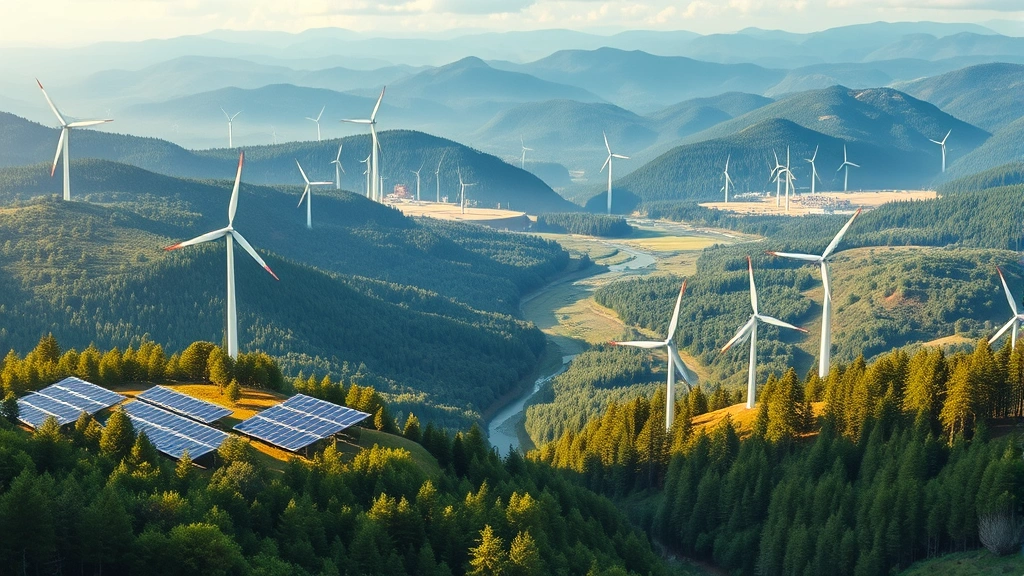
Eco-Friendly Economies: A Scientific Perspective
The intersection of ecological science and economic theory represents one of the most critical frontiers in contemporary policy research. An eco-friendly economy—fundamentally defined as an economic system that maintains or enhances environmental capital while delivering sustainable material prosperity—requires a rigorous scientific foundation to move beyond rhetorical commitments toward measurable outcomes. This perspective integrates principles from ecological economics, environmental science, and systems theory to examine how economies can function within planetary boundaries while meeting human needs.
The scientific definition of environment encompasses the complex web of biophysical systems, including atmosphere, hydrosphere, lithosphere, and biosphere, along with their interactions and the services they provide to human civilization. When we examine eco-friendly economies through this lens, we move beyond simple green marketing to understand the thermodynamic and ecological constraints that govern sustainable economic activity. The challenge lies in reconciling perpetual economic growth models with the finite capacity of Earth’s regenerative systems.
Defining Eco-Friendly Economies: Scientific Foundations
An eco-friendly economy represents a deliberate restructuring of production and consumption systems to align with ecological carrying capacity. The science environment definition provides the empirical framework for this alignment. Scientific inquiry demonstrates that Earth’s natural systems operate within quantifiable boundaries: carbon cycles measured in gigatons, nitrogen and phosphorus flows traceable through biogeochemical pathways, and biodiversity indices reflecting ecosystem resilience.
The scientific perspective requires distinguishing between weak and strong sustainability. Weak sustainability assumes that human-made capital can substitute for natural capital, while strong sustainability—grounded in thermodynamic principles—recognizes that certain natural capital stocks possess irreplaceable functions. Research from ecological economists reveals that biophysical constraints impose absolute limits on material throughput, regardless of technological efficiency gains.
Understanding human environment interaction through scientific methods reveals how economic activities cascade through ecosystems. Each unit of economic output requires energy transformation, material extraction, and waste absorption. The second law of thermodynamics ensures that entropy increases with every economic transaction, meaning perpetual growth in physical throughput remains physically impossible.
Contemporary research integrates systems thinking with environmental accounting. The how to reduce carbon footprint initiatives demonstrate practical applications of this science-based approach, translating abstract ecological principles into measurable behavioral and institutional changes. Eco-friendly economies operationalize these scientific insights through structural transformation rather than marginal adjustments.
Ecological Economics and Biophysical Limits
Ecological economics emerged as a distinct discipline precisely because conventional economic models excluded biophysical reality. This heterodox school recognizes that the economy represents a subsystem of the finite Earth ecosystem, not the reverse. The scientific evidence supporting this perspective accumulates continuously through research published in journals like Ecological Economics and reports from the World Bank Environmental Programs.
Planetary boundaries research quantifies nine critical Earth system processes: climate change, biodiversity loss, land-system change, freshwater use, biogeochemical flows, ocean acidification, atmospheric aerosol loading, stratospheric ozone depletion, and chemical pollution. Current economic activity transgresses at least six of these boundaries simultaneously. Eco-friendly economies must operate within these constraints rather than treating them as externalities to be managed through marginal adjustments.
The carrying capacity concept, derived from population ecology, translates directly to economic analysis. Human economies extract renewable resources (fish, forests, agricultural output) and regenerate waste absorption services (carbon sequestration, nutrient cycling). When extraction exceeds regeneration rates or waste generation exceeds absorption capacity, the economic system operates unsustainably. Scientific measurement of these flows reveals that global economic activity currently requires approximately 1.7 Earths to sustain itself at present consumption levels in developed nations.
Regenerative capacity varies geographically and temporally. Tropical rainforests exhibit high productivity but face degradation pressures; agricultural soils regenerate slowly relative to nutrient mining; aquifers recharge over millennia while extraction occurs within decades. Eco-friendly economies must recognize these temporal and spatial dimensions of biophysical constraints, moving beyond aggregate global metrics to understand regional ecosystem limits.
Carbon Economics and Climate Integration
Climate science provides perhaps the most compelling argument for transforming economic structures. The carbon cycle operates at planetary scale, yet economic incentives historically treated atmospheric carbon as a free waste disposal medium. The scientific consensus, documented by the Intergovernmental Panel on Climate Change, establishes unequivocal links between anthropogenic greenhouse gas emissions and climate destabilization.
Eco-friendly economies internalize climate costs through carbon pricing mechanisms, emissions standards, and structural shifts toward renewable energy systems. The thermodynamic foundation of climate economics reveals that energy transformation—the core of all economic activity—determines carbon intensity. Renewable energy systems, powered by solar and wind resources that operate continuously without fuel combustion, represent the scientific pathway toward decarbonization.
Carbon accounting frameworks quantify embodied emissions across supply chains, revealing that consumption patterns in wealthy nations generate carbon footprints 5-10 times higher than sustainable levels. Scientific analysis demonstrates that efficiency improvements alone cannot achieve necessary decarbonization; structural transformation toward renewable energy, circular material use, and reduced material throughput becomes imperative. The relationship between World Environment Day 2025 initiatives and climate science reflects growing recognition that environmental protection requires systematic economic restructuring.
Climate-integrated economies employ carbon sequestration strategies grounded in soil science, forestry, and biogeochemistry. Natural climate solutions—restoring wetlands, protecting forests, regenerating agricultural soils—leverage ecological processes to absorb atmospheric carbon while providing co-benefits including biodiversity enhancement, water purification, and food security. These approaches integrate climate economics with ecosystem science.

Circular Economy Systems and Material Flows
Linear “take-make-waste” economic models violate fundamental principles of materials science and thermodynamics. Circular economy frameworks, grounded in industrial ecology and systems engineering, redesign production processes to minimize virgin material extraction and waste generation. Scientific analysis of material flows reveals that 99% of extracted materials become waste within six weeks; circular design principles reduce this dramatically.
Circular systems operate through biological and technical cycles. Biological cycles process materials that safely return to soil without toxicity; technical cycles recover durable materials for repeated manufacturing cycles. The science underlying circular economies draws from chemistry (material compatibility and degradation), microbiology (decomposition processes), and engineering (design for disassembly and recycling).
Life cycle assessment (LCA), a standardized scientific methodology, quantifies environmental impacts across product lifecycles from raw material extraction through end-of-life. LCA reveals that manufacturing represents only one phase; material extraction and transportation often dominate environmental impacts. Eco-friendly economies employ LCA findings to redesign supply chains, substitute high-impact materials, and extend product lifespans through durability and repairability.
Material science research identifies renewable alternatives to petroleum-based plastics, including mycelium composites, seaweed biopolymers, and regenerated cellulose. These innovations, grounded in biochemistry and materials engineering, enable circular material cycles while reducing fossil fuel dependence. Implementation requires economic incentives aligned with scientific evidence regarding environmental superiority.
Ecosystem Services Valuation
Ecosystem services—benefits humans derive from natural systems—encompass provisioning services (food, water, materials), regulating services (climate, water purification, disease control), supporting services (nutrient cycling, soil formation), and cultural services (recreation, spiritual value). Scientific valuation of these services, while methodologically challenging, reveals their economic magnitude and irreplaceability.
Research from the United Nations Environment Programme demonstrates that global ecosystem services generate estimated annual value exceeding $125 trillion, substantially exceeding global GDP. Yet conventional economic accounting omits this value, creating systematic underestimation of natural capital depletion. Eco-friendly economies incorporate ecosystem services valuation into national accounting systems, revealing true economic costs of environmental degradation.
Valuation methodologies span revealed preference approaches (market prices for ecosystem services), stated preference techniques (willingness-to-pay surveys), and replacement cost methods (expense of replacing ecosystem functions with artificial systems). Each approach provides partial insights; comprehensive ecosystem accounting integrates multiple methodologies. The scientific challenge involves translating diverse ecosystem functions—from carbon sequestration to pollination to cultural heritage—into commensurate economic units without oversimplifying irreducible complexity.
Payment for ecosystem services (PES) programs operationalize valuation through direct incentive mechanisms. Scientific monitoring of PES outcomes reveals mixed results; when designed with ecological understanding, they effectively protect critical ecosystems and support livelihoods. Failure occurs when PES programs ignore underlying ecological dynamics, creating perverse incentives that degrade ecosystem function despite monetary compensation.
Policy Instruments and Market Mechanisms
Transforming economies toward ecological sustainability requires policy instruments grounded in scientific understanding. Carbon pricing—whether through taxes or cap-and-trade systems—reflects climate science by imposing costs proportional to greenhouse gas emissions. Economic research demonstrates that carbon prices require continuous escalation to drive necessary decarbonization rates; static prices fail to generate adequate transformation incentives.
Command-and-control regulations, informed by environmental science, establish absolute limits on pollutant concentrations, emissions rates, or resource extraction. These instruments reflect scientific understanding that certain thresholds exist beyond which ecosystem damage becomes irreversible or catastrophic. Tradeable permit systems combine regulatory certainty with market flexibility, allowing regulated entities to achieve compliance through least-cost pathways while maintaining aggregate environmental targets.
Subsidy reform represents another critical policy domain. Scientific analysis reveals that fossil fuel subsidies globally exceed $7 trillion annually when accounting for environmental costs. Redirecting these subsidies toward renewable energy, ecosystem restoration, and sustainable agriculture would align economic incentives with ecological science. The political economy of subsidy reform remains contentious, yet the scientific case for reform strengthens continuously.
Innovation policy, informed by technological science and systems analysis, accelerates development and deployment of low-carbon technologies. Public investment in research generates knowledge spillovers that private markets undersupply; strategic government support for renewable energy, energy efficiency, and sustainable materials research yields high returns. The science policy interface requires continuous iteration between basic research discoveries and applied development.
Measurement Frameworks and Indicators
Scientific economics requires rigorous measurement frameworks translating ecological principles into quantifiable indicators. Gross Domestic Product (GDP), despite widespread use, measures economic throughput rather than welfare or sustainability. Comprehensive alternatives including Genuine Progress Indicator (GPI), Inclusive Wealth Index, and Natural Capital Accounting provide scientifically superior measures of economic performance.
Natural capital accounting, endorsed by the System of Environmental-Economic Accounting (SEEA) international standard, integrates environmental assets and liabilities into national accounting systems. This approach, grounded in ecological economics and environmental science, reveals that many nations depleting natural capital while reporting positive economic growth actually experience declining true wealth. Scientific measurement reveals genuine economic performance masked by conventional GDP accounting.
Biophysical indicators complement monetary metrics. Carbon footprinting measures embodied emissions; material flow analysis tracks physical resource throughput; ecological footprint quantifies land requirements for economic activity; biodiversity indices assess ecosystem health. These scientific metrics, derived from environmental monitoring and systems analysis, provide complementary perspectives on economic sustainability beyond monetary valuation.
Monitoring frameworks must track progress toward environmental sustainability targets established through scientific assessment of planetary boundaries. The Sustainable Development Goals (SDGs) integrate environmental, social, and economic dimensions, though scientific critique reveals that certain SDGs create tensions—economic growth targets may conflict with environmental limits. Eco-friendly economies prioritize environmental constraints as binding constraints within which social and economic goals must fit, reflecting biophysical reality.
Real-time data systems, enabled by satellite monitoring, sensor networks, and computational analysis, enable continuous assessment of ecosystem conditions and resource flows. Scientific integration of these data streams with economic activity data reveals feedback loops and leverage points for policy intervention. The blog home archives document evolving understanding of these measurement challenges.

FAQ
What distinguishes eco-friendly economies from green economies?
Eco-friendly economies, grounded in rigorous science, recognize biophysical constraints as binding limits on economic activity. Green economies, while rhetorically embracing sustainability, often pursue growth-compatible approaches assuming technological solutions will overcome ecological limits. Scientific evidence increasingly demonstrates that certain limits—particularly carbon absorption capacity and biodiversity regeneration—cannot be overcome through technology alone; structural economic transformation becomes necessary.
Can eco-friendly economies maintain current living standards in wealthy nations?
Scientific evidence suggests that current consumption levels in wealthy nations exceed sustainable per-capita resource use by 5-10 fold. However, eco-friendly economies need not reduce living standards measured as genuine welfare—health, education, leisure, social connection, and cultural engagement. Material consumption reduction, offset by enhanced public goods, can maintain or improve life satisfaction while achieving sustainability. The challenge involves political economy rather than technical infeasibility.
How do renewable energy systems support eco-friendly economies?
Renewable energy, powered by solar and wind resources that operate sustainably at current utilization rates, enables decarbonization while reducing resource depletion. Scientific analysis reveals that renewable energy systems require higher upfront material investment but generate energy across multi-decade lifespans with minimal ongoing resource extraction. The energy return on investment (EROI) for renewables exceeds fossil fuels over complete lifecycles, supporting long-term economic viability.
What role do international institutions play in promoting eco-friendly economies?
Organizations including the World Bank, UNEP, and IPCC provide scientific assessment, policy guidance, and coordination mechanisms facilitating economic transformation. However, scientific critique reveals that international institutions remain constrained by political pressures from fossil fuel interests and growth-oriented governments. Effective transformation requires institutional reform aligning international economic governance with planetary science.
How can developing nations transition toward eco-friendly economies without sacrificing development goals?
Scientific research demonstrates that leapfrogging to renewable energy and circular material systems often proves more cost-effective than replicating historical industrialization pathways. Renewable energy deployment increasingly proves cheaper than fossil fuels; circular agriculture regenerates soil fertility while reducing synthetic input costs. International support through technology transfer, climate finance, and debt relief enables developing nations to pursue sustainable development pathways aligned with ecological science.


