
Can Green Economy Save Forests? Economist Insights
Forests cover approximately 31% of global land area, yet we lose roughly 10 million hectares annually—an area equivalent to Iceland. This ecological crisis intersects directly with economic systems that have historically valued timber extraction over forest preservation. The question whether a green economy can reverse deforestation trends demands rigorous economic analysis, empirical evidence, and understanding of how market mechanisms, policy frameworks, and ecosystem valuation reshape incentives for forest conservation.
Traditional economic models treated forests as extractable commodities with finite value calculable through timber markets alone. Green economy approaches fundamentally reframe this perspective by quantifying ecosystem services—carbon sequestration, water filtration, biodiversity provision, and climate regulation—as economic assets worthy of protection. This paradigm shift creates theoretical pathways toward forest preservation, yet implementation reveals complex challenges around market design, governance capacity, and distributional equity.
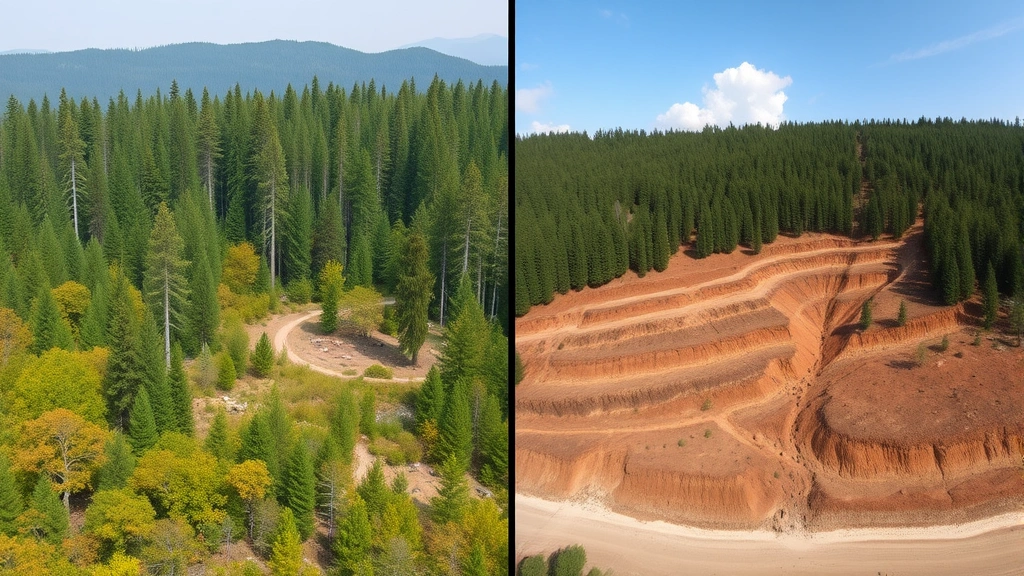
Understanding Green Economy Principles
The green economy represents a departure from conventional economic growth models by incorporating environmental limits and natural capital depreciation into GDP calculations. Rather than treating environmental degradation as externalities—costs borne by society rather than market actors—green economics internalizes these costs directly into decision-making frameworks.
For forests specifically, this means recognizing that a hectare of standing forest generates continuous economic value through multiple channels. A forest provides timber value (harvestable resources), but simultaneously delivers non-timber forest products, watershed protection, air quality improvement, climate regulation through carbon storage, genetic resources for pharmaceutical development, and existence value for biodiversity conservation. When these services are monetized and compared against conversion costs, the economic case for preservation often strengthens considerably.
The living environment perspective emphasizes that economic systems must operate within ecological boundaries. Green economy advocates argue that current GDP metrics fail to capture whether economic growth actually improves human welfare when environmental destruction accelerates. This critique challenges policymakers to develop alternative prosperity measures—genuine progress indicators, adjusted net savings, or natural capital accounting—that reveal whether economies truly advance or merely transfer wealth from future generations.
However, green economy frameworks face theoretical criticism. Some economists argue that assigning monetary values to ecosystem services oversimplifies complex ecological relationships and creates false commensurability—treating nature as tradeable commodities rather than irreplaceable systems. Others question whether market mechanisms adequately protect irreplaceable biodiversity or genuinely shift production away from extractive industries.

Ecosystem Services Valuation and Forest Economics
Quantifying forest value requires sophisticated ecological-economic analysis. Research from World Bank environmental economics divisions estimates that tropical forests generate $2-5 trillion annually in ecosystem services globally. A single hectare of Amazonian rainforest may sequester 150-250 metric tons of carbon, equivalent to $5,000-15,000 in carbon credit value depending on market pricing.
This valuation exercise transforms forest policy conversations. When decision-makers confront evidence that preserving a forest generates greater long-term economic returns than clearing it for cattle ranching or agriculture, the economic argument shifts toward conservation. This logic underpins payment for ecosystem services (PES) schemes, where governments or international actors compensate forest owners for maintaining standing forests rather than converting land.
The challenge emerges in implementation. Ecosystem service values depend heavily on methodological choices—discount rates, pricing assumptions, temporal horizons, and which services receive quantification. A forest valued at $10,000 per hectare using comprehensive service accounting might appear worth only $2,000 using narrower metrics. These differences prove decisive when determining whether conservation financially outcompetes alternative land uses.
Additionally, forest ecosystem services exhibit what economists call “non-rivalrous” and “non-excludable” characteristics. Carbon sequestration benefits accrue globally regardless of who paid for preservation. Water filtration benefits downstream communities who didn’t fund forest protection. This creates classic market failure scenarios where individual actors lack sufficient incentive to maintain services benefiting society broadly. Green economy solutions propose government intervention through subsidies, carbon pricing, or regulatory mandates to align private incentives with social welfare.
Research from ecological economics journals demonstrates that ecosystem service values frequently exceed commercial timber values by factors of 5-20, depending on forest type and local context. Yet markets rarely capture these values without explicit policy mechanisms, explaining why forests continue disappearing despite their economic value to humanity.
Market-Based Conservation Mechanisms
Green economy approaches leverage market mechanisms to make forest conservation financially competitive with extraction. These mechanisms operate through several channels:
- Carbon Markets: Forests sequester atmospheric carbon dioxide. Carbon pricing systems—whether cap-and-trade frameworks or carbon taxes—create financial incentives for forest preservation. The UNEP reports that carbon markets generated approximately $850 million in forest conservation payments in 2021. Programs like Reducing Emissions from Deforestation and Degradation (REDD+) compensate countries for maintaining forest carbon stocks rather than harvesting timber.
- Payment for Ecosystem Services: Governments or conservation organizations directly pay landowners for maintaining ecosystem services. Costa Rica’s PES program, established in 1997, has protected over 1 million hectares by paying farmers to reforest degraded lands or maintain existing forests. Payments typically range $50-500 annually per hectare, often exceeding agricultural income.
- Biodiversity Offsets: Developers harming ecosystems must finance equivalent habitat restoration elsewhere. This creates economic incentives for protecting biodiverse forests since offset credits command significant prices.
- Certification and Premium Markets: Forest certification programs like FSC (Forest Stewardship Council) enable consumers to pay premiums for sustainably harvested timber, creating market differentiation that rewards conservation-oriented management.
- Green Bonds and Impact Investing: Financial instruments explicitly funding forest conservation attract capital from impact-focused investors, channeling investment toward preservation rather than extraction.
These mechanisms theoretically align economic incentives with conservation goals. When forest preservation generates higher financial returns than conversion, rational economic actors should choose preservation. Yet empirical evidence reveals persistent implementation gaps between theory and practice.
Policy Frameworks and Implementation Challenges
Green economy success depends critically on institutional capacity, governance quality, and policy design. Even theoretically sound mechanisms fail without effective implementation. Several structural challenges impede forest conservation through green economy approaches:
Weak Property Rights and Governance: Many forest regions suffer from insecure land tenure, corruption, and limited state capacity. Payment schemes require clear ownership definition and monitoring capacity to verify conservation compliance. Where governance fails, payments disappear into corruption rather than funding conservation. Human environment interaction patterns reveal that communities with strongest forest governance records achieve best conservation outcomes.
Discount Rate Assumptions: Economic analysis comparing immediate conversion benefits against long-term conservation returns depends heavily on discount rates. Higher discount rates make future ecosystem service values appear negligible, justifying current extraction. Green economy advocates argue for lower environmental discount rates reflecting intergenerational equity, but this remains contested among economists.
Leakage and Additionality: Conservation programs reduce deforestation in protected areas, but activity may shift to unprotected regions—”leakage.” Additionally, payments often fund conservation that would occur anyway (“non-additionality”), wasting resources without achieving net environmental gains. Studies suggest 30-50% of PES programs suffer significant leakage, undermining environmental effectiveness.
Poverty and Livelihood Dynamics: Forest-dependent communities often rely on extraction for survival. Green economy schemes must provide income alternatives exceeding what communities earn through timber harvesting, agriculture, or mining. Insufficient payment levels lead to scheme failure. Reducing carbon footprint through forest conservation only succeeds when communities benefit materially.
Distributional Equity: Market-based conservation mechanisms risk concentrating benefits among wealthy landowners while excluding indigenous communities with historical forest stewardship roles. Green economy frameworks must explicitly address equity concerns through benefit-sharing arrangements and community participation in governance.
Permanence and Reversal Risk: Payments for ecosystem services typically operate on annual cycles, creating risk that conservation ceases when payments end. Unlike regulatory protections, market-based schemes lack inherent permanence. Forest reversion to extraction after payment cessation undermines long-term climate and biodiversity goals.
Case Studies: Successes and Limitations
Real-world forest conservation efforts reveal both green economy promise and persistent limitations:
Costa Rica’s Payment for Ecosystem Services Program: Since 1997, Costa Rica’s PES scheme has protected approximately 1.2 million hectares through direct payments to landowners. The program successfully reversed deforestation trends—forest cover increased from 21% in 1987 to 52% by 2020. Economic analysis suggests PES payments cost $50-500 per hectare annually, far below typical land values, making the program cost-effective. However, success depended on Costa Rica’s institutional capacity, democratic governance, and middle-income status enabling government budget allocation to conservation. The model proves difficult replicating in fragile states with weak governance.
Brazil’s Amazon Fund: International donors pledged $1.3 billion to reduce Amazon deforestation, with funds supporting indigenous territories and sustainable development. Yet deforestation accelerated after 2019 due to policy changes weakening environmental enforcement. This case demonstrates that market mechanisms cannot overcome political decisions prioritizing extraction. Without supporting governance frameworks and political commitment, green economy tools prove insufficient.
Indonesia’s REDD+ Implementation: Indonesia’s REDD+ programs aimed to reduce forest loss while generating carbon revenues. However, monitoring capacity limitations, land tenure conflicts, and insufficient benefit-sharing with forest communities limited effectiveness. Studies document significant discrepancies between reported forest protection and ground-truth satellite data, suggesting implementation fell far short of targets.
European Forest Certification: FSC certification created premium markets for sustainably harvested timber in wealthy regions. Certified forests receive 10-20% price premiums, incentivizing sustainable management. Yet certification doesn’t prevent deforestation—it merely ensures remaining harvests follow sustainable practices. Certification success in wealthy nations contrasts with limited uptake in developing regions where certification costs exceed financial benefits.
Integrating Traditional and Modern Economic Approaches
Evidence increasingly suggests that green economy mechanisms alone cannot save forests without complementary policy approaches. Effective forest conservation requires integrated strategies combining market mechanisms, regulatory protection, and community participation:
Regulatory Foundations: Successful forest protection relies on legal prohibitions against deforestation in critical ecosystems. Payment schemes work most effectively when operating within regulatory frameworks protecting core forest areas. Markets alone cannot preserve forests without regulatory guardrails preventing conversion in sensitive regions.
Indigenous Rights and Community Stewardship: Research demonstrates that indigenous-managed forests experience deforestation rates 2-3 times lower than government-protected areas. Green economy frameworks must recognize indigenous land rights and support community-based management. Sustainable approaches increasingly emphasize indigenous participation in governance and benefit-sharing from conservation outcomes.
Supply Chain Accountability: Deforestation often occurs to supply global commodity chains—beef, soy, palm oil, timber. Green economy approaches must address demand-side factors through corporate accountability, consumer awareness, and supply chain transparency. Commodity certification and corporate commitments to zero-deforestation sourcing complement price-based incentives.
Climate Policy Integration: Forest conservation connects directly to climate mitigation. Carbon pricing that reflects climate damages creates stronger incentives for preservation. Conversely, climate policies failing to price carbon adequately provide insufficient conservation incentives. Renewable energy transitions reducing pressure on forests for energy biomass also support conservation.
Technological Monitoring: Satellite monitoring, drone surveillance, and blockchain-based tracking systems enable verification of conservation compliance. Green economy mechanisms require robust monitoring to ensure additionally and prevent leakage. Technology investments make payment schemes more cost-effective and credible.
Leading economic analyses from Nature-based solutions research and PNAS indicate that integrated approaches combining 30-40% regulatory protection, 30-40% market mechanisms, 20-30% community management, and 10-20% technological monitoring achieve optimal forest conservation outcomes. No single instrument suffices.
The green economy offers valuable tools for forest conservation, yet cannot independently overcome structural drivers of deforestation—poverty, weak governance, commodity demand, and political priorities favoring extraction. Success requires embedding green economy mechanisms within broader institutional reforms, rights recognition, and climate policies that fundamentally reshape economic incentives toward sustainability.
FAQ
What makes ecosystem services valuation controversial among economists?
Ecosystem service valuation assigns monetary values to natural processes, enabling economic comparison with market activities. Critics argue this oversimplifies ecological complexity, creates false commensurability treating nature as tradeable commodities, and may undervalue irreplaceable biodiversity. Advocates counter that monetization makes environmental protection economically competitive against extraction, providing practical policy tools. The debate reflects deeper disagreements about whether market mechanisms adequately protect ecological systems.
Can carbon markets alone save forests?
Carbon markets create financial incentives for forest preservation by pricing carbon sequestration. However, carbon prices remain insufficient without complementary policies. Current carbon prices ($5-50 per metric ton) generate $750-3,750 per hectare in present value—competitive with some land uses but insufficient against high-value agriculture or mining. Additionally, carbon markets suffer from permanence issues, leakage, and governance challenges. Most economists agree carbon pricing should complement regulatory protection and community management rather than replace them.
Why do payment for ecosystem services programs sometimes fail?
PES failures typically result from insufficient payment levels failing to compete with alternative land uses, weak governance enabling corruption, poor monitoring allowing non-compliance, inadequate community participation in program design, and permanence concerns arising when payments cease. Success requires institutional capacity, democratic governance, secure property rights, and community engagement—conditions absent in many forest regions experiencing greatest deforestation.
How do indigenous forests compare to protected areas in conservation outcomes?
Research consistently demonstrates that indigenous-managed forests achieve lower deforestation rates (0.1-0.3% annually) compared to government-protected areas (0.5-1.5% annually) or unprotected forests (1-3% annually). This reflects indigenous communities’ long-term stewardship incentives, traditional ecological knowledge, and strong governance institutions. Green economy frameworks increasingly recognize indigenous rights and support community-based management as cost-effective conservation strategies.
What role should developing nations’ governments play in green forest economy?
Developing nations require institutional investments in governance capacity, land tenure security, monitoring systems, and regulatory frameworks enabling market mechanisms to function. International support through climate finance, technical assistance, and carbon revenue-sharing mechanisms can facilitate green economy implementation. However, governments must prioritize governance quality and anti-corruption measures—without these foundations, market mechanisms prove ineffective regardless of international support levels.


