

Can Biodiversity Boost Economies? Studies Show Yes
The relationship between biodiversity and economic prosperity has long been misunderstood as a zero-sum game, where conservation costs compete with development gains. However, mounting scientific evidence demonstrates that this framework fundamentally misrepresents ecological and economic reality. Biodiversity isn’t merely a luxury amenity for wealthy nations—it’s essential infrastructure for economic resilience, productivity, and long-term prosperity. Recent studies from leading research institutions reveal that ecosystems rich in biological diversity generate measurable economic returns through ecosystem services, climate regulation, agricultural productivity, and pharmaceutical innovation.
This comprehensive analysis examines how biodiversity translates into tangible economic benefits, explores the mechanisms through which ecological diversity strengthens economies, and investigates why many policymakers continue to undervalue nature’s economic contributions. The evidence suggests that integrating biodiversity conservation into economic planning isn’t environmentally responsible—it’s economically rational.
The Economic Value of Ecosystem Services
Ecosystem services—the benefits humans derive from nature—represent one of the most significant yet undervalued economic assets globally. A landmark study by the World Bank quantified that natural capital, including biodiversity-dependent services, contributes approximately $125 trillion annually to global economic value. This figure encompasses pollination, water purification, soil formation, carbon sequestration, and nutrient cycling—functions entirely dependent on biological diversity.
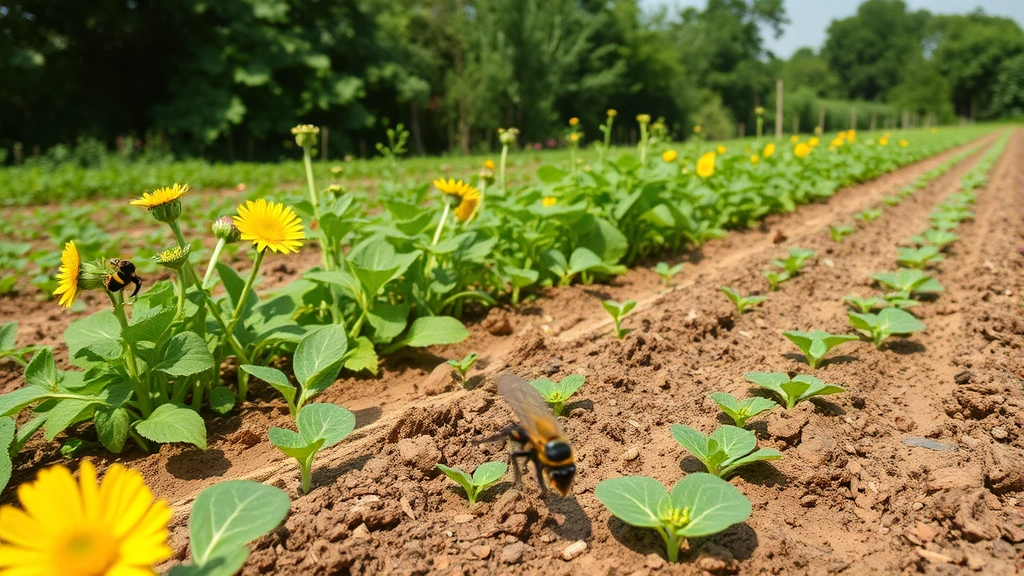
Pollination services alone demonstrate the concrete economic impact of biodiversity. Approximately 75 percent of global food crops depend at least partially on animal pollinators, predominantly insects. Economic valuations estimate global pollination services at $15-20 billion annually. When honeybee colonies collapse due to habitat loss and reduced floral diversity, agricultural yields plummet, food prices rise, and farmer incomes decline. Regions maintaining diverse wildflower corridors and hedgerows experience 30-40 percent higher crop yields compared to monoculture landscapes, directly attributable to robust pollinator populations sustained by botanical diversity.
Water purification services provide another quantifiable economic benefit. Natural wetlands, forests, and riparian zones filter contaminants, regulate water flow, and maintain aquifer recharge rates. Cities relying on natural water filtration systems through biodiverse watersheds save billions in water treatment infrastructure costs. New York City’s watershed protection strategy, prioritizing biodiversity conservation in Catskill Mountains, costs $1.5 billion compared to the estimated $8-10 billion required for artificial water treatment facilities. This economic calculation explicitly demonstrates biodiversity’s infrastructure value.
Soil formation and fertility maintenance depend critically on soil microbial and faunal diversity. Earthworms, mycorrhizal fungi, bacteria, and arthropods transform organic matter into plant-available nutrients. Biodiversity-rich soils contain 500-1000 times more microbial biomass than degraded soils. This biological activity translates to enhanced agricultural productivity, reduced fertilizer requirements, and improved soil carbon sequestration. When biodiversity declines, agricultural systems require expensive chemical inputs to compensate for lost biological function, reducing profit margins and increasing environmental contamination.
Biodiversity and Agricultural Productivity
Industrial agriculture’s historical trajectory prioritized monoculture efficiency while neglecting ecological complexity. However, mounting evidence reveals that genetically diverse agricultural systems outperform simplified monocultures across multiple economic metrics. Research from agricultural economics institutes demonstrates that crop diversity within farming systems reduces yield variability by 20-30 percent, providing economic stability crucial for farmer livelihoods, particularly in climate-uncertain regions.
Genetic diversity within crop species offers substantial economic protection. When farmers cultivate multiple crop varieties adapted to local conditions, they maintain resilience against pest outbreaks, diseases, and environmental shocks. The Irish Potato Famine exemplifies catastrophic monoculture economics—reliance on a single potato variety created vulnerability to late blight fungus, resulting in mass starvation and economic collapse. Modern agriculture increasingly recognizes that maintaining genetic diversity within staple crops provides insurance against such systemic failures.
Intercropping systems combining diverse species generate superior economic returns per unit land compared to monocultures. Polyculture farms in Southeast Asia integrating rice, fish, and vegetable production achieve 30-50 percent higher net income than rice monocultures while requiring fewer external inputs. This productivity advantage emerges from complementary resource utilization, pest management through ecological balance, and reduced dependency on expensive agrochemical inputs. Understanding human environment interaction within agricultural contexts reveals how biodiversity enables profitable sustainable farming.
Agroforestry systems incorporating tree diversity with crops generate multiple economic revenue streams. Farmers cultivate timber, fruit, nuts, and medicinal products simultaneously with food crops, diversifying income and reducing economic vulnerability to commodity price fluctuations. Economic analyses demonstrate that biodiverse agroforestry systems generate 2-4 times higher net present value over 25-year periods compared to conventional monoculture agriculture, even accounting for initial establishment costs.
Pharmaceutical Innovation and Genetic Resources
Approximately 25 percent of modern pharmaceutical drugs originate from plant compounds, yet less than 1 percent of tropical plant species have been pharmacologically screened. This represents an enormous untapped economic resource. Biodiversity hotspots, particularly tropical rainforests, contain an estimated 50-90 percent of global species diversity. The economic value of these genetic resources for pharmaceutical development remains poorly quantified but potentially staggering.
Taxol, derived from Pacific yew tree bark, generates approximately $1.6 billion annually in cancer treatment revenues. Artemisinin, extracted from sweet wormwood, produces over $1 billion in annual antimalarial drug sales. Quinine from cinchona bark, aspirin precursors from willow trees, and digoxin from foxglove plants demonstrate how biodiversity directly translates into pharmaceutical economic value. Yet these represent merely a fraction of potential discoveries—biodiversity loss through habitat destruction means permanent elimination of potentially valuable genetic resources before scientific evaluation.
The economic principle of option value quantifies the worth of maintaining resources for potential future discovery. Economists estimate that preserving unexplored biodiversity in tropical rainforests generates option values of $1,000-10,000 per species, accounting for potential pharmaceutical, agricultural, and industrial applications. With millions of species facing extinction, this represents trillions of dollars in lost economic potential.
Bioprospecting agreements increasingly recognize biodiversity’s pharmaceutical value through benefit-sharing arrangements. Costa Rica’s INBio program established compensation mechanisms where pharmaceutical companies pay for access to genetic resources and share profits from successful drug development. This model demonstrates how biodiversity conservation generates direct economic returns to developing nations possessing the world’s richest biological resources.
Climate Resilience and Economic Stability
Biodiversity provides critical climate regulation services through carbon sequestration and climate stabilization. Forests, wetlands, grasslands, and marine ecosystems collectively store approximately 1,300 gigatons of carbon. This biological carbon storage prevents atmospheric carbon dioxide accumulation that would otherwise require expensive carbon capture technologies costing hundreds of dollars per ton.
Biodiverse ecosystems demonstrate superior carbon sequestration capacity compared to simplified systems. Tropical rainforests with high species diversity sequester 10-15 tons of carbon annually per hectare, compared to 2-5 tons in degraded or replanted monoculture forests. This translates to measurable economic value—at carbon prices of $50-150 per ton, biodiverse forest preservation generates $500-2,250 annual economic value per hectare through climate regulation alone.
Climate-related economic damages from extreme weather events already exceed $300 billion annually. Biodiverse ecosystems provide natural climate adaptation infrastructure. Mangrove forests with high species diversity reduce hurricane storm surge damage by 70-90 percent through wave attenuation and sediment trapping. Coral reef ecosystems protect 600 million people and $375 billion in annual economic value from coastal erosion and storm damage. When biodiversity declines, these protective services diminish, increasing climate disaster vulnerability and economic losses.
Agricultural systems face mounting climate variability requiring adaptation strategies. Genetically diverse crop portfolios enable farmers to switch between varieties as climate conditions shift, maintaining productivity and income stability. Biodiversity-rich livestock systems incorporating multiple breeds adapted to different conditions provide resilience as climate patterns transform regional suitability for specific animals. This adaptive capacity translates directly to economic resilience for agricultural communities.
Tourism and Recreation Economics
Biodiversity generates substantial direct economic returns through nature-based tourism, representing one of the fastest-growing tourism sectors globally. International nature tourism produces approximately $600 billion in annual revenue, supporting 21 million jobs worldwide. This economic activity depends entirely on biodiversity preservation—tourists travel to experience biodiverse ecosystems, observe wildlife, and engage with natural landscapes.
Specific biodiversity hotspots generate enormous economic value through tourism. Costa Rica’s cloud forests, protecting exceptional bird and amphibian diversity, generate $2 billion annually through ecotourism. The Galápagos Islands’ unique endemic species attract 200,000 annual visitors generating $300 million in tourism revenue. African safari tourism dependent on megafauna diversity produces $29 billion annually across the continent. These economic figures demonstrate clear market-based valuation of biodiversity’s tourism value.
Recreational opportunities tied to biodiversity—hiking, birdwatching, fishing, wildlife photography—generate substantial economic multiplier effects. Outdoor recreation expenditures exceed $800 billion globally, supporting hotels, restaurants, guide services, equipment manufacturers, and transportation providers. When biodiversity declines, these economic cascades diminish. Fisheries collapse from overharvesting reduce recreational fishing tourism; wildlife disappearance eliminates birdwatching destinations; habitat destruction diminishes hiking trail quality and scenic value.
Property values demonstrate capitalized biodiversity benefits in residential real estate markets. Homes proximate to biodiverse natural areas command 5-20 percent price premiums compared to equivalent properties lacking nearby ecosystem access. This reveals consumers’ willingness to pay for biodiversity proximity, reflecting perceived quality-of-life benefits and recreational opportunities that biodiverse landscapes provide.
The Cost of Biodiversity Loss
While biodiversity’s economic benefits are substantial, the costs of continued loss are potentially catastrophic. The United Nations Environment Programme estimates that biodiversity loss and ecosystem degradation cost the global economy $2-5 trillion annually through lost ecosystem services. This figure dwarfs conservation investment costs, which represent a fraction of potential losses.
Pollinator decline exemplifies escalating biodiversity loss costs. Wild pollinator populations have declined 25-45 percent over past decades. Agricultural productivity losses from insufficient pollination already reach $5-15 billion annually and continue accelerating. Honeybee colony collapse disorder, partly attributable to monoculture landscapes reducing floral diversity, costs U.S. agriculture $5.7 billion annually in crop losses and management expenses.
Fishery collapse represents another quantifiable biodiversity loss cost. Overharvesting has eliminated 90 percent of large predatory fish populations. Global fisheries productivity declined 10 percent since peak catches in 1996 despite increased fishing effort, indicating ecosystem degradation. This collapse costs fishing communities $80 billion annually in lost income and threatens food security for 3 billion people depending on marine protein sources.
Disease emergence correlates directly with biodiversity loss. Approximately 75 percent of emerging infectious diseases originate in wildlife, with spillover risk increasing as habitat destruction forces wildlife-human contact. COVID-19’s estimated economic cost of $28 trillion demonstrates pandemic economic vulnerability. Biodiverse ecosystems with intact wildlife habitat boundaries provide natural disease containment, whereas degraded habitats with human-wildlife interface facilitate pathogen spillover.
Disaster vulnerability increases dramatically as biodiversity declines. Hurricane Katrina’s $125 billion damage cost partly reflected wetland loss removing storm surge protection. The 2004 Indian Ocean tsunami’s $14 billion damage would have been substantially reduced if intact coral reefs and mangrove forests remained. As biodiversity-dependent protective ecosystem services disappear, disaster costs escalate exponentially.
Policy Frameworks for Biodiversity Economics
Effective biodiversity conservation requires policy frameworks integrating ecological science with economic analysis. Natural capital accounting represents a foundational approach, incorporating ecosystem asset values into national accounting systems. Countries including Costa Rica, India, and several European nations now calculate natural capital accounts, revealing that ecosystem service losses exceed GDP growth, indicating unsustainable economic trajectories.
Payment for ecosystem services (PES) programs create market mechanisms compensating biodiversity preservation. Costa Rica’s PES program has protected 1 million hectares of forest by compensating landowners for conservation, costing $200 million while generating $2.8 billion in ecosystem service value. This demonstrates how economic incentives can align private interests with conservation objectives.
Biodiversity offset requirements mandate that development activities causing ecosystem damage fund equivalent habitat restoration elsewhere. While controversial regarding ecological effectiveness, biodiversity offsets create economic accountability for environmental damage. Mining companies in Australia now budget $1-2 billion for biodiversity offset obligations, substantially influencing development location decisions and project design.
International agreements recognize biodiversity’s economic importance. The Convention on Biological Diversity’s post-2020 framework includes economic targets, acknowledging that conservation requires financial mechanisms. The World Wildlife Fund estimates that achieving global biodiversity conservation targets requires $300 billion annually—substantial but minuscule compared to $2-5 trillion annual ecosystem service losses from continued degradation.
Corporate sustainability initiatives increasingly recognize biodiversity’s economic materiality. Companies dependent on agricultural inputs, water resources, or pharmaceutical development now calculate biodiversity-related financial risks. Unilever’s sustainable agriculture programs, targeting 100 percent sustainable sourcing, reflect recognition that supply chain resilience depends on ecosystem health and biodiversity preservation. This represents evolution from viewing conservation as cost to recognizing it as essential investment in business continuity.
Exploring our comprehensive blog coverage reveals how biodiversity economics intersects with broader sustainability frameworks. Understanding these connections enables more sophisticated policy design integrating ecological and economic considerations.
Technological innovation increasingly enables biodiversity valuation. Remote sensing and satellite monitoring quantify ecosystem changes, facilitating accurate ecosystem service accounting. Artificial intelligence models predict biodiversity loss consequences for economic outcomes. Blockchain technology enables transparent biodiversity offset tracking and benefit-sharing from genetic resource commercialization. These technologies reduce measurement costs, making biodiversity economic integration increasingly feasible.
Climate change amplifies biodiversity’s economic importance. As climate impacts intensify, genetically diverse agricultural systems provide adaptation capacity; biodiverse forests enhance carbon sequestration; ecosystem resilience determines disaster vulnerability. Climate policy increasingly recognizes that climate mitigation and adaptation require biodiversity conservation—carbon pricing mechanisms now incorporate ecosystem service valuation, creating economic incentives for conservation.
Developing nations possess disproportionate biodiversity but face capital constraints limiting conservation investment. Mechanisms directing climate finance toward biodiversity conservation in developing countries represent emerging policy approaches. The Green Climate Fund and similar mechanisms recognize that global biodiversity preservation requires financial transfers from developed to developing nations, reflecting both equity principles and enlightened self-interest regarding climate and disease prevention.
Biodiversity Economics and Sustainable Development
Integrating biodiversity into sustainable development frameworks represents essential policy evolution. The Sustainable Development Goals explicitly recognize biodiversity’s role in poverty reduction, food security, health, and economic development. Goal 15 targets biodiversity conservation while acknowledging that biodiversity preservation enables achievement of multiple other SDGs through ecosystem service provision.
Poverty reduction depends critically on biodiversity. Rural poor populations depend directly on ecosystem services—fisheries, forest products, agricultural productivity, water access. Biodiversity loss disproportionately harms poor communities lacking resources to substitute lost ecosystem services through technological or market alternatives. Conversely, biodiversity conservation creates employment opportunities through ecotourism, sustainable harvesting, and restoration activities. Studies demonstrate that biodiversity-based livelihoods in developing nations generate income for 1-2 billion people.
Food security increasingly depends on biodiversity preservation. Crop genetic diversity maintains agricultural productivity as climate conditions shift. Fisheries supporting 3 billion people depend on marine biodiversity. Livestock genetic diversity enables adaptation to changing climate and disease challenges. As population growth increases food demand, biodiversity conservation becomes increasingly critical for meeting nutritional requirements sustainably.
Health outcomes correlate strongly with ecosystem health and biodiversity. Biodiverse landscapes reduce disease transmission; ecosystem services provide water purification and air quality; natural spaces generate mental health benefits reducing healthcare costs. WHO estimates that ecosystem degradation costs the healthcare sector $2-3 trillion annually through disease burden increases. Conversely, biodiversity-rich environments reduce disease prevalence and improve public health outcomes, reducing healthcare expenditures.
Understanding how to reduce carbon footprint through biodiversity-conscious choices represents individual-level integration of biodiversity economics. Consumer decisions supporting biodiverse agricultural systems, sustainable tourism, and ecosystem preservation directly influence economic incentives for conservation.

Corporate supply chains increasingly emphasize biodiversity. Agricultural commodity producers face pressure to eliminate deforestation, maintain soil health, and support pollinator populations—all biodiversity-dependent practices. Certification systems (organic, rainforest alliance, sustainable seafood) create market premiums rewarding biodiversity conservation. These market mechanisms demonstrate that consumers value biodiversity economically, willing to pay price premiums for products from biodiverse production systems.
Infrastructure development increasingly incorporates biodiversity considerations through green infrastructure approaches. Green roofs and walls provide urban cooling while supporting pollinator populations; constructed wetlands provide wastewater treatment while creating wildlife habitat; riparian restoration provides flood control while enhancing aquatic biodiversity. These approaches demonstrate that infrastructure can simultaneously provide engineering functions and biodiversity benefits, enhancing economic efficiency.
Renewable energy transitions provide opportunities for biodiversity integration. Wind and solar installations can incorporate native vegetation supporting pollinators and wildlife. Hydroelectric facilities can be designed with fishery considerations maintaining aquatic biodiversity. Biomass energy systems can utilize agricultural residues without competing for land needed for food production or biodiversity preservation. Examining renewable energy approaches for homes reveals how individual-level energy choices intersect with biodiversity considerations.
Fashion and consumer goods industries increasingly recognize biodiversity’s economic importance. Sustainable textile production requires biodiversity-rich agricultural systems; cosmetics and pharmaceutical ingredients derive from biodiverse plant sources; luxury goods depend on charismatic wildlife (leather, fur, exotic materials). Exploring sustainable fashion brands demonstrates how biodiversity considerations influence consumer product choices and corporate supply chain strategies.
Educational initiatives emphasizing natural environment teaching create future generations understanding biodiversity’s economic value. Environmental economics education in schools and universities develops human capital capable of integrating ecological and economic analysis, essential for policy development and business strategy reflecting biodiversity considerations.
FAQ
How much economic value does biodiversity provide globally?
Ecosystem services dependent on biodiversity generate approximately $125 trillion annually globally, according to World Bank estimates. This encompasses pollination ($15-20 billion annually), water purification, soil formation, carbon sequestration, and other services. Costs of biodiversity loss reach $2-5 trillion annually, indicating net economic damage from continued ecosystem degradation.
Which industries depend most directly on biodiversity?
Agriculture, fisheries, pharmaceutical development, tourism, and forestry depend most directly on biodiversity. Approximately 40 percent of global GDP derives from industries relying on natural capital and biodiversity-dependent ecosystem services. Supply chain vulnerabilities in agriculture, seafood production, and pharmaceutical development create direct economic exposure to biodiversity loss.
Can economic growth continue without biodiversity conservation?
Economic analyses increasingly demonstrate that continued biodiversity loss will constrain long-term economic growth. Declining pollination reduces agricultural productivity; fishery collapse eliminates protein sources; climate instability increases disaster costs; disease emergence threatens public health; water scarcity limits industrial production. Short-term economic growth sacrificing biodiversity creates long-term economic vulnerability and declining prosperity.
What policy mechanisms effectively integrate biodiversity into economic planning?
Natural capital accounting, payment for ecosystem services, biodiversity offset requirements, and international agreements provide policy mechanisms integrating biodiversity into economic planning. Carbon pricing incorporating ecosystem service valuation, green infrastructure standards, and corporate biodiversity commitments represent emerging approaches aligning economic incentives with conservation objectives.
How does biodiversity loss affect developing nations economically?
Developing nations disproportionately experience biodiversity loss costs despite possessing the world’s greatest biological wealth. Poor rural populations depending on ecosystem services face income loss; agricultural productivity declines threaten food security; disease emergence creates health system burdens; climate vulnerability increases disaster costs. Conversely, biodiversity conservation creates economic opportunities through sustainable livelihoods, ecotourism, and ecosystem service provision.
What is the relationship between biodiversity and climate economics?
Biodiversity and climate economics increasingly converge. Biodiverse ecosystems provide superior carbon sequestration; genetically diverse agricultural systems adapt to climate change; ecosystem resilience determines climate vulnerability. Climate finance mechanisms increasingly incorporate biodiversity considerations, recognizing that climate mitigation and adaptation require conservation. The Intergovernmental Panel on Climate Change emphasizes biodiversity conservation as essential climate strategy.