Can Economic Growth Harm Ecosystems? Study Insights
The relationship between economic growth and environmental degradation has become one of the most pressing questions in contemporary policy debates. For decades, economists and ecologists have grappled with a fundamental paradox: can societies achieve prosperity without decimating the natural systems that sustain all life? Recent research increasingly suggests that conventional economic growth models do indeed inflict substantial harm on ecosystems, though the mechanisms and severity vary significantly across regions, sectors, and development stages.
This article examines the empirical evidence from recent studies, exploring how different growth pathways affect biodiversity, carbon cycles, water systems, and soil health. We’ll analyze the disconnect between GDP expansion and ecological wellbeing, investigate why traditional economic metrics fail to capture environmental costs, and consider emerging frameworks that attempt to reconcile development with planetary boundaries.

The GDP Paradox: Growth Without Wellbeing
Gross Domestic Product has long served as the primary measure of national prosperity, yet it fundamentally misrepresents economic health when ecosystems deteriorate. A country can report robust GDP growth while simultaneously experiencing deforestation, species extinction, soil degradation, and aquifer depletion. This accounting failure represents perhaps the greatest flaw in modern economic measurement.
Consider a nation that harvests old-growth forests at an accelerated rate. The timber revenues boost GDP immediately, yet the loss of carbon sequestration capacity, habitat destruction, and reduced future productivity never appear on the balance sheet. Similarly, when fisheries collapse from overharvesting, the initial catch contributes positively to growth statistics, while the ecological and economic catastrophe emerges only later. This temporal mismatch between growth accounting and ecological reality creates perverse incentives favoring short-term extraction over long-term sustainability.
The ways humans affect the environment through economic activity are extensively documented, yet our measurement systems remain stubbornly antiquated. Environmental economists have proposed alternatives like the Genuine Progress Indicator and natural capital accounting, which subtract environmental costs from GDP. When applied rigorously, these adjusted metrics reveal that many nations experiencing headline growth are actually experiencing declining true wealth.

How Economic Activities Degrade Ecosystems
Economic growth typically drives ecosystem degradation through multiple interconnected pathways. Understanding these mechanisms is essential for designing effective policy responses that don’t simply shift environmental costs to other regions or future generations.
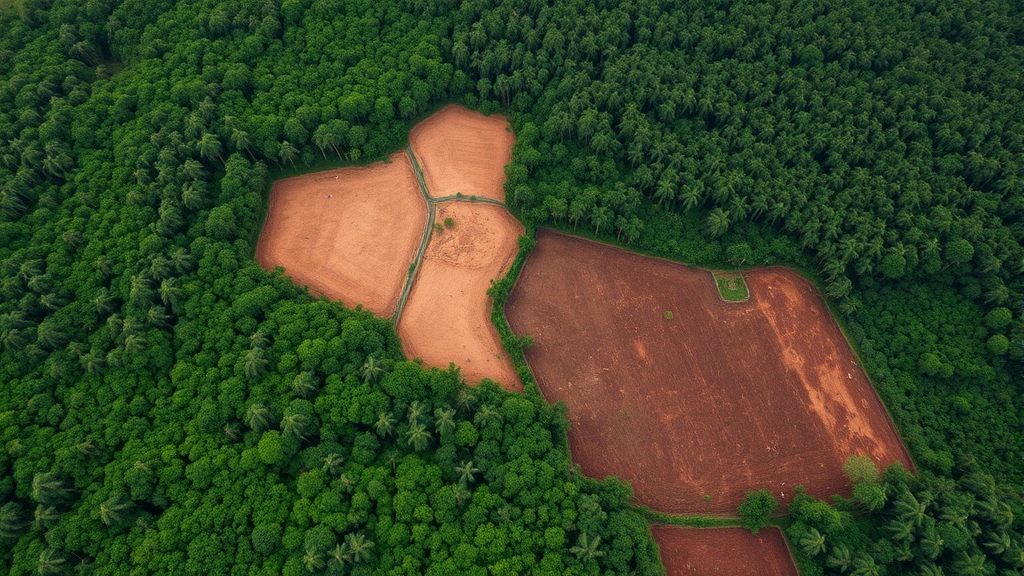
Land-use conversion represents the most visible mechanism. Agricultural expansion, urban development, and infrastructure projects transform natural ecosystems into human-dominated landscapes. Tropical rainforests, wetlands, and grasslands—among the most biodiverse ecosystems—face relentless pressure from growth-driven development. The human-environment interaction in these contexts typically favors short-term economic gains over ecosystem services worth far more in the long term.
Pollution and resource extraction degrade ecosystems even when land-use doesn’t change. Mining operations leach heavy metals into waterways, industrial agriculture depletes soil nutrients and contaminates groundwater with fertilizers and pesticides, and manufacturing releases greenhouse gases and toxic compounds. These impacts propagate through food webs and accumulate in organisms over time.
Resource depletion reduces ecosystem resilience and productivity. Overfishing removes apex predators essential for ecosystem balance, groundwater extraction lowers water tables below sustainable levels, and logging reduces forest carbon storage capacity. Once depletion crosses critical thresholds, ecosystems may shift to alternative stable states from which recovery becomes prohibitively expensive or impossible.
Climate disruption from greenhouse gas emissions creates cascading ecosystem effects: altered precipitation patterns, temperature extremes, phenological mismatches between species, and range shifts that fragment populations. Unlike localized pollution, climate change affects all ecosystems simultaneously, eliminating migration corridors and reducing adaptive capacity.
Research Evidence on Growth and Environmental Impact
Empirical research over the past two decades has produced substantial evidence that economic growth and environmental degradation remain tightly coupled, despite technological improvements and efficiency gains. The relationship between environment and society reveals consistent patterns across diverse economic contexts.
A comprehensive analysis by the World Bank examining natural capital across 141 countries found that genuine wealth per capita—accounting for natural capital depletion—declined in 36 countries despite positive GDP growth. In resource-dependent economies, the disconnect was particularly pronounced. Countries exporting oil, minerals, and timber at accelerating rates showed GDP growth coupled with declining genuine wealth as natural assets depleted faster than manufactured capital accumulated.
Research published in ecological economics journals demonstrates that decoupling—the hypothesis that growth can be separated from environmental impact—remains largely illusory at the global scale. While some wealthy nations achieved relative decoupling (slower environmental impact growth than GDP growth) through offshoring manufacturing, absolute decoupling (simultaneous growth and environmental improvement) has proven vanishingly rare. Most “green growth” narratives reflect accounting artifacts rather than genuine ecological improvement.
A meta-analysis of biodiversity trends across 28,000 monitored populations revealed a 68% decline in vertebrate abundance since 1970, precisely during the period of greatest economic growth. This decline correlates strongly with agricultural intensification, habitat conversion, and resource extraction—all growth-driven activities. The timing and geography of species declines map closely onto regions experiencing rapid economic expansion.
The Carbon-Growth Nexus
The relationship between economic growth and carbon emissions provides perhaps the clearest evidence of growth’s ecological harm. Despite renewable energy deployment and efficiency improvements, global carbon emissions have remained tightly coupled to GDP growth, with a correlation coefficient exceeding 0.9 across decades and nations.
This coupling reflects fundamental thermodynamic realities. Economic activity requires energy transformation and material throughput. While renewable energy can replace fossil fuels, the total energy consumption required for growth continues expanding. Rebound effects further complicate the picture: efficiency improvements lower the effective cost of energy services, inducing greater consumption that partially or wholly offsets efficiency gains.
The IPCC’s most recent assessment emphasizes that limiting warming to 1.5°C requires rapid decarbonization incompatible with continued GDP growth in wealthy nations. Meeting climate targets necessitates absolute reductions in material and energy throughput—a contraction in growth terms—particularly in high-income countries responsible for cumulative emissions.
Carbon budgets provide a useful framework for understanding this constraint. Humanity has exhausted roughly 90% of the carbon budget compatible with 1.5°C warming. Remaining budget, distributed equitably across the global population, allows minimal per-capita emissions growth in high-income nations and requires absolute contraction to accommodate development in lower-income regions. Continued growth in wealthy economies directly consumes the atmospheric commons required for equitable development elsewhere.
Biodiversity Loss and Economic Expansion
Economic growth drives biodiversity loss through habitat destruction, overexploitation, pollution, climate change, and invasive species introduction. The mechanisms interconnect in ways that amplify impacts beyond simple additive effects.
Agricultural expansion for commodity production represents the single largest driver of habitat loss. Cattle ranching, soy cultivation, and palm oil production have converted hundreds of millions of hectares of biodiverse ecosystems into monocultures. These conversions eliminate habitat for countless species while reducing ecosystem resilience and carbon storage capacity. The positive environmental impacts humans can generate pale in comparison to these conversion rates, representing a tiny fraction of overall land-use change.
Overexploitation of wild populations has driven numerous species toward extinction. Commercial fisheries have depleted 90% of large predatory fish stocks since industrial fishing began. Bushmeat hunting, wildlife trafficking, and trophy hunting remove key species from ecosystems, disrupting trophic cascades and reducing genetic diversity. Recovery timescales for depleted populations often exceed human lifespans, effectively representing permanent losses.
Invasive species introduction, facilitated by global trade networks that expand with economic growth, has devastated native biodiversity across isolated ecosystems. Island species, in particular, lack evolutionary defenses against introduced predators and competitors. Once established, invasive species are extraordinarily difficult to remove, requiring perpetual management.
The fundamental definitions of environmental science emphasize ecosystem integrity and biodiversity maintenance as essential for human survival. Yet economic growth systematically undermines these foundational principles. The sixth mass extinction, currently underway, represents a direct consequence of growth-driven habitat loss and overexploitation.
Alternative Economic Models
Recognition that growth-based economics harms ecosystems has stimulated development of alternative frameworks attempting to align economic activity with ecological limits.
Steady-state economics proposes stabilizing the physical scale of the economy at a sustainable level while allowing qualitative improvement and redistribution. Rather than maximizing throughput, steady-state models prioritize optimal scale—the point where marginal ecological costs equal marginal benefits. This framework acknowledges that beyond optimal scale, growth becomes uneconomic, destroying more value through environmental damage than it creates.
Degrowth and post-growth economics argue that wealthy economies must deliberately contract material and energy throughput to remain within planetary boundaries. These frameworks prioritize wellbeing, equity, and ecological stability over growth metrics. They propose radical redistribution, reduced working hours, and reorientation toward meeting human needs rather than endless consumption expansion.
Circular economy models attempt to minimize resource extraction and waste through product redesign, reuse systems, and material cycling. While valuable for reducing environmental impact per unit of consumption, circular approaches alone cannot accommodate continued growth without hitting physical limits. Circularity works best within a steady-state or degrowth framework rather than as a growth enabler.
Natural capital accounting integrates ecosystem services and resource stocks into national accounts, making environmental costs visible in economic measurement. When properly implemented, these systems reveal that most nations are depleting natural wealth while reporting growth. This accounting transparency can shift policy priorities toward genuine sustainability.
Regenerative economics proposes that economic activity should actively restore ecosystems rather than merely minimize harm. This ambitious framework requires fundamental restructuring of production systems, supply chains, and consumption patterns. While regenerative approaches show promise in specific contexts, scaling them to replace current economic systems remains largely theoretical.
Policy Implications and Solutions
If economic growth genuinely harms ecosystems, policy responses must address root causes rather than merely managing symptoms through environmental regulations and green technologies.
Carbon pricing and similar mechanisms that internalize environmental costs can reduce growth’s most harmful impacts. When pollution, resource depletion, and ecosystem damage carry financial costs, markets generate incentives for efficiency and alternatives. However, carbon prices must be set at levels reflecting true social costs—typically far higher than current implementations—to significantly alter behavior.
Limits on resource extraction prevent ecosystem degradation at the source. Establishing extractive quotas based on ecosystem regeneration rates, protecting remaining old-growth forests and intact ecosystems, and eliminating subsidies for resource-intensive activities can constrain the growth-extraction linkage. These policies face intense resistance from industries dependent on continued expansion.
Redistribution and reduced consumption in wealthy nations could maintain or improve wellbeing while reducing environmental impact. Shorter working weeks, universal basic services, progressive taxation, and cultural shifts away from consumption-based status would lower ecological footprints without requiring poverty. Research demonstrates that beyond modest income thresholds, additional consumption provides minimal wellbeing gains.
Regenerative agriculture and ecosystem restoration can reverse some historical damage while improving livelihoods. Agroforestry, wetland restoration, and wildlife corridor protection increase biodiversity while sequestering carbon and improving water quality. However, restoration cannot occur at scales sufficient to offset current degradation without constraining growth simultaneously.
Technology and efficiency improvements remain important but insufficient alone. Renewable energy, precision agriculture, and industrial efficiency reduce environmental impact per unit of output. Yet without constraining total output growth, efficiency gains typically trigger rebound effects that partially offset improvements. Efficiency works best as a complement to reduced consumption and activity levels.
The United Nations Environment Programme emphasizes that achieving the Sustainable Development Goals requires transforming economic systems fundamentally, not merely optimizing existing growth paradigms. Current trajectories are incompatible with planetary boundaries and climate targets, necessitating deliberate transitions toward sustainable economies.
FAQ
Does all economic growth harm ecosystems?
Not identically, but growth in material and energy throughput—the core of conventional GDP expansion—remains tightly coupled to environmental impact globally. Some growth in services and knowledge-intensive sectors has lower per-unit impacts, yet absolute decoupling at the national scale remains rare. Qualitative improvements in wellbeing through redistribution and efficiency can occur without growth, suggesting that growth itself isn’t necessary for human flourishing.
Can renewable energy enable continued growth without harm?
Renewable energy can replace fossil fuels for electricity generation, but growth requires expanding total energy consumption, not merely changing sources. Mining, manufacturing, and deploying renewable infrastructure requires substantial material throughput. Additionally, rebound effects mean efficiency improvements partially offset conservation. Renewable energy is necessary but insufficient for sustainable growth.
What about green growth and decoupling?
Green growth rhetoric claims that technology and policy can enable growth without environmental harm. Evidence suggests relative decoupling (slower environmental impact growth than GDP growth) is possible through efficiency, but absolute decoupling (simultaneous growth and environmental improvement) remains elusive at global scales. Many apparent decoupling examples reflect accounting artifacts and outsourcing rather than genuine ecological improvement.
How do we transition to sustainable economies?
Transitions require multiple simultaneous changes: carbon pricing, resource extraction limits, redistribution policies, cultural shifts away from consumption, ecosystem restoration, and technological innovation. No single solution suffices. Different regions will require different approaches based on their development stage, resource endowments, and ecological contexts. International cooperation is essential to prevent carbon leakage and ensure equitable distribution of transition costs.
Will sustainable economies provide adequate living standards?
Research demonstrates that wellbeing depends more on meeting basic needs, social connection, and meaningful work than on consumption expansion. Wealthy nations can maintain or improve wellbeing while reducing environmental impact through redistribution, reduced working hours, and cultural reorientation. Lower-income regions require development that meets basic needs, but this differs fundamentally from replicating wealthy nations’ consumption patterns.


