
Human Activity Boosting Ecosystems? New Study Findings on Environmental Restoration
For decades, the dominant narrative in environmental science has positioned human activity as fundamentally destructive to natural ecosystems. However, emerging research challenges this binary perspective, revealing that strategic human intervention can actually enhance biodiversity, restore degraded landscapes, and strengthen ecosystem resilience. A growing body of evidence demonstrates that when designed thoughtfully, human activities—from rewilding initiatives to agricultural innovation—can generate measurable positive impacts on environmental health and ecological function.
This paradigm shift doesn’t dismiss legitimate environmental concerns. Rather, it recognizes that humans are not separate from nature but integral participants capable of accelerating ecosystem recovery. Recent studies published in leading ecological journals document how directed human effort has reversed species declines, restored critical habitats, and improved ecosystem services across multiple biomes. Understanding these mechanisms provides crucial insights for developing effective environmental policy and identifying pathways toward genuine ecological restoration rather than merely reducing harm.
The Paradigm Shift: From Damage Control to Active Restoration
Traditional environmental economics has operated within a framework of mitigation—attempting to reduce negative externalities and contain ecological damage. This approach, while necessary, remains fundamentally reactive. Contemporary research increasingly demonstrates that proactive human intervention can generate net positive environmental outcomes, fundamentally reframing our relationship with natural systems.
The positive human impacts on environment extend beyond simple restoration to active ecosystem enhancement. Studies from the World Bank’s environmental programs document how strategic investments in ecosystem management generate returns exceeding 15:1 in ecosystem services. This represents a fundamental economic insight: environmental restoration isn’t merely an ethical imperative but a sound economic investment.
The shift reflects deeper understanding of ecological dynamics. Ecosystems are not static entities requiring preservation in amber-like conditions, but dynamic systems capable of responding to intelligent management. Human environment interaction through restoration ecology, adaptive management, and technological innovation creates opportunities for genuine environmental improvement.
Rewilding and Species Recovery: Measurable Success Stories
Rewilding represents perhaps the most compelling evidence for human-driven ecosystem enhancement. These initiatives involve reintroducing species, restoring habitat connectivity, and allowing natural processes to reassert themselves in degraded landscapes. The outcomes challenge pessimistic environmental narratives.
European Rewilding Success: The Yellowstone to Yukon Conservation Initiative demonstrates how coordinated human effort can restore ecosystem function across vast landscapes. Following wolf reintroduction to Yellowstone in 1995, ecosystem recovery exceeded predictions. Wolves reduced elk overgrazing, enabling riparian vegetation recovery, which stabilized riverbanks and created habitat for multiple species. This trophic cascade—triggered by deliberate human action—generated measurable improvements across dozens of ecological metrics.
Similarly, European bison reintroduction programs have transformed grassland ecosystems. In Poland’s Białowieża Forest and surrounding regions, bison restoration has enhanced vegetation diversity and created habitat mosaics supporting hundreds of species. Population recovery from 54 individuals in 1919 to over 6,000 today represents one of conservation’s greatest achievements through strategic human management.
Marine Ecosystem Recovery: Coral restoration programs now employ thousands of researchers and technicians globally. While coral bleaching remains concerning, active restoration efforts have prevented complete ecosystem collapse in critical reef systems. Human-managed coral nurseries and transplantation programs have successfully restored reproductive capacity in degraded reefs, demonstrating that technological intervention can reverse ecological decline when implemented at sufficient scale.
These successes share common elements: clear ecological objectives, sustained funding, scientific monitoring, and long-term commitment. They prove that human intelligence and resources, properly directed, can enhance rather than diminish ecosystem function.
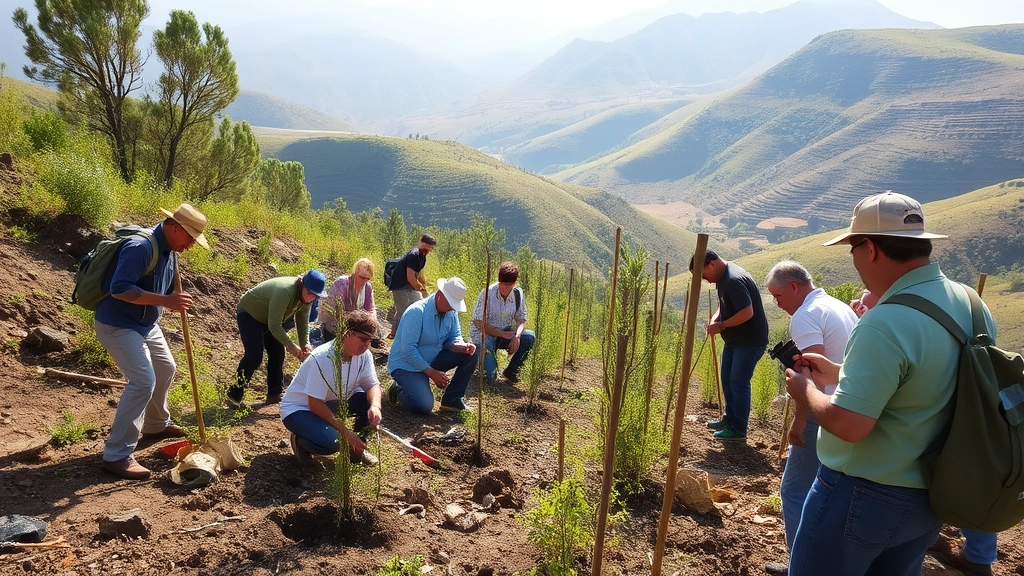
Agricultural Innovation and Biodiversity Enhancement
Agriculture occupies 40% of terrestrial surface, making agricultural practices crucial for global biodiversity. Emerging evidence suggests that regenerative and precision agriculture approaches can simultaneously increase food production and enhance ecosystem services.
Regenerative Agriculture Impact: Practices including cover cropping, reduced tillage, and integrated pest management have demonstrably increased soil biodiversity. Research published in ecological economics journals shows that regenerative farms support 30-50% higher arthropod diversity compared to conventional monocultures. These increases directly translate to improved pollination, natural pest control, and nutrient cycling—ecosystem services worth billions annually.
The economic logic is compelling. A UNEP assessment found that regenerative agricultural practices increase long-term productivity while reducing input costs by 20-40%. This represents a rare convergence of environmental and economic benefit, where human activity simultaneously improves ecosystem health and financial returns.
Agroforestry Systems: Integration of trees within agricultural landscapes creates structural complexity supporting significantly higher biodiversity than monocultures. Studies from tropical regions document that agroforestry systems maintain 60-80% of native biodiversity while producing commercial crops. This demonstrates that human productive activity need not conflict with ecological integrity.
Precision Agriculture Technology: GPS-guided application of inputs, drone monitoring, and data analytics enable farmers to optimize production while minimizing environmental impact. Precision techniques reduce fertilizer use by 15-25% while maintaining or increasing yields, demonstrating how technological sophistication can align human economic interests with ecological health.
Urban Ecosystems: Cities as Conservation Laboratories
Urban areas, often viewed as ecological dead zones, increasingly demonstrate capacity for ecosystem enhancement through deliberate human design. Cities contain 50% of global population but occupy only 2% of terrestrial surface, making urban ecosystem management disproportionately important for global biodiversity.
Green Infrastructure Benefits: Urban green roofs, rain gardens, and restored urban wetlands generate measurable biodiversity increases. Studies from cities including Singapore, Copenhagen, and São Paulo document that green infrastructure supports thriving native plant and animal populations while providing flood mitigation, temperature regulation, and air quality improvements. These multifunctional systems demonstrate how human-designed environments can generate ecological value.
Pollinator Corridor Development: Cities including Toronto and London have established networks of pollinator-supporting habitat throughout urban landscapes. These human-managed corridors have increased native bee and butterfly populations by 200-400% in participating neighborhoods. The human activity of deliberate habitat creation directly enhanced biodiversity within human-dominated landscapes.
Urban rewilding initiatives further demonstrate this potential. Thames 21 in London and similar organizations have restored urban waterways, creating habitat for fish, birds, and aquatic invertebrates. What were degraded, concrete-lined channels have become functioning ecosystems supporting multiple native species—a transformation accomplished entirely through human effort and investment.
Wetland Restoration and Hydrological Benefits
Wetlands represent among Earth’s most productive ecosystems, supporting exceptional biodiversity while providing critical ecosystem services including water filtration, flood mitigation, and carbon sequestration. Wetland restoration projects offer particularly compelling evidence for human-driven ecosystem enhancement.
Hydrological Recovery: Restored wetlands demonstrate measurable improvements in water cycling and quality. The Mesopotamian Marshes restoration in Iraq, following deliberate drainage that destroyed 90% of original wetland area, shows how human effort can reverse environmental degradation. Restoration efforts since 2003 have recovered approximately 50% of original wetland area, restoring habitat for migratory birds and fish populations while improving regional water quality.
Carbon Sequestration Capacity: Wetland restoration generates significant climate benefits. Restored wetlands accumulate carbon in soils and biomass at rates of 1-2 tons per hectare annually. This means human investment in wetland restoration directly contributes to climate mitigation while enhancing biodiversity—a rare alignment of multiple environmental objectives.
Economic Valuation: Research from ecological economics institutes demonstrates that wetland ecosystem services—including water purification, flood control, and fishery support—generate economic value of $5,000-$15,000 per hectare annually. This economic case justifies substantial public investment in restoration, positioning wetland enhancement as economically rational rather than merely altruistic.

Economic Implications of Ecosystem Enhancement
The economic case for human-driven ecosystem enhancement has strengthened considerably as valuation methodologies have improved. This represents a crucial shift in environmental policy foundations.
Natural Capital Accounting: Progressive national accounting systems now incorporate natural capital alongside manufactured and human capital. This accounting framework reveals that ecosystem enhancement generates measurable economic returns. A World Bank natural capital assessment found that environmental restoration investments yield 4-7 times return through improved ecosystem services, reduced disaster costs, and enhanced productivity.
Biodiversity and Productivity Nexus: Economic research increasingly documents that biodiversity enhancement directly increases ecosystem productivity and resilience. Agricultural systems with higher biodiversity demonstrate 15-25% greater yield stability, reducing financial risk for farmers. This creates direct economic incentive for conservation practices that reduce carbon footprint while enhancing productivity.
Payment for Ecosystem Services: Market mechanisms including carbon credits, water quality payments, and biodiversity offsets now mobilize capital for ecosystem enhancement. Costa Rica’s payment for ecosystem services program, operating since 1997, has directed over $600 million toward forest restoration and protection, demonstrating that economic incentives can align private interests with ecosystem enhancement.
The economic logic extends to renewable energy and sustainable practices that reduce ecological pressure while creating economic opportunity. This convergence suggests that future economic growth need not conflict with environmental health.
Challenges in Scaling Positive Human Interventions
While evidence for human-driven ecosystem enhancement continues accumulating, significant challenges impede scaling these approaches globally.
Funding and Political Will: Ecosystem restoration requires sustained, long-term investment—decades rather than years for full recovery. Most environmental funding operates on 5-10 year cycles, misaligned with ecological timescales. Political systems struggle to maintain commitment across election cycles, undermining long-term ecosystem projects. Addressing this requires fundamental reform in environmental finance, including dedicated funding mechanisms and international agreements ensuring continuity.
Knowledge Integration: Successful ecosystem enhancement demands integration of ecological science, traditional ecological knowledge, economic analysis, and social considerations. Most institutions remain siloed, limiting interdisciplinary collaboration. The International Society for Ecological Economics promotes this integration, but broader institutional adoption remains limited.
Complexity and Context-Specificity: Ecosystem enhancement approaches must be tailored to specific ecological and social contexts. Solutions effective in temperate forests may fail in tropical systems. This context-specificity limits technological transfer and requires sustained local research and adaptive management—expensive and difficult at global scale.
Unintended Consequences: Human interventions, however well-intentioned, generate unexpected outcomes. Introduced species sometimes become invasive, disrupting target ecosystems. Hydrological modifications can have cascading effects across landscapes. Addressing these challenges requires sophisticated monitoring systems, scientific humility, and willingness to modify approaches based on outcomes.
Social Equity Considerations: Ecosystem enhancement projects sometimes benefit wealthy nations or groups while imposing costs on vulnerable populations. Ensuring equitable distribution of benefits and costs remains crucial for legitimate environmental governance. This requires integrating social science with ecological and economic analysis.
Despite these challenges, the evidence base for human-driven ecosystem enhancement continues strengthening. Rather than accepting that human activity inevitably degrades ecosystems, we can deliberately design interventions that enhance ecological function while meeting human needs. This represents genuine progress toward sustainable futures.
FAQ
Can human activity genuinely improve ecosystems, or does restoration always involve tradeoffs?
Research demonstrates that thoughtfully designed human interventions can generate net positive environmental outcomes across multiple metrics simultaneously. Rewilding initiatives, for instance, often increase biodiversity while improving water quality and carbon sequestration. However, tradeoffs sometimes exist—for example, between intensive agriculture and wild habitat. The key is recognizing that human management, when informed by ecological science and adaptive monitoring, can enhance rather than diminish ecosystem function.
What distinguishes successful ecosystem enhancement projects from failed ones?
Successful projects typically feature: clear, measurable ecological objectives; sustained funding across decades; rigorous scientific monitoring and adaptive management; integration of local and traditional knowledge; equitable stakeholder engagement; and realistic timescales aligned with ecological recovery processes. Failed projects often lack one or more of these elements, particularly sustained commitment and realistic expectations about recovery timelines.
How does ecosystem enhancement relate to climate change mitigation?
Ecosystem restoration contributes significantly to climate mitigation through carbon sequestration in soils, biomass, and water bodies. Wetland, forest, and grassland restoration can sequester 0.5-2 tons of carbon per hectare annually. Additionally, enhanced ecosystem resilience improves adaptive capacity for climate change impacts, making restoration complementary to emissions reduction strategies.
What role should technology play in ecosystem enhancement?
Technology enables ecosystem enhancement through monitoring, precision management, and innovation in restoration techniques. Drone monitoring, genetic analysis, and data analytics improve intervention effectiveness. However, technology alone cannot replace ecological understanding and adaptive management. The most effective approaches integrate technological tools with ecological knowledge and long-term commitment.
How can governments incentivize ecosystem enhancement at scale?
Effective mechanisms include: dedicated environmental funding with long-term commitments; payment for ecosystem services programs; carbon credit systems; biodiversity offset requirements; tax incentives for conservation; and integration of natural capital accounting into national systems. These mechanisms work best when combined with regulatory requirements, scientific support, and community engagement, creating comprehensive policy frameworks rather than relying on single instruments.
Can ecosystem enhancement projects provide livelihood benefits for local communities?
Yes—many successful projects demonstrate that ecosystem enhancement and livelihood improvement can align. Agroforestry systems, ecotourism initiatives, and sustainable harvesting of restoration products generate income while enhancing ecosystems. The key is ensuring that local communities benefit directly from restoration efforts and maintain decision-making authority regarding land management approaches.


