
POC Environment’s Role in Economy: An In-Depth Look
The relationship between People-Oriented Conservation (POC) environments and economic systems represents one of the most critical intersections in contemporary sustainability discourse. POC environments—ecosystems managed with explicit consideration for community welfare, indigenous knowledge systems, and equitable resource distribution—generate measurable economic returns that extend far beyond traditional GDP calculations. Understanding this dynamic requires examining how environmental stewardship directly translates into economic resilience, poverty reduction, and long-term prosperity across developing and developed economies alike.
The economic significance of POC environments has gained substantial recognition from international development institutions, though implementation remains fragmented across regions. When communities maintain direct stewardship over natural resources, economic outcomes improve through enhanced resource productivity, reduced transaction costs, and strengthened social capital. This article explores the multifaceted economic contributions of POC environments, examining empirical evidence, policy frameworks, and practical applications that demonstrate why environmental conservation and economic development need not exist in opposition.
Understanding POC Environments and Economic Frameworks
POC environments emerge from the recognition that conservation effectiveness improves dramatically when local communities possess decision-making authority and economic incentives aligned with ecosystem preservation. This approach contrasts sharply with fortress conservation models that historically excluded communities from resource access and decision-making processes. The economic rationale underlying POC environments stems from property rights theory, institutional economics, and behavioral economics—disciplines that consistently demonstrate how aligned incentives produce superior outcomes compared to centralized command-and-control approaches.
The economic framework supporting POC environments rests on several foundational principles. First, communities with secure tenure rights over natural resources invest in long-term sustainability because they capture the benefits of their stewardship efforts. Second, local ecological knowledge accumulated over generations often produces management practices superior to externally designed interventions. Third, reduced enforcement costs and higher voluntary compliance emerge when regulations reflect community preferences and incorporate traditional governance mechanisms. These factors combine to create economic efficiency gains that conventional conservation approaches struggle to achieve.
Research from the World Bank demonstrates that community-based natural resource management generates economic returns averaging 10-15% annually in developing economies, substantially exceeding returns from extractive alternatives. These returns manifest through sustainable timber harvesting, non-timber forest products, ecotourism, and watershed protection services that communities monetize through payment for ecosystem services schemes. The economic logic proves compelling: when communities capture value from ecosystem conservation, environmental degradation becomes economically irrational.
Direct Economic Contributions of Community-Managed Ecosystems
Community-managed ecosystems contribute to economic systems through multiple revenue streams that strengthen local economies while maintaining ecological integrity. Sustainable harvest of non-timber forest products—including medicinal plants, nuts, fibers, and resins—generates billions in annual economic value while requiring minimal capital investment and producing employment for rural populations. In Southeast Asia alone, non-timber forest products contribute approximately $1.2 billion annually to local economies, with growth rates exceeding 8% per year.
Ecotourism represents another substantial economic contribution of POC environments. When communities control tourism development and capture primary economic benefits, visitation becomes economically sustainable at lower volume thresholds compared to externally managed tourism operations. Costa Rica’s community-based ecotourism initiatives generate $3.5 billion annually while maintaining forest cover rates above 50%—among the highest globally. These outcomes demonstrate that sustainable economic activities prove viable at commercial scales when structured to align community interests with conservation objectives.
Agricultural productivity within POC environments frequently exceeds conventional monoculture systems when measured across multiple crop cycles and accounting for ecosystem service benefits. Agroforestry systems managed by indigenous communities in the Amazon region produce yields 20-40% higher than conventional agriculture when calculated on a per-hectare basis over 20-year periods, while simultaneously sequestering carbon, maintaining biodiversity, and building soil fertility. These integrated systems reduce input costs—particularly fertilizer and pesticide expenditures—while generating multiple revenue streams from diverse crops and forest products.
Watershed protection services constitute perhaps the most economically significant ecosystem service provided by POC environments, though often undervalued in economic accounting. Communities managing forest watersheds provide water purification, flood regulation, and dry-season flow maintenance worth billions annually to downstream urban populations. New York City’s investment in Catskills watershed protection through community-based conservation cost $1.5 billion—substantially less than the $8-10 billion required for artificial water treatment infrastructure that would provide equivalent services. This example illustrates how human environment interaction within POC frameworks produces economic efficiencies impossible under conventional infrastructure approaches.
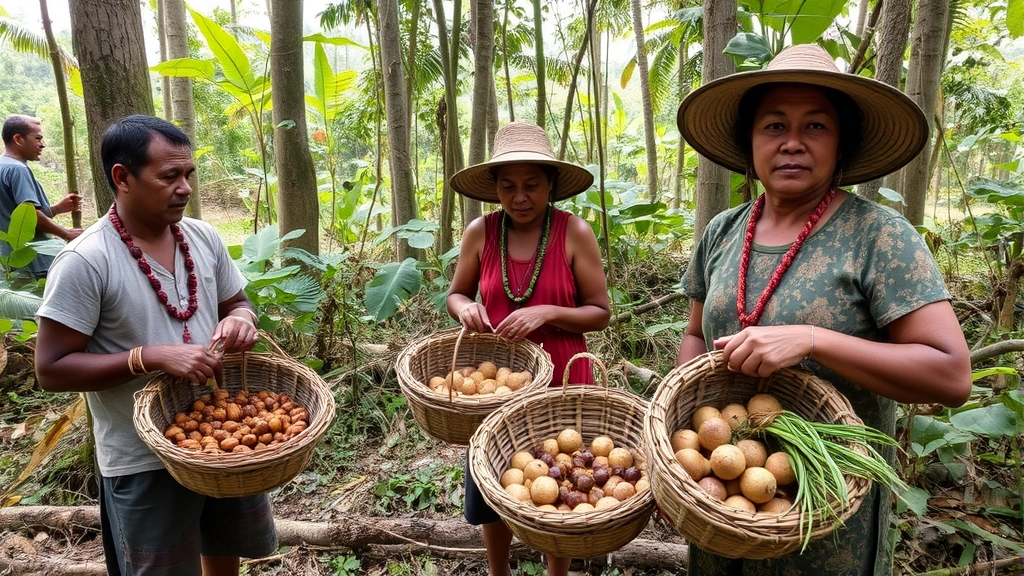
Ecosystem Services Valuation and Market Integration
Translating ecosystem services into economic value requires sophisticated valuation methodologies that move beyond extractive resource accounting. The Millennium Ecosystem Assessment estimated global ecosystem service value at $125 trillion annually, with forests alone providing $125,000 value per hectare when accounting for carbon sequestration, water purification, biodiversity habitat, and cultural services. However, markets historically failed to price these services, creating systematic undervaluation that incentivized conversion to economically inferior land uses.
Payment for Ecosystem Services (PES) schemes emerged as market mechanisms to internalize ecosystem service values, directly compensating communities for conservation activities. These programs—implemented across Latin America, Africa, and Asia—demonstrate that when ecosystem services receive monetary valuation, conservation becomes economically rational for individual landholders. Costa Rica’s PES program, established in 1997, pays landowners $45-600 annually per hectare for forest conservation, water protection, and carbon sequestration. Program participants demonstrate significantly lower deforestation rates than control populations, with benefit-cost ratios exceeding 3:1 when accounting for downstream water quality improvements and carbon sequestration value.
Carbon credit markets represent a rapidly expanding mechanism for monetizing ecosystem services, with forest carbon credits trading at $5-15 per ton CO2 equivalent. Reduced Emissions from Deforestation and Degradation (REDD+) programs, operating in over 60 countries, channel climate finance directly to communities managing forests. These programs generated $850 million in transactions during 2021, with projections suggesting growth to $10 billion annually by 2030. When communities receive carbon revenue directly—rather than through intermediaries—economic incentives align perfectly with conservation objectives.
Biodiversity credit systems represent emerging mechanisms for monetizing genetic resources and species habitat preservation. Pharmaceutical and agricultural biotechnology companies increasingly recognize that genetic diversity concentrated in tropical ecosystems holds enormous economic value for drug development and crop improvement. Benefit-sharing agreements that compensate communities for genetic resource access have generated over $2 billion in cumulative payments, with individual agreements sometimes providing $10-50 million to indigenous communities managing genetically diverse territories.
Poverty Alleviation Through Environmental Stewardship
The relationship between environmental conservation and poverty reduction proves direct and measurable within POC frameworks. Approximately 1.6 billion people—roughly 20% of global population—depend directly on forest ecosystems for subsistence and income. For these populations, environmental degradation directly translates into poverty deepening, while ecosystem restoration creates immediate income opportunities. Community-based conservation initiatives demonstrate poverty reduction rates 15-25% higher than conventional development interventions, with benefits distributed more equitably across gender and wealth strata.
Women constitute disproportionate beneficiaries of POC environment initiatives, particularly when program design explicitly incorporates gender considerations. Women collect 80% of non-timber forest products in many African regions, yet rarely received direct income from these activities under conventional economic arrangements. Community-based management that monetizes these products through fair-trade certification and direct market access has increased women’s incomes by 200-400% in pilot programs across East Africa. These income increases prove particularly impactful for household nutrition, children’s education, and health outcomes—multiplier effects that extend far beyond individual income measurements.
Youth employment within POC environments addresses rural-to-urban migration pressures that characterize developing economies. When young people perceive viable income opportunities from ecosystem management—whether through ecotourism employment, sustainable harvest operations, or environmental monitoring roles—migration rates decline substantially. Studies from Indonesia and the Philippines document 30-40% reductions in youth outmigration when community forest management creates local employment opportunities averaging $2,000-4,000 annually, sufficient for middle-class status in rural contexts.
Microfinance integration with POC environments amplifies poverty alleviation effects by enabling communities to invest in value-added processing, equipment upgrades, and market infrastructure. Cooperative structures that aggregate community production and manage collective assets prove particularly effective, with member households achieving income increases of 150-300% within 5-year periods. The Ecorise Daily blog documents numerous case studies demonstrating how institutional innovation combined with environmental stewardship produces transformative economic outcomes for rural populations.
Climate Resilience and Economic Stability
POC environments provide crucial climate resilience services that generate economic value through avoided disaster losses and enhanced adaptive capacity. Communities managing ecosystems with high carbon storage capacity—particularly forests, wetlands, and grasslands—contribute substantially to climate mitigation, with economic value estimated at $4-15 per ton CO2 avoided. Forest conservation in the tropics costs $50-200 per hectare annually to maintain, yet prevents carbon emissions valued at $500-2,000 per hectare annually at realistic carbon price projections.
Climate adaptation benefits of POC environments prove equally significant economically. Mangrove forests managed by coastal communities provide storm surge protection worth $500-1,000 per hectare annually, while supporting fisheries generating $1,500-2,500 per hectare annually. When communities lose mangrove ecosystems to aquaculture conversion or coastal development, they sacrifice both ecosystem services and long-term economic productivity for short-term gains. Economic analyses demonstrate that preserving mangrove ecosystems proves cost-effective compared to alternative storm protection infrastructure, while generating additional fisheries and carbon sequestration value.
Agricultural resilience improves substantially within POC frameworks that incorporate diversified farming systems and ecosystem-based adaptation strategies. Farmers practicing agroforestry and conservation agriculture demonstrate 30-50% greater yield stability across variable rainfall years compared to conventional monoculture farmers. This stability translates into reduced income volatility, lower credit requirements, and improved food security—economic benefits particularly valuable for populations with limited financial buffers. Understanding carbon footprint reduction at the community level reveals how ecosystem management decisions directly influence climate resilience economics.
Insurance and financial sector integration with POC environment management creates innovative risk management mechanisms. Index-based crop insurance schemes that link payments to ecosystem health indicators rather than individual farm losses have reduced insurance costs 20-40% while improving farmer participation rates. These schemes recognize that ecosystem resilience directly reduces climate-related losses, creating win-win outcomes where lower premiums reward conservation while reducing insurer exposure to catastrophic losses.

Policy Implementation and Governance Models
Successful POC environment integration within economic systems requires coherent policy frameworks that recognize ecosystem services within national accounting systems. Genuine Progress Indicator (GPI) and similar adjusted national accounting methodologies that incorporate environmental asset depreciation demonstrate that many economies with high GDP growth rates actually experience declining genuine wealth when environmental degradation costs are subtracted. Countries implementing comprehensive environmental accounting—including Botswana, Costa Rica, and Bhutan—demonstrate how policy frameworks acknowledging ecosystem service values guide investment toward sustainable development pathways.
Payment for ecosystem services schemes require careful institutional design to ensure community benefits, environmental effectiveness, and financial sustainability. Successful programs share common characteristics: transparent governance structures with community representation, secure property rights or use rights, baseline environmental monitoring, and benefit distribution mechanisms that align incentives with conservation outcomes. The United Nations Environment Programme has documented that programs incorporating these elements achieve conservation success rates 70-80% higher than programs lacking institutional rigor.
Community land rights formalization proves essential for POC environment economic benefits realization. Countries that legally recognized community tenure over forest lands—including Tanzania, Mozambique, and Guatemala—documented 50-80% reductions in deforestation rates within 10-year periods following formalization. Economic returns to communities increase substantially when secure rights enable long-term investment in resource management infrastructure and value-added processing capacity. Legal security also reduces transaction costs for accessing credit and insurance products that enable productive investment.
Benefit-sharing mechanisms require careful attention to power dynamics and equity considerations. Poorly designed programs often concentrate benefits among elite community members while excluding marginalized groups. Effective governance incorporates explicit equity mechanisms: reserved decision-making positions for women and youth, transparent benefit distribution formulas, and dispute resolution procedures. Programs implementing these safeguards achieve 2-3 times higher poverty reduction outcomes compared to programs neglecting equity considerations.
Scaling POC environment approaches from pilot projects to national implementation requires institutional capacity development, financing mechanisms, and coordination across government agencies. Successful scaling requires integration of environmental management within local government budgets, training programs for community natural resource managers, and technical support systems. Countries including Costa Rica and Indonesia that invested substantially in institutional development achieved national-scale implementation generating economic returns exceeding $2 billion annually.
Challenges and Future Directions
Despite compelling economic evidence, POC environment approaches face substantial implementation challenges. Market failures persist in valuing ecosystem services, with externalities remaining unpriced in most economic transactions. Agricultural commodity markets, for example, continue reflecting only production costs while ignoring environmental degradation costs—creating systematic bias toward unsustainable practices. Correcting these market failures requires policy interventions including carbon pricing, biodiversity offset requirements, and payment mechanisms that prove politically challenging to implement.
Financing remains a critical constraint limiting POC environment expansion. Annual financing requirements for scaling community-based conservation to global scale exceed $50 billion, yet current annual investments total approximately $8-10 billion. Climate finance mechanisms, development bank lending, and philanthropic support require substantial expansion and reorientation toward community-based approaches. Innovative financing mechanisms—including green bonds, blended finance structures, and debt-for-nature swaps—show promise for mobilizing additional capital.
Institutional coordination challenges emerge when POC environment management intersects with sectoral development objectives. Hydroelectric development, agricultural expansion, and mining activities often conflict with conservation interests, with sectoral agencies prioritizing development outcomes over ecosystem preservation. Successful integration requires high-level political commitment to sustainability principles and institutional mechanisms for coordinating across agencies with divergent mandates. Countries including Costa Rica and Namibia demonstrate that such coordination proves possible when environmental sustainability receives constitutional or legislative priority.
Climate change impacts increasingly challenge community-based management systems that evolved under historical climate conditions. Shifting precipitation patterns, changing species ranges, and increased extreme weather events require adaptive management approaches incorporating climate projections and flexible governance structures. Research exploring renewable energy integration within community-based systems reveals opportunities for combining traditional ecological knowledge with climate adaptation technology.
Tenure insecurity remains endemic in many regions where POC environments theoretically operate, with customary rights lacking legal recognition and vulnerable to expropriation. Strengthening community property rights requires political will to challenge powerful interests benefiting from centralized resource control. International support mechanisms including the World Bank’s Forest Carbon Partnership Facility and the Global Environment Facility have begun prioritizing tenure formalization as prerequisite for environmental finance, creating positive incentives for legal reform.
Knowledge integration between scientific and traditional ecological knowledge systems remains imperfect, with institutional structures often privileging Western scientific approaches while marginalizing indigenous knowledge. Emerging collaborative research models that position indigenous knowledge holders as equal partners rather than informants show promise for generating superior environmental management outcomes. These approaches recognize that millennia of community management experience encoded in traditional practices often proves more effective than decades of scientific research conducted without community context.
Monitoring, reporting, and verification (MRV) systems require substantial investment to document environmental outcomes and link them to economic benefits. Communities often lack technical capacity and financial resources for maintaining rigorous monitoring systems required by international financing mechanisms. Capacity building investments and technology transfer enabling communities to conduct their own monitoring prove cost-effective compared to external monitoring systems, while building local institutional capacity.
FAQ
What exactly constitutes a POC environment?
POC (People-Oriented Conservation) environments are ecosystems managed with explicit consideration for community welfare, where local communities possess decision-making authority and capture primary economic benefits from conservation activities. These systems integrate traditional ecological knowledge with resource management, emphasizing equitable benefit distribution and community prosperity alongside environmental preservation. Environmental quotes from indigenous leaders often emphasize the inseparability of human wellbeing and ecosystem health—core principles underlying POC approaches.
How do POC environments generate economic value?
POC environments generate economic value through multiple pathways: sustainable harvesting of non-timber forest products, ecotourism revenue, payment for ecosystem services (carbon, water, biodiversity), agricultural productivity improvements, and avoided disaster losses from ecosystem services. When communities manage these resources sustainably, they create reliable income streams supporting rural economies while maintaining long-term ecological productivity.
What evidence demonstrates that POC approaches outperform conventional conservation?
Empirical research published in journals including Conservation Biology, Ecological Economics, and World Development demonstrates that community-managed ecosystems maintain higher biodiversity, experience lower deforestation rates, and generate greater economic returns compared to protected areas excluding communities or centrally managed conservation programs. Meta-analyses examining over 300 studies conclude that community management proves superior on 70-80% of measured outcomes.
How can developing countries finance POC environment expansion?
Financing mechanisms include: direct government budget allocation recognizing ecosystem service value, international climate finance through REDD+ and adaptation programs, bilateral development assistance, World Bank and regional development bank lending, philanthropic support, private sector investment in payment for ecosystem services schemes, and innovative mechanisms including green bonds and debt-for-nature swaps. Successful financing requires combining multiple sources rather than relying on single mechanisms.
What role does technology play in POC environment management?
Technology enables improved monitoring through satellite imagery and drone-based assessment, facilitates market access through e-commerce platforms connecting community products to global buyers, enhances productivity through precision agriculture tools, and supports knowledge sharing through digital platforms. However, technology proves most effective when communities control technology deployment rather than external actors imposing technological solutions disconnected from local contexts and priorities.
How do POC approaches address gender inequality?
Explicit gender integration within POC program design ensures women’s participation in decision-making, recognizes women’s disproportionate dependence on forest resources, creates income opportunities from activities women traditionally perform (non-timber product collection), and establishes benefit distribution mechanisms ensuring women capture fair share of economic returns. Programs incorporating these elements achieve substantially better outcomes for household nutrition, children’s education, and women’s empowerment.