Is Eco-Friendly Growth Achievable? Economist Insights
The tension between economic growth and environmental sustainability has dominated policy discourse for decades. Policymakers, business leaders, and economists face a fundamental question: can we expand economic output while simultaneously reducing ecological degradation? This inquiry extends beyond theoretical economics into the practical realm of resource management, carbon emissions, and planetary boundaries. Recent research suggests that eco-friendly growth is not merely aspirational but increasingly necessary for long-term economic stability.
The concept of decoupling economic growth from environmental impact represents one of the most critical challenges in 21st-century economics. Traditional economic models assumed that growth inevitably required proportional increases in resource extraction and waste generation. However, emerging evidence from leading economies demonstrates that strategic investments in renewable energy, circular economy principles, and sustainable infrastructure can generate robust GDP expansion while reducing environmental footprints. Understanding these mechanisms requires examining both macroeconomic theory and empirical case studies from nations pioneering the green economy transition.
Understanding Decoupling: The Economic-Environmental Relationship
Decoupling represents the separation of economic growth from environmental degradation—the holy grail of sustainable development. Economists distinguish between relative decoupling (where environmental impact grows slower than GDP) and absolute decoupling (where environmental impact shrinks while GDP expands). The distinction matters profoundly for climate targets and biodiversity preservation.
According to research from the World Bank, several developed nations have achieved relative decoupling over the past two decades. Germany, for instance, increased GDP by approximately 45% since 1990 while reducing CO2 emissions by over 40%. This achievement stemmed from deliberate policy choices including the Energiewende (energy transition), which prioritized renewable energy infrastructure investment alongside industrial modernization.
Absolute decoupling presents greater complexity. It requires not merely slowing environmental damage but reversing it entirely—reducing resource consumption and emissions in absolute terms while maintaining or growing economic output. Denmark and Costa Rica provide instructive examples. Denmark generates over 80% of electricity from renewables and wind power while maintaining one of Europe’s highest per-capita GDPs. Costa Rica has achieved similar renewable energy penetration while diversifying its economy toward sustainable tourism and biotechnology sectors.
The mechanisms enabling decoupling involve technological innovation, structural economic shifts, and policy intervention. When economies transition from manufacturing-heavy models to service and knowledge-based sectors, material intensity naturally decreases. A software company generates far less environmental impact per unit of economic value than a steel mill. Additionally, renewable energy technologies have experienced dramatic cost reductions—solar photovoltaic costs declined 90% between 2010 and 2020, fundamentally altering economic calculations around energy sourcing.

Renewable Energy Investment and Economic Returns
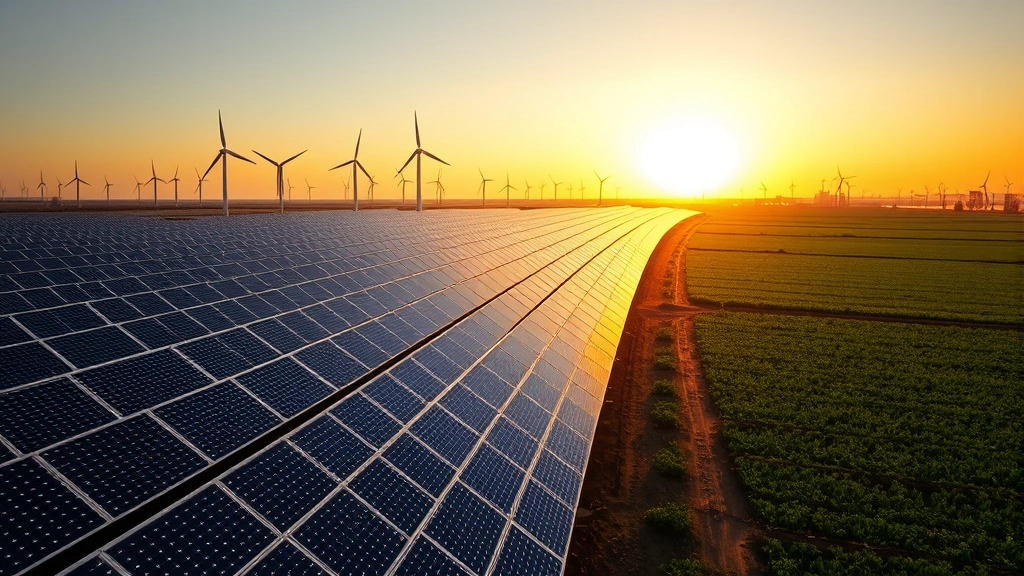
The renewable energy sector exemplifies how environmental objectives align with economic opportunity. Global renewable energy capacity additions exceeded fossil fuel additions for the first time in 2023, driven by economic competitiveness rather than subsidy dependence alone. UNEP reports that renewable energy investments generated approximately $500 billion annually in recent years, creating millions of jobs across manufacturing, installation, maintenance, and grid modernization.
Employment metrics reveal renewable energy’s economic multiplier effects. Solar installation jobs outnumber coal mining positions in the United States, with superior wage growth trajectories. Wind turbine technicians represent one of the fastest-growing occupational categories in the U.S. labor market. These aren’t temporary subsidized positions but sustainable careers embedded in expanding industries.
The economics of energy transition extend beyond direct employment. Renewable energy systems reduce long-term operational costs significantly. While initial capital investment for solar farms or wind installations exceeds fossil fuel plants, levelized cost of electricity (LCOE) calculations increasingly favor renewables. In most markets, solar and wind power now represent the cheapest electricity sources available, independent of climate considerations. This economic advantage accelerates adoption regardless of environmental motivation.
Grid modernization and energy storage technologies create additional economic opportunities. Battery manufacturing, smart grid infrastructure, and demand-response systems generate high-value employment and technological advancement. Tesla’s rise from startup to trillion-dollar valuation demonstrates how environmental solutions can drive extraordinary economic returns. Similarly, companies investing in renewable energy for homes are capturing growing consumer demand for cost-effective, sustainable power.
Developing nations particularly benefit from renewable energy economics. Countries lacking established fossil fuel infrastructure can leapfrog directly to renewable systems, avoiding stranded asset risks and infrastructure lock-in. India’s renewable energy capacity expansion—now exceeding 200 gigawatts—positions the nation as both an environmental leader and clean technology manufacturer, creating export opportunities and industrial competitiveness.
Circular Economy Models and Resource Efficiency
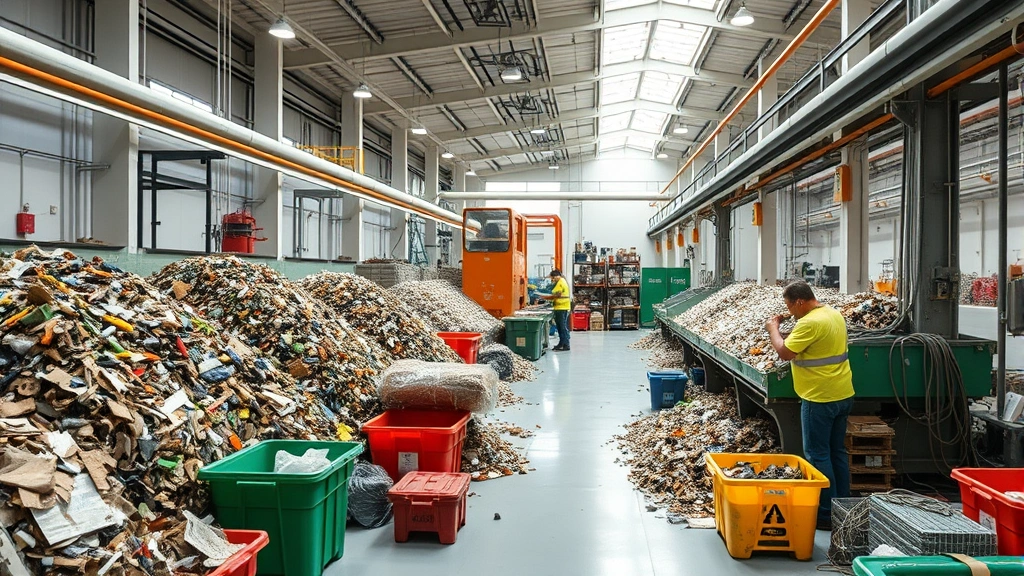
Traditional linear economies follow a take-make-dispose pattern, inherently wasteful and resource-intensive. Circular economy principles reverse this trajectory by designing products for durability, repairability, and material recovery. Economic analysis reveals circular approaches generate superior financial returns while reducing environmental impact.
The Ellen MacArthur Foundation’s research demonstrates that circular economy models could generate $4.5 trillion in economic benefits by 2030 through material cost reductions, waste elimination, and new business opportunities. Companies implementing circular strategies achieve measurable cost savings. Interface, a carpet tile manufacturer, redesigned its entire production system around material recovery, reducing waste by 96% while improving profitability through material reuse and reduced virgin resource purchases.
Fashion and textiles illustrate circular economy potential within currently problematic industries. The fashion industry generates approximately 10% of global carbon emissions and massive textile waste. Sustainable fashion brands implementing sustainable fashion practices demonstrate that environmental responsibility and business success align. Companies using recycled materials, implementing take-back programs, and designing for longevity capture premium market segments while reducing environmental footprints.
Circular economy principles extend across sectors. Electronics manufacturers developing modular designs and component recovery systems reduce mining pressure for rare earth elements while creating refurbishment and repair industries. Construction sectors adopting material reuse and prefabrication techniques simultaneously reduce waste and improve project efficiency. Agricultural systems implementing regenerative practices enhance soil carbon while improving long-term productivity and farmer profitability.
The economic advantage emerges from resource scarcity recognition. As virgin resource extraction becomes increasingly expensive—both economically and environmentally—recovered materials gain competitive advantage. Aluminum recycling requires 95% less energy than primary production, creating cost advantages that drive adoption independent of environmental sentiment. Water scarcity in many regions makes water recycling economically essential, spurring innovation in water recovery technologies.
Policy Mechanisms for Sustainable Growth
Eco-friendly growth doesn’t emerge spontaneously from market forces alone. Strategic policy intervention creates frameworks enabling sustainable economic expansion. Carbon pricing, renewable energy mandates, and green infrastructure investment represent essential policy tools supported by economic analysis.
Carbon pricing mechanisms—whether carbon taxes or cap-and-trade systems—internalize environmental costs into economic decisions. Economic research demonstrates that well-designed carbon pricing generates minimal GDP drag while incentivizing rapid technological transition. British Columbia’s carbon tax, implemented in 2008, achieved emissions reductions while maintaining economic competitiveness. The mechanism’s elegance lies in letting markets determine lowest-cost abatement pathways rather than prescribing specific technologies.
Investment in green infrastructure generates multiplier effects exceeding traditional infrastructure spending. Infrastructure focused on renewable energy, public transit, and ecosystem restoration creates employment while building long-term productive capacity. Economic modeling suggests green stimulus spending generates 15-40% greater job creation per dollar than fossil fuel infrastructure investment, reflecting labor intensity of renewable energy and ecological restoration sectors.
Research and development support accelerates technology cost reductions critical for decoupling. Public investment in renewable energy R&D, battery technology, and carbon capture has historically preceded private sector scaling. This public-private partnership model, exemplified by ventures like ARPA-E in the United States, de-risks early-stage technologies while enabling market-driven commercialization.
Educational and workforce development policies ensure labor market transitions support workers displaced by energy system changes. Just transition frameworks protecting coal miners’ livelihoods while retraining them for renewable energy sectors prevent politically destabilizing inequality. Economic analysis suggests transition costs are modest relative to long-term benefits, yet without proactive policy support, transition burden falls inequitably on affected communities.
Corporate Innovation and Green Markets
Corporate sector innovation increasingly drives sustainable growth, motivated by both regulatory pressure and market opportunity recognition. Companies across sectors are discovering that environmental efficiency improvements enhance competitiveness, reduce costs, and access growing consumer demand for sustainable products.
The concept of human and environment interaction through business models reveals how companies create value while reducing environmental impact. Patagonia’s business model—building premium products designed for durability and supporting environmental causes—demonstrates that environmental commitment and profitability align. The company’s revenue growth consistently outpaces industry averages while maintaining environmental leadership.
Green bonds and sustainable finance mechanisms mobilize capital toward environmental solutions. Issuance of green bonds exceeded $500 billion annually in recent years, funding renewable energy projects, energy efficiency upgrades, and sustainable agriculture. This capital mobilization reflects investor recognition that climate risks threaten financial returns, making environmental factors material to investment decisions.
Innovation in sustainable materials creates competitive advantage. Companies developing plant-based alternatives to animal products, bio-based polymers replacing petroleum plastics, and lab-grown materials capture expanding markets while reducing environmental footprints. Beyond Meat and similar companies demonstrate that environmental solutions can capture significant market share and valuations when consumer preferences align with sustainability.
Corporate sustainability reporting increasingly reveals how environmental management generates financial returns. Companies reducing energy consumption, water usage, and waste simultaneously lower operational costs and improve resilience. Unilever’s sustainable living plan demonstrated that brands with strong environmental and social performance grow faster than traditional brands, directly challenging the growth-sustainability trade-off assumption.
Challenges and Realistic Timelines
Despite encouraging examples and economic logic supporting eco-friendly growth, substantial challenges remain. Understanding these obstacles provides realistic perspective on transition timelines and required effort magnitude.
Infrastructure lock-in presents fundamental challenge. Fossil fuel infrastructure—power plants, refineries, distribution networks—represents trillions in sunk capital designed for 30-50 year operational lifespans. Early retirement of functional infrastructure creates stranded assets and financial losses, generating political resistance. However, economic analysis increasingly suggests that continuing to operate fossil fuel plants through their designed lifespans costs more than early retirement combined with renewable replacement, as renewable energy costs continue declining.
Global energy demand growth, particularly in developing nations, complicates decoupling. While developed nations can transition existing energy systems, emerging economies must simultaneously expand capacity and transition toward renewables. This dual challenge requires unprecedented capital investment and technology transfer, straining global financial systems and international cooperation mechanisms.
Intermittency and storage challenges persist despite technological improvements. Battery storage costs have declined dramatically but remain expensive at grid scale. Seasonal storage for renewable energy systems requires further technological development. These technical challenges are solvable but require sustained research investment and infrastructure development.
Political economy obstacles frequently prove more significant than technical challenges. Fossil fuel industries, entrenched interests, and incumbent infrastructure operators actively resist transition policies. Developing nations dependent on resource extraction for government revenue face genuine development challenges when transitioning away from fossil fuels. Addressing these political obstacles requires recognizing legitimate concerns while demonstrating superior long-term economic benefits from sustainable transition.
To understand how individuals contribute to this transition, explore strategies for how to reduce carbon footprint through personal and professional choices. Individual actions, while insufficient alone, create market demand signals and social pressure supporting systemic change.
Realistic timelines suggest that developed nations can achieve 80-90% emissions reductions by 2050 through currently available technologies, with remaining reductions requiring breakthrough innovations. Developing nations may require extended timelines but can achieve faster deployment rates through technology transfer and leapfrogging strategies. Complete global decarbonization likely requires technological innovation—particularly for cement, steel, and aviation—not yet commercially viable.
FAQ
Can economies grow indefinitely while reducing environmental impact?
Absolute decoupling is theoretically possible and empirically demonstrated in specific sectors and nations. However, global decoupling at scale remains unproven. The question hinges on whether economic growth can continue while material and energy throughput decline absolutely. Most economists believe this is achievable through service-economy expansion, renewable energy, and circular economy principles, though requiring deliberate policy and investment.
How long will the energy transition take?
Transition timelines vary by region and sector. Electricity systems can transition relatively rapidly—Denmark achieved 80% renewable electricity in two decades. Transportation electrification may require 20-30 years for fleet turnover. Harder-to-decarbonize sectors like aviation, shipping, and heavy industry may require 40+ years for full transition, depending on breakthrough technology commercialization.
Will eco-friendly growth cost jobs?
Employment transitions will occur, with some job losses in fossil fuel sectors offset by larger employment gains in renewable energy and related industries. Job quality, wages, and geographic distribution differ, requiring proactive transition policies. Without support programs, displaced workers face genuine hardship, making just transition policies essential for equitable outcomes.
Are developing nations disadvantaged by environmental requirements?
Early evidence suggests developing nations benefit from renewable energy deployment, avoiding fossil fuel infrastructure lock-in that constrains developed nations. However, technology access, capital availability, and capacity building remain challenges. International support for technology transfer and climate finance can accelerate developing nation transitions while addressing equity concerns.
What role does individual action play in eco-friendly growth?
Individual consumption choices create market demand signals supporting sustainable businesses and products. Collective individual actions build political constituencies supporting climate policy. However, systemic change through policy, infrastructure investment, and corporate transition drives majority of emissions reductions. Individual action matters but requires complementary systemic transformation.
How does environmental accounting affect economic growth measurement?
Traditional GDP measurement ignores environmental degradation, overstating true economic growth. Natural capital accounting that incorporates resource depletion, pollution, and ecosystem service losses reveals lower sustainable growth rates. Several nations now implement satellite accounts alongside traditional GDP, providing more comprehensive economic assessment. This accounting reform could fundamentally shift growth priorities toward genuinely sustainable expansion.


