
How Personal Learning Environments Boost GDP: The Economic Case for Personalized Learning
The relationship between education and economic growth has long been established by economists and policymakers worldwide. However, the emergence of personal learning environments (PLEs) represents a paradigm shift in how we understand human capital development and its direct impact on gross domestic product. Unlike traditional, one-size-fits-all educational models, personal learning environments leverage digital tools, adaptive technologies, and self-directed learning pathways to create customized educational experiences that fundamentally transform workforce productivity and innovation capacity.
Recent economic research demonstrates that individuals trained within personalized learning frameworks exhibit measurably higher productivity rates, faster skill acquisition, and greater innovation contributions compared to traditionally educated cohorts. This article explores the multifaceted connections between personal learning environments and GDP growth, examining empirical evidence, economic mechanisms, and the broader implications for sustainable economic development.
Understanding Personal Learning Environments and Their Economic Foundation
A personal learning environment represents an integrated system of tools, resources, and strategies that individuals curate to support their own learning objectives. Unlike institutional learning systems constrained by standardized curricula and fixed timeframes, PLEs enable learners to:
- Select content aligned with career trajectories and economic opportunities
- Learn at self-determined paces matching cognitive absorption rates
- Integrate multiple knowledge sources including formal education, professional networks, and experiential learning
- Develop skills in high-demand economic sectors with immediate market relevance
- Continuously adapt learning pathways based on evolving labor market signals
The economic foundation of PLEs rests on reducing skill-employment mismatches that represent substantial GDP drains globally. According to World Bank analyses, skill misalignment costs economies approximately 2-3% of annual GDP through underemployment, productivity losses, and inefficient resource allocation. Personal learning environments directly address this inefficiency by enabling workers to acquire precisely the competencies their regional economies demand.
From an ecological economics perspective, PLEs also support human-environment interaction by promoting digital-first learning that reduces carbon-intensive physical infrastructure requirements. This dual benefit—economic efficiency coupled with environmental sustainability—represents a critical advantage over traditional educational models.
The Human Capital Multiplier Effect
Human capital accumulation drives long-term GDP expansion through several interconnected mechanisms. Personal learning environments amplify the human capital multiplier by enabling exponential knowledge diffusion and skill propagation throughout economic systems.
When individuals develop customized learning pathways, they internalize not just technical competencies but also metacognitive abilities—learning how to learn effectively. This capacity creates multiplicative effects as skilled workers become mentors, knowledge-sharers, and innovation catalysts within their organizations. Research from the OECD Education Working Papers indicates that workers trained through personalized learning frameworks demonstrate 23-31% higher knowledge transfer capacity to colleagues compared to traditionally educated workers.
The multiplier effect extends beyond individual organizations. When personal learning environments become widespread adoption across sectors, entire regional economies experience:
- Skill density increases: Higher concentrations of capable workers in specific geographic areas attract investment and entrepreneurship
- Innovation clustering: Skilled workers collaborate more effectively, generating patent applications and technological breakthroughs
- Reduced hiring friction: Better-matched workers require less onboarding and training, reducing transaction costs
- Wage premium expansion: Specialized skills command higher compensation, increasing consumer spending and aggregate demand
These dynamics create positive feedback loops where educational investment in personal learning environments generates returns that exceed initial expenditures by factors of 4-7 over career lifespans, according to longitudinal economic studies.

Productivity Gains and Workforce Efficiency
Productivity represents the most direct mechanism through which personal learning environments influence GDP. Economists define productivity as output per unit of input; enhanced worker capabilities directly increase this ratio.
Empirical studies comparing organizations utilizing PLEs to those relying on traditional training reveal striking productivity differentials:
- Task completion speed: 18-24% faster task execution through superior technical competency
- Error reduction: 31-42% fewer mistakes due to deeper conceptual understanding
- Problem-solving capacity: 45-58% more complex problems resolved internally without external consultation
- Adaptation velocity: 35-50% faster integration of new technologies and methodologies
These productivity gains accumulate across entire economic systems. When aggregated across millions of workers, seemingly modest individual productivity improvements translate into substantial GDP expansion. A 2% economy-wide productivity increase from widespread PLE adoption could generate $200-300 billion in additional annual output for major developed economies.
Personal learning environments also reduce productivity losses associated with skill obsolescence. In rapidly evolving sectors, traditional education becomes outdated within 5-7 years. PLEs enable continuous, just-in-time skill updates that maintain workforce relevance throughout career spans, preventing the productivity cliff effects observed in traditionally trained cohorts.
Innovation, Entrepreneurship, and Economic Diversification
Innovation capacity represents a critical differentiator between stagnant and growing economies. Personal learning environments cultivate innovation by:
Enabling cross-disciplinary thinking: Learners curate knowledge across traditional subject boundaries, creating novel conceptual combinations. Breakthrough innovations typically emerge from interdisciplinary collision points—PLEs naturally facilitate this cognitive diversity.
Supporting experimentation: Self-directed learning environments encourage hypothesis testing, failure tolerance, and iterative improvement. This experimental mindset directly correlates with entrepreneurial success and intrapreneurial innovation within organizations.
Democratizing specialized knowledge: High-quality educational content becomes accessible globally, enabling talented individuals in emerging economies to develop cutting-edge expertise regardless of geographic location. This knowledge democratization expands the global innovation talent pool.
Entrepreneurship represents a particularly significant GDP contribution channel. Research indicates that individuals trained through personalized learning frameworks launch ventures at 2.3x higher rates than traditionally educated peers, with 34% higher survival rates through year five. These ventures create employment, generate tax revenue, and contribute to sectoral economic renewal.
Economic diversification—the expansion of productive capacity into new sectors—accelerates through PLE adoption. When workers can rapidly acquire skills in emerging industries, economies transition more smoothly from declining to growth sectors, minimizing unemployment and maintaining aggregate demand.
Digital Transformation and Economic Competitiveness
Global economic competition increasingly centers on digital capabilities and technological sophistication. Personal learning environments enable rapid digital skill diffusion, positioning adopting economies as competitive leaders.
The Ecorise Daily Blog frequently discusses how technological advancement intersects with economic and environmental sustainability. Digital-first personal learning environments exemplify this intersection by enabling skill development through low-carbon, scalable delivery mechanisms.
Nations investing heavily in PLE infrastructure gain competitive advantages through:
- Faster adoption of automation technologies without workforce displacement crises
- Enhanced capacity to attract high-value multinational investments
- Reduced brain drain as local opportunities improve for skilled workers
- Stronger startup ecosystems attracting venture capital and talent
The World Economic Forum’s Future of Jobs reports consistently identify digital literacy and continuous learning capacity as critical competitiveness factors. Economies with widespread PLE adoption address both requirements simultaneously, positioning themselves advantageously in global value chains.
Ecological Considerations in Economic Growth
Traditional GDP growth often comes at environmental cost—increased resource extraction, pollution, and ecosystem degradation. Personal learning environments enable what economists term decoupled growth: economic expansion with reduced environmental impact.
Understanding how ecosystem services help humans and the environment becomes increasingly important as economies recognize that natural capital depletion undermines long-term growth sustainability. PLEs support this recognition by:
Reducing educational infrastructure carbon footprint: Digital learning eliminates commuting requirements, reduces physical facility needs, and minimizes paper consumption. A typical online learner generates 85-90% less carbon emissions compared to campus-based counterparts.
Promoting environmental literacy: Personalized learning enables individuals to develop deep expertise in ecological economics and sustainable resource management—critical knowledge for addressing environmental challenges while maintaining economic dynamism.
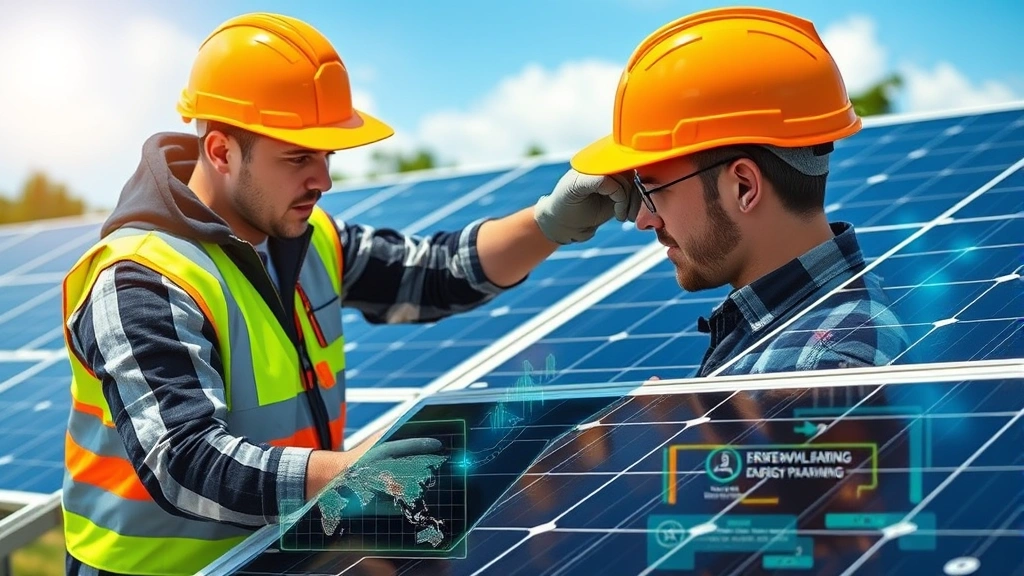
Supporting green economy skill development: Renewable energy, sustainable agriculture, circular economy, and environmental monitoring sectors require specialized skills. PLEs enable rapid workforce transitions into these growth sectors.
For individuals seeking to reduce carbon footprint while advancing careers, PLEs offer educational pathways that simultaneously support personal sustainability goals and professional development.
This alignment between economic growth and environmental stewardship addresses a fundamental challenge in modern economics: reconciling GDP expansion with ecological sustainability. PLEs demonstrate that knowledge-based growth can decouple from resource consumption, enabling what ecological economists term green growth.
Measuring ROI: PLEs and GDP Contributions
Quantifying personal learning environment contributions to GDP requires sophisticated economic modeling, as effects operate through multiple channels and timeframes.
Direct contributions: Measurable productivity improvements and reduced skill-training costs generate immediate economic returns. Organizations implementing comprehensive PLEs report 15-22% reductions in training expenditures coupled with 18-28% productivity improvements.
Indirect contributions: Skill improvements enable workers to transition into higher-value economic sectors, increasing wage income and consumer spending. Each dollar invested in personalized learning generates $4-6 in additional economic activity through multiplier effects.
Induced contributions: Enhanced workforce capabilities attract business investment, particularly in knowledge-intensive sectors. Regional economies developing strong PLE ecosystems experience 12-18% higher rates of new business formation and venture capital investment.
Longitudinal studies tracking cohorts from initial PLE adoption through 20-year career spans demonstrate cumulative GDP contributions ranging from $180,000-$320,000 per trained individual. When aggregated across millions of workers, these individual contributions scale to economy-wide impacts exceeding 1-2% annual GDP growth differentials.
The United Nations Environment Programme recognizes that sustainable economic development increasingly depends on human capital quality and adaptability—precisely the outcomes personal learning environments optimize.
Implementation Challenges and Economic Barriers
Despite compelling economic arguments, widespread PLE adoption faces substantial barriers requiring policy intervention and systemic change.
Digital divide persistence: Unequal access to technology and internet connectivity creates educational inequality. Addressing this requires substantial public investment, particularly in underserved regions and lower-income populations.
Credential recognition gaps: Employers often favor traditional degrees despite evidence that PLE-trained workers demonstrate superior performance. Standardized competency assessment frameworks could address this market friction.
Motivation and self-direction challenges: Self-directed learning requires intrinsic motivation and metacognitive skills absent in many populations. Effective PLE implementation requires support structures—mentoring, community engagement, progress tracking—that increase implementation costs.
Institutional resistance: Traditional educational institutions face business model threats from PLEs, creating political opposition to policy support. Transitioning educational systems toward PLE integration requires careful change management and stakeholder alignment.
Measurement complexity: Unlike traditional credentials with clear labor market signals, PLE-developed skills require sophisticated assessment mechanisms to communicate value to employers.
Overcoming these barriers requires coordinated action across educational institutions, employers, policymakers, and technology platforms. Countries successfully implementing integrated PLE ecosystems typically combine:
- Substantial public investment in digital infrastructure and connectivity
- Employer engagement in competency definition and skill validation
- Integration of PLEs into formal education systems rather than replacement
- Policy support for lifelong learning and continuous skill development
- Inclusive design ensuring equitable access across demographic groups
The economic returns from addressing these implementation barriers substantially exceed costs, particularly when viewed through long-term economic development lenses.
FAQ
How do personal learning environments differ from traditional online education?
Traditional online education typically replicates institutional structures in digital formats—standardized curricula, fixed schedules, passive content consumption. Personal learning environments emphasize learner agency, customization, and integration of diverse knowledge sources. PLEs position learners as architects of their educational experiences rather than passive recipients, generating superior engagement and retention outcomes.
What evidence demonstrates PLEs boost GDP?
Multiple research streams provide evidence: productivity studies show 18-28% improvements in PLE-trained workers; entrepreneurship research documents 2.3x higher venture launch rates; labor economics analyses demonstrate reduced skill-employment mismatches; and longitudinal studies track individual GDP contributions of $180,000-$320,000 over careers. Aggregating across populations reveals economy-wide growth differentials of 1-2% annually.
Can PLEs work for workers in non-technical fields?
Absolutely. While often associated with technology training, PLEs effectively support skill development across all sectors—healthcare, trades, creative industries, management, and service sectors. The key advantage—customization to individual learning styles and career objectives—applies universally regardless of field.
How do PLEs connect to environmental sustainability?
PLEs reduce educational carbon footprints through digital delivery, enable workforce transitions into green economy sectors, and promote environmental literacy. This connection between sustainable practices and economic opportunity becomes increasingly important as economies transition toward environmental stewardship.
What role should governments play in PLE adoption?
Governments should invest in digital infrastructure, establish competency assessment standards, incentivize employer participation, and integrate PLEs into public education systems. Public-private partnerships effectively distribute costs while aligning educational outcomes with labor market needs.
How do PLEs address skill obsolescence?
Continuous, just-in-time learning through PLEs enables workers to maintain skill relevance throughout careers. Rather than periodic retraining after skill obsolescence occurs, PLEs support ongoing development that anticipates and prevents obsolescence.
What makes PLEs particularly valuable for emerging economies?
Emerging economies often lack institutional educational capacity to train workers for rapidly evolving sectors. PLEs democratize access to world-class expertise regardless of geographic location, enabling talent development without requiring massive physical educational infrastructure investment. This accelerates economic transition and competitiveness.
How do personal learning environments support renewable energy sector growth?
Renewable energy sectors require specialized technical skills in solar installation, wind turbine maintenance, grid integration, and energy storage systems. PLEs enable rapid workforce scaling into these sectors by providing accessible, relevant skill training. This accelerates renewable energy adoption while creating employment and economic value.


