Person-in-Environment Theory: Social Work Insights for Holistic Practice
Person-in-environment (PIE) theory represents a fundamental paradigm shift in social work practice, moving beyond individualistic approaches to embrace a systemic understanding of human behavior and social functioning. This ecological perspective recognizes that individuals exist within interconnected systems—family, community, cultural, economic, and natural environments—that profoundly shape their experiences, challenges, and potential for growth. By examining the dynamic interactions between people and their environments, social workers can develop more effective, culturally responsive interventions that address root causes rather than symptoms.
The evolution of person-in-environment theory reflects decades of interdisciplinary scholarship drawing from ecology, systems theory, environmental psychology, and social work practice wisdom. Contemporary social work increasingly integrates ecological frameworks with economic and environmental justice perspectives, acknowledging that environmental degradation, economic inequality, and social marginalization are deeply interconnected. This comprehensive approach enables practitioners to understand how environmental stressors—from housing instability to air pollution—compound psychological and social difficulties, while simultaneously recognizing individual agency and resilience within constrained circumstances.

Historical Development and Theoretical Foundations
The person-in-environment framework emerged from the convergence of multiple theoretical traditions in the mid-twentieth century. Social workers initially adopted ecological concepts from biologists and environmental scientists, adapting them to understand human social systems. Key figures including Carel Germain and Alex Gitterman pioneered the life model of social work practice, which conceptualized individuals as organisms adapting to their environments, subject to stressors and resources that shape developmental trajectories.
This theoretical evolution occurred alongside broader movements in systems theory and cybernetics, which demonstrated that complex phenomena cannot be understood through reductionist analysis alone. Social work scholars recognized that treating individuals in isolation from their contextual realities produced limited results. A person experiencing depression, for instance, might benefit from therapeutic support, but lasting change requires addressing environmental factors: employment opportunities, housing security, social support networks, and access to healthcare. The person-in-environment perspective integrates these insights into a unified framework.
The definition of environment in science extends beyond natural ecosystems to encompass all external systems affecting human development. For social workers, this includes immediate microsystems (family, peer groups) and broader macrosystems (economic structures, cultural norms, institutional policies). Understanding these layered environmental contexts allows practitioners to identify leverage points for intervention and recognize systemic barriers that individual effort alone cannot overcome.

Core Principles of Person-in-Environment Theory
Person-in-environment theory rests on several foundational principles that distinguish it from earlier deficit-focused approaches. First, it emphasizes the reciprocal relationship between individuals and environments. People are not passive recipients of environmental influence; they actively shape their surroundings through choices, relationships, and collective action. Simultaneously, environments constrain or enable individual agency through resource availability, institutional structures, and cultural norms.
Second, PIE theory incorporates a strengths perspective that balances problem identification with recognition of existing capacities, resilience, and resources. Rather than exclusively cataloging pathologies, social workers using this framework identify individual strengths, family resources, community assets, and environmental opportunities that can be mobilized for change. This approach proves particularly valuable when working with marginalized populations whose resilience in the face of systemic adversity often goes unrecognized.
Third, the framework emphasizes cultural competence and contextuality. Environmental meaning is culturally constructed; what constitutes a stressor or resource varies significantly across cultural contexts. A practice grounded in person-in-environment theory must understand how clients’ cultural backgrounds shape their relationship with their environments and how discrimination, colonialism, and systemic inequality create differential environmental experiences.
Fourth, PIE theory incorporates temporal and developmental dimensions. Individuals and environments change over time; understanding current functioning requires knowledge of historical processes and future aspirations. Life course theory, integrated within person-in-environment frameworks, examines how early experiences accumulate to shape adult outcomes, while recognizing that change remains possible across the lifespan.
Environmental Systems and Social Work Practice
Applying person-in-environment theory requires sophisticated understanding of how multiple environmental systems intersect. Bronfenbrenner’s ecological systems model, widely adopted in social work education, identifies nested levels: microsystems (immediate social contexts), mesosystems (connections between microsystems), exosystems (indirect environmental influences), macrosystems (cultural and institutional frameworks), and chronosystems (temporal dimensions).
Consider a child struggling academically. A purely individual assessment might identify learning disabilities or motivation problems. A person-in-environment analysis would examine: family stability and parental educational engagement (microsystem); coordination between school and home (mesosystem); neighborhood resources like libraries and after-school programs (exosystem); educational policies, funding structures, and cultural attitudes toward education (macrosystem); and historical educational inequities affecting the child’s community (chronosystem). This comprehensive view reveals leverage points for intervention at multiple levels simultaneously.
Environmental stressors documented in social work research include housing instability, neighborhood violence, environmental hazards, limited employment opportunities, inadequate healthcare access, and educational inequities. These stressors cluster disproportionately in low-income communities and communities of color, reflecting historical and ongoing patterns of discrimination and resource allocation. Understanding these environmental inequities is essential for ethical social work practice that challenges rather than reproduces systemic injustice.
Simultaneously, environmental resources include stable housing, employment opportunities, educational institutions, healthcare facilities, social networks, recreational spaces, and cultural institutions. Communities vary dramatically in resource distribution. The concept of human environment interaction in social work emphasizes that practitioners must actively work to connect clients with available resources while advocating for more equitable resource distribution.
Economic Dimensions and Ecological Justice
Contemporary person-in-environment theory increasingly integrates economic and ecological perspectives, recognizing that environmental degradation and economic inequality are inseparable from social work concerns. The ways humans affect the environment through production, consumption, and waste generation create cascading effects on vulnerable populations. Low-income communities bear disproportionate burden from industrial pollution, landfills, hazardous waste sites, and climate change impacts, while having fewer resources to adapt or relocate.
Environmental justice frameworks, increasingly integrated into social work practice, highlight how environmental hazards correlate with race, class, and colonial history. Industrial facilities cluster in neighborhoods inhabited by people of color; lead contamination concentrates in older housing stock occupied by low-income families; climate impacts devastate communities with limited adaptive capacity. Social workers must understand these patterns to practice effectively and ethically.
Economic dimensions of the person-in-environment framework extend to how economic systems shape opportunity structures. Labor market conditions, wage levels, benefit availability, and wealth-building opportunities vary dramatically based on education, geography, race, gender, and other factors. A person-in-environment assessment must examine not only individual employment status but also structural features of local economies: industry composition, union presence, discrimination patterns, and wage levels. Reducing carbon footprint at individual and household levels, while important, cannot substitute for systemic economic transformation toward sustainability.
Research from institutions like the World Bank’s environmental programs documents how environmental degradation perpetuates poverty while poverty drives unsustainable resource use—creating vicious cycles. Social workers addressing poverty and environmental sustainability must work toward economic structures that decouple wellbeing from endless growth and resource extraction, supporting instead regenerative and circular economic models.
Assessment and Intervention Frameworks
Person-in-environment assessment requires structured approaches that examine multiple system levels systematically. Comprehensive PIE assessments typically examine: individual factors (biological, psychological, behavioral); family systems and relationships; social networks and community connections; institutional and organizational contexts; cultural factors and identity; economic resources and constraints; and environmental hazards and assets.
Ecomaps and genograms serve as practical tools for visualizing person-in-environment relationships. Ecomaps display an individual or family’s connections to external systems—schools, workplaces, healthcare providers, religious institutions, recreational facilities—revealing which systems provide support versus stress. Genograms, while traditionally focused on family relationships, can be expanded to include community and environmental dimensions, illustrating how family patterns interact with broader social contexts.
Interventions flowing from person-in-environment assessment operate at multiple levels simultaneously. Micro-level interventions work with individuals and families on coping strategies, relationship skills, and accessing available resources. Mezzo-level interventions address group dynamics, organizational policies, and community resources. Macro-level interventions advocate for policy change, challenge discriminatory practices, and work toward systemic transformation. Effective social work practice integrates all three levels, recognizing that individual change requires supportive environments and that environmental change benefits from individuals’ active participation.
The concept of sustainable living practices offers one example of how person-in-environment thinking extends to daily life. Rather than framing sustainability as individual consumer choice alone, a person-in-environment approach examines how economic systems, marketing, infrastructure, and cultural norms shape consumption patterns. Intervention might address both individual awareness and systemic barriers to sustainability.
Integrating Sustainability and Wellbeing
Emerging scholarship integrates person-in-environment theory with sustainability science and ecological economics, recognizing that human wellbeing depends fundamentally on ecological health. Social work’s traditional concern with vulnerable populations intersects increasingly with environmental sustainability, as those most vulnerable to poverty are also most vulnerable to environmental degradation and climate change.
This integration reframes social work’s mission: practitioners work not only to help individuals adapt to existing conditions but to transform conditions themselves toward sustainability and justice. Environmental social work, a growing subspecialty, explicitly addresses how environmental quality affects client wellbeing and how social workers can advance environmental protection and restoration.
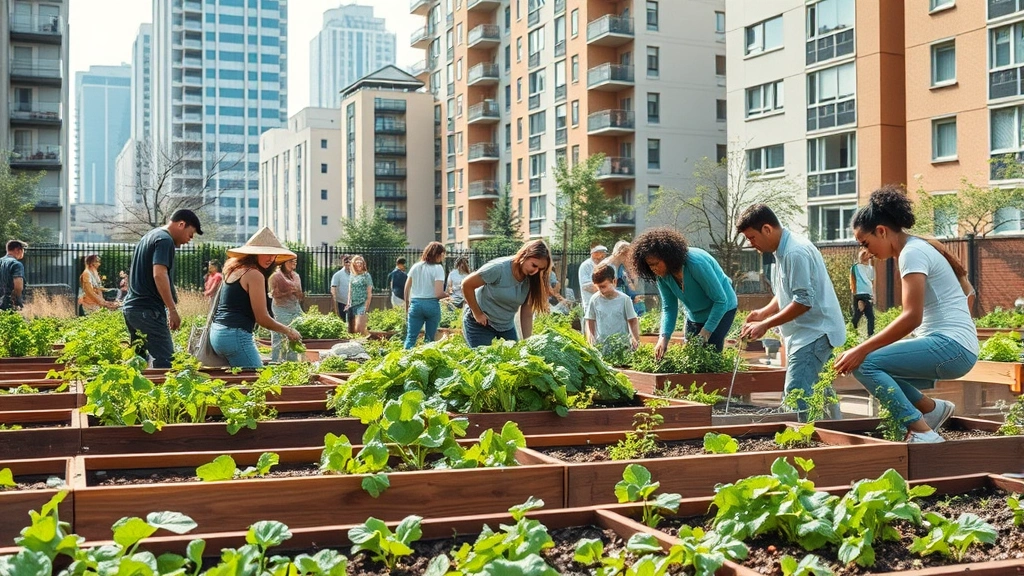
Research in environmental programs through UNEP demonstrates that nature-based solutions—restoring wetlands, protecting forests, regenerating soil—provide both ecological and social benefits. Social workers increasingly facilitate client engagement with nature, recognizing that access to green space, gardening, and environmental stewardship contribute to mental health, community cohesion, and environmental restoration simultaneously.
The Ecorise Daily Blog explores interconnections between human wellbeing and environmental health, relevant to contemporary social work practice. As climate change accelerates and environmental degradation deepens, social workers must develop competence in environmental assessment, climate-informed practice, and advocacy for environmental justice.
Integrating economic perspectives from ecological economics reveals that current economic models externalize environmental costs, placing them on vulnerable populations and future generations. Social workers can advocate for economic policies that internalize environmental costs, support regenerative enterprises, and ensure that environmental protection advances rather than harms low-income communities. This requires understanding economic policy alongside social and environmental policy.
FAQ
What distinguishes person-in-environment theory from other social work approaches?
Person-in-environment theory fundamentally differs from individual-focused approaches by emphasizing reciprocal relationships between people and their contexts. Rather than viewing problems as residing within individuals, PIE theory examines how individual characteristics interact with environmental opportunities and constraints. This approach integrates systems thinking, ecological perspectives, and strengths-based practice into a comprehensive framework for understanding human behavior and social functioning.
How do social workers apply person-in-environment theory in practice?
Social workers apply PIE theory through comprehensive assessment examining multiple system levels, use of visual tools like ecomaps and genograms, and interventions targeting individual, family, community, and systemic change simultaneously. Assessment considers biological, psychological, social, economic, cultural, and environmental factors. Interventions might include individual counseling, family therapy, community organizing, policy advocacy, and resource connection—selected based on assessment findings and client priorities.
How does person-in-environment theory address environmental justice?
Contemporary person-in-environment theory increasingly incorporates environmental justice frameworks, recognizing that environmental hazards and resource scarcity cluster in marginalized communities due to historical discrimination and ongoing inequality. Social workers using PIE theory examine how environmental stressors—pollution, climate impacts, resource scarcity—compound other challenges facing vulnerable clients and advocate for equitable environmental protection and restoration.
Can person-in-environment theory address economic inequality?
Yes. PIE theory examines economic dimensions of clients’ environments: employment opportunities, wage levels, benefit availability, wealth-building barriers, and systemic discrimination in economic systems. Social workers can identify economic stressors, connect clients with economic resources, and advocate for policies supporting economic justice. Understanding economic structures and policies is essential for comprehensive person-in-environment practice.
How does sustainability relate to person-in-environment social work?
Environmental sustainability directly relates to social work values and mission. Ecological degradation and resource depletion disproportionately harm vulnerable populations. Social workers increasingly integrate environmental assessment into practice, facilitate client engagement with nature, and advocate for environmental protection and restoration. This integration recognizes that human wellbeing depends on ecological health and that social justice and environmental sustainability are inseparable.


