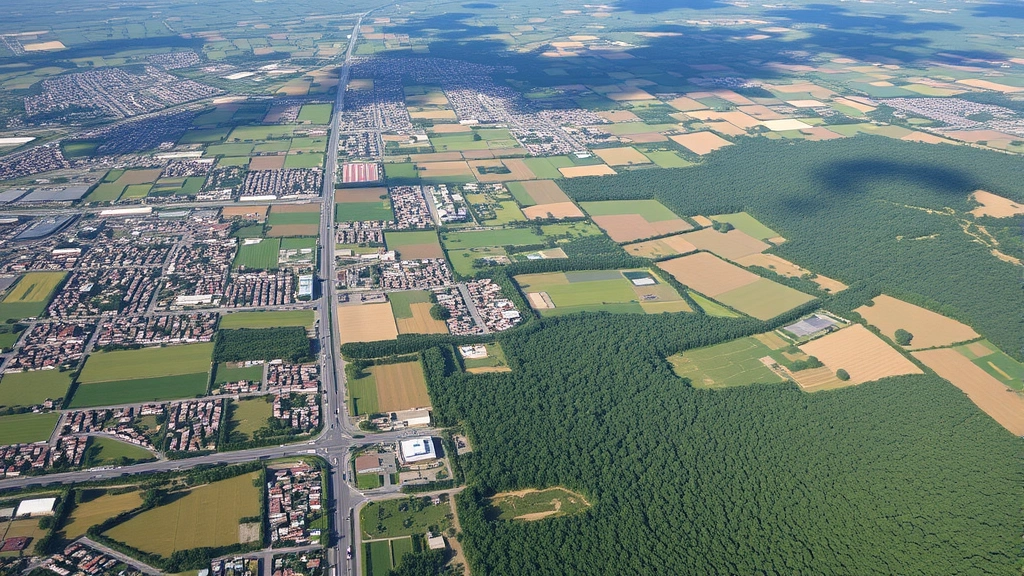
Person-in-Environment Theory: Impact on Economy and Ecological Systems
Person-in-environment theory represents a fundamental shift in how we understand the interconnections between human behavior, social systems, and natural ecosystems. Rather than viewing individuals as isolated actors making purely rational economic decisions, this theoretical framework recognizes that people exist within complex, dynamic relationships with their physical and social environments. This holistic perspective has profound implications for economic policy, business strategy, and environmental management, challenging conventional models that treat nature as merely an external input to production.
The economic significance of person-in-environment theory extends beyond academic discourse into practical applications that affect resource allocation, market valuation, and policy formulation. When economists and policymakers integrate this framework into their analysis, they begin accounting for feedback loops, externalities, and long-term sustainability in ways that traditional models overlook. This article explores how person-in-environment theory reshapes our understanding of economic systems and their relationship to natural and social environments.

Foundations of Person-in-Environment Theory
Person-in-environment theory emerged from social work and ecological psychology, establishing that human development, behavior, and well-being cannot be understood in isolation from their surrounding contexts. The theory posits that individuals continuously interact with and adapt to their environments—both natural and social—creating a bidirectional relationship where people shape environments while simultaneously being shaped by them. This perspective fundamentally challenges the economic assumption of the rational actor operating independently of contextual constraints.
The theoretical foundation rests on several key principles. First, humans are embedded within ecosystems and depend on ecological functions for survival and prosperity. Second, social structures, cultural norms, and institutional arrangements mediate how people access and utilize environmental resources. Third, individual agency and environmental constraints interact dynamically, meaning that economic outcomes result from this interplay rather than from individual choices alone. When applied to economic analysis, these principles suggest that market prices and individual preferences alone cannot capture the full value of environmental assets or the true costs of economic activity.
Understanding human-environment interaction through this theoretical lens reveals why conventional economic models frequently underestimate environmental degradation and overestimate sustainable growth rates. The theory demonstrates that economic systems are not separate from natural systems but are fundamentally embedded within them, requiring integrated analysis rather than compartmentalized thinking.
Economic Implications and Market Failures
Person-in-environment theory illuminates why markets frequently fail to allocate environmental resources efficiently. Traditional economics assumes that prices accurately reflect scarcity and value, but this assumption breaks down when environmental externalities remain unpriced. When individuals make economic decisions based solely on private costs and benefits, they ignore negative externalities imposed on others and future generations—a direct consequence of treating people and environments as separable entities rather than interconnected systems.
Consider air pollution from industrial production. A factory owner making profit-maximizing decisions considers only private costs, not the health impacts on surrounding communities or the degradation of ecosystem services. Person-in-environment theory reveals this failure as a system-level problem: the economic actor is embedded within a social-ecological system where their decisions ripple through multiple pathways, affecting air quality, human health, agricultural productivity, and ecosystem function. The market price of the industrial product does not reflect these interconnected impacts because they remain external to the transaction.
Market failures emerge across multiple dimensions:
- Environmental externalities: Costs borne by society rather than producers, including pollution, resource depletion, and climate impacts
- Information asymmetries: Consumers lack knowledge about environmental impacts embedded in supply chains and production processes
- Temporal mismatches: Economic actors discount future environmental costs, prioritizing short-term profits over long-term sustainability
- Commons tragedies: Shared resources lack clear property rights, leading to overexploitation despite collective interest in conservation
- Distributional inequities: Environmental costs concentrate among vulnerable populations while benefits accrue to wealthy actors
Research from the World Bank documents how environmental degradation disproportionately affects poor communities, demonstrating that person-in-environment dynamics create economic inequality. When individuals lack power to shape their environments or negotiate environmental terms, they absorb costs that wealthier actors successfully externalize.
Ecosystem Services and Economic Valuation
One of person-in-environment theory’s most significant economic contributions involves recognizing and valuing ecosystem services that help humans and the environment. These services—including pollination, water purification, carbon sequestration, nutrient cycling, and climate regulation—represent critical inputs to human economic activity that markets historically treated as free or infinite. By integrating person-in-environment perspectives, economists now recognize that human prosperity depends fundamentally on ecosystem functioning.
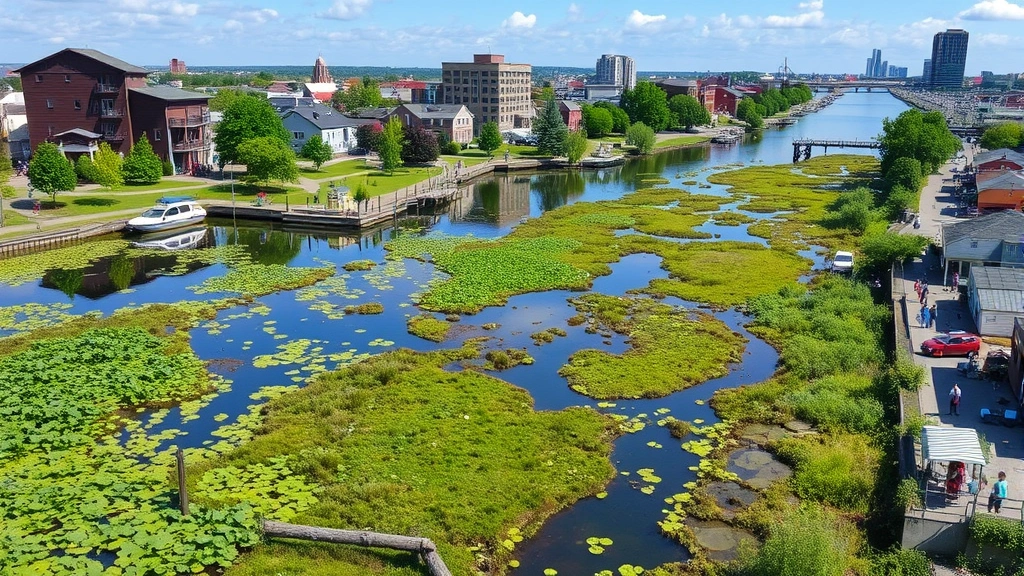
The economic valuation of ecosystem services has expanded dramatically over the past two decades. Studies estimate that global ecosystem services are worth $125-145 trillion annually, exceeding global GDP. This valuation shift reflects a person-in-environment understanding that humans cannot thrive economically when embedded in degraded ecosystems. Agricultural productivity depends on pollinator services worth $15-20 billion annually. Coastal communities depend on wetland services worth thousands of dollars per hectare in storm protection and fishery support. Urban forests provide cooling, air filtration, and mental health benefits worth billions to cities.
However, ecosystem service valuation presents methodological challenges and philosophical questions. Different valuation approaches—contingent valuation, hedonic pricing, replacement cost analysis—yield different results, and some argue that assigning monetary values to nature inappropriately commodifies ecological systems. Person-in-environment theory suggests a middle path: recognizing that ecosystem services support human well-being without necessarily treating all environmental goods as market commodities. This perspective allows economic analysis to incorporate ecological constraints while respecting that some environmental values transcend market logic.
The practical impact appears in emerging markets for ecosystem services. Carbon credit markets, wetland mitigation banking, and payment for ecosystem services programs attempt to create economic incentives for conservation. These mechanisms work most effectively when designed with person-in-environment principles—recognizing that local communities are embedded within ecosystems and depend on their health for livelihoods.
Labor Markets and Environmental Justice
Person-in-environment theory reveals critical connections between labor economics and environmental quality often ignored in conventional analysis. Workers are not abstract units of labor but people embedded in specific places, dependent on local environmental conditions for health and well-being. Environmental degradation directly affects labor productivity, health outcomes, and economic opportunity.
Environmental justice research demonstrates that low-income communities and communities of color disproportionately experience environmental hazards—proximity to toxic facilities, air pollution, contaminated water, and degraded green space. These environmental conditions are not incidental to economic disadvantage but constitute mechanisms through which inequality reproduces across generations. Children growing up in polluted environments experience higher rates of asthma, lead exposure, and developmental delays, reducing educational attainment and lifetime earnings. Workers in extractive industries or agricultural sectors dependent on chemical inputs experience occupational health impacts that reduce productivity and increase healthcare costs.
From a person-in-environment perspective, labor market outcomes cannot be understood separately from environmental conditions. An individual’s economic opportunities depend partly on whether they are embedded in healthy or degraded environments. This insight challenges conventional human capital theory, which treats workers’ capabilities as individual attributes rather than products of environmental-social contexts. When policy addresses labor market inequality without addressing environmental justice, it addresses only symptoms rather than root causes.
Economic analysis incorporating person-in-environment principles reveals that investments in environmental remediation constitute investments in human capital. UNEP research documents that environmental cleanup programs generate employment while improving health outcomes and productivity. Green jobs in renewable energy, ecological restoration, and sustainable agriculture represent not merely environmental initiatives but labor market opportunities that simultaneously improve environmental conditions.
Business Models and Sustainability Integration
Leading businesses increasingly recognize that person-in-environment frameworks offer strategic advantages. Companies operating within degraded environments or dependent on unsustainable resource extraction face long-term risks: resource depletion, regulatory changes, supply chain disruptions, and reputational damage. Conversely, businesses that integrate environmental stewardship into core operations often achieve cost reductions, risk mitigation, and market differentiation.
Circular economy models exemplify how person-in-environment thinking reshapes business strategy. Rather than linear extraction-production-disposal models that treat environments as infinite waste repositories, circular approaches recognize that businesses are embedded within finite ecosystems. Waste becomes a design problem rather than an externality. Companies like Patagonia, Interface, and Unilever have implemented circular principles, achieving simultaneous environmental and economic improvements: reduced material costs, lower regulatory compliance expenses, enhanced brand value, and improved employee retention.
Supply chain transparency and traceability represent another business application of person-in-environment theory. Companies recognize that their operations depend on complex networks of suppliers, workers, and natural systems. When environmental or social degradation occurs anywhere in supply chains, it ultimately affects company performance. Sustainable fashion brands, for example, implement person-in-environment principles by ensuring that workers are embedded in safe, healthy conditions and that material sourcing does not degrade ecosystems. Learn more about sustainable fashion brands implementing these principles.
Financial markets increasingly price environmental and social risks, reflecting institutional recognition that person-in-environment dynamics affect long-term returns. ESG (environmental, social, governance) investing, while sometimes criticized for greenwashing, reflects awareness that companies embedded in healthy social-ecological systems outperform those externalizing costs.
Policy Applications and Economic Instruments
Governments implementing person-in-environment principles develop more effective environmental and economic policies. Carbon pricing mechanisms, for example, attempt to internalize climate externalities by making carbon costs explicit in market prices. When designed appropriately, carbon taxes or cap-and-trade systems acknowledge that economic actors are embedded within climate systems and must account for climate impacts in decision-making.
Environmental impact assessments (EIAs) operationalize person-in-environment thinking by requiring systematic analysis of how projects affect interconnected social-ecological systems before implementation. Rather than treating environmental and social effects as afterthoughts, EIAs integrate them into decision-making from the beginning. Natural capital accounting extends this logic to national economic accounting, attempting to measure whether GDP growth represents genuine economic progress or merely resource depletion and environmental degradation.
Payment for ecosystem services programs directly apply person-in-environment theory by creating economic incentives for conservation. When farmers receive payments for maintaining riparian buffers that improve water quality, or landowners receive compensation for preserving forest carbon stocks, economic instruments align private incentives with ecosystem protection. The success of such programs depends on recognizing that land managers are embedded within ecosystems and responding to economic signals.
Policy innovations increasingly recognize that reducing carbon footprints requires systemic approaches rather than individual behavior change alone. When policies account for person-in-environment dynamics, they address infrastructure, incentives, and social norms simultaneously. For example, transit-oriented development policies recognize that individuals’ transportation choices depend on available infrastructure, not merely on environmental preferences. By improving public transit, walkability, and cycling infrastructure, policies change the environment within which individuals make decisions, making sustainable choices easier and more attractive.
Measuring Progress Beyond GDP
Perhaps person-in-environment theory’s most fundamental economic challenge involves reconceptualizing how we measure progress. GDP measures economic activity but ignores environmental degradation and distributional outcomes. A country could increase GDP while depleting natural capital, degrading ecosystems, and increasing inequality—outcomes that GDP growth alone cannot capture.
Alternative metrics incorporating person-in-environment principles provide more comprehensive assessments. The Genuine Progress Indicator (GPI) adjusts GDP for environmental costs, resource depletion, and distributional factors. The Human Development Index combines income with health and education measures. Natural capital accounting attempts to measure whether economic growth represents genuine wealth creation or merely resource extraction. Bhutan’s Gross National Happiness framework prioritizes well-being and environmental conservation over GDP growth.
These alternative metrics share a common insight: economic progress must be assessed within social-ecological contexts. An economy cannot be considered successful if it degrades the natural systems upon which human prosperity depends or if growth benefits concentrate among elites while others experience declining well-being. Person-in-environment theory suggests that genuine economic progress requires simultaneous improvements in human well-being, environmental health, and distributional equity.
Research from ecological economics journals, including publications from the International Society for Ecological Economics, demonstrates that economies prioritizing well-being and environmental health often achieve better long-term outcomes than those pursuing GDP growth alone. Costa Rica, for example, has maintained forest coverage while achieving high human development indicators, demonstrating that environmental conservation and economic prosperity need not conflict.
The transition toward person-in-environment-informed economic measurement faces resistance from entrenched interests and institutional inertia. GDP remains embedded in policy frameworks, financial markets, and political discourse. Yet growing recognition that current measurement systems inadequately capture economic reality drives gradual adoption of alternative metrics. When investors, policymakers, and citizens understand that environmental degradation and inequality represent economic costs rather than externalities, demand for better measurement increases.
FAQ
How does person-in-environment theory differ from traditional economics?
Traditional economics often treats individuals as rational actors making independent decisions based on prices and preferences, with environmental and social contexts as background factors. Person-in-environment theory recognizes that individuals are embedded within interconnected social-ecological systems where their choices both reflect and reshape environmental conditions. This framework makes environmental and social contexts central to economic analysis rather than peripheral.
Can person-in-environment theory work with market-based solutions?
Yes, but with important caveats. Market mechanisms like carbon pricing or payment for ecosystem services can effectively operationalize person-in-environment principles when designed carefully. However, markets alone cannot address all environmental challenges, particularly those involving equity, irreversibility, or common resources. The most effective approaches combine market instruments with regulation, public investment, and community participation.
Does person-in-environment theory require abandoning economic growth?
Not necessarily. The theory suggests that growth in material throughput may be unsustainable, but growth in well-being, efficiency, and innovation can continue indefinitely. The key distinction involves decoupling economic prosperity from environmental degradation—achieving more well-being with less resource extraction. This requires transforming economic structures rather than merely reducing consumption.
How do businesses benefit from adopting person-in-environment approaches?
Businesses gain multiple benefits: reduced material and energy costs through efficiency improvements, lower regulatory and litigation risks, enhanced brand value and customer loyalty, improved employee retention and productivity, and better positioning for future resource constraints. Companies embedding environmental stewardship into strategy often outperform competitors relying on cost-cutting alone.
What role do governments play in implementing person-in-environment economic principles?
Governments establish the policy and regulatory frameworks within which economic actors operate. They can internalize environmental costs through pricing mechanisms, invest in public goods like transit infrastructure and ecosystem restoration, establish environmental standards that protect health and ecosystems, support research and innovation in sustainable technologies, and reform measurement systems to reflect true economic progress. Effective implementation requires integrating person-in-environment principles across all policy domains.
Can person-in-environment theory address global inequality?
Yes, because the theory reveals that environmental degradation and economic inequality are interconnected. Poor communities disproportionately experience environmental hazards while benefiting least from economic growth. Addressing inequality requires simultaneously addressing environmental justice—ensuring that all people have access to clean environments and participate in decisions affecting their surroundings. Person-in-environment approaches that incorporate equity considerations can help break cycles connecting poverty and environmental degradation.


