

Human Impact on Ecosystems: A Scientific Review
The relationship between humans and ecosystems has fundamentally transformed over the past two centuries, shifting from a largely sustainable coexistence to one characterized by unprecedented ecological disruption. As the global population has surged from one billion in 1800 to nearly eight billion today, the environmental footprint of humanity has expanded exponentially, affecting virtually every terrestrial and aquatic ecosystem on Earth. This scientific review examines the multifaceted mechanisms through which human activities degrade, fragment, and destabilize natural systems, while exploring the economic and ecological interdependencies that demand urgent systemic change.
Understanding the definition of environment science provides essential context for analyzing human-ecosystem interactions. Environmental science integrates disciplines from ecology, chemistry, physics, and geology to evaluate how living organisms interact with their physical surroundings. The person in environment represents not merely an observer but an active agent whose consumption patterns, technological innovations, and land-use decisions cascade through biological and biogeochemical systems. The urgency of this analysis lies in recognizing that ecosystem degradation directly undermines human wellbeing through compromised food security, water availability, climate regulation, and disease control.

Mechanisms of Ecosystem Degradation
Human impact on ecosystems operates through five primary mechanisms: habitat destruction, pollution, overexploitation of resources, invasive species introduction, and climate disruption. Habitat destruction remains the leading driver of biodiversity loss, accounting for approximately 73% of species extinctions recorded in the Holocene epoch. Agricultural expansion, urbanization, and infrastructure development have converted roughly 68% of Earth’s terrestrial habitats into human-dominated landscapes, fragmenting once-continuous ecosystems into isolated patches incapable of supporting viable populations of large-bodied species.
The concept of human environment interaction encompasses both direct and indirect pathways of ecosystem modification. Direct impacts include clear-cutting forests, damming rivers, and converting wetlands to agricultural lands. Indirect impacts manifest through altered nutrient cycling, changed fire regimes, and modified hydrological patterns. For instance, the construction of dams on the Mekong River has fragmented fish migration corridors, reducing catches by an estimated 40% and threatening food security for 60 million people dependent on the fishery.
Pollution represents a second major degradation pathway, introducing synthetic compounds that ecosystems lack evolutionary adaptation to process. Persistent organic pollutants, heavy metals, and microplastics now contaminate every ecosystem globally, from Arctic ice to deep ocean trenches. Agricultural runoff creates hypoxic dead zones in coastal waters—the Gulf of Mexico dead zone spans approximately 6,000 to 7,000 square kilometers annually, eliminating most benthic fauna and collapsing commercial fisheries. These pollutants accumulate through food webs via bioaccumulation, concentrating toxins in apex predators at levels 10,000 times higher than ambient water concentrations.
Overexploitation of biological resources has driven numerous species toward extinction and destabilized population dynamics across multiple trophic levels. Commercial fishing removes approximately 90 million tons of wild fish annually, with industrial trawling destroying benthic habitats and capturing non-target species as bycatch. Overhunting has reduced African elephant populations from 3-5 million individuals in 1900 to approximately 400,000 today, fundamentally altering savanna vegetation structure and carbon cycling patterns.
Biodiversity Loss and Trophic Collapse
The current extinction rate exceeds background rates by 100 to 1,000 times, prompting scientists to designate this period as the Anthropocene’s sixth mass extinction event. Unlike previous extinction pulses driven by volcanic activity or asteroid impacts, this crisis stems directly from human economic activities concentrated over mere centuries. How humans affect the environment extends beyond individual species loss to encompassing trophic restructuring and ecosystem function collapse.
Biodiversity loss cascades through food webs with nonlinear consequences. The removal of apex predators initiates trophic cascades—the reintroduction of wolves to Yellowstone National Park after 70 years of absence reversed decades of herbivore overgrazing, allowing riparian vegetation recovery, which stabilized riverbanks, created fish habitat, and increased carbon sequestration. Conversely, the elimination of large predators from most terrestrial ecosystems has permitted mesopredator release, where mid-sized carnivores proliferate unchecked, driving declines in ground-nesting birds and small mammals.
Pollinator decline exemplifies ecosystem service degradation with direct economic consequences. Approximately 75% of global crop species depend partially on animal pollination, yet bee populations have declined 25-45% in temperate regions over the past two decades. Insecticide use, particularly neonicotinoids, has reduced insect biomass by 76% in some European ecosystems, with cascading effects through insectivorous bird populations. The economic value of pollination services globally exceeds $15 billion annually, making pollinator conservation a critical economic and ecological imperative.
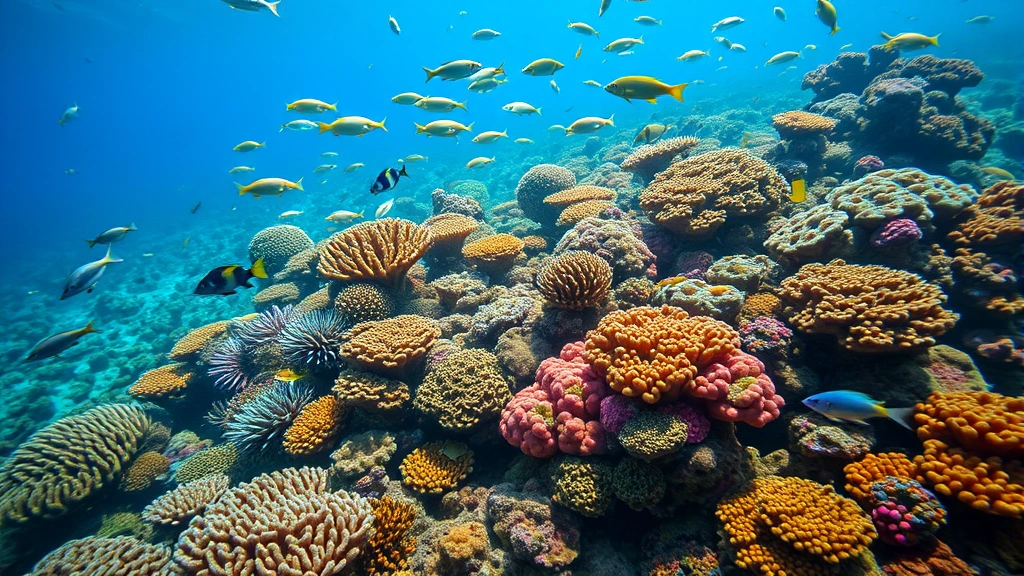
Coral reef bleaching illustrates how multiple stressors interact to exceed ecosystem resilience thresholds. Warming ocean temperatures trigger zooxanthellae expulsion from coral tissues, but the process becomes irreversible when combined with ocean acidification, which reduces coral calcification rates by 30-50%. The 2016 mass bleaching event affected 30% of the Great Barrier Reef, with economic implications extending to tourism revenue ($5.4 billion annually) and food security for 500 million people dependent on reef-associated fisheries.
Climate Change as an Ecosystem Multiplier
Climate disruption functions as a threat multiplier, exacerbating existing stressors and creating novel ecological conditions that exceed species’ adaptive capacity. Rising temperatures shift species’ geographic ranges poleward and upslope, fragmenting populations and disrupting coevolved relationships. Phenological mismatches—temporal desynchronization between predators and prey, pollinators and flowering plants—threaten energy transfer efficiency through food webs. Spring arrives 2-3 weeks earlier in temperate regions compared to 1950, yet migratory bird arrival times have advanced only 1-2 weeks, creating critical feeding windows misalignment during chick-rearing periods.
Ocean acidification represents a particularly insidious climate consequence, reducing seawater pH by 0.1 units since industrialization—a 30% increase in hydrogen ion concentration. This seemingly modest change disrupts calcification in pteropods, coccolithophores, mollusks, and crustaceans, undermining the foundation of marine food webs. Environment awareness campaigns must emphasize that climate change is not merely an atmospheric phenomenon but a fundamental restructuring of ocean chemistry affecting millions of species simultaneously.
Permafrost thaw in Arctic regions exemplifies climate-ecosystem feedback loops. Thawing releases previously sequestered carbon (estimated at 1.7 trillion tons) and methane, accelerating warming and further destabilizing permafrost, creating a positive feedback loop. This process also disrupts subsistence hunting and fishing practices for indigenous communities while releasing legacy pollutants accumulated over decades.
Drought intensification threatens ecosystem water availability globally. The 2012-2016 California drought reduced soil moisture to levels unseen in 1,200 years, triggering widespread tree mortality affecting carbon storage capacity and increasing wildfire vulnerability. Simultaneously, drought stress increased pest outbreaks, as weakened trees cannot mount effective chemical defenses against bark beetles, creating further forest degradation.
Economic Valuation of Ecosystem Services
Ecosystem services—the benefits humans derive from natural systems—generate economic value that conventional GDP accounting systematically ignores. Global ecosystem services are valued between $125-145 trillion annually, approximately 1.5-2 times global GDP, yet most policy decisions treat ecosystems as having negligible economic worth. This valuation gap explains why development projects destroying mangrove forests appear economically rational despite mangroves providing storm protection, fish nursery habitat, and carbon sequestration worth $500,000-1,000,000 per hectare over their lifetime.
The Ecorise Daily Blog explores how integrating ecosystem service valuation into economic policy frameworks creates incentives for conservation. Payment for ecosystem services (PES) schemes have emerged as market-based mechanisms attempting to monetize conservation. Costa Rica’s PES program, operating since 1997, has conserved over 1 million hectares by paying landowners for forest conservation, generating carbon sequestration, hydrological services, and biodiversity protection valued at $2.4 billion over two decades.
Natural capital accounting represents a paradigm shift toward treating ecosystems as productive assets rather than externalities. The World Bank’s natural capital accounting initiatives demonstrate that countries with declining natural capital face long-term economic stagnation despite short-term GDP growth. Nations extracting natural resources unsustainably experience declining genuine savings rates—a metric accounting for resource depletion and environmental degradation. Zambia, for instance, experienced 8% annual GDP growth between 2004-2010 while genuine savings rates remained near zero, indicating unsustainable resource extraction undermining long-term prosperity.
Biodiversity loss imposes economic costs through reduced genetic variation limiting agricultural productivity and pharmaceutical development. Approximately 25% of pharmaceutical compounds derive from tropical plants, yet only 1% of tropical species have been screened for bioactive compounds. The potential value of undiscovered medicinal compounds in threatened rainforests reaches into the trillions of dollars, representing a massive option value destroyed through deforestation.
Agricultural ecosystem service degradation demonstrates how environmental destruction directly reduces economic productivity. Soil degradation affects 1.5 billion hectares globally, reducing productivity by an average of 20% and generating annual economic losses of $400 billion. Pollinator decline threatens $15 billion in annual crop value, while freshwater ecosystem degradation limits irrigation capacity and hydroelectric generation across multiple continents.
Pathways to Ecological Restoration
Scientific evidence indicates that ecosystem restoration at scale remains technically feasible within critical time windows, though requiring unprecedented economic and political commitment. Restoration ecology has matured from small-scale site rehabilitation toward landscape-level interventions addressing underlying drivers of degradation. The United Nations Environment Programme estimates that restoring 1.5 billion hectares of degraded lands could sequester 37 gigatons of carbon dioxide while generating $9 trillion in ecosystem service benefits.
Rewilding initiatives attempt to restore ecosystem complexity and function by reintroducing apex predators and megafauna. The Serengeti ecosystem restoration project, through controlled predator protection, has enabled lion population recovery from 3,000 to 25,000 individuals over 40 years, restoring trophic control of herbivore populations and preventing vegetation degradation. Similarly, European rewilding projects reintroducing wolves and lynx have documented rapid ecosystem recovery in previously degraded landscapes.
Marine protected areas represent conservation interventions with documented ecological and economic benefits. No-take marine reserves increase fish biomass by 400-600% within protected areas while enhancing spillover benefits to adjacent fishing grounds. The Phoenix Islands Protected Area, encompassing 410,500 square kilometers, has enabled recovery of depleted tuna populations and coral reef ecosystems while maintaining sustainable fishery yields in surrounding waters.
Regenerative agriculture offers pathways to restore agricultural ecosystem services while maintaining food production. Practices including cover cropping, reduced tillage, and integrated crop-livestock systems increase soil organic matter, enhance water retention, reduce erosion, and promote beneficial soil fauna. Studies document that regenerative farms sequester 0.5-1.5 tons of carbon per hectare annually while improving yields 10-20% through enhanced water availability and nutrient cycling.
Sustainable fashion brands demonstrate how consumer-facing industries can restructure supply chains to minimize ecosystem impacts. Brands implementing regenerative cotton cultivation, reducing water consumption by 90% and eliminating synthetic pesticides, illustrate how economic activity can align with ecological restoration. However, systemic transition requires policy frameworks incentivizing sustainable production at scale.
Urban ecosystem restoration has emerged as a critical pathway given that 68% of humanity will inhabit cities by 2050. Green infrastructure—including green roofs, constructed wetlands, and urban forests—provides stormwater management, temperature regulation, air quality improvement, and habitat provisioning. Cities implementing comprehensive green infrastructure programs report 15-25% reductions in flooding impacts and $4-8 in ecosystem service benefits for every dollar invested.
Indigenous land management practices offer evidence-based approaches to ecosystem restoration. Indigenous territories covering 22% of global land area contain 80% of remaining biodiversity, demonstrating that human presence is compatible with ecosystem integrity when management practices respect ecological processes. Recognition of indigenous land rights and integration of traditional ecological knowledge into restoration frameworks represents both an ethical imperative and a scientifically sound approach to conservation.
FAQ
What is the primary driver of species extinction today?
Habitat destruction remains the leading extinction driver, accounting for approximately 73% of recorded species losses. Agricultural expansion, urbanization, and infrastructure development have converted 68% of terrestrial habitats, fragmenting ecosystems into isolated patches incapable of supporting viable populations. Climate change increasingly functions as a multiplier, exacerbating habitat loss through altered temperature and precipitation regimes.
How do ecosystem services relate to economic value?
Ecosystem services—benefits humans derive from natural systems—are valued at $125-145 trillion annually, approximately 1.5-2 times global GDP. However, conventional economic accounting treats ecosystem services as externalities with zero value, creating perverse incentives for ecosystem destruction. Integrating natural capital accounting into policy frameworks reveals that resource extraction without environmental accounting generates illusory economic growth while depleting productive assets.
Can degraded ecosystems be restored to previous conditions?
Complete restoration to pre-disturbance conditions is generally infeasible given altered climate and landscape contexts, but restoration toward functional, biodiverse, productive conditions remains achievable. Marine protected areas increase fish biomass 400-600%, rewilding initiatives enable apex predator recovery, and regenerative agriculture restores soil function. Success requires addressing underlying drivers—habitat fragmentation, pollution, overexploitation—while implementing active restoration interventions.
What role do indigenous peoples play in ecosystem conservation?
Indigenous territories covering 22% of global land area contain 80% of remaining biodiversity, demonstrating that human presence is compatible with ecosystem integrity when management practices respect ecological processes. Recognition of indigenous land rights and integration of traditional ecological knowledge represent both ethical imperatives and scientifically sound conservation approaches supported by decades of research documenting superior conservation outcomes on indigenous-managed lands.
How does ocean acidification affect marine ecosystems?
Ocean acidification, resulting from atmospheric CO2 dissolution, reduces seawater pH by 0.1 units since industrialization—a 30% increase in hydrogen ion concentration. This disrupts calcification in pteropods, coccolithophores, mollusks, and crustaceans, undermining marine food web foundations. Impacts cascade through food webs, threatening fish populations dependent on calcifying organisms and ultimately affecting global food security for 3 billion people dependent on marine protein.