
Impact of Economy on Ecosystems: A Study of Operating Environment Dynamics
The relationship between economic systems and natural ecosystems represents one of the most critical intersections in contemporary environmental science. Economic activities fundamentally shape the operating environment in which ecological processes function, creating cascading effects that ripple through food webs, biogeochemical cycles, and climate systems. Understanding this complex interplay requires examining how industrial production, resource extraction, market mechanisms, and financial incentives either degrade or enhance the biological and physical systems upon which all human prosperity ultimately depends.
The operating environment for ecosystems has undergone unprecedented transformation over the past two centuries. As economies have expanded exponentially—particularly since the industrial revolution—the pressure on natural systems has intensified proportionally. From atmospheric carbon concentrations to biodiversity loss, from soil degradation to freshwater depletion, the fingerprints of economic activity are evident across every major environmental metric. Yet this relationship is not uniformly negative; understanding the mechanisms through which economies impact ecosystems opens pathways toward sustainable economic models that regenerate rather than deplete natural capital.
Economic Systems and Ecological Degradation
The operating environment within which modern economies function has been fundamentally reshaped by the pursuit of economic growth as the primary measure of progress. Gross Domestic Product (GDP), the dominant metric for assessing economic health, measures economic throughput without accounting for the depletion of natural capital or the accumulation of environmental liabilities. This accounting framework creates perverse incentives where the destruction of ecosystems can be counted as economic gain—clear-cutting a forest generates timber revenue without subtracting the loss of carbon sequestration capacity, biodiversity, or hydrological regulation services.
According to research from the World Bank, natural capital—including forests, fisheries, minerals, and fossil fuels—comprises approximately 26 percent of total wealth in low-income countries, yet these assets are being depleted at rates far exceeding their regeneration capacity. The operating environment has become one where short-term extraction economics override long-term ecological sustainability. Industrial agriculture, which now covers approximately 38 percent of global land area, exemplifies this dynamic: it generates substantial economic value while simultaneously degrading soil health, reducing biodiversity, and contaminating water systems.
The structural incentives within capitalist economies create what ecological economists term the “growth imperative.” Companies must continually increase production and profits to satisfy shareholders and maintain competitive position. This operating environment naturally favors resource-intensive production over conservation, expansion over restoration, and extraction over stewardship. Human and environment interaction patterns reveal that whenever economic incentives conflict with ecological preservation, economic logic typically prevails in the absence of regulatory constraints.
Resource Extraction and Habitat Loss
The extraction of natural resources forms the material foundation of all economic activity, yet this extraction fundamentally alters the operating environment for countless species and ecological processes. Mining operations, timber harvesting, oil and gas drilling, and aquaculture expansion directly destroy habitats while simultaneously fragmenting remaining ecosystems into isolated patches insufficient to support viable populations. The World Wildlife Fund reports that global wildlife populations have declined by an average of 68 percent since 1970, a period coinciding with accelerated economic expansion in developing nations.
Deforestation, driven primarily by economic incentives to convert forests into agricultural land or extract timber, represents perhaps the most visible form of habitat destruction. Approximately 10 million hectares of forest are lost annually, predominantly in tropical regions where biodiversity is highest and carbon storage capacity is greatest. The operating environment for forest-dependent species—from jaguars to orangutans to countless insect species—shrinks continuously. Yet from a conventional economic perspective, this represents productive land use conversion, with the forest’s value measured only in terms of extractable commodities rather than its ecological services worth an estimated $125 trillion annually globally.
Fisheries extraction exemplifies the tragedy of the commons within a global operating environment lacking adequate governance. Fish stocks represent renewable resources that could theoretically sustain indefinite harvesting at sustainable levels. Instead, industrial fishing fleets—economically optimized for maximum catch per unit effort—have depleted 90 percent of large predatory fish species and collapsed numerous regional fisheries. The operating environment beneath the ocean surface has been transformed by bottom trawling, which destroys benthic ecosystems accumulated over millennia, all to extract resources for short-term profit.
Mining operations create perhaps the most severe localized environmental damage. The operating environment surrounding mines becomes characterized by toxic tailings, acid mine drainage, and complete habitat conversion. A single large gold mine can generate millions of tons of waste rock and tailings, often containing heavy metals and sulfides that contaminate water systems for decades. The economic value extracted—typically captured by corporations and exported as profit—is vastly outweighed by the environmental costs borne by local communities and ecosystems.
Pollution, Externalities, and Market Failure
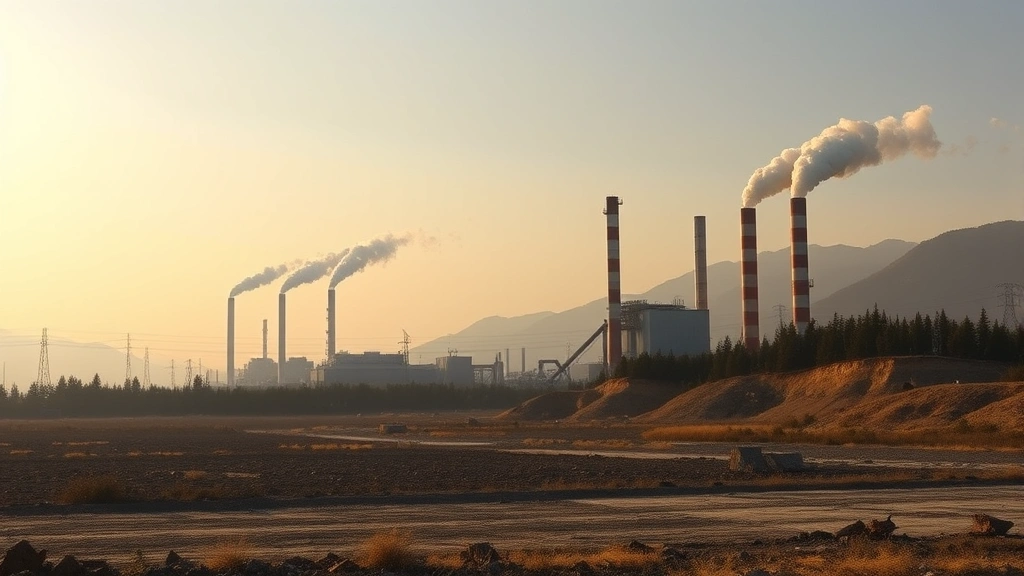
Pollution represents perhaps the clearest example of how economic operating environments fail to internalize environmental costs. When factories emit greenhouse gases, heavy metals, or persistent organic pollutants, these costs are not reflected in product prices. This creates what economists call negative externalities—costs imposed on society and ecosystems without corresponding compensation. The operating environment becomes progressively degraded as polluters face no financial incentive to reduce emissions, making pollution-intensive production methods artificially competitive compared to cleaner alternatives.
Industrial agriculture generates substantial pollution externalities through nitrogen and phosphorus runoff that creates dead zones in aquatic ecosystems. The Gulf of Mexico dead zone, sustained by agricultural runoff from the Mississippi River basin, covers approximately 6,000-7,000 square miles annually—an area roughly equivalent to New Jersey. Fish cannot survive in these hypoxic waters, and the operating environment for marine life becomes uninhabitable. Yet the economic costs of this pollution—lost fisheries productivity, treatment of contaminated drinking water, ecosystem service loss—are not reflected in corn or soybean prices.
Plastic pollution illustrates how the operating environment has become saturated with persistent synthetic materials that were never part of natural biogeochemical cycles. Approximately 8 million metric tons of plastic enter oceans annually, creating a distributed toxin source affecting organisms from plankton to whales. The economic production of single-use plastics is profitable precisely because the operating environment absorbs disposal costs at no charge to producers. Only through regulatory intervention—bans, taxes, or extended producer responsibility—can these externalities be internalized.
The chemical industry’s creation of persistent organic pollutants (POPs) demonstrates how the operating environment can be contaminated with substances that bioaccumulate through food chains for generations. DDT, banned in many countries since the 1970s, continues to circulate through ecosystems and accumulate in apex predators and human breast milk. The economic value generated from pesticide production was captured by manufacturers, while the environmental and health costs are distributed across entire populations and persist across generations.
Climate Change as Economic-Ecological Crisis
Climate change represents the ultimate expression of how economic operating environments have become decoupled from ecological limits. The emission of greenhouse gases—primarily carbon dioxide from fossil fuel combustion—has accumulated in the atmosphere to concentrations 50 percent higher than pre-industrial levels. This transformation of atmospheric composition, occurring over merely 150 years, is reshaping the operating environment for all terrestrial and marine ecosystems simultaneously and at a pace that exceeds most species’ adaptive capacity.
The operating environment created by climate change manifests through multiple mechanisms: rising temperatures alter seasonal timing and species ranges; changing precipitation patterns create drought and flood extremes; ocean acidification undermines calcifying organisms; and sea-level rise inundates coastal ecosystems. Coral reefs, which support roughly one billion people globally and provide ecosystem services worth $375 billion annually, face existential threat from warming and acidification. The economic activity that drives climate change—fossil fuel combustion—generates immediate profit while imposing catastrophic costs on future generations and vulnerable populations.
Economic analyses consistently undervalue climate impacts by applying discount rates that make future environmental damages seem insignificant in present-value terms. A 3 percent discount rate—standard in cost-benefit analysis—implies that an environmental cost of $1 trillion in 100 years equals only $5 million in present value. This operating environment of financial analysis systematically discounts the future, making climate inaction economically rational within conventional frameworks despite its ecological irrationality.
The United Nations Environment Programme estimates that the economic costs of climate change could reach $23 trillion by 2050 without mitigation. Yet this represents only a fraction of total ecological costs, as it omits ecosystem collapse, species extinction, and disruption of essential services like pollination and water purification. The operating environment is being fundamentally transformed by economic systems optimized for short-term profit rather than long-term ecological stability.
Measuring Economic-Ecological Impact
Conventional economic accounting systems fundamentally misrepresent the relationship between economy and ecosystems by treating natural capital as infinite and infinitely substitutable with manufactured capital. Natural capital accounting attempts to correct this by measuring ecosystem services—the benefits humans derive from ecosystems—in monetary terms. These services include provisioning services (food, water, materials), regulating services (climate regulation, water purification, pollination), supporting services (nutrient cycling, soil formation), and cultural services (recreation, spiritual value).
Research from ecological economics journals demonstrates that ecosystem services globally are valued at approximately $125-145 trillion annually, roughly twice global GDP. Yet these values are not reflected in market prices or economic decision-making. A hectare of tropical forest might generate $100 annually in timber value while providing $2,000 in ecosystem services through carbon sequestration, water regulation, and biodiversity support. The operating environment incentivizes conversion to agriculture or timber extraction because those values are captured as immediate profit while ecosystem service values remain external to market calculations.
Life cycle assessment (LCA) methodologies attempt to measure total environmental impacts of products from extraction through disposal. Studies consistently reveal that conventional prices dramatically underestimate true environmental costs. A cheap t-shirt produced through conventional cotton agriculture, which represents 16 percent of global insecticide use despite occupying 2.5 percent of cultivated land, imposes environmental costs through pesticide pollution, water depletion, and soil degradation that far exceed its retail price. The operating environment permits this cost externalization.
Biodiversity indices provide another critical measurement of economic-ecological impact. The Living Planet Index, tracking population trends of vertebrate species globally, shows a 68 percent average decline since 1970. Regional variation is substantial—tropical species show 94 percent decline, reflecting concentrated economic activity and resource extraction in biodiverse regions. The operating environment for wildlife has contracted dramatically, with habitat loss, pollution, and climate change as primary drivers all linked to economic expansion.

Pathways to Sustainable Economic Models
Transitioning toward economic systems that operate within ecological limits requires fundamental restructuring of how we measure progress, price goods, and organize production. Living environment quality must become the primary measure of economic success rather than GDP growth. Genuine Progress Indicator (GPI) and similar metrics subtract environmental costs and resource depletion from economic accounts, typically showing that genuine welfare has stagnated or declined in wealthy nations even as GDP has grown.
Circular economy models attempt to redesign production systems so that materials cycle continuously rather than following linear take-make-waste patterns. By treating waste as a design flaw and optimizing for material reuse, circular approaches reduce resource extraction pressure and pollution generation. Companies implementing circular models report cost savings alongside environmental benefits, demonstrating that the operating environment need not pit profitability against sustainability. How to reduce carbon footprint strategies often involve circular economy principles at organizational level.
Regenerative agriculture represents an alternative operating environment for food production, using practices that build soil carbon, enhance biodiversity, and increase water retention while maintaining productivity. Rather than mining soil fertility through conventional agriculture, regenerative approaches restore it, creating an operating environment where farming enhances rather than degrades ecosystem function. Preliminary evidence suggests regenerative systems can sequester significant atmospheric carbon while producing nutritious food and supporting rural livelihoods.
Renewable energy transition fundamentally alters the operating environment by decoupling energy production from fossil fuel extraction and combustion. Renewable energy for homes adoption, when scaled economy-wide, eliminates the carbon emissions driving climate change while reducing air and water pollution from fossil fuel extraction and combustion. The operating environment becomes one where energy production regenerates rather than depletes natural capital.
Nature-based solutions—protecting and restoring forests, wetlands, grasslands, and marine ecosystems—provide dual benefits of biodiversity conservation and climate mitigation. Mangrove forests, for example, sequester carbon at rates 10 times higher than terrestrial forests while providing critical nursery habitat for fisheries. The operating environment in restored ecosystems becomes increasingly resilient while generating economic value through improved ecosystem services.
Sustainable fashion represents a sector-specific example of operating environment transformation. Sustainable fashion brands demonstrate that premium positioning and environmental responsibility can align, creating an operating environment where ecological stewardship becomes a competitive advantage rather than a cost burden. Material innovation, fair labor practices, and circular design principles generate both environmental and social benefits.
Policy Frameworks and Implementation
Transforming the operating environment requires policy interventions that internalize environmental costs into market prices. Carbon pricing—through either taxes or cap-and-trade systems—makes climate impacts visible in energy and transportation costs, shifting the operating environment toward lower-emission alternatives. The Carbon Brief documents that carbon pricing is expanding globally, with over 60 carbon pricing initiatives implemented or planned across national and subnational jurisdictions.
Extended producer responsibility (EPR) policies shift waste management costs to manufacturers, creating incentives to design products for durability and recyclability. When producers bear end-of-life costs, the operating environment changes such that material efficiency becomes profitable. Electronics manufacturers subject to EPR regulations have dramatically reduced hazardous substances and improved design for disassembly compared to unregulated competitors.
Protected area networks fundamentally alter the operating environment for conservation by legally restricting extractive activities. Yet protected areas cover only 17 percent of land globally, with lower coverage in biodiverse regions. Expanding and effectively managing protected areas—ensuring adequate funding and enforcement—represents essential infrastructure for maintaining ecosystem function. Indigenous peoples manage approximately 80 percent of remaining biodiversity despite inhabiting only 22 percent of land, suggesting that rights-based conservation approaches create operating environments more conducive to long-term sustainability than fortress conservation models.
Regulatory standards for pollution control, whether applied to air emissions, water discharge, or chemical use, directly reshape operating environments by prohibiting the most damaging practices. The Clean Air Act in the United States, despite industry opposition, generated documented health benefits far exceeding compliance costs. The operating environment for industrial production shifted toward cleaner technologies once regulatory standards made pollution economically disadvantageous.
International agreements—from the Paris Climate Agreement to the Convention on Biological Diversity—attempt to coordinate policy across jurisdictions to address global operating environment challenges. Implementation remains inconsistent, with many signatories failing to meet commitments. Yet the frameworks establish global norms and create pressure for domestic policy alignment, gradually shifting the operating environment toward greater environmental consideration in economic decision-making.
Corporate sustainability reporting and disclosure requirements increase transparency about environmental impacts, allowing investors and consumers to evaluate economic-ecological tradeoffs. As institutional investors increasingly divest from fossil fuels and prioritize environmental, social, and governance (ESG) criteria, the operating environment for capital allocation shifts toward sustainability. However, greenwashing remains prevalent, requiring robust standards and verification to ensure credibility.
FAQ
How do economic systems directly damage ecosystems?
Economic systems damage ecosystems through multiple mechanisms: resource extraction destroys habitats; pollution contaminates air, water, and soil; greenhouse gas emissions alter climate; and market structures externalize environmental costs. The operating environment permits these damages because natural capital remains unpriced in most economic transactions, making environmentally destructive activities artificially profitable.
What are the most significant economic drivers of biodiversity loss?
Habitat loss from agricultural expansion, logging, and urban development accounts for approximately 73 percent of biodiversity decline. Climate change, pollution, overexploitation, and invasive species—all driven by economic activity—account for remaining losses. The operating environment for wildlife shrinks as economic land use intensifies.
Can economic growth be compatible with ecosystem protection?
Decoupled economic growth—increasing prosperity without proportional resource consumption or emission increases—is theoretically possible through efficiency improvements, renewable energy transition, and circular economy implementation. However, absolute decoupling remains rare globally, and relative decoupling often masks outsourced environmental impacts. Fundamentally, infinite growth within finite planetary operating environment is impossible; sustainable economics requires stabilizing material throughput while improving welfare through non-material dimensions.
How do carbon prices affect ecosystem protection?
Carbon pricing makes climate impacts visible in economic calculations, incentivizing emissions reductions and renewable energy transition. By shifting the operating environment so that fossil fuels reflect their true climate costs, carbon pricing reduces emissions while generating revenue for environmental investment. However, prices must be sufficiently high and stable to drive meaningful behavioral change.
What role do protected areas play in economic-ecological balance?
Protected areas preserve ecosystem function and biodiversity by restricting extractive activities. They generate economic value through ecosystem services, recreation, and scientific research while maintaining genetic resources for agriculture and medicine. The operating environment within protected areas remains subject to external pressures—climate change, pollution drift, invasive species—yet provides refugia essential for long-term biodiversity conservation.
How can consumers influence the operating environment?
Consumer choices drive corporate behavior and market signals. Demand for sustainably produced goods creates economic incentives for environmental stewardship, gradually shifting the operating environment. However, individual consumer action alone cannot overcome systemic incentives; policy intervention remains essential to ensure that sustainable products become the economically dominant option rather than premium niche offerings.


