Human Impact on Ecosystems: A Scientific Perspective
The relationship between humanity and Earth’s ecosystems has fundamentally transformed over the past two centuries. What began as localized environmental modifications has evolved into a planetary-scale phenomenon, with human activities now reshaping fundamental biogeochemical cycles, climate patterns, and biodiversity distributions. Scientists increasingly recognize that we have entered a new geological epoch—the Anthropocene—where human influence rivals natural processes in shaping Earth’s systems.
Understanding the negative effects humans have on the environment requires examining multiple interconnected pathways through which our species exerts pressure on natural systems. From atmospheric composition changes to soil degradation, the evidence reveals not isolated problems but rather a comprehensive reorganization of planetary ecosystems driven by economic expansion, population growth, and consumption patterns.
Climate Disruption and Atmospheric Changes
Human-induced climate change represents perhaps the most pervasive environmental impact, operating through the accumulation of greenhouse gases primarily from fossil fuel combustion. Since industrialization, atmospheric carbon dioxide concentrations have increased from approximately 280 parts per million to over 420 ppm—levels unprecedented in the past 800,000 years. This rapid atmospheric modification has already driven global mean temperatures upward by 1.1°C, with cascading consequences for precipitation patterns, ocean currents, and weather extremes.
The mechanisms linking human activities to climate change operate through straightforward physics: carbon dioxide and other greenhouse gases trap infrared radiation, preventing heat from escaping to space. The evidence is overwhelming across multiple independent lines of investigation. Ice core records demonstrate the temporal correlation between industrial emissions and atmospheric CO₂ increases. Isotopic analysis of atmospheric carbon confirms the fossil fuel source. Satellite measurements document changing energy balances. This convergence of evidence has led the Intergovernmental Panel on Climate Change to declare human influence on the climate system unequivocal.
Beyond carbon dioxide, human activities have altered atmospheric methane and nitrous oxide concentrations. Agricultural expansion, particularly livestock production, generates substantial methane emissions from ruminant digestion and manure management. Industrial nitrogen fixation for fertilizer production has doubled the global nitrogen cycle, with excess reactive nitrogen reaching the atmosphere as nitrous oxide—a potent greenhouse gas with a radiative forcing effect 298 times stronger than carbon dioxide on a century timescale. These atmospheric modifications represent fundamental alterations to planetary chemistry with implications extending centuries into the future.
Biodiversity Loss and Species Extinction
The current extinction rate represents one of the clearest indicators of human environmental impact. Scientific estimates suggest species are disappearing at rates 100 to 1,000 times faster than background extinction rates observed in the fossil record. The United Nations Environment Programme reports that approximately one million animal and plant species face extinction, with habitat loss, overexploitation, pollution, invasive species, and climate change serving as primary drivers.
This biodiversity loss operates across multiple scales. At the genetic level, populations become fragmented and isolated, reducing within-species genetic diversity and adaptive potential. At the species level, charismatic megafauna like tigers, elephants, and rhinoceroses decline toward extinction, but the losses extend across virtually all taxonomic groups—from pollinators to decomposers. At the ecosystem level, the loss of key species can trigger cascading trophic effects, fundamentally altering community structure and function.
The mechanisms driving extinction reveal how human activities compress multiple stressors simultaneously. Habitat destruction from land clearing removes the physical space organisms require. Pollution introduces toxic compounds that exceed physiological tolerance thresholds. Overexploitation through hunting and fishing removes individuals faster than populations can reproduce. Invasive species introduced through global commerce outcompete native species or introduce novel diseases. Climate change shifts suitable habitat ranges faster than many species can migrate. These pressures interact multiplicatively rather than additively, creating extinction risk that exceeds what any single stressor would produce independently.
Land Use Transformation and Habitat Destruction
Human land use now covers approximately 75% of Earth’s ice-free surface, with profound implications for ecosystem structure and function. Agricultural expansion represents the dominant form of land transformation, with croplands and pastures occupying roughly 40% of terrestrial surfaces. This conversion from natural ecosystems to human-managed systems fundamentally alters vegetation communities, soil properties, hydrological cycles, and species composition.
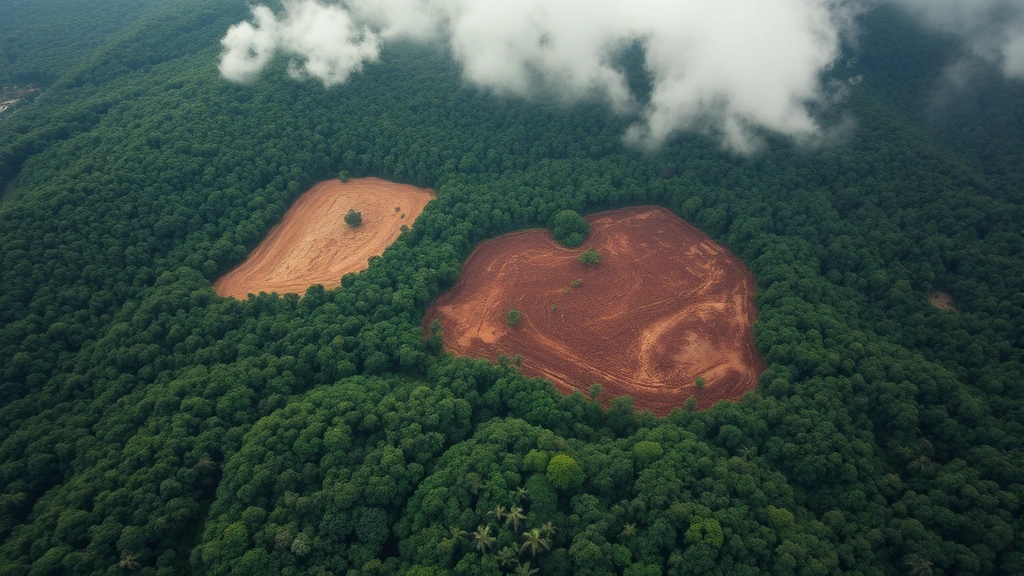
Tropical deforestation exemplifies the most dramatic habitat destruction. The Amazon rainforest, which once covered approximately 5.5 million square kilometers, has been reduced by roughly 20% through cattle ranching, soy cultivation, logging, and infrastructure development. This deforestation eliminates habitat for countless species while simultaneously reducing the forest’s capacity to function as a carbon sink—converting it from a carbon storage system to a carbon source through decomposition of cleared biomass.
Wetland conversion represents another critical habitat loss pathway. Approximately 87% of global wetlands have disappeared over the past 300 years, with the rate of loss accelerating. Wetlands provide disproportionate ecosystem services—supporting 40% of all species despite occupying only 6% of Earth’s surface—while also regulating water cycles and storing substantial carbon reserves. Their conversion to agricultural land or urban development eliminates these services while releasing stored carbon.
The concept of human environment interaction becomes concretely evident in these landscape-scale transformations. The fragmentation of continuous habitat into isolated patches fundamentally alters species distributions, gene flow, and ecosystem functioning. Edge effects become dominant, with microclimatic changes, increased predation pressure, and altered resource availability affecting species composition even in nominally protected areas.
Water Pollution and Aquatic Ecosystem Degradation
Human activities have contaminated virtually every aquatic ecosystem on Earth through multiple pollution pathways. Agricultural runoff carries excess nutrients (nitrogen and phosphorus), creating eutrophic conditions where algal blooms consume dissolved oxygen, creating hypoxic dead zones. Industrial discharge introduces heavy metals, persistent organic pollutants, and other toxic compounds. Urban stormwater carries petroleum products, heavy metals, and microplastics. Wastewater treatment facilities, despite their function, cannot remove all pharmaceutical residues and endocrine-disrupting chemicals.
The Great Dead Zone in the Gulf of Mexico exemplifies nutrient pollution consequences. Fed by Mississippi River discharge carrying agricultural runoff from the central United States, the zone encompasses approximately 6,000-7,000 square kilometers annually where dissolved oxygen concentrations drop below levels supporting most aquatic life. Similar hypoxic zones exist globally, with estimates suggesting over 400 such zones worldwide, affecting fisheries and aquatic biodiversity across economically important regions.
Plastic pollution represents a newer but rapidly expanding aquatic contamination pathway. Approximately 8 million metric tons of plastic enter ocean systems annually, with much of this material persisting for decades or centuries. Microplastics—particles smaller than 5 millimeters—have become ubiquitous in marine ecosystems, detected in fish tissues, invertebrates, and even in the deepest ocean trenches. These particles carry absorbed organic pollutants and may leach plastic additives into surrounding tissues, with implications for food web dynamics and bioaccumulation patterns still being elucidated.

Chemical Contamination and Persistent Pollutants
Beyond nutrient and plastic pollution, synthetic chemicals introduced through industrial processes have created novel environmental contamination challenges. Persistent organic pollutants (POPs)—including polychlorinated biphenyls, dichlorodiphenyltrichloroethane (DDT), and various pesticides—resist degradation and bioaccumulate through food webs, reaching concentrations in top predators millions of times higher than environmental concentrations.
The case of DDT illustrates how chemical contamination operates across global scales. Despite being banned in most developed nations since the 1970s, DDT continues persisting in environments and organisms worldwide. The pesticide’s lipophilic properties cause it to accumulate in fatty tissues, with bioaccumulation factors exceeding 10,000 in some organisms. Birds of prey experienced reproductive failure from eggshell thinning caused by DDT metabolites, driving species toward extinction before legal restrictions were implemented. Decades after cessation of use, DDT remains detectable in arctic ice cores and marine organisms, demonstrating the persistence of chemical contamination.
Heavy metal contamination from mining, smelting, and industrial processes has created localized zones of severe contamination. Mercury released from coal combustion and industrial processes methylates in aquatic systems, creating highly bioavailable methyl mercury that accumulates in fish tissues. Populations depending on fish consumption face neurological damage from mercury exposure. Lead contamination from historical gasoline additives and paint persists in soils and sediments, affecting child neurodevelopment in contaminated areas. Cadmium from zinc smelting operations contaminates agricultural soils, entering food chains through crop uptake.
Soil Degradation and Agricultural Impacts
Soil, often overlooked in environmental discussions, represents a critical ecosystem component now degrading at alarming rates. The United Nations estimates that one-third of global soils are already degraded, with approximately 24 billion metric tons of fertile soil lost annually through erosion. This degradation results from multiple anthropogenic factors: intensive agriculture, deforestation, overgrazing, and compaction from machinery and livestock.
Industrial agriculture particularly accelerates soil degradation through several mechanisms. Monoculture cultivation removes diverse plant communities that would maintain soil structure and biological diversity. Tillage disrupts soil aggregates and exposes organic matter to oxidation, depleting soil carbon stocks. Pesticide and herbicide applications eliminate soil organisms including beneficial fungi and bacteria that facilitate nutrient cycling. The result is soil that becomes progressively depleted in organic matter, more susceptible to erosion, and less capable of supporting biological productivity.
Soil carbon depletion represents a particularly significant consequence. Agricultural soils globally have lost approximately 25-75% of their original carbon content, with this carbon released to the atmosphere as carbon dioxide. This soil carbon loss simultaneously reduces soil fertility and contributes to atmospheric CO₂ accumulation, creating a feedback loop where agricultural expansion simultaneously degrades productivity and accelerates climate change. The reduction of carbon footprint thus requires fundamental agricultural system transformation.
Ocean Acidification and Marine System Disruption
Approximately 25% of anthropogenic carbon dioxide emissions dissolve into ocean waters, where they form carbonic acid, reducing ocean pH. Since industrialization, ocean pH has declined by 0.1 units—representing a 30% increase in hydrogen ion concentration. This seemingly modest change has profound implications for calcifying organisms including corals, pteropods, cephalopods, and countless other species dependent on calcium carbonate shell and skeleton formation.
Ocean acidification operates through direct chemical mechanisms affecting calcification rates and shell dissolution. The saturation state of calcium carbonate minerals decreases with lower pH, reducing the thermodynamic favorability of shell formation while increasing dissolution rates. Pteropods—small swimming snails serving as key food sources for fish and marine mammals—show shell dissolution in waters already experiencing acidification, with implications extending through marine food webs. Coral polyps exhibit reduced calcification rates and increased mortality under acidified conditions, threatening reef ecosystems that support approximately 25% of marine species despite occupying less than 1% of the ocean floor.
The consequences extend beyond direct calcification effects. Ocean acidification alters sensory systems in fish larvae, impairs predator avoidance behavior, and affects the chemical cues organisms use for navigation and habitat selection. These behavioral effects may prove as consequential as physiological effects, disrupting recruitment and population dynamics across marine ecosystems. The magnitude of pH change projected for the coming century—potentially 0.3-0.4 units—exceeds any change experienced by ocean ecosystems in millions of years, providing minimal time for evolutionary adaptation.
Economic Dimensions of Environmental Damage
Understanding human impact on ecosystems requires integrating ecological science with economic analysis. The field of ecological economics examines how economic systems depend upon and affect natural systems, revealing that conventional economic accounting systematically undervalues environmental impacts. Ecosystem services—the benefits humans derive from natural systems—remain largely external to market prices, creating economic incentives for their destruction.
The World Bank has attempted to quantify ecosystem service values, estimating that ecosystem services provide approximately $125 trillion annually in benefits. However, these services diminish as ecosystems degrade, creating what economists term natural capital depletion. A forest cleared for timber production generates short-term economic gains while eliminating perpetual flows of ecosystem services including carbon sequestration, water purification, flood regulation, and biodiversity support. Conventional GDP accounting counts the timber harvest as income without deducting the loss of natural capital, creating a false impression of economic progress.
Pollution represents another form of economic externality where costs are borne by society while profits accrue to producers. A factory discharging effluent into a river generates private profits while imposing public costs through reduced water quality, fishery losses, and health impacts. These external costs typically exceed the private profits generated, but conventional accounting excludes them from business calculations. The result is overproduction of polluting goods and underinvestment in pollution prevention technologies.
The concept of planetary boundaries provides a framework for understanding economic limits. Research published in ecological economics journals identifies nine critical Earth system processes—climate change, biodiversity loss, land system change, freshwater depletion, ocean acidification, nitrogen and phosphorus cycling, ozone depletion, and chemical pollution—where human activities now exceed safe operating spaces. Transgressing these boundaries creates risks of triggering irreversible tipping points in Earth systems. Economic models that ignore these biophysical constraints inherently produce unsustainable outcomes.
Solutions require economic restructuring that internalizes environmental costs. Carbon pricing mechanisms attempt to assign monetary values to greenhouse gas emissions, creating market incentives for emissions reduction. Payments for ecosystem services compensate landowners for maintaining natural systems rather than converting them to alternative uses. Extended producer responsibility shifts waste management costs to manufacturers, incentivizing product design that minimizes environmental impacts. These mechanisms acknowledge that environmental protection requires economic transformation, not merely voluntary conservation efforts.
The transition toward renewable energy exemplifies necessary economic transformation. Renewable energy for homes represents one component of broader energy system decarbonization required to address climate disruption. Economic models demonstrate that renewable energy deployment, while requiring substantial upfront capital investment, becomes economically superior to fossil fuel systems when external costs of carbon emissions and air pollution are properly accounted.
Sustainable fashion represents another domain where economic incentives misalign with environmental protection. The fashion industry generates enormous environmental externalities through water pollution, pesticide use, and textile waste. Sustainable fashion brands attempt to internalize environmental costs through material selection, production practices, and waste reduction. However, their higher prices reflect accurate cost accounting rather than premium pricing, revealing how conventional fashion pricing conceals environmental destruction.
The Ecorise Daily Blog provides ongoing analysis of how economic structures drive environmental outcomes, examining both the problems and potential solutions. Understanding environmental economics requires recognizing that ecosystem degradation results not from individual moral failures but from structural economic incentives that reward destruction and penalize conservation.
FAQ
What is the primary cause of species extinction today?
Habitat destruction represents the leading cause of species extinction, affecting approximately 73% of threatened species according to conservation assessments. Climate change increasingly compounds habitat loss, creating compound stressors that exceed species’ adaptive capacity. Overexploitation, invasive species, and pollution contribute significantly but operate primarily through habitat-mediated mechanisms.
How do human activities affect ocean ecosystems specifically?
Ocean ecosystems experience multiple simultaneous stressors from human activities: overfishing reduces predator and prey populations, altering trophic structure; pollution introduces toxic compounds and microplastics; nutrient runoff creates dead zones; acidification impairs calcification and sensory systems; warming alters species distributions and breeding cycles. These stressors interact, creating ecosystem conditions unprecedented in recent geological history.
Can ecosystem damage be reversed?
Some ecosystem degradation proves reversible if stressor removal occurs before critical tipping points are crossed. Reforestation can restore some forest functions, though old-growth forest characteristics require centuries to develop. Water quality improves when pollution sources are eliminated, though persistent contaminants may require decades for environmental concentrations to decline. However, extinction is permanent—species cannot be recovered once populations collapse below viable numbers. Prevention of further damage thus takes priority over restoration.
What role does population growth play in environmental impact?
Population growth amplifies environmental impacts through increased resource consumption and pollution generation. However, the relationship is not simple; wealthy populations with high per capita resource consumption create larger environmental footprints than numerically larger poor populations. Global environmental impact results from the product of population size, consumption per capita, and technological efficiency. Addressing environmental degradation requires simultaneous attention to all three factors.
How do ecosystem impacts affect human economies and health?
Ecosystem degradation imposes substantial economic costs through lost fisheries, reduced agricultural productivity, water contamination, air pollution health effects, and climate disaster damages. The economic costs of inaction substantially exceed costs of environmental protection, yet economic structures systematically undervalue ecosystem protection. Human health directly suffers from air and water pollution, pesticide exposure, and climate-related extreme events, with low-income populations experiencing disproportionate exposure to environmental hazards.


