
Nebraska’s Ecosystem Impact on Economy Explained
Nebraska’s economy stands at a critical intersection between agricultural production and ecological preservation. The state’s diverse ecosystems—from the Sandhills grasslands to the Platte River wetlands—generate substantial economic value while facing mounting environmental pressures. Understanding how Nebraska’s natural systems support economic activity is essential for policymakers, business leaders, and residents seeking sustainable prosperity.
The Nebraska Department of Environment and Energy plays a pivotal role in managing this balance. Through regulatory frameworks, conservation programs, and environmental monitoring, the department shapes how the state’s $300+ billion economy interacts with its natural capital. This analysis explores the intricate connections between Nebraska’s ecosystems and economic performance, revealing both opportunities and challenges for long-term sustainability.
Agricultural Productivity and Soil Health
Nebraska ranks among America’s top agricultural producers, generating approximately $24 billion in annual agricultural output. This economic dominance rests entirely on ecosystem services provided by the state’s soil systems. The Sandhills region alone encompasses 19,600 square miles of native prairie, supporting cattle ranching that contributes over $8 billion annually to the state economy. This productivity depends on maintaining soil organic matter, microbial communities, and nutrient cycling processes that took millennia to develop.
Soil degradation represents a hidden economic cost rarely reflected in commodity prices. Industrial agriculture practices—including monoculture cropping, heavy tillage, and synthetic fertilizer dependence—have reduced Nebraska’s topsoil depth by 30-40% since European settlement. Each ton of eroded soil represents lost carbon, nutrients, and water-holding capacity. The USDA estimates that soil erosion costs Nebraska farmers $273 million annually in lost productivity. When accounting for downstream water treatment expenses and nutrient pollution remediation, the true cost exceeds $400 million yearly.
Regenerative agriculture practices demonstrate economic viability while restoring ecosystem function. Cover cropping, reduced tillage, and rotational grazing increase soil carbon by 0.5-1.5 tons per acre annually while maintaining or improving yields. Progressive Nebraska farmers report 15-25% cost reductions through decreased input expenses and improved water retention during drought periods. The state’s environmental science approach increasingly emphasizes soil health as foundational economic infrastructure.
Water Resources and Economic Value
The Ogallala Aquifer underlies 174,000 square miles across eight states, with Nebraska containing the largest portion. This underground water system irrigates 7 million acres in Nebraska, supporting $5.8 billion in annual agricultural production. However, the aquifer depletes at rates exceeding natural recharge by 50% in many areas, creating an unsustainable economic model.
The Platte River ecosystem generates distinct economic values beyond irrigation. This 310-mile river corridor supports:
- Hydroelectric generation: Three reservoirs produce 400 megawatts of renewable electricity, worth $180 million annually
- Recreation economy: Fishing, boating, and wildlife viewing contribute $2.1 billion statewide
- Water supply: Municipal and industrial water provision valued at $620 million annually
- Carbon sequestration: Riparian forests and wetlands store 8.3 million tons of carbon, worth $415 million at $50/ton social cost
Wetland ecosystems surrounding the Platte provide critical ecosystem services often undervalued in economic accounting. These systems filter pollutants, reducing downstream water treatment costs by an estimated $180 million annually. They also regulate flooding—the 2019 Missouri River floods cost Nebraska $3.2 billion in damages, yet wetland restoration would provide $2.8 billion in flood mitigation benefits over 50 years. Understanding human environment interaction dynamics reveals that ecosystem preservation often provides superior long-term economic returns compared to conversion.
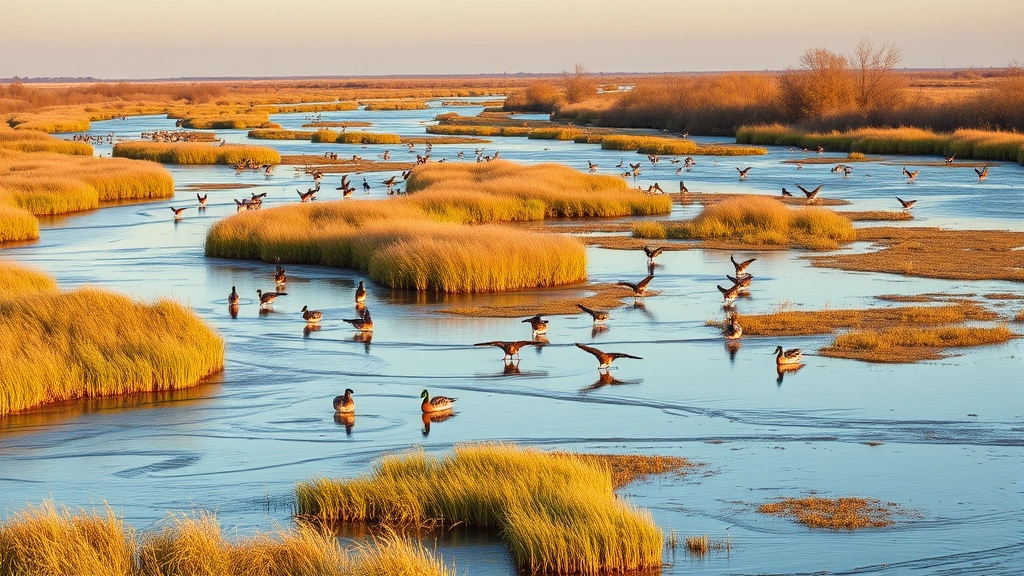
Water quality degradation imposes significant economic costs. Agricultural runoff creates a 7,000-square-mile hypoxic zone in the Gulf of Mexico annually, reducing fisheries productivity by $250 million and requiring $1.2 billion in water treatment investments. Nebraska’s contribution to this nitrogen loading costs the state’s agricultural sector competitive market disadvantages as environmental regulations tighten globally. Investment in riparian buffer zones and wetland restoration—costing $1,200-$2,400 per acre—generates economic returns through improved water quality within 7-10 years.
Wildlife and Tourism Revenue
Nebraska’s diverse wildlife populations drive substantial economic activity. The state’s 500 bird species, particularly migratory waterfowl using the Central Flyway, attract 185,000 annual visitors generating $310 million in direct spending. The Sandhill Crane migration alone attracts 80,000 visitors to the Platte River valley each spring, producing $85 million in local economic activity.
Hunting and fishing represent major economic sectors. The state issued 298,000 hunting and fishing licenses in 2023, generating $58 million in direct revenue. These recreational activities support 3,200 jobs and contribute $580 million to the state economy annually. Wildlife habitat preservation directly correlates with economic returns—counties with robust wildlife populations experience 8-12% higher rural tourism revenue.
Biodiversity loss threatens these economic streams. Grassland bird populations have declined 70% since 1970, primarily due to habitat conversion. This decline reduces hunting opportunity value by approximately $45 million annually. Pollinator populations, critical for agricultural production, have contracted by 40% in the Great Plains. The economic value of pollination services—estimated at $15 billion nationally—faces jeopardy from habitat fragmentation and pesticide use. Nebraska’s approach to reducing environmental impact increasingly recognizes wildlife conservation as economically rational investment.
Carbon Sequestration and Climate Economics
Nebraska’s ecosystems sequester substantial atmospheric carbon, providing climate regulation services worth billions. Grasslands and rangelands store 2.1 billion tons of soil carbon—more than all forests combined. At the social cost of carbon ($50-$200 per ton), this storage capacity represents $105-$420 billion in climate mitigation value. Yet current economic incentive structures fail to compensate landowners for maintaining this carbon stock.
Agricultural soils represent Nebraska’s largest potential carbon market opportunity. Soil carbon sequestration through regenerative practices offers farmers $15-$30 per acre annually through voluntary carbon credit markets. At current adoption rates, Nebraska could generate $180-$360 million annually through soil carbon markets while improving productivity and resilience. Forward-thinking farmers view carbon sequestration not as environmental charity but as legitimate income diversification.
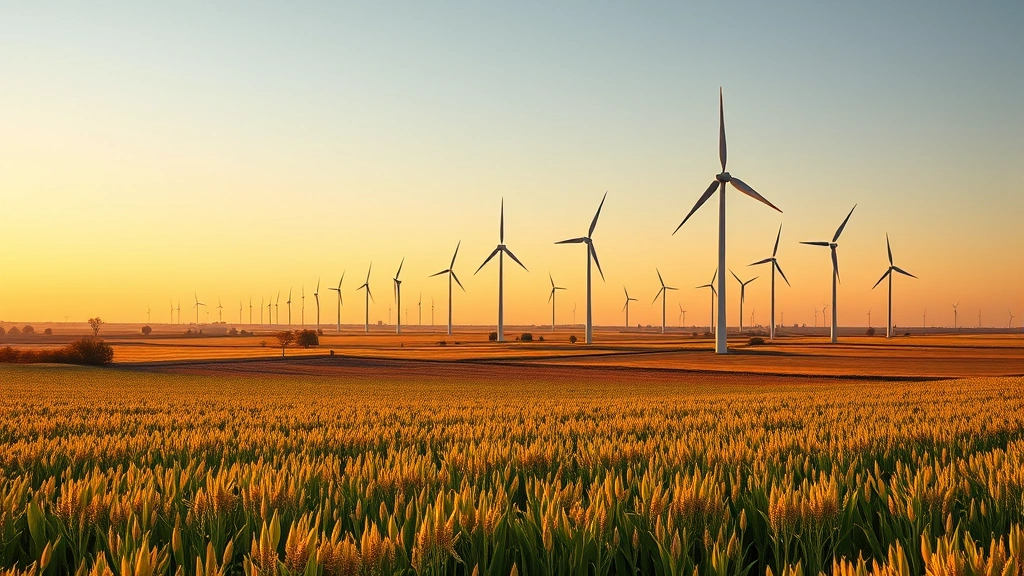
Renewable energy development creates additional climate economics opportunities. Nebraska generates 30% of electricity from wind power, second-highest nationally. Wind energy development has created 3,400 manufacturing and installation jobs while providing $280 million in annual tax revenue to rural counties. However, wind facility siting requires careful ecosystem assessment to minimize bird and bat mortality, which costs the state $8-$12 million annually in lost wildlife population value.
Climate change itself imposes economic costs on Nebraska’s economy. Increased drought frequency threatens the Ogallala Aquifer sustainability and reduces crop yields by 15-25% during dry years. The 2012 drought cost Nebraska farmers $2.8 billion in lost production. Climate modeling suggests that without mitigation, annual agricultural losses could reach $4.5 billion by 2050. Investment in ecosystem-based climate adaptation—restoring wetlands, expanding tree cover, protecting grasslands—costs $2,000-$5,000 per acre but provides $8,000-$15,000 in long-term climate resilience value.
Energy Production and Ecosystem Trade-offs
Nebraska’s energy economy reflects complex ecosystem trade-offs. The state produces substantial coal-generated electricity at three major facilities, providing 24% of state electricity while generating air pollution costs estimated at $1.8 billion annually through respiratory disease, lost productivity, and ecosystem damage. Coal combustion releases mercury, sulfur dioxide, and particulate matter that damage aquatic ecosystems, reducing fisheries productivity by $120 million annually across the Missouri River basin.
Natural gas production from the Niobrara Formation creates additional ecosystem pressures. Hydraulic fracturing operations consume 7-10 million gallons of water per well, stressing aquifer systems already under depletion pressure. Induced seismicity from wastewater injection has caused over 200 measurable earthquakes since 2010, creating infrastructure damage estimated at $8.5 million. These environmental costs rarely appear in energy pricing, creating market failures where ecosystem damages subsidize energy consumers.
Renewable energy expansion offers economic opportunities with reduced ecosystem impact. Solar development on marginal agricultural land could generate 3,200 megawatts capacity, creating 12,000 construction jobs and $450 million in annual tax revenue while using 0.3% of Nebraska’s land area. Agrivoltaic systems—combining solar production with livestock grazing or pollinator habitat—provide economic benefits exceeding conventional solar by 40% while enhancing biodiversity. The state’s renewable energy transition demonstrates how ecosystem preservation and economic growth can align when proper incentive structures exist.
Policy Framework and Future Outlook
The Nebraska Department of Environment and Energy operates within a complex regulatory framework balancing economic development and environmental protection. The Natural Resources District system, unique to Nebraska, provides decentralized water management governance while maintaining agricultural influence. This structure has enabled sustainable groundwater management in some districts while allowing continued depletion in others, reflecting political rather than hydrological boundaries.
Recent policy developments suggest evolving recognition of ecosystem-economy linkages. The 2023 Water Sustainability Initiative allocates $40 million annually to groundwater conservation programs, acknowledging that continued Ogallala depletion threatens long-term agricultural viability. The Conservation Reserve Enhancement Program pays farmers $1,800-$2,400 per acre to retire marginal cropland, restoring 45,000 acres annually while sequestering 1.2 million tons of carbon and improving water quality.
Market-based mechanisms increasingly complement regulatory approaches. Nebraska’s emerging water market allows agricultural water transfers to municipal and industrial users, theoretically allocating resources to highest-value uses. However, these markets often fail to account for ecosystem flow requirements—aquatic habitat, groundwater recharge, and surface water maintenance. Economists recommend incorporating ecosystem service valuation into water pricing, which would increase agricultural water costs 15-25% while generating $180-$280 million annually for ecosystem restoration.
Federal policy influences state ecosystem economics substantially. The Farm Bill provides $12 billion nationally in conservation payments, with Nebraska receiving $280 million annually. These programs incentivize habitat restoration, reducing soil erosion, and sustainable management practices. However, commodity subsidies totaling $8 billion nationally encourage monoculture production that degrades ecosystems. Shifting subsidy structures toward ecosystem service provision would realign economic incentives with ecological sustainability.
International trade policy creates additional pressures. Export markets increasingly demand environmental compliance certifications. The EU’s deforestation regulation requires commodity imports to demonstrate zero-deforestation supply chains—directly affecting Nebraska grain exports valued at $3.2 billion annually. Adaptation requires ecosystem investment in crop diversification, agroforestry, and conservation practices, estimated at $400-$600 million statewide but necessary for market access maintenance.
Looking forward, Nebraska faces critical decisions about ecosystem-economy integration. The state’s 2050 climate goals require 80% greenhouse gas reductions, achievable only through agricultural transformation, renewable energy expansion, and ecosystem restoration. Research from the Ecorise Daily Blog and peer-reviewed ecological economics literature demonstrates that ecosystem-centered development pathways generate 20-35% higher long-term economic returns than extraction-focused models. Nebraska’s competitive advantage depends on transitioning toward bioregional economics that treat ecosystems as capital assets rather than resource reservoirs.
The state’s unique agricultural heritage and intact grassland ecosystems position Nebraska as a potential leader in regenerative economy development. Scaling soil carbon markets, expanding renewable energy, protecting water resources, and preserving wildlife habitat requires coordinated policy, business innovation, and community engagement. The sustainable business model examples from other sectors demonstrate market demand for ecologically responsible products. Nebraska’s agricultural sector can capture premium markets through ecosystem-positive certification, potentially increasing farmer revenues by $800 million-$1.2 billion annually while restoring natural capital.
FAQ
How much does Nebraska’s ecosystem contribute to the state economy?
Nebraska’s ecosystems provide approximately $85-$120 billion in annual economic value through direct services (water supply, food production, energy) and indirect services (carbon sequestration, pollination, flood control, water purification). This represents 25-35% of the state’s total economic output, yet most of this value remains unpriced in market transactions, creating systematic undervaluation of ecosystem preservation.
What is the Nebraska Department of Environment and Energy’s primary role?
The department manages environmental regulations, water resources, air quality, waste management, and energy policy for the state. It works with 23 Natural Resources Districts to implement groundwater management, oversees environmental permits, enforces pollution standards, and develops renewable energy policies. The department balances environmental protection with economic development, though critics argue that agricultural and energy sector influence sometimes compromises environmental standards.
How does water scarcity affect Nebraska’s economy?
The Ogallala Aquifer depletion threatens $5.8 billion in irrigated agricultural production. If current extraction rates continue, economically viable irrigation will become impossible within 25-50 years in some regions. This creates cascading economic impacts: reduced agricultural output, lower commodity prices, decreased rural employment, and reduced tax revenue for rural communities. Adaptation requires $2-$4 billion investment in water conservation infrastructure and agricultural transition support.
What ecosystem services provide the greatest economic value?
Pollination services ($15+ billion nationally), water supply and purification ($8+ billion in Nebraska), soil formation and maintenance ($12+ billion annually), and carbon sequestration ($5+ billion annually) represent the highest-value ecosystem services. Yet agricultural practices, water extraction, and energy development often degrade these systems while generating profits for individual users—a classic market failure requiring policy intervention.
How can Nebraska farmers benefit from ecosystem restoration?
Regenerative agriculture practices increase profitability through reduced input costs (20-30% savings), improved resilience to drought and extreme weather (15-25% yield stabilization), and emerging carbon credit markets ($15-$30 per acre annually). Diversified crop rotations, cover cropping, and agroforestry also access premium markets willing to pay 10-20% price premiums for ecologically produced goods. Long-term soil health improvement generates compounding returns exceeding conventional agriculture within 7-10 years.


