
Can Economy Thrive Without Ecosystems? Study Says No
The relationship between economic prosperity and ecological health represents one of the most critical questions facing modern civilization. For decades, conventional economic theory treated natural resources as infinite inputs and ecosystem services as externalities—costs conveniently excluded from financial calculations. However, groundbreaking research increasingly demonstrates that this separation is fundamentally flawed. Economies cannot sustain long-term growth without functioning ecosystems, and the attempt to do so creates cascading financial, social, and environmental crises that ultimately undermine prosperity itself.
Recent comprehensive studies from leading environmental economics institutions reveal that ecosystem degradation directly translates into economic losses measured in trillions of dollars annually. When we account for the true value of ecosystem services—from pollination and water purification to climate regulation and soil formation—the economic case for conservation becomes irrefutable. The mh wilds environment link demonstrates how natural systems and human economic activity form an inseparable interdependence, challenging the outdated paradigm that treated nature as separate from commerce.
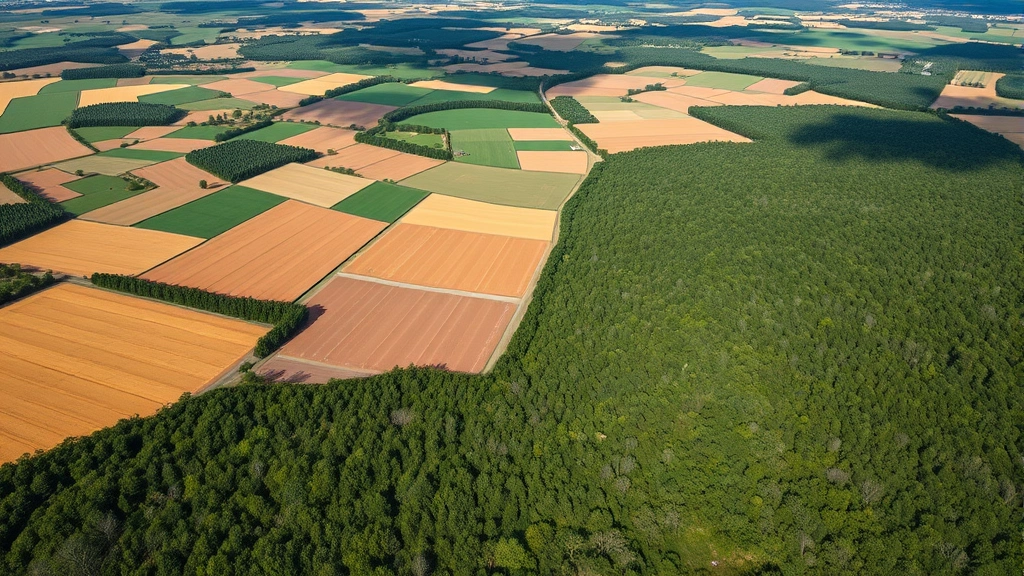
The Economic Value of Ecosystem Services
Ecosystem services represent the tangible benefits that human economies derive directly from natural systems. These services operate across four primary categories: provisioning services (food, water, timber), regulating services (climate control, flood prevention, disease regulation), supporting services (nutrient cycling, soil formation, photosynthesis), and cultural services (recreation, aesthetic value, spiritual significance). The critical insight from recent economic research is that these services generate measurable monetary value that far exceeds the cost of conservation.
A landmark study published through World Bank analysis estimated that global ecosystem services generate approximately $125 trillion in annual economic value. To contextualize this figure: global GDP totals roughly $100 trillion annually. This means that ecosystem services produce more economic value than all human economic activity combined, yet these services receive virtually no compensation in market economies. When forests are cleared for short-term timber profits, the loss of pollination services, carbon sequestration, water filtration, and biodiversity habitat represents an unaccounted economic loss far exceeding the timber revenue.
Understanding definition of environment science becomes essential when discussing ecosystem services, as it encompasses the complex interactions that generate economic value. Pollination services alone support agricultural production valued at $15-20 billion annually in the United States, yet these services depend entirely on ecosystem health. When pesticide use and habitat loss reduce pollinator populations, the economic cost manifests through reduced crop yields, increased agricultural input costs, and eventual food price inflation. This represents a direct transfer of wealth from ecosystem destruction to economic accounts that fail to capture the underlying damage.
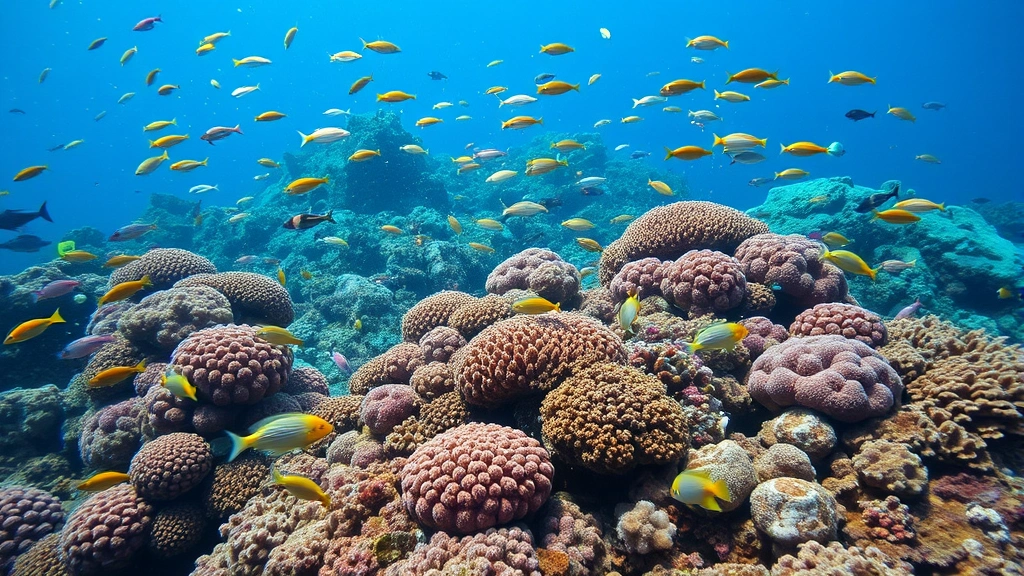
The regulating services provided by healthy ecosystems generate perhaps the most substantial economic benefits. Wetlands and mangrove forests provide flood protection worth thousands of dollars per hectare annually, yet these ecosystems are drained and converted to development at rates suggesting zero economic value. Coral reefs protect coastlines from storm surge while supporting fisheries worth $375 billion annually and providing tourism revenue exceeding $36 billion. When reef systems collapse from warming, acidification, and pollution, the economic losses cascade through multiple sectors simultaneously.
Natural Capital and GDP Accounting
Conventional GDP accounting represents perhaps the most fundamental flaw in how modern economies measure progress. GDP captures economic transactions but completely ignores whether those transactions deplete natural capital or degrade environmental conditions. A nation could clearcut its entire forest, sell the timber, and experience a measured increase in GDP—despite destroying the asset base that generates long-term economic productivity. This accounting framework incentivizes short-term extraction over long-term stewardship.
Environmental economists have developed alternative accounting frameworks that treat natural capital with the same rigor applied to financial and manufactured capital. Natural capital includes renewable resources (forests, fisheries, agricultural land) and non-renewable resources (minerals, fossil fuels), along with environmental assets like clean air and water. When these assets are depleted, the depletion should be treated as capital consumption, not income. A country harvesting its natural capital should adjust GDP downward by the depreciation value of that capital—precisely as a manufacturing company would account for equipment depreciation.
The United Nations Environment Programme (UNEP) has promoted natural capital accounting methodologies that several countries have begun implementing. When Indonesia adjusted its national accounts to include natural capital depreciation, the nation’s measured economic growth declined by approximately 2-4 percentage points annually—a dramatic difference that reveals how conventional accounting obscures ecological decline. Countries dependent on forest resources showed that sustainable timber harvest rates would require maintaining forest cover, rather than the liquidation approach that conventional GDP accounting incentivizes.
Understanding human environment interaction through the lens of natural capital accounting reveals that economic prosperity depends on maintaining the ecological systems that generate value. This represents a fundamental reorientation of how we measure economic success. Rather than maximizing extraction rates, economies should optimize the flow of services from natural capital stocks, much as financial investors manage asset portfolios to generate sustainable returns rather than liquidate principal.
The relationship between natural capital depletion and economic vulnerability becomes evident when examining resource-dependent economies. Nations that have depleted fish stocks experience economic collapse in fishing sectors. Countries that have degraded agricultural soils face declining productivity and eventual food insecurity. Regions that have exhausted groundwater aquifers confront agricultural and economic crises. These represent not abstract environmental concerns but concrete economic disasters that could have been prevented through natural capital accounting that recognized the finite nature of these resources.
Case Studies: Economic Collapse from Ecological Failure
History provides numerous examples of civilizations that experienced economic collapse through ecological degradation, offering empirical evidence that economies cannot thrive without functioning ecosystems. The Easter Island civilization represents perhaps the most dramatic historical example: a society that achieved remarkable cultural and architectural accomplishments while its ecosystem remained healthy, then experienced complete collapse when deforestation eliminated the resource base supporting population and construction.
More recent examples demonstrate that modern economies remain vulnerable to the same ecological constraints. The Grand Banks cod fishery off Newfoundland represented one of the world’s most productive fisheries, supporting economies and populations for centuries. Through the 1980s, industrial fishing technology enabled harvest rates far exceeding sustainable yield levels. By 1992, the fishery collapsed entirely—cod populations dropped 99 percent, and the Canadian government implemented a moratorium that devastated fishing communities and eliminated thousands of jobs. The economic value extracted through unsustainable fishing proved temporary, while the ecological and economic damage persists decades later. The fishery remains commercially closed, representing a permanent loss of ecosystem services and economic productivity.
The Aral Sea ecological disaster demonstrates how large-scale ecosystem degradation creates catastrophic economic consequences. Soviet-era irrigation projects diverted water from the Aral Sea to support cotton cultivation, fundamentally altering the region’s hydrology. The sea shrunk to a fraction of its former size, fisheries collapsed, and the exposed seabed released toxic salts and agricultural chemicals into the atmosphere. The region experienced economic devastation, health crises, and population decline—consequences that persist despite efforts to restore portions of the ecosystem. The short-term economic gains from cotton production proved vastly outweighed by the long-term economic losses from ecosystem destruction.
Contemporary examples continue this pattern. The deforestation of Madagascar has eliminated 90 percent of the island’s original forest cover, destroying ecosystems that supported unique biodiversity and provided crucial ecosystem services. The economic consequence includes soil degradation, reduced agricultural productivity, increased poverty, and economic stagnation. The short-term timber revenues from forest clearing proved insignificant compared to the long-term economic losses from ecosystem service degradation.
These case studies reveal a consistent pattern: ecosystems generate continuous flows of economic value through provisioning and regulating services. When these systems are degraded through extraction or pollution, the immediate economic gains prove temporary while the economic losses accumulate indefinitely. The rational economic response involves maintaining ecosystem capital to ensure perpetual flows of ecosystem services, rather than liquidating that capital for short-term gain.
The True Cost of Ecosystem Degradation
Calculating the true economic cost of ecosystem degradation requires accounting for multiple categories of loss: direct loss of provisioning services (food, water, materials), loss of regulating services (climate stability, disease control, water purification), reduced resilience to environmental shocks, and health and quality-of-life impacts. When these costs are aggregated, ecosystem degradation emerges as an enormous drag on economic performance.
Climate change represents perhaps the most economically significant consequence of ecosystem degradation. Forests, wetlands, and ocean ecosystems provide carbon sequestration services that regulate atmospheric composition and climate stability. Deforestation and ecosystem degradation eliminate this carbon sink capacity while releasing stored carbon, accelerating climate change. The economic costs of climate impacts—including extreme weather events, agricultural disruption, infrastructure damage, health impacts, and forced migration—are projected to reach $1-5 trillion annually by mid-century under moderate warming scenarios. These costs dwarf any economic benefits from the activities causing ecosystem degradation.
Air and water pollution from ecosystem degradation creates direct health costs that manifest through medical expenses, lost productivity, and premature mortality. The World Health Organization estimates that air pollution alone causes approximately 7 million premature deaths annually, with economic costs exceeding $5 trillion when accounting for health impacts and lost productivity. Much of this pollution originates from ecosystem degradation: deforestation reducing air quality, agricultural runoff creating dead zones in coastal waters, and industrial expansion polluting air and groundwater.
Understanding how do humans affect the environment through the lens of true economic cost reveals that many activities appearing profitable in conventional accounting actually represent net economic losses when ecosystem damage is properly valued. Industrial agriculture appears profitable when measuring only crop output, but when accounting for soil degradation, water pollution, pesticide health impacts, and lost pollinator services, the true economic return often becomes negative. Sustainable agricultural practices that maintain soil health and ecosystem function may generate lower short-term yields but create superior long-term economic returns through sustained productivity.
Biodiversity loss represents another profound economic cost of ecosystem degradation. Genetic diversity in wild plant and animal populations provides the raw material for agricultural improvement, pharmaceutical development, and biotechnology innovation. The economic value of genetic resources for agriculture alone is estimated at hundreds of billions of dollars annually. When species extinction eliminates genetic diversity, future generations lose potential economic benefits that cannot be recovered. This represents an irreversible transfer of wealth from future generations to present-day consumers.
Integrating Ecological Economics into Policy
The emerging field of ecological economics attempts to integrate ecological realities into economic analysis, challenging fundamental assumptions of conventional economics. Rather than treating the economy as a closed system independent of natural systems, ecological economics recognizes the economy as a subsystem embedded within the finite Earth ecosystem. This perspective fundamentally alters policy recommendations.
Ecological economists emphasize the concept of optimal scale—the idea that economic activity should be sized relative to ecosystem carrying capacity. When economic throughput exceeds the rate at which ecosystems can regenerate resources and absorb waste, the economy has exceeded optimal scale and is consuming natural capital. Many high-income countries operate well beyond optimal scale, extracting resources from other nations and accumulating waste in the global commons. This approach is inherently unsustainable and creates economic instability.
Policy integration requires several fundamental shifts. First, natural capital must be incorporated into national accounts and economic decision-making frameworks, as discussed regarding definition of environment science and natural capital valuation. Second, ecosystem services must be recognized in market pricing through mechanisms like carbon pricing, water pricing, and payment for ecosystem services programs. Third, regulations must enforce ecological limits, recognizing that some ecosystem degradation cannot be compensated through market mechanisms.
Several nations have begun implementing these principles. Costa Rica established payment for ecosystem services programs that compensate landowners for maintaining forests, water systems, and biodiversity. This approach has maintained forest cover while generating economic benefits for rural communities. New Zealand incorporated environmental limits into national accounting frameworks, requiring that economic decisions consider impacts on natural capital. The Nordic countries have implemented circular economy principles that minimize resource extraction and waste generation while maintaining economic productivity.
However, global policy remains dominated by conventional economic frameworks that ignore ecological constraints. International trade agreements prioritize short-term market efficiency over ecosystem sustainability. Development finance institutions continue funding projects that degrade ecosystems for short-term economic gain. Carbon pricing remains absent or inadequate in most economies, failing to incorporate climate costs into economic decision-making. Until policy frameworks align with ecological reality, economies will continue pursuing unsustainable paths that generate short-term gains while accumulating long-term losses.
Future Economic Models and Sustainability
The transition toward genuinely sustainable economies requires developing and implementing economic models that recognize ecological constraints and optimize for long-term prosperity rather than short-term extraction. Several alternative frameworks are gaining traction among economists and policymakers.
The circular economy model emphasizes minimizing resource extraction and waste generation through designing products for durability, repairability, and recycling. Rather than the linear “extract-produce-dispose” model that degrades ecosystems, circular approaches maintain materials in productive use, reducing pressure on natural systems. Companies implementing circular principles often discover that reduced material throughput lowers costs while improving resilience. This demonstrates that ecological sustainability and economic efficiency can align when properly designed.
Regenerative economics extends beyond sustainability toward actively improving ecosystem health while generating economic value. Regenerative agriculture rebuilds soil health through practices like cover cropping, reduced tillage, and integrated livestock management. While sometimes producing lower short-term yields than industrial agriculture, regenerative approaches build natural capital, reduce input costs, and create greater resilience to climate variability. Over multi-decade horizons, regenerative approaches generate superior economic returns while improving ecosystem services.
The doughnut economics framework, developed by Kate Raworth, proposes that economies should operate within a “safe operating space” bounded by social foundations (minimum living standards) and ecological ceilings (planetary boundaries). Rather than maximizing growth, the goal becomes meeting human needs within ecological limits. This framework reorients economic policy from growth maximization toward thriving—ensuring that all people have sufficient material wellbeing while maintaining the ecosystems that support all life.
Understanding how to reduce carbon footprint and implement sustainable practices represents essential elements of transitioning toward genuinely sustainable economies. Individual choices matter, but systemic change requires transforming economic institutions, corporate structures, and policy frameworks. Sustainable business practices, green finance mechanisms, and circular supply chains represent concrete implementations of ecological economics principles.
The role of technology deserves careful consideration in future economic models. Renewable energy, efficiency improvements, and biotechnology innovations can reduce ecosystem pressure while maintaining economic productivity. However, technology alone cannot solve ecological challenges without accompanying changes in consumption patterns, economic incentives, and policy frameworks. Some economists worry that technology optimism enables continued disregard for ecological limits, creating false confidence that innovation will overcome fundamental constraints.
Examining sustainable fashion brands reveals how economic sectors can transition toward genuinely sustainable models. Fashion industry transformation requires reducing material throughput, improving labor conditions, minimizing pollution, and extending product lifespans. Companies implementing these changes often discover that sustainability creates competitive advantages through brand loyalty, operational efficiency, and risk reduction. This demonstrates that ecological sustainability and economic success can reinforce rather than contradict each other.
The transition toward sustainable economies represents perhaps the defining economic challenge of the coming decades. Success requires that policymakers, business leaders, and economists acknowledge the fundamental dependence of human economies on functioning ecosystems. The evidence from ecological economics research, natural capital accounting, and historical case studies increasingly demonstrates that economies cannot thrive without ecosystems. The question is not whether to transition toward sustainable models, but whether this transition occurs through deliberate policy and business innovation, or through the painful economic consequences of ecological collapse.
FAQ
What are ecosystem services and why do they matter economically?
Ecosystem services are the tangible benefits humans derive from natural systems: provisioning services (food, water, materials), regulating services (climate control, flood prevention), supporting services (nutrient cycling, soil formation), and cultural services (recreation, aesthetic value). They matter economically because they generate approximately $125 trillion in annual value—exceeding global GDP—yet receive no market compensation, creating massive market failure and misallocation of resources.
How does ecosystem degradation create economic losses?
Ecosystem degradation eliminates provisioning services (reducing food and water availability), reduces regulating services (increasing climate volatility and disease), diminishes resilience to environmental shocks, and creates health impacts through pollution. These losses cascade through multiple economic sectors simultaneously, with costs vastly exceeding the short-term gains from extraction activities.
What is natural capital accounting and how would it change economic policy?
Natural capital accounting treats natural resources and environmental assets with the same rigor as financial capital, accounting for depletion as capital consumption rather than income. Implementation would eliminate the perverse incentive to liquidate natural capital for short-term GDP gains, instead optimizing for sustainable flows of ecosystem services. Countries implementing this approach have discovered that measured economic growth declines 2-4 percentage points annually, revealing the hidden ecological degradation masked by conventional accounting.
Can sustainable economies still provide prosperity and employment?
Yes. Sustainable economic models can generate prosperity through different mechanisms: renewable energy and efficiency improvements create employment while reducing environmental impact, regenerative agriculture builds natural capital while improving farmer income, circular economy approaches reduce costs through reduced material throughput, and ecosystem restoration creates employment while rebuilding natural systems. The transition requires restructuring economic institutions, not eliminating prosperity.
What role should government policy play in transitioning toward sustainable economies?
Government policy is essential for establishing ecological limits, incorporating environmental costs into market pricing through carbon pricing and other mechanisms, protecting ecosystem services that markets undervalue, funding research and infrastructure for sustainable technologies, and regulating activities that exceed planetary boundaries. Markets alone cannot internalize externalities or protect public goods like climate stability, requiring policy intervention to align economic incentives with ecological reality.


