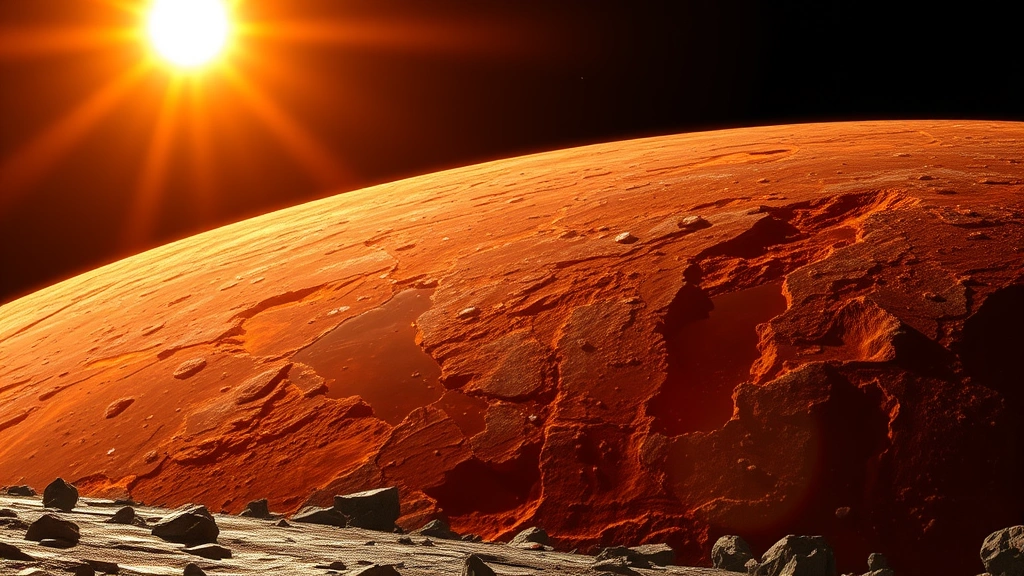
Mercury’s Economy & Ecosystems: Expert Insights on Surface, Space Environment, and Geochemistry
Mercury represents one of the most economically significant and scientifically fascinating planetary bodies in our solar system. While traditionally viewed through an astronomical lens, Mercury’s surface composition, space environment, and geochemical properties reveal profound implications for understanding planetary economics—both in terms of resource potential and the fundamental relationships between planetary systems and economic viability. This analysis bridges planetary science with economic and ecological frameworks, examining how Mercury’s unique characteristics inform our understanding of space resource management, geochemical cycling, and the broader implications for future space-based economies.
The study of Mercury has intensified dramatically over the past two decades, driven by missions like NASA’s MESSENGER and the ongoing BepiColombo mission, which employ sophisticated surface space environment geochemistry and ranging (SSGR) technologies. These instruments have revolutionized our understanding of the planet’s composition, thermal dynamics, and potential economic value. As humanity contemplates expanding economic activities beyond Earth, Mercury serves as a critical case study for understanding how planetary characteristics influence resource accessibility, extraction feasibility, and long-term sustainability of extraterrestrial economic ventures.
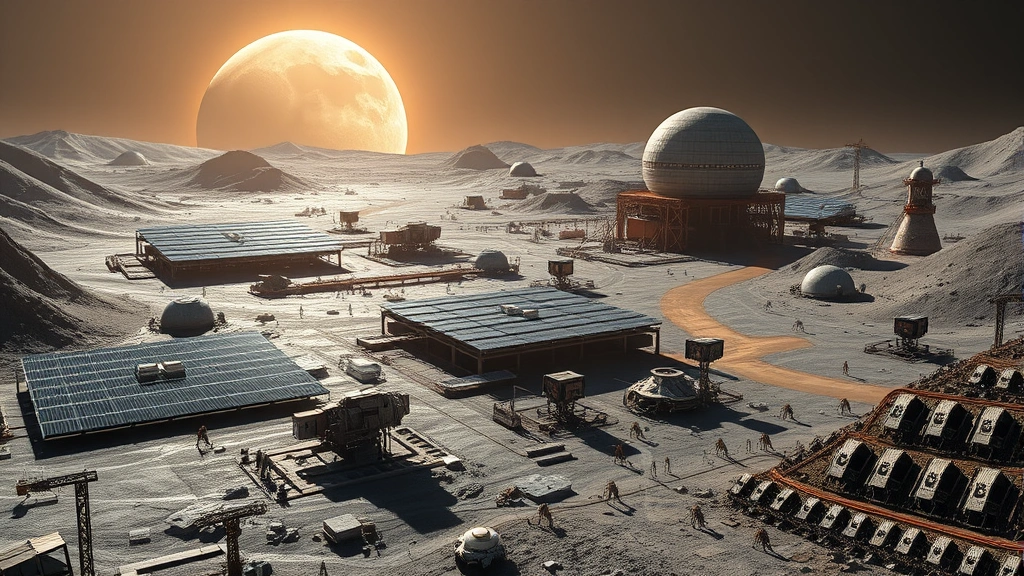
Understanding Mercury’s Geochemical Composition
Mercury’s surface reveals a complex geochemical signature that fundamentally shapes its economic potential and scientific interest. The planet’s composition differs dramatically from Earth, with a disproportionately large iron core comprising approximately 75% of the planet’s radius. This unusual composition creates distinct economic opportunities and challenges for future resource extraction initiatives. The surface, characterized by ancient impact basins, ridges, and plains, contains concentrations of elements including sulfur, oxygen, sodium, hydrogen, and volatile organic compounds that were previously thought impossible at Mercury’s proximity to the sun.
Advanced environmental science methodologies have enabled researchers to map Mercury’s surface composition with unprecedented precision. Spectrographic analysis reveals that Mercury’s regolith—the unconsolidated surface material—contains valuable elements including iron, magnesium, calcium, and aluminum. These elements possess significant economic value for construction, manufacturing, and energy production in space-based industrial operations. The discovery of water ice in permanently shadowed craters near Mercury’s poles represents perhaps the most economically significant finding, as water serves as both a consumable resource and a potential fuel source for spacecraft and habitats.
The geochemical cycling processes on Mercury operate under conditions fundamentally different from Earth’s systems. Without a substantial atmosphere or magnetic field, Mercury’s surface experiences direct solar radiation and cosmic ray bombardment, creating unique weathering patterns and chemical transformations. Understanding these processes proves essential for assessing the long-term viability of surface operations and resource extraction. The interaction between planetary systems and potential human or robotic activity requires sophisticated modeling of geochemical response to industrial processes.

Space Environment and Economic Implications
Mercury’s space environment presents both remarkable opportunities and formidable challenges for economic development. The planet’s proximity to the sun creates an intense radiation environment and extreme temperature variations, with daytime surface temperatures reaching 430°C (800°F) and nighttime temperatures plummeting to -180°C (-290°F). This thermal regime demands revolutionary engineering solutions and represents a substantial cost factor in any economic assessment of Mercury-based operations.
The magnetosphere and solar wind interaction at Mercury generate unique phenomena with significant implications for technology deployment and human presence. Mercury’s weak magnetic field, approximately 1% the strength of Earth’s, provides minimal protection from solar radiation, creating hazardous conditions for electronic systems and biological organisms. This environmental constraint fundamentally shapes the economic calculus of Mercury-based activities, requiring substantial investment in radiation shielding, redundant systems, and advanced materials capable of withstanding extreme conditions.
Surface space environment geochemistry and ranging technologies enable precise measurement of these environmental parameters. Instruments aboard spacecraft measure solar wind density, magnetospheric structure, and energetic particle distributions, providing data essential for mission planning and risk assessment. The accumulation of environmental data supports increasingly sophisticated economic models that account for operational challenges and resource requirements. Recent analyses from the United Nations Environment Programme suggest that understanding extraterrestrial space environments proves critical for sustainable resource management frameworks applicable across multiple planetary bodies.
Mercury’s orbital characteristics influence economic considerations significantly. The planet’s elliptical orbit creates substantial variations in solar energy availability, affecting the feasibility of solar power systems and thermal management strategies. The 88-day Mercurian year and complex orbital resonances with the sun shape the planning horizons for long-duration missions and industrial operations. These temporal factors require integration into comprehensive economic models that account for cyclical resource availability and operational windows.
Resource Potential and Future Economics
The economic potential of Mercury extends beyond simple resource extraction to encompass strategic positioning within emerging space-based economic systems. Mercury’s proximity to the sun creates unique advantages for solar energy collection, with solar radiation intensity approximately 6.5 times greater than at Earth. This energy advantage could support energy-intensive industrial processes, including manufacturing, mineral processing, and potentially even fusion research facilities powered by concentrated solar energy.
The discovery of water ice deposits represents the most immediately economically viable resource. Water ice, found in permanently shadowed crater regions despite Mercury’s proximity to the sun, could support human habitats, provide radiation shielding, and serve as fuel for spacecraft propulsion systems. Economic analyses suggest that extracting and processing this water ice could reduce the cost of space operations dramatically by eliminating the necessity of launching water from Earth’s gravity well. This single resource advantage could catalyze substantial economic development in Mercury’s vicinity.
Rare earth elements and strategic metals concentrated in Mercury’s regolith present additional economic opportunities. Iron, nickel, cobalt, and other transition metals essential for advanced manufacturing and energy storage systems exist in concentrations potentially economical to extract. The relative abundance of these elements on Mercury, combined with lower gravitational requirements for transport compared to extraction from larger bodies, creates favorable economics for selective mining operations. Understanding how human activity affects planetary systems requires integrating these resource extraction scenarios into broader sustainability frameworks.
The volatile-rich deposits near Mercury’s poles represent frontiers in planetary geochemistry and economic potential. These materials, including organic compounds and volatile elements, may prove valuable for chemical manufacturing, pharmaceutical production, or advanced materials synthesis. The extreme conditions on Mercury, paradoxically, may enable production of materials impossible to manufacture under Earth’s atmospheric and gravitational constraints.
Technological Frameworks for Planetary Assessment
Surface space environment geochemistry and ranging (SSGR) technology encompasses sophisticated instrumental systems designed to characterize planetary bodies comprehensively. These technologies integrate spectrographic analysis, magnetometry, radiometry, and ranging measurements to generate detailed geochemical maps and environmental profiles. The MESSENGER mission, which orbited Mercury from 2011 to 2015, deployed advanced SSGR instruments including the Mercury Dual Imaging System, the Gamma-Ray Spectrometer, and the Neutron Spectrometer, revolutionizing our understanding of Mercury’s composition.
The BepiColombo mission, a joint effort between the European Space Agency and Japan’s space agency, continues advancing SSGR methodologies. This mission employs even more sophisticated instruments, including the Mercury Imaging X-ray Spectrometer and advanced magnetometers, enabling unprecedented resolution in geochemical mapping and environmental characterization. These technological capabilities support increasingly accurate economic assessments by providing data on resource distribution, environmental hazards, and operational constraints with margins of error previously impossible to achieve.
Future SSGR technology development focuses on miniaturization, increased sensitivity, and enhanced data processing capabilities. Autonomous systems capable of deploying SSGR instruments on Mercury’s surface would generate continuous environmental and geochemical data streams, supporting real-time decision-making for industrial operations. These technological advances reduce uncertainty in economic projections and enable more sophisticated risk management strategies for space-based enterprises.
The integration of SSGR data with advanced computational modeling enables sophisticated simulations of planetary processes and resource extraction scenarios. Machine learning algorithms analyze vast datasets to identify optimal locations for resource extraction, predict environmental responses to industrial activity, and model long-term sustainability of operations. This computational infrastructure represents essential economic infrastructure for space-based industries, equivalent to the surveying and geological assessment services that underpin terrestrial mining and resource extraction.
Ecological Perspectives on Extraterrestrial Systems
While Mercury lacks biological ecosystems in any conventional sense, applying ecological frameworks to understand planetary systems and human-system interactions proves analytically valuable. Ecological economics, as discussed in comprehensive environmental analyses, emphasizes the interdependence between economic systems and the biophysical environment. This perspective, while developed for Earth’s ecosystems, offers important insights for evaluating sustainable approaches to extraterrestrial resource management.
The concept of planetary boundaries, typically applied to Earth, can be adapted to Mercury to identify thresholds beyond which intensive resource extraction or industrial activity would fundamentally alter planetary characteristics. These boundaries might include limits on surface disruption, thermal modification of subsurface systems, or contamination of water ice deposits. Establishing such boundaries proactively, before intensive economic development occurs, reflects lessons learned from terrestrial environmental management and incorporates precautionary principles into space economics.
The preservation of scientific value represents an ecological consideration in extraterrestrial contexts. Mercury’s unique geochemical characteristics and extreme environment offer irreplaceable scientific knowledge about planetary formation, geochemical processes, and habitability conditions. Intensive resource extraction or industrial development could compromise scientific research opportunities, representing a form of ecological loss in the informational sense. Balancing economic development with scientific preservation requires integrated planning frameworks that value knowledge generation alongside material resource extraction.
Contamination prevention, while not involving biological organisms, parallels ecological concerns about preserving pristine environments. The introduction of Earth-derived materials or modifications to Mercury’s surface could compromise the scientific integrity of geochemical studies and potentially interfere with future resource extraction or industrial operations. Developing protocols for contamination prevention and environmental stewardship in extraterrestrial contexts reflects ecological principles of maintaining system integrity and resilience.
Investment and Policy Considerations
The economic viability of Mercury-based activities depends substantially on policy frameworks and investment structures that remain underdeveloped. Current international space law, codified primarily in the Outer Space Treaty of 1967, prohibits national appropriation of celestial bodies but permits resource extraction by private entities under national sponsorship. This ambiguous framework creates uncertainty for potential investors and inhibits capital formation for Mercury-focused ventures.
Economic modeling suggests that Mercury-based operations would require initial capital investments ranging from hundreds of millions to several billion dollars, depending on operational scope and technological sophistication. These investment requirements exceed the capacity of most private enterprises and necessitate substantial public funding, international partnerships, or innovative financing mechanisms. Understanding environmental impact reduction strategies applicable to space industries could inform sustainable investment frameworks that incorporate long-term environmental stewardship as a core principle.
The World Bank and development finance institutions have begun examining frameworks for sustainable resource management in extraterrestrial contexts. Research from institutions like the International Institute for Sustainable Development explores how terrestrial sustainability principles might apply to space-based economies. These analyses suggest that integrating environmental assessment, stakeholder consultation, and long-term monitoring requirements into space project planning could prevent repeating terrestrial mistakes in space resource management.
Policy development requires input from diverse stakeholders including scientists, engineers, economists, environmental advocates, and international representatives. Establishing governance structures capable of managing Mercury’s resources sustainably while permitting economic development represents a complex institutional challenge. Regional approaches, sectoral regulations, and adaptive management frameworks could provide flexible mechanisms for balancing competing interests while maintaining environmental integrity and scientific value.
The concept of sustainable practice implementation in terrestrial contexts offers insights applicable to space industries. Certification systems, environmental impact assessments, and corporate responsibility frameworks developed for sustainable business could be adapted for space-based enterprises. These mechanisms would establish accountability structures and ensure that economic development incorporates environmental and scientific preservation principles.
Taxation and benefit-sharing mechanisms require development to ensure that Mercury’s resources benefit humanity broadly rather than concentrating benefits among a narrow group of investors or nations. International frameworks could mandate revenue sharing, technology transfer, or contributions to scientific research as conditions for resource extraction rights. These mechanisms would align space resource extraction with sustainable development goals and ensure equitable distribution of benefits from extraterrestrial economic activities.
FAQ
What is surface space environment geochemistry and ranging technology?
Surface space environment geochemistry and ranging (SSGR) encompasses instrumental systems that measure planetary composition, environmental conditions, and physical characteristics. These technologies include spectrometers, magnetometers, and ranging instruments that generate detailed maps of elemental composition, magnetic fields, and surface features. SSGR capabilities enable precise assessment of resource potential, environmental hazards, and scientific characteristics essential for planning economic activities on planetary bodies.
Why is Mercury economically significant despite extreme conditions?
Mercury’s economic significance derives from several factors: water ice deposits in polar regions, abundant rare earth elements and strategic metals, intense solar radiation enabling energy-intensive industrial processes, and strategic positioning for future space-based economies. The planet’s unique geochemical composition and extreme environment create opportunities for specialized manufacturing and resource extraction that could reduce costs for space-based operations substantially.
How do extreme temperatures affect resource extraction on Mercury?
Extreme temperature variations (430°C daytime to -180°C nighttime) require revolutionary engineering solutions including advanced thermal management systems, specialized materials, and redundant equipment. These requirements increase operational costs substantially and necessitate innovative technologies capable of functioning across Mercury’s thermal extremes. However, these same extreme conditions enable certain manufacturing processes impossible under Earth conditions.
What are the main environmental concerns for Mercury development?
Primary environmental concerns include contamination of water ice deposits, disruption of geochemical systems, compromise of scientific research opportunities, and potential long-term alterations to planetary characteristics. Establishing environmental management frameworks proactively, before intensive development occurs, reflects lessons learned from terrestrial environmental management and incorporates precautionary principles into space economics.
How might Mercury’s resources benefit Earth-based economies?
Mercury’s resources could reduce costs for space-based infrastructure by eliminating launch costs for water and strategic materials. Lower-cost space infrastructure could enable more affordable satellite services, space tourism, manufacturing in microgravity, and other space-based economic activities. Additionally, scientific knowledge gained from Mercury research advances understanding of planetary processes applicable to Earth system science and resource management.
What policy frameworks currently govern Mercury resource extraction?
The Outer Space Treaty of 1967 prohibits national appropriation but permits resource extraction by private entities under national sponsorship. This ambiguous framework creates uncertainty for investors and requires clarification through additional international agreements. Policy development remains underdeveloped, necessitating international cooperation to establish sustainable governance structures for space resource management.


