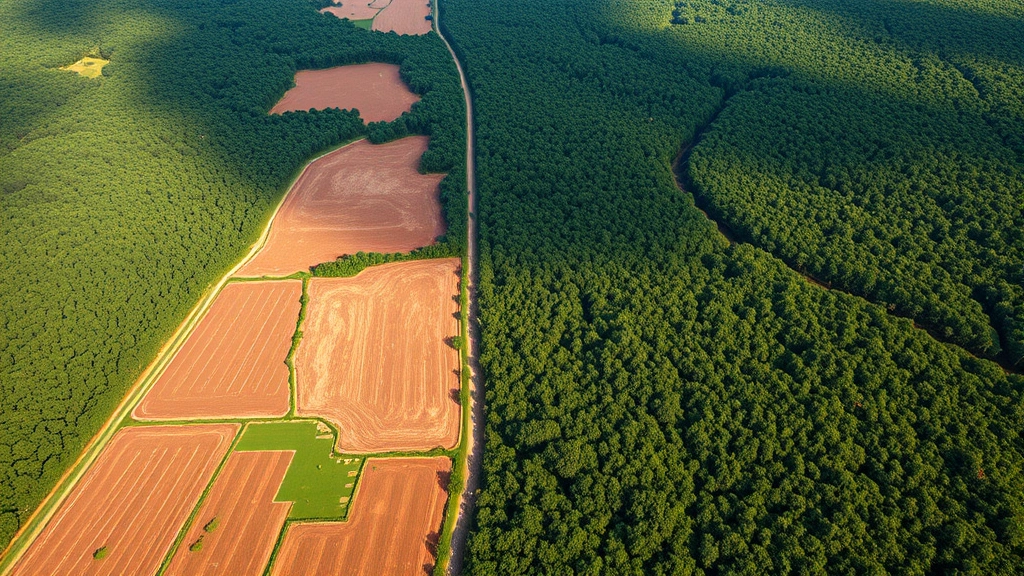
Macroeconomic Environment’s Impact on Ecosystems
The macroeconomic environment fundamentally shapes how human societies interact with natural systems, creating cascading effects that ripple through ecosystems worldwide. Economic growth patterns, interest rates, trade policies, and investment flows determine resource extraction rates, pollution levels, and conservation funding. Understanding this interconnection reveals why traditional GDP-focused economics has systematically undervalued ecological assets and why systemic economic restructuring is essential for planetary health.
The relationship between macroeconomic conditions and ecosystem degradation operates through multiple pathways: financial incentives drive agricultural expansion into biodiverse regions, currency fluctuations affect commodity prices and extraction intensity, and recessions paradoxically create both environmental relief and increased resource exploitation pressures. This complex dynamic demands an integrated analytical framework that bridges ecological economics with macroeconomic policy analysis.
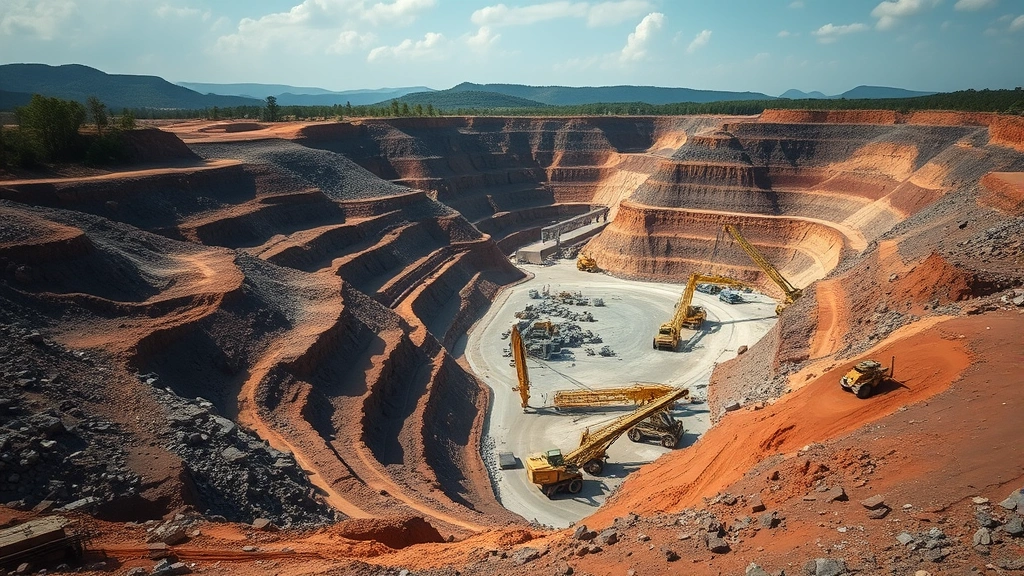
Economic Growth and Resource Extraction Dynamics
The pursuit of GDP expansion creates systematic pressures on ecosystems through intensified resource extraction. When macroeconomic conditions favor growth, investment capital flows toward extractive industries—logging, mining, agriculture, and fisheries. The economic environment’s interest rate structure determines the discount rate applied to future environmental costs, effectively making immediate extraction more economically rational than long-term conservation.
Research from the World Bank’s environmental economics division demonstrates that nations experiencing rapid GDP growth consume 2-3 times more natural resources per capita than stable economies. Between 2000 and 2020, global biomass extraction increased 167%, driven primarily by macroeconomic expansion in developing nations. This extraction-growth nexus creates what ecological economists term the “rebound effect”—efficiency improvements are overwhelmed by increased consumption.
The macroeconomic environment also influences technological adoption rates. During economic booms, capital investment in efficient extraction technologies increases, paradoxically enabling faster resource depletion. Conversely, during recessions, reduced investment can temporarily slow extraction, though this often reflects demand destruction rather than conservation ethics. Understanding human-environment interaction requires recognizing that economic cycles directly translate into ecosystem stress cycles.
Commodity price fluctuations—themselves driven by macroeconomic conditions—create volatile incentives for extraction. When global demand strengthens and commodity prices rise, marginal lands become economically viable for development. The Amazon experiences accelerated deforestation during economic growth periods in developed nations, as cattle ranching and soy cultivation become increasingly profitable. This demonstrates how distant macroeconomic conditions trigger ecosystem transformation thousands of miles away.

Financial Markets and Ecosystem Valuation
Modern financial systems systematically undervalue natural capital, creating persistent market failures that accelerate ecosystem degradation. The macroeconomic environment’s capital allocation mechanisms—stock markets, bond markets, and venture capital flows—reward activities that externalize environmental costs. A forest’s carbon sequestration services, water filtration capacity, and biodiversity support generate zero financial returns in conventional accounting.
The discount rate applied in cost-benefit analyses embodies this valuation problem. Standard macroeconomic practice applies 3-7% annual discount rates to future environmental benefits, mathematically rendering century-scale ecosystem services worthless. A forest providing perpetual watershed services worth $100 million annually becomes valued at under $2 million when discounted at 5% over 100 years. This accounting framework, embedded in macroeconomic policy, justifies ecosystem conversion to immediate financial gains.
Financial innovation has intensified these dynamics. Derivatives markets, securitization of natural resource rights, and speculative investment in agricultural land create incentive structures divorced from ecological outcomes. A macroeconomic environment favoring financial deregulation—as occurred from 1990-2008—correlates with accelerated land grabs, deforestation, and agricultural intensification in biodiverse regions. The 2008 financial crisis, triggered by macroeconomic instability, subsequently sparked massive land acquisitions in Africa and Southeast Asia as investors sought tangible assets.
Addressing these valuation failures requires fundamental macroeconomic restructuring. Natural capital accounting—incorporating ecosystem services into national accounts—remains marginally implemented despite decades of advocacy. The UN System of Environmental-Economic Accounting (SEEA) provides frameworks for ecosystem-integrated economics, yet most nations continue using GDP as their primary macroeconomic metric, ignoring natural capital depletion equivalent to consuming productive capital.
Trade Policies and Environmental Degradation
The macroeconomic environment’s trade architecture—tariff structures, trade agreements, and exchange rate regimes—creates powerful incentives for ecosystem destruction across global supply chains. Comparative advantage theory, foundational to macroeconomic trade policy, encourages nations to specialize in resource-intensive production if they possess abundant natural capital. This specialization systematically transfers environmental costs to biodiverse developing nations while concentrating financial benefits in wealthy consuming nations.
Trade liberalization since the 1990s correlates strongly with accelerated deforestation, particularly in tropical regions. Nations integrating into global markets expand agricultural exports—palm oil, beef, soy—at rates driven by macroeconomic growth in importing nations rather than domestic sustainability considerations. The macroeconomic environment determines exchange rates; when currencies strengthen, export industries intensify production to maintain revenue, accelerating ecosystem conversion.
Understanding how water pollution affects ecosystems requires examining trade’s role in agricultural intensification. Global macroeconomic demand for cheap agricultural commodities drives fertilizer and pesticide use, creating nutrient pollution cascades that collapse aquatic ecosystems thousands of kilometers downstream. The Mississippi River’s hypoxic dead zone—among Earth’s largest—results directly from macroeconomic incentives for intensive Midwestern agriculture serving global markets.
Trade policy’s environmental asymmetries become apparent when examining carbon embodied in international commerce. Wealthy nations import carbon-intensive manufactured goods, outsourcing production emissions to developing nations. The macroeconomic environment rewards this arrangement: corporations minimize costs by locating production in nations with weak environmental regulation, while consuming nations maintain political credit for domestic emissions reductions. Global carbon accounting reveals that consumption-based emissions—the macroeconomic environment’s true environmental footprint—exceed production-based measures by 25-30%.
Monetary Policy Effects on Natural Capital
Central bank policies—interest rates, quantitative easing, reserve requirements—shape the macroeconomic environment’s treatment of natural assets through discount rate mechanisms. Low interest rates reduce the opportunity cost of environmental conservation; preservation becomes economically competitive with extraction. Conversely, elevated interest rates increase pressure for immediate resource extraction, as future environmental benefits become mathematically negligible relative to present financial returns.
The post-2008 era of unprecedented monetary expansion—near-zero interest rates and trillions in quantitative easing—created contradictory environmental effects. Low borrowing costs enabled renewable energy investment, yet simultaneously fueled speculative asset bubbles in agricultural land and extractive industries. Macroeconomic conditions favored both conservation-enabling green bonds and destructive land speculation simultaneously, depending on investor expectations and policy frameworks.
Inflation dynamics within the macroeconomic environment also influence ecosystem pressure. High inflation erodes savings, encouraging investors to seek real asset returns through land acquisition and resource extraction. During inflationary periods, natural resource prices typically rise, further incentivizing extraction. The stagflation of the 1970s, the post-COVID inflation surge, and currency debasement in developing nations all correlate with accelerated ecosystem degradation as economic actors seek inflation hedges through resource acquisition.
Macroeconomic instability itself damages ecosystems through multiple pathways. Currency crises force nations to intensify exports to service external debt, accelerating resource extraction. Indonesia’s 1997 financial crisis preceded massive forest fires and deforestation as economic desperation drove unsustainable harvesting. The macroeconomic environment’s stability directly determines ecosystem stability; financial volatility translates into ecological volatility through resource pressure mechanisms.
Sectoral Economic Shifts and Biodiversity
Structural economic transitions—deindustrialization, agricultural decline, service sector expansion—reshape macroeconomic environments in ways with profound ecosystem consequences. Post-industrial economies in wealthy nations experience reduced domestic resource extraction, yet maintain ecosystem impacts through imports. The macroeconomic transition from manufacturing to services in developed nations created illusion of decoupling from nature; reality shows outsourced environmental destruction in supply chains.
Agricultural economics exemplifies sectoral transformation’s ecosystem impacts. Macroeconomic development typically follows agricultural mechanization and intensification, enabling workforce migration to cities. Industrial agriculture replaces diverse farming systems, eliminating habitat and genetic diversity while concentrating production on commodity monocultures. The macroeconomic environment’s reward structure—economies of scale, mechanization advantages, chemical input efficiency—systematically eliminates traditional polyculture systems supporting higher biodiversity.
Renewable energy expansion represents a sectoral shift potentially decoupling economic growth from carbon emissions. However, the macroeconomic environment determines transition speed and sustainability. Subsidies, carbon pricing, and investment incentives—macroeconomic policy tools—enable renewable deployment. Conversely, fossil fuel subsidies ($7 trillion annually when including environmental externalities) perpetuate carbon-intensive growth. Learning about renewable energy for homes illustrates household-level responses, yet macroeconomic policy fundamentally determines sector-wide transformation rates.
Tourism’s macroeconomic expansion demonstrates sectoral growth’s ecosystem complexity. Tourism provides economic incentives for conservation in developing nations, protecting rainforests and coral reefs through payment for ecosystem services. Yet tourism infrastructure development—roads, hotels, resorts—fragments habitats and accelerates ecosystem conversion. The macroeconomic environment determines whether tourism becomes conservation ally or ecosystem destroyer; unregulated growth typically produces the latter.
Climate Economics and Ecosystem Resilience
Climate change represents the ultimate macroeconomic-ecosystem interaction: global economic systems generate greenhouse gas emissions that destabilize climate systems, which cascade through ecosystems with impacts exceeding any direct economic effect. The macroeconomic environment’s carbon intensity—energy sources, transportation systems, industrial processes—determines climate trajectory and ecosystem resilience consequences.
Stern Review and subsequent climate economics research establish that immediate macroeconomic restructuring toward decarbonization costs 1-3% of global GDP, while climate inaction costs 5-20% of GDP through ecosystem collapse, agricultural failure, and infrastructure destruction. Yet the macroeconomic environment’s short-term orientation—quarterly earnings, election cycles, political mandates—systematically underweights these long-term costs. Discount rates embed this temporal bias mathematically, rendering future catastrophe economically negligible in present-value calculations.
Ecosystem resilience—capacity to absorb disturbance and maintain function—degrades under combined pressures of climate change and macroeconomic extraction. Forests stressed by logging become less resilient to drought; coral reefs weakened by fishing collapse under warming. The macroeconomic environment that drives extraction simultaneously undermines ecosystem capacity to adapt to climate impacts. This compounding effect creates tipping points where ecosystem collapse accelerates suddenly rather than degrading gradually.
Carbon pricing mechanisms, carbon taxes, and cap-and-trade systems represent macroeconomic policy attempts to internalize climate costs. However, current carbon prices ($5-50 per ton globally) remain far below social cost of carbon estimates ($75-200+ per ton), reflecting political constraints within the macroeconomic environment. This pricing gap perpetuates incentive structures favoring carbon-intensive production, locking in decades of ecosystem damage through capital stock decisions made today.
Biodiversity loss and ecosystem degradation accelerate climate vulnerability. Deforestation reduces carbon sequestration capacity and increases atmospheric carbon; wetland destruction eliminates methane storage; agricultural intensification reduces soil carbon. The macroeconomic environment’s extraction patterns directly reduce Earth’s climate buffering capacity, creating vicious cycles where economic growth simultaneously increases climate vulnerability and reduces ecosystem resilience to manage resulting impacts.
FAQ
How does economic growth directly damage ecosystems?
Economic growth typically increases resource extraction, energy consumption, and waste generation. The macroeconomic environment’s incentive structures reward activities externalizing environmental costs. Growing economies demand more timber, minerals, agricultural products, and energy, directly translating into ecosystem conversion, pollution, and habitat loss. However, decoupling growth from environmental impact remains theoretically possible through renewable energy, circular economy models, and ecosystem service valuation, though current macroeconomic policies inadequately support such transitions.
What role do interest rates play in ecosystem degradation?
Interest rates determine discount rates applied to future environmental benefits, mathematically rendering long-term ecosystem services worthless in economic calculations. High interest rates increase pressure for immediate resource extraction; low rates make conservation economically competitive. The macroeconomic environment’s interest rate structure thus directly influences whether ecosystems face preservation or conversion pressure through purely financial mechanisms independent of environmental awareness.
Can ecosystems recover during recessions?
Recessions reduce economic activity, temporarily decreasing extraction, pollution, and resource consumption. However, recovery remains partial and often creates perverse incentives. Nations experiencing recession frequently intensify resource extraction during recovery to repay accumulated debt, potentially causing greater long-term ecosystem damage. Additionally, reduced conservation funding during recessions prevents ecosystem restoration. The macroeconomic environment’s cyclical nature creates boom-bust patterns with net negative ecosystem outcomes across full cycles.
How do trade agreements affect ecosystem protection?
Trade agreements typically prioritize commerce over environmental protection, creating incentives for ecosystem-destructive production in signatory nations. Provisions protecting investor rights can override environmental regulations; tariff elimination encourages specialization in resource-intensive production. However, some modern agreements incorporate environmental standards. The macroeconomic environment’s trade architecture fundamentally shapes whether ecosystems benefit from international cooperation or suffer from competitive degradation races.
What macroeconomic changes would reduce ecosystem damage?
Comprehensive approaches include: natural capital accounting replacing GDP; carbon pricing reflecting true social costs; elimination of fossil fuel subsidies; ecosystem service payment mechanisms; reformed discount rates valuing future generations; supply chain transparency requiring environmental cost internalization; and decentralized economic systems reducing transportation impacts. Additionally, exploring how to reduce carbon footprint at individual levels complements necessary macroeconomic restructuring. Ultimately, transitioning from extractive to regenerative economics requires fundamental macroeconomic environment transformation beyond incremental policy adjustments.
How do financial markets drive ecosystem destruction?
Financial markets allocate capital based on profit maximization rather than ecosystem health. Extractive industries receive investment because they generate financial returns; ecosystem services generate zero financial flows. Speculation in agricultural land, commodity derivatives, and resource rights creates incentives divorced from ecological outcomes. The macroeconomic environment’s capital allocation mechanisms systematically favor short-term extraction over long-term conservation, regardless of ecological consequences.
Can renewable energy transition occur within current macroeconomic frameworks?
Partial decarbonization remains possible through policy intervention—subsidies, carbon pricing, regulatory mandates—yet true sustainability likely requires macroeconomic restructuring. Renewable energy requires material extraction (minerals for batteries and solar panels), land use changes, and manufacturing impacts. The macroeconomic environment determines whether renewable transition becomes genuine ecosystem restoration or merely shifts extraction patterns. Learning about sustainable fashion brands illustrates consumer-level greening within existing systems, yet systemic transformation demands macroeconomic policy change.


