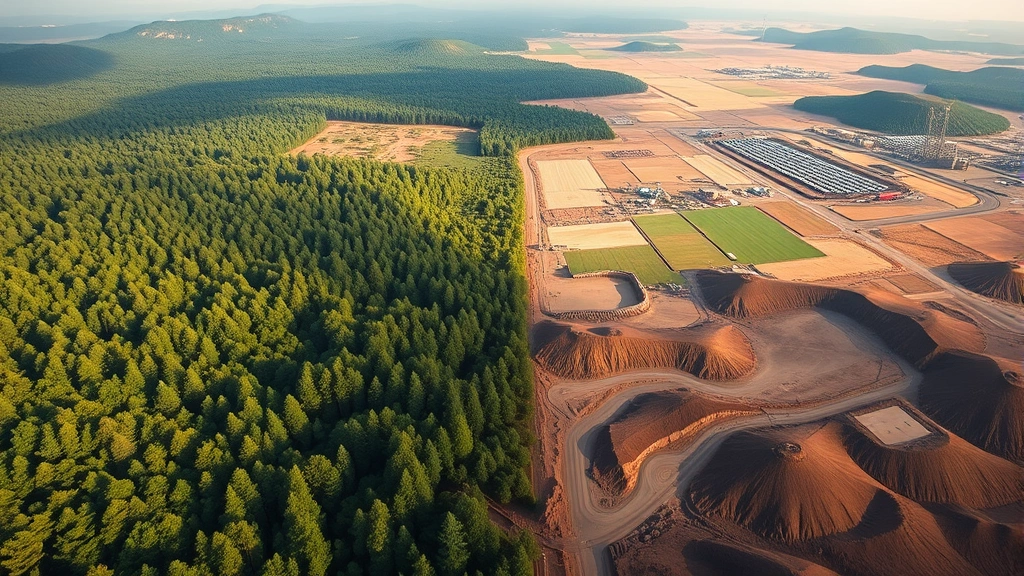
Is Economic Growth Hurting Ecosystems? Study Insights
The relationship between economic growth and environmental degradation has become one of the most pressing questions in contemporary policy discourse. As global GDP continues to expand, so too does our consumption of natural resources, energy production, and waste generation. Recent studies reveal a complex, often troubling correlation: while economic expansion has lifted millions from poverty, it has simultaneously accelerated biodiversity loss, climate change, and ecosystem collapse at unprecedented rates. This paradox challenges the fundamental assumptions underlying modern development models and demands urgent reassessment of how we measure progress and prosperity.
Understanding whether economic growth inherently damages ecosystems requires examining empirical evidence, economic theory, and emerging alternatives to traditional GDP-focused development. The question is not merely academic—it shapes policy decisions affecting billions of people and the planetary systems upon which all life depends. This analysis synthesizes recent research findings with ecological and economic principles to illuminate the mechanisms through which growth impacts nature, and explores pathways toward more sustainable futures.

The Growth-Ecosystem Paradox: Empirical Evidence
Recent comprehensive studies demonstrate an unmistakable trend: global economic expansion correlates directly with increased environmental stress. The World Bank and numerous peer-reviewed analyses show that since 1970, global GDP has tripled while wild vertebrate populations have declined by an average of 68%. Simultaneously, carbon emissions have increased by 60%, deforestation has accelerated, and ocean acidification has risen by 30%. These metrics suggest that conventional economic growth, as currently measured and pursued, fundamentally depends upon extracting resources faster than ecosystems can regenerate them.
The empirical relationship becomes clearer when examining specific sectors. Industrial agriculture, which generates substantial economic output, drives 80% of global deforestation. Fossil fuel extraction and combustion—central to modern economies—account for approximately 75% of greenhouse gas emissions. Manufacturing expansion requires mining, which devastates landscapes and contaminates water supplies. Tourism growth, celebrated as economically beneficial, increasingly degrades natural areas through infrastructure development and resource consumption. These patterns are not anomalies but structural features of growth-dependent economic systems.
Consider the temporal dimension: ecosystem degradation accelerates as economies expand. The Living Planet Index reveals that biodiversity decline has intensified during periods of highest GDP growth. Wealthy nations, which have achieved the highest per-capita GDP, simultaneously maintain the highest ecological footprints—consuming resources equivalent to multiple Earths if universalized. This correlation persists across diverse geographic, cultural, and political contexts, suggesting systemic rather than incidental causation.

Mechanisms of Environmental Degradation Under Growth
Economic growth operates through several interconnected mechanisms that drive ecosystem damage. The foundational mechanism is resource extraction acceleration. Growth-dependent economies require continuous increases in raw material inputs—minerals, timber, agricultural products, fossil fuels. This creates systematic pressure to expand extraction into previously untouched ecosystems, reducing habitat, fragmenting wildlife corridors, and destabilizing ecological balance. A healthy human and environment interaction requires respecting these boundaries, yet growth imperatives override such constraints.
The second mechanism involves waste generation and pollution. Economic activity produces waste at every stage—extraction, manufacturing, transportation, consumption, and disposal. Growth amplifies this waste proportionally. Plastic pollution, chemical contamination, radioactive materials, and microplastics now pervade every ecosystem globally. These pollutants persist for centuries, bioaccumulate through food chains, and cause cascading ecological damage. The economic system externalizes these costs, treating the biosphere as an infinite waste repository rather than a finite system with carrying capacity.
Third, growth drives energy consumption and climate change. Despite renewable energy expansion, global energy demand continues rising with economic expansion. Fossil fuels still comprise 82% of primary energy, and absolute emissions continue increasing despite efficiency improvements. The rebound effect—where efficiency gains lead to increased consumption—partially explains this persistence. Economic growth fundamentally requires energy throughput; dematerialization remains theoretical at global scales.
Fourth, land conversion and habitat destruction accelerate with growth. Expanding economies convert forests, wetlands, grasslands, and marine ecosystems into agricultural land, urban areas, and industrial zones. This fragmentation isolates species populations, reduces genetic diversity, and undermines ecosystem services. Agricultural expansion alone drives 80% of deforestation, while urban sprawl consumes prime agricultural land. Each conversion permanently reduces biodiversity and ecosystem resilience.
Fifth, growth intensifies chemical and nutrient pollution. Industrial agriculture uses synthetic fertilizers and pesticides that contaminate groundwater, create ocean dead zones, and poison non-target organisms. Industrial manufacturing releases persistent organic pollutants. These chemicals accumulate in organisms and ecosystems for decades, causing reproductive failure, developmental disorders, and ecosystem collapse. The economic system treats chemical inputs as free or cheap, ignoring ecological costs.
Decoupling Theory and Its Limitations
Proponents of continued growth argue that decoupling—separating economic expansion from environmental impact—is achievable through technology and efficiency. This theory suggests that renewable energy, circular economy principles, and green technology can enable infinite growth within finite planetary boundaries. Superficially attractive, this narrative dominates policy discussions and attracts investment.
However, empirical evidence reveals decoupling’s fundamental limitations. Relative decoupling—where environmental impact grows slower than GDP—has occurred in some wealthy nations for specific metrics like carbon intensity. Yet absolute decoupling—where environmental impact decreases while GDP increases—remains virtually non-existent at meaningful scales. When accounting for outsourced production and consumption-based emissions, wealthy nations’ apparent decoupling disappears. They’ve merely shifted extraction and pollution to poorer nations while importing finished goods.
Several factors explain decoupling’s failure. The rebound effect ensures that efficiency improvements increase consumption rather than reducing it. More efficient cars encourage more driving; cheaper renewable electricity increases overall electricity consumption. The Jevons paradox, identified in the 1800s, demonstrates that efficiency improvements historically increased resource consumption by reducing costs. This pattern persists: renewable energy expansion has not reduced fossil fuel use but supplemented it.
Additionally, material throughput requirements cannot be eliminated. Every economic activity requires some physical material flow. Renewable energy requires vast material inputs—mining rare earth elements, manufacturing solar panels and batteries, building transmission infrastructure. These processes damage ecosystems substantially. Circular economy concepts, while valuable, cannot achieve true circularity at industrial scales; entropy ensures some material loss and energy degradation in every cycle.
Perhaps most importantly, decoupling ignores embodied ecosystem damage that occurs outside market accounting. Pollinator decline, soil degradation, fishery collapse, and forest dieback represent irreversible ecological losses that GDP metrics ignore. By the time these losses become economically measurable, ecosystems have often crossed critical thresholds beyond recovery. Decoupling theory addresses economic metrics, not ecological reality.
Ecological Economics Perspective
Ecological economics offers a fundamentally different framework for understanding growth’s relationship to ecosystems. Rather than treating the economy as a self-contained system with external environmental constraints, ecological economics recognizes the economy as a subsystem embedded within the finite biosphere. This perspective, developed by scholars examining ideal work environment principles at systemic levels, reveals growth’s inherent contradictions.
The foundational insight is that natural capital—ecosystems, biodiversity, soil, water, atmosphere—provides the ultimate basis for all economic activity. Unlike manufactured capital, natural capital cannot be substituted; we cannot replace pollinated crops with machines. Ecosystem services—water filtration, climate regulation, pollination, nutrient cycling—are irreplaceable. Yet conventional economics treats these as externalities, valuing them at zero unless explicitly monetized.
Ecological economists emphasize biophysical limits to growth. The Earth has finite capacity for resource extraction and waste absorption. These limits are not distant; we’ve already exceeded safe operating boundaries for climate change, biodiversity loss, and biogeochemical flows. Continued growth toward these boundaries accelerates collapse dynamics. UNEP research confirms we’re operating 50-75% beyond sustainable extraction rates for many resources.
The concept of optimal scale challenges growth imperative logic. At small scales relative to planetary systems, growth increases human welfare by expanding productive capacity. However, beyond optimal scale, growth becomes “uneconomic”—additional production destroys more natural capital than it creates in economic value. Wealthy nations have exceeded optimal scale; further growth reduces genuine wealth despite increasing GDP. Yet growth-dependent economies cannot stabilize without collapse.
This creates a systemic trap: growth-dependent economies require continuous expansion to service debt, provide employment, and maintain political stability. Yet growth beyond optimal scale degrades the ecological foundations upon which economies depend. This is not a temporary problem solvable through efficiency; it’s a structural contradiction requiring fundamental economic reorganization.
Alternative Development Models
Recognizing growth’s ecological incompatibility, scholars and movements have developed alternative frameworks. Degrowth proposes deliberately reducing material and energy throughput in wealthy nations to sustainable levels. This requires redistribution, shorter work weeks, universal basic services, and reorientation toward wellbeing rather than consumption. While politically challenging, degrowth acknowledges ecological reality: wealthy nations cannot maintain current consumption levels without catastrophic environmental collapse.
The circular economy model attempts to minimize waste through product design, reuse, and recycling. While valuable, circular economy approaches cannot eliminate growth’s environmental impact without addressing consumption levels and material throughput. True circularity remains impossible due to thermodynamic constraints; entropy ensures some material degradation in every cycle. Circular economy works best at smaller scales with reduced overall throughput rather than as justification for continued expansion.
Bioregional economics proposes organizing economies around ecological carrying capacity of specific regions rather than maximizing exchange value. This approach respects how to reduce carbon footprint through localization while supporting community resilience. Bioregional approaches reduce transportation, increase accountability for local environmental impacts, and enable adaptive management based on ecological feedback. However, they require substantial restructuring of global supply chains and consumption patterns.
Doughnut economics reframes development as meeting human needs within planetary boundaries rather than maximizing growth. This model identifies minimum thresholds for human wellbeing (food, health, education, income) and maximum thresholds for ecological sustainability (climate, biodiversity, land use). Economic policy aims for this “safe and just space” rather than infinite growth. While conceptually appealing, implementation requires confronting powerful interests benefiting from current arrangements.
Ecological restoration economics proposes directing resources toward ecosystem recovery rather than perpetual extraction. This includes reforestation, wetland restoration, fishery rebuilding, and soil regeneration. While requiring initial investment, restoration provides employment, builds natural capital, and increases ecosystem resilience. Yet restoration economics cannot justify itself within growth frameworks; it requires valuing ecosystem health independent of market returns.
Policy Implications and Solutions
Addressing growth’s ecological damage requires multifaceted policy approaches operating at different scales. At national levels, genuine progress indicators should replace GDP as primary economic metrics. These measure actual wellbeing—health, education, environmental quality, equality, leisure—rather than mere monetary throughput. Benefits of eating organic food illustrate how individual choices align with systemic metrics when properly measured.
Carbon pricing and resource taxes internalize environmental costs, making extraction and pollution economically costly. While insufficient alone, these mechanisms create financial incentives for efficiency and conservation. However, they must be paired with redistribution to prevent regressive impacts on low-income populations and with regulations preventing simple carbon offsetting without real reduction.
Circular economy regulations mandate extended producer responsibility, requiring manufacturers to design for durability and recycling. Planned obsolescence becomes illegal; products must be repairable and recyclable. While not solving growth’s fundamental problems, these regulations reduce waste and resource intensity. World Bank analysis shows such regulations can reduce material throughput 20-40% without reducing wellbeing.
Protected area expansion preserves remaining ecosystems and enables restoration. Current protection covers approximately 17% of land and 8% of oceans; expansion to 50% would substantially reduce extinction rates and preserve ecosystem services. This requires compensation for foregone extraction and community involvement in management. Research from ecological journals confirms that large, well-connected protected areas provide disproportionate conservation benefits.
Just transition policies support workers and communities dependent on extractive industries. Rather than abrupt shutdowns, managed transition provides retraining, income support, and economic diversification toward sustainable sectors. This addresses legitimate concerns about unemployment and community collapse that fuel political resistance to environmental protection.
Consumption reduction programs in wealthy nations address the fundamental driver of growth pressure. These include shorter work weeks (enabling more leisure with less consumption), universal basic services (healthcare, education, housing, transportation), and cultural shifts away from consumerism. Denmark’s work-life balance policies and Costa Rica’s wellbeing focus demonstrate that high quality of life doesn’t require high consumption.
Agricultural transformation toward regenerative practices can sequester carbon, rebuild soil, increase biodiversity, and improve food security. Agroforestry, crop rotation, cover cropping, and reduced chemical inputs restore ecosystem function while maintaining productivity. Supporting farmer transition through subsidies and technical assistance enables this shift despite initial cost increases.
Renewable energy transition remains essential despite decoupling limitations. While insufficient alone, replacing fossil fuels with renewable sources prevents climate catastrophe and reduces air pollution. This requires massive investment in renewable infrastructure, grid modernization, and energy storage. However, this transition must accompany consumption reduction; renewable energy alone cannot sustain current consumption patterns.
International cooperation on environmental protection requires wealthy nations supporting development in poorer nations without repeating the resource-intensive growth model. Technology transfer, climate finance, and debt relief enable sustainable development pathways. Current frameworks inadequately address historical responsibility for environmental degradation and current consumption-based emissions.
FAQ
Does all economic growth damage ecosystems?
Research indicates that growth in wealthy nations, operating beyond optimal ecological scale, consistently damages ecosystems. However, growth in very poor nations—from subsistence toward basic material security—can improve human welfare without exceeding planetary boundaries if pursued sustainably. The critical distinction is scale: growth is only compatible with ecosystem health below carrying capacity thresholds, which wealthy nations have exceeded.
Can technology solve growth’s environmental problems?
Technology can improve efficiency and reduce environmental impact per unit of output, but evidence shows it cannot enable infinite growth within finite planetary boundaries. The rebound effect, material throughput requirements, and embodied ecosystem damage in production ensure that technological improvements alone fail to achieve absolute decoupling. Technology is necessary but insufficient; consumption reduction is also essential.
What would degrowth mean for employment and living standards?
Degrowth in wealthy nations would reduce material consumption but could maintain or improve living standards through shorter work weeks, universal basic services, and redistribution. Employment would shift from resource extraction and consumption goods toward care work, education, healthcare, and ecological restoration. Wellbeing metrics show that beyond certain income thresholds, additional consumption provides minimal happiness improvement; reduced work hours improve life satisfaction substantially.
How can developing nations achieve prosperity without growth?
Developing nations need sustainable development that meets basic needs—food, health, education, housing, dignity—within ecological boundaries. This differs from wealthy nations’ required degrowth. International support through technology transfer, climate finance, and debt relief enables sustainable development pathways. However, wealthy nations must simultaneously reduce consumption, creating ecological space for poorer nations’ development.
Is ecosystem protection economically viable?
Ecosystem protection generates economic value through maintained services—pollination, water filtration, climate regulation, fisheries. Studies show that conservation often provides greater economic returns than extraction when accounting for long-term value. Additionally, ecological restoration provides employment comparable to extractive industries. The barrier is not economic viability but distribution of costs and benefits; extraction concentrates profits while dispersing environmental costs, while protection distributes benefits broadly.
What role should individuals play in addressing growth’s ecological impacts?
Individual consumption reduction—reducing flights, meat consumption, shopping, driving—contributes meaningfully to ecosystem protection. However, individual action alone is insufficient; systemic change requires policy transformation. Individual choices gain leverage when paired with political advocacy for carbon pricing, renewable energy investment, and consumption reduction policies. Understanding renewable energy for homes implementation demonstrates how individual and systemic changes reinforce each other.


