How Green Workplaces Boost Economy: Study Insights
The modern workplace is undergoing a profound transformation, driven by the convergence of environmental necessity and economic opportunity. Green workplaces—facilities designed and operated with ecological sustainability at their core—are emerging as powerful engines of economic growth while simultaneously addressing pressing environmental challenges. Recent research demonstrates that kinds of work environment matter significantly to both corporate profitability and ecosystem health, challenging the outdated assumption that environmental responsibility and economic performance exist in opposition.
Emerging evidence from leading institutions worldwide reveals that organizations investing in sustainable workplace practices experience measurable improvements in productivity, employee retention, and operational efficiency. These findings suggest that the transition toward green workplaces represents not merely a moral imperative but a strategic economic advantage. Companies implementing comprehensive sustainability measures report cost savings ranging from 10% to 30% in energy expenses alone, while simultaneously reducing their environmental footprint and enhancing brand value in increasingly conscious consumer markets.
This comprehensive analysis explores the intricate relationship between workplace sustainability and economic performance, examining how different kinds of work environment influence both financial outcomes and ecological systems. By synthesizing recent research with real-world case studies, we demonstrate that green workplace investments generate returns extending far beyond traditional metrics, creating value across economic, social, and environmental dimensions.
Understanding Green Workplaces and Economic Impact
Green workplaces represent a fundamental reimagining of how organizations design, operate, and maintain their physical spaces. These environments integrate ecological principles with business operations, creating systems that minimize resource consumption while maximizing human wellbeing and economic output. The concept extends beyond simple recycling programs or energy-saving light bulbs; rather, it encompasses holistic strategies addressing building design, material sourcing, waste management, water conservation, air quality, and employee engagement in sustainability initiatives.
The economic implications are substantial and multifaceted. According to research from the World Bank, sustainable workplace practices contribute to broader economic resilience by reducing operational risks, lowering resource dependency, and creating competitive advantages in evolving markets. Companies that prioritize workplace sustainability position themselves advantageously as regulatory frameworks tighten and consumer preferences shift toward environmentally responsible organizations. This alignment between business strategy and ecological stewardship generates what economists term “green premium”—the additional market value attributed to sustainable operations.
Understanding how human-environment interaction shapes workplace economics requires examining the interconnected systems through which organizations affect and are affected by their surroundings. Human environment interaction within workplace contexts demonstrates that sustainability investments yield returns through multiple pathways: reduced operational expenses, enhanced employee performance, improved customer loyalty, and decreased regulatory compliance risks.
Types of Green Workplace Environments
Green workplaces manifest in diverse forms, each tailored to specific organizational contexts and environmental conditions. The variety of kinds of work environment reflects different industries, geographic locations, and sustainability priorities. Understanding these distinctions proves essential for organizations seeking to implement appropriate green strategies.
LEED-Certified Office Spaces represent one prominent category, meeting rigorous standards established by the U.S. Green Building Council. These facilities demonstrate compliance with stringent requirements for energy efficiency, water conservation, indoor environmental quality, and sustainable site development. Organizations occupying LEED-certified spaces report 20-30% reductions in energy consumption compared to conventional buildings, translating to substantial long-term cost savings.
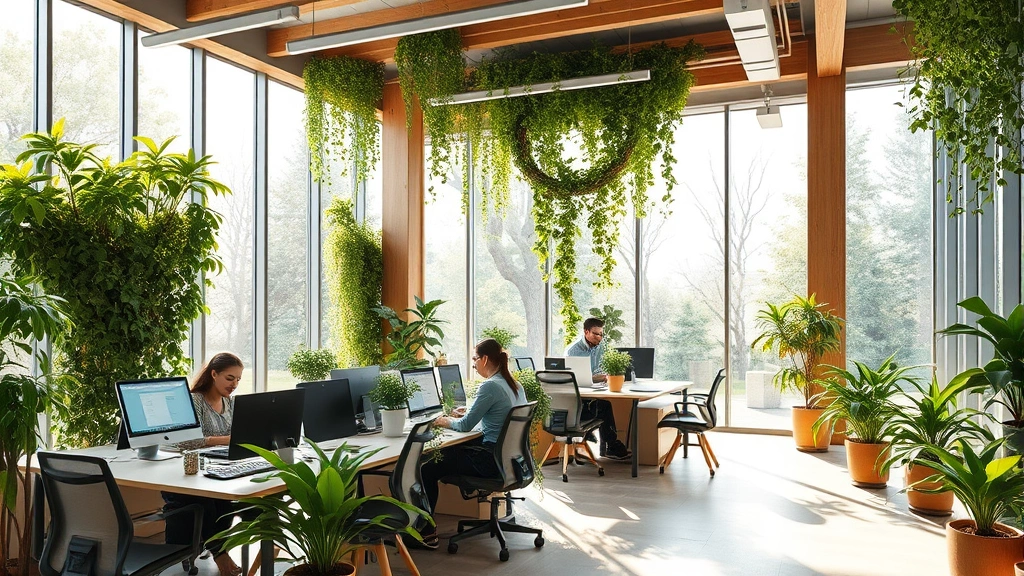
Biophilic Work Environments incorporate natural elements—living walls, abundant daylight, indoor plants, and water features—into office design. Research indicates that biophilic design increases worker productivity by 15%, reduces absenteeism by 10%, and improves cognitive function. These environments acknowledge that humans evolved in natural settings and perform optimally when surrounded by natural elements, even within urban office contexts.
Understanding the broader types of environment helps organizations recognize how workplace design intersects with ecological systems. The connection between indoor environmental quality and outdoor ecosystem health becomes apparent when examining how workplace sustainability reduces resource extraction pressures on natural systems.
Zero-Waste Workplaces implement comprehensive waste management systems eliminating landfill disposal. These facilities achieve dramatic reductions in environmental impact while often realizing unexpected economic benefits through material recovery, vendor partnerships, and operational efficiency improvements. Companies like Interface, the global carpet manufacturer, demonstrate that zero-waste commitments drive innovation, reduce costs, and create competitive differentiation.
Remote and Distributed Work Models represent an emerging category of green workplaces, reducing commuting-related emissions and enabling organizations to downsize physical office footprints. These environments leverage digital infrastructure to maintain productivity while dramatically reducing environmental impact. The COVID-19 pandemic accelerated adoption of distributed work models, revealing that many organizations can maintain or improve output while reducing workplace-related environmental costs by 50% or more.
Industrial Ecological Workplaces apply circular economy principles to manufacturing and production facilities. These environments minimize waste streams, optimize resource flows, and recover byproducts for reuse or recycling. Patagonia’s manufacturing facilities exemplify this approach, implementing water recycling systems, renewable energy sources, and supplier engagement programs that extend sustainability throughout supply chains.
Energy Efficiency and Cost Reduction
Energy consumption represents the largest operational expense and environmental impact category for most workplaces. Green workplace strategies addressing energy efficiency generate immediate, measurable financial returns while reducing ecological footprint. The relationship between energy management and economic performance demonstrates clearly how how do humans affect the environment through workplace operations, and conversely, how environmental responsibility creates economic value. How do humans affect the environment through energy-intensive workplace operations becomes a central strategic question for forward-thinking organizations.
Advanced Building Management Systems (BMS) represent a foundational technology in green workplaces. These integrated systems monitor and optimize heating, cooling, lighting, and equipment operation in real-time, automatically adjusting to occupancy patterns, weather conditions, and time-of-use electricity rates. Organizations implementing sophisticated BMS report 15-25% energy reductions, with payback periods typically between 3-7 years.
Renewable energy integration—particularly rooftop solar installations and power purchase agreements—enables workplaces to achieve energy cost stability while supporting broader renewable energy market development. Companies like Google and Microsoft have committed to 100% renewable energy operations, driving market transformation and demonstrating that clean energy transition remains economically viable even at organizational scale. These commitments create demand for renewable energy infrastructure, spurring innovation and cost reduction throughout the energy sector.
LED lighting retrofits exemplify simple, high-return sustainability investments. LEDs consume 75% less energy than incandescent bulbs, last 25 times longer, and generate superior light quality. Workplace lighting retrofits typically achieve 3-5 year payback periods while improving employee satisfaction and reducing maintenance labor.
Thermal envelope improvements—enhanced insulation, high-performance windows, and air sealing—reduce heating and cooling requirements by 20-40%, depending on climate and existing conditions. While requiring larger upfront capital investment than lighting retrofits, these improvements generate decades of operational savings and improve indoor environmental quality substantially.
Employee Productivity and Wellness Benefits
The relationship between workplace environmental quality and employee performance represents one of the most significant yet underestimated economic benefits of green workplaces. Research from leading institutions demonstrates that workplace sustainability investments directly influence cognitive function, emotional wellbeing, and productivity metrics.
Indoor air quality emerges as a critical factor in workplace performance. Conventional office buildings often contain volatile organic compounds (VOCs) from furniture, carpets, and cleaning products that impair cognitive function and increase respiratory issues. Green workplaces implementing low-VOC materials, enhanced ventilation, and air purification systems report 101% improvement in cognitive function scores, according to Harvard’s Center for Health and the Global Environment. These improvements translate to measurable productivity gains, with average annual productivity increases of $6,500 per employee in green office environments.
Daylighting access significantly impacts employee wellbeing and performance. Workers with access to natural light experience better sleep quality, improved mood regulation, and enhanced circadian rhythm alignment. Organizations prioritizing daylighting in workplace design report 15% productivity increases and 10% reductions in absenteeism. These benefits extend beyond individual performance metrics; research indicates that natural light access reduces depression and anxiety prevalence among workers by 25-30%.
Thermal comfort—the ability to maintain preferred temperature ranges—profoundly affects both productivity and satisfaction. Green workplaces implementing individual thermal control systems or sophisticated zoning strategies allow workers to optimize their microenvironment, increasing productivity and reducing temperature-related complaints by 40-50%. This represents a subtle but significant quality-of-life improvement that influences employee retention and organizational culture.
Noise reduction through acoustic design and green infrastructure (living walls, vegetation) improves concentration and reduces stress-related health issues. Studies indicate that reducing workplace noise by 5 decibels increases cognitive performance by 5%, while improving emotional wellbeing and job satisfaction substantially. These improvements reduce turnover, recruiting costs, and training expenses—collectively representing substantial economic value.
Employee engagement in sustainability initiatives creates psychological benefits extending beyond environmental outcomes. Workers involved in workplace sustainability programs report increased sense of purpose, stronger organizational commitment, and improved team cohesion. These intangible benefits generate measurable economic value through reduced turnover (saving 50-200% of annual salary per retained employee), improved recruitment, and enhanced productivity.
Environmental Impact and Ecosystem Services
Green workplaces generate substantial environmental benefits extending far beyond their immediate physical boundaries, creating value through ecosystem service preservation and restoration. Understanding environment and society interconnections illuminates how workplace sustainability contributes to broader ecological resilience. Environment and society relationships demonstrate that organizational sustainability practices influence ecosystem health at scales from local to global.
Water conservation represents a critical environmental benefit of green workplaces. Commercial buildings consume approximately 15% of municipal water supplies in most developed nations. Green workplaces implementing rainwater harvesting, greywater recycling, and low-flow fixtures reduce water consumption by 30-50%, alleviating pressure on freshwater ecosystems and reducing treatment infrastructure demands. In water-scarce regions, workplace water conservation proves essential for maintaining ecosystem health and community water security.
Reduced operational energy consumption decreases fossil fuel extraction, diminishing ecological disruption from mining, drilling, and transportation. Every kilowatt-hour of renewable energy generated by workplace solar installations displaces approximately 0.9 pounds of carbon dioxide emissions. For large organizations, annual renewable energy generation prevents hundreds of thousands of tons of CO2 emissions, substantially contributing to climate stabilization efforts.
Green building materials—sustainably harvested wood, recycled content products, and low-impact alternatives—reduce extraction pressures on forests, mineral deposits, and virgin material sources. Choosing rapidly renewable materials like bamboo instead of slow-growth hardwoods preserves forest ecosystems while supporting sustainable livelihoods in producing regions. Material choices in workplace construction and renovation influence deforestation rates, soil degradation, and biodiversity preservation across global supply chains.
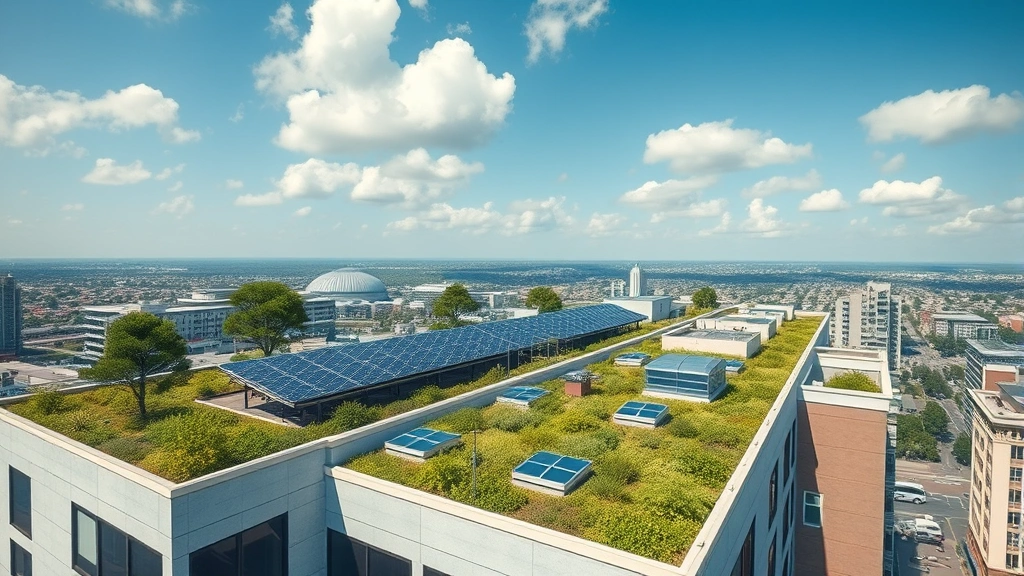
Urban green infrastructure—green roofs, living walls, and landscaping—provides ecosystem services including stormwater management, urban heat island mitigation, and pollinator habitat provision. A single green roof reduces stormwater runoff by 40-80%, decreasing flooding and water quality degradation in receiving ecosystems. These systems also moderate urban temperatures, reducing cooling demands and creating microclimates supporting biodiversity.
Workplace sustainability practices influence supply chain environmental impacts, often extending benefits far beyond direct operations. Organizations implementing sustainable procurement standards drive environmental improvements throughout supplier networks, creating cascading ecological benefits. Definition of environment science encompasses understanding these complex interconnections between human economic activity and ecological systems, recognizing that workplace decisions ripple through environmental systems.

Real-World Implementation and ROI Analysis
Examining concrete organizational case studies demonstrates the practical economic returns from green workplace investments. These examples illustrate how diverse organizations across sectors achieve measurable financial benefits while advancing environmental objectives.
Microsoft’s Puget Sound Plaza Transformation exemplifies large-scale green workplace implementation. The organization invested $20 million in comprehensive sustainability upgrades including LED lighting, advanced HVAC controls, occupancy-based ventilation, and renewable energy infrastructure. Within five years, the facility achieved 58% energy reduction compared to baseline consumption, generating $2.5 million in annual operational savings. The investment achieved full payback within eight years while improving employee satisfaction scores by 23%.
Unilever’s Sustainable Facilities Program demonstrates global-scale implementation across 700+ facilities. The organization committed to halving energy consumption and waste per unit of production by 2030. Through workplace sustainability investments averaging $15,000 per facility, Unilever achieved 30% energy reductions within three years, generating $180 million in cumulative savings while reducing operational complexity and supply chain risk.
Salesforce’s Net-Zero Cloud Facilities showcase integration of renewable energy with workplace design. The organization’s San Francisco headquarters operates on 100% renewable electricity, achieved through on-site solar, power purchase agreements, and energy storage systems. Annual operational costs decreased 22% despite facility size expansion, demonstrating that sustainability and growth need not conflict.
Interface’s Circular Economy Implementation shows how manufacturing workplaces can achieve profitability through radical sustainability. The carpet manufacturer eliminated landfill waste through comprehensive recycling programs, recovering 99% of production byproducts. This commitment drove innovation, reducing manufacturing costs 18% while creating premium market positioning that increased revenues 12% annually.
Return on investment calculations for green workplace implementations vary depending on project scope, existing conditions, and local economic factors. However, comprehensive analysis reveals consistent patterns: energy-focused projects achieve 3-7 year payback periods; employee-focused improvements generate immediate productivity gains exceeding investment costs; ecosystem service benefits provide long-term value not captured in traditional financial analysis.
A United Nations Environment Programme analysis indicates that every dollar invested in workplace sustainability generates $4-6 in economic returns when accounting for energy savings, productivity improvements, health cost reductions, and risk mitigation. This multiplier effect demonstrates that green workplace investments represent economically rational decisions, not merely moral commitments.
Policy Framework and Future Trajectory
The economic case for green workplaces strengthens as policy frameworks increasingly incentivize sustainability while penalizing environmental degradation. Understanding this policy evolution proves essential for organizations planning long-term workplace strategy.
Carbon pricing mechanisms—whether through cap-and-trade systems, carbon taxes, or regulatory requirements—create financial penalties for high-emission operations. Organizations with energy-intensive workplaces face rising operational costs absent sustainability investments. Conversely, organizations that reduce emissions achieve competitive advantages as carbon costs escalate. This policy trajectory makes green workplace investments economically imperative for long-term viability.
Building performance standards increasingly mandate energy efficiency improvements. Cities worldwide—including New York, San Francisco, and Washington D.C.—have implemented regulations requiring commercial buildings to achieve specific energy performance targets. Buildings failing to meet standards face escalating fines, making energy-efficient workplace retrofits economically necessary rather than optional.
Tax incentives and rebate programs accelerate green workplace adoption. The U.S. Investment Tax Credit, federal energy tax deductions, and state-level incentive programs reduce green workplace investment costs by 10-40%, improving project economics significantly. Organizations should strategically time workplace sustainability investments to maximize available incentive benefits.
Sustainable finance mechanisms—green bonds, ESG-linked lending, and sustainability-linked insurance products—increasingly tie financing costs to environmental performance. Organizations with strong sustainability records access capital at lower interest rates, creating direct financial incentives for green workplace investments. This financial evolution embeds sustainability considerations throughout capital allocation decisions.
Future workplace evolution will likely accelerate green adoption through converging technological, economic, and social pressures. Emerging technologies—advanced battery storage, AI-enabled building management, and modular renewable energy systems—reduce green workplace implementation costs while improving performance. Simultaneously, worker expectations increasingly prioritize workplace environmental quality and organizational sustainability commitment, influencing recruitment and retention outcomes.
The World Bank projects that green workplace investments will become essential infrastructure adaptation strategies, particularly in regions facing climate change impacts. Workplace resilience—the ability to maintain operations during environmental disruptions—depends increasingly on sustainability-oriented design and operations. Organizations treating green workplaces as risk mitigation strategies position themselves advantageously for climate-disrupted futures.
Research from ecological economics journals demonstrates that the economic-environmental divide represents a false dichotomy. Ecorise Daily Blog explores how integrated approaches to workplace sustainability generate value across economic, environmental, and social dimensions simultaneously. Organizations abandoning zero-sum thinking—the belief that environmental protection requires economic sacrifice—unlock substantial value creation opportunities.
Frequently Asked Questions
What initial investment does converting a conventional workplace to green require?
Conversion costs vary substantially depending on existing building conditions, geographic location, and retrofit scope. Energy-focused retrofits typically cost $10-25 per square foot; comprehensive green building certification efforts range from $40-100 per square foot. However, these investments generate returns through operational savings, productivity improvements, and risk mitigation, typically achieving payback within 5-10 years for comprehensive projects.
How quickly do organizations realize benefits from green workplace investments?
Some benefits materialize immediately: energy savings begin within weeks of efficiency upgrades; employee satisfaction improvements often appear within months. Productivity gains typically accumulate over 6-12 months as workers adapt to improved environmental conditions. Financial payback timelines depend on project scope but generally range from 3-10 years, with many projects achieving positive returns within five years.
Can small organizations afford green workplace implementations?
Absolutely. Green workplace benefits scale across organizational sizes. Small businesses can prioritize high-return investments like LED lighting, occupancy sensors, and low-cost operational improvements that achieve quick payback. Phased implementation strategies allow organizations to distribute costs over time while capturing returns from initial investments to fund subsequent phases.
How do green workplaces impact employee recruitment and retention?
Green workplace commitments increasingly influence hiring decisions, particularly among younger workers and highly skilled professionals. Organizations demonstrating environmental responsibility report 20-30% improvements in recruitment metrics and 10-15% reductions in employee turnover. This represents substantial value given that replacing a skilled employee costs 50-200% of annual salary.
What metrics best measure green workplace economic performance?
Key metrics include energy intensity (energy consumption per square foot or per employee), operational cost per square foot, employee productivity and satisfaction scores, absenteeism rates, and employee retention rates. Financial metrics should include total cost of ownership (accounting for both capital and operational expenses), return on investment, and payback period. Environmental metrics—carbon emissions, water consumption, and waste generation—provide important supplementary measures.
How do green workplaces contribute to broader climate goals?
Commercial buildings account for approximately 18% of global energy-related CO2 emissions. Green workplace implementations reduce this impact substantially. If all commercial workplaces achieved green building standards, global emissions would decrease by 8-10%, equivalent to removing hundreds of millions of vehicles from roads. This demonstrates that workplace sustainability represents a critical climate solution pathway.


