
Kansas Economy & Ecosystems: Health Dept Insights
Kansas stands at the intersection of agricultural productivity and environmental stewardship, where economic vitality directly influences ecosystem health. The Kansas Department of Health and Environment (KDHE) serves as a critical institutional bridge between these domains, providing data-driven insights that illuminate how economic activities reshape natural systems. Understanding this relationship reveals deeper truths about sustainable development in the Great Plains.
The state’s economy—anchored by agriculture, energy production, and manufacturing—generates substantial wealth while simultaneously placing significant pressure on water resources, soil quality, and air integrity. KDHE’s multifaceted role encompasses environmental monitoring, public health protection, and regulatory oversight, making it essential for comprehending Kansas’s economic-ecological nexus. This analysis explores how these systems interact, what data reveals about their interdependence, and what pathways exist toward genuine sustainability.
KDHE’s Role in Economic-Environmental Monitoring
The Kansas Department of Health and Environment operates as the state’s primary institution for integrating environmental protection with public health policy. Established through legislative mandates and federal environmental law compliance, KDHE monitors air and water quality, manages waste systems, and tracks environmental health indicators across Kansas’s diverse landscapes. This institutional framework reflects an essential understanding: economic systems cannot be evaluated in isolation from their environmental and health consequences.
KDHE’s data collection mechanisms provide quantifiable evidence of how economic activities translate into measurable environmental changes. The department maintains comprehensive databases on point-source and non-point pollution, tracks compliance with the Clean Air Act and Clean Water Act, and monitors emerging contaminants that threaten both ecological integrity and human wellbeing. These monitoring systems generate approximately 50,000 data points annually across multiple environmental domains, creating an empirical foundation for understanding Kansas’s economy-ecosystem relationships.
The department’s regulatory authority extends across multiple sectors: industrial facilities must obtain air and water permits; agricultural operations face increasingly stringent runoff regulations; energy producers must demonstrate compliance with emissions standards. This regulatory architecture, while sometimes contentious, creates economic incentives for pollution reduction and resource efficiency. Studies by the World Bank demonstrate that environmental regulation, when well-designed, drives innovation and reduces long-term economic costs associated with environmental degradation.
Understanding human environment interaction in Kansas requires engaging with KDHE’s institutional knowledge, which synthesizes decades of environmental monitoring with economic data. The department’s reports reveal critical patterns: how commodity prices influence fertilizer application rates, how energy markets affect emission levels, and how industrial restructuring reshapes regional air quality.
Agricultural Economy and Ecosystem Pressures
Kansas agriculture generates approximately $17.6 billion annually in economic output, representing roughly 10% of the state’s gross domestic product. This substantial economic contribution derives primarily from wheat, corn, sorghum, and cattle production across approximately 14 million acres of farmland. However, this economic productivity comes intertwined with significant ecosystem pressures that KDHE monitoring systems continuously document.
The agricultural sector’s primary environmental impact mechanisms include soil degradation, nutrient runoff, pesticide contamination, and water depletion. KDHE tracks nitrogen and phosphorus concentrations in Kansas waterways, documenting seasonal spikes coinciding with fertilizer application cycles. Nutrient loading contributes to hypoxic zones in downstream water bodies, creating ecological dead zones where aquatic life cannot survive. The economic value of agricultural productivity must therefore be weighed against environmental costs including lost fisheries value, reduced recreational opportunities, and degraded water quality requiring expensive treatment infrastructure.
Soil health represents another critical economic-ecological intersection. Kansas experiences approximately 4 tons per acre of soil loss annually in some regions—a rate exceeding natural soil formation by orders of magnitude. This degradation reduces long-term agricultural productivity and ecosystem service provision. KDHE’s soil monitoring programs, conducted in collaboration with university researchers, demonstrate that conventional tillage practices generate the highest erosion rates, while conservation agriculture systems significantly reduce soil loss while maintaining economic viability.
The relationship between agricultural chemicals and ecosystem health reveals complex economic trade-offs. Herbicide and insecticide applications boost short-term crop yields and farm profitability, yet KDHE water quality data documents pesticide residues in groundwater across multiple Kansas aquifers. These contaminants persist for decades, requiring expensive remediation and potentially threatening drinking water supplies for future generations. From an ecological economics perspective, current agricultural practices externalize environmental costs—shifting them to public health systems, water treatment infrastructure, and ecosystem degradation—rather than incorporating them into commodity prices.
Livestock production, particularly concentrated animal feeding operations (CAFOs), presents distinct environmental pressures. KDHE regulates animal waste management at large-scale facilities, monitoring for nutrient runoff, pathogen contamination, and air quality impacts from concentrated animal housing. These operations generate significant economic value—Kansas ranks among the nation’s leading beef producers—while creating localized environmental and public health challenges that KDHE must manage through permitting and enforcement.
Water Resources and Economic Trade-offs
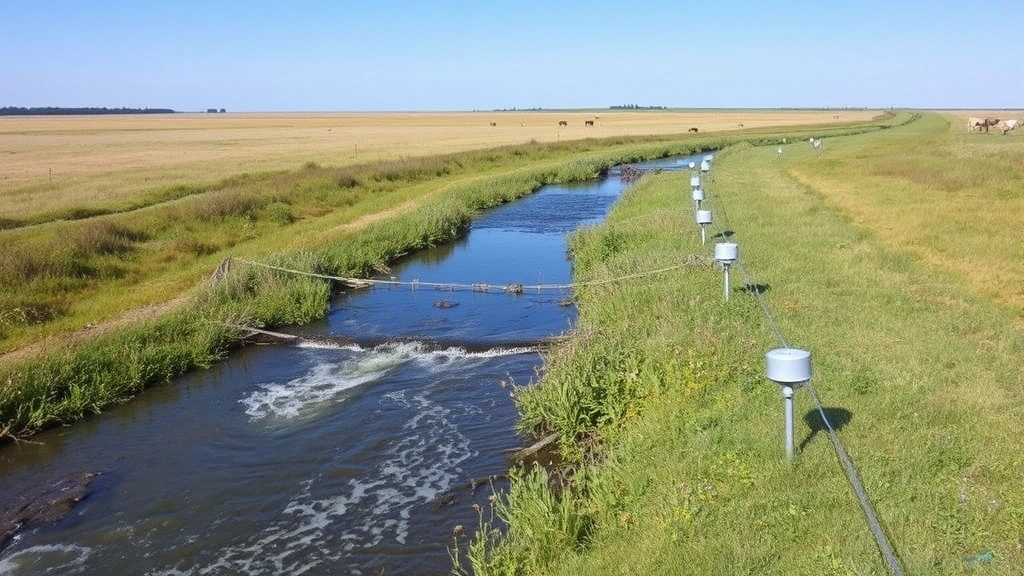
Kansas faces profound water scarcity challenges that directly threaten economic sustainability. The Ogallala Aquifer, which underlies western Kansas and supports intensive irrigation agriculture, has experienced dramatic depletion over recent decades. KDHE water monitoring reveals aquifer levels declining at rates averaging 1-2 feet annually in some regions, a consequence of irrigation withdrawals exceeding natural recharge rates by a factor of 10 or more. This situation exemplifies how short-term economic optimization generates long-term ecological and economic crisis.
The economics of groundwater depletion involve temporal discounting—the tendency to value immediate economic gains more highly than future costs. Current agricultural producers benefit from cheap irrigation water subsidized by aquifer mining, while future generations will face either reduced agricultural productivity or prohibitively expensive water imports. KDHE’s role includes documenting this dynamic through groundwater monitoring networks that track declining water tables and changing water quality profiles.
Surface water resources present distinct challenges. Kansas rivers, particularly the Platte and Arkansas rivers, face competing demands from agricultural, industrial, and municipal users. KDHE water quality monitoring documents how upstream agricultural runoff, combined with point-source industrial and municipal discharges, creates complex pollution profiles in downstream reaches. Interstate water compacts, which KDHE helps administer, establish legal frameworks for allocating increasingly scarce water resources—frameworks that must balance economic productivity with ecological integrity and public health protection.
Municipal water systems across Kansas depend on both groundwater and surface water sources. KDHE’s drinking water program monitors approximately 1,000 public water systems, tracking contaminant levels and ensuring compliance with Safe Drinking Water Act standards. Rising nitrate concentrations in many Kansas water supplies—a direct consequence of intensive agricultural nitrogen applications—force municipalities to invest in expensive treatment infrastructure or seek alternative water sources. These costs represent economic externalities of agricultural production that KDHE’s regulatory authority attempts to internalize through nonpoint source pollution controls.
The relationship between water availability and economic development creates difficult policy choices. Kansas can pursue intensive irrigation agriculture with short-term economic gains but long-term aquifer depletion, or transition toward less water-intensive production systems with reduced immediate revenue but greater long-term sustainability. KDHE data provides the empirical foundation for this policy debate, offering quantitative evidence about hydrological limits and ecological carrying capacity.
Energy Production and Air Quality Impacts
Kansas energy production encompasses diverse sources: coal-fired electricity generation, natural gas production and processing, wind energy development, and petroleum refining. KDHE’s air quality monitoring programs track emissions from these sectors, documenting how energy production decisions directly affect atmospheric composition and public health outcomes.
Coal-fired power plants, while declining in number, continue generating approximately 40% of Kansas electricity. These facilities emit substantial quantities of sulfur dioxide, nitrogen oxides, and particulate matter—pollutants that KDHE monitors through ambient air quality networks. KDHE data demonstrates correlations between proximity to coal plants and elevated childhood asthma rates, cardiovascular disease incidence, and respiratory illness prevalence. These health impacts generate economic costs through medical expenditures, lost productivity, and reduced life expectancy—costs externalized by coal producers and borne by public health systems and affected individuals.
Natural gas development in Kansas, particularly in the Hugoton Gas Field and emerging shale plays, involves methane emissions from production, processing, and distribution infrastructure. Methane represents a potent greenhouse gas with 28-34 times the warming potential of carbon dioxide over a 100-year timeframe. KDHE’s air quality monitoring, supplemented by federal EPA measurements, documents methane concentrations in Kansas air and contributes to understanding the climate economic impacts of natural gas expansion.
Wind energy development offers economic and environmental alternatives to fossil fuel generation. Kansas possesses substantial wind resources and has developed wind capacity exceeding 6,000 megawatts. KDHE monitoring confirms that wind facilities generate negligible air pollution, though environmental assessment reveals ecological impacts including avian and bat mortality, landscape fragmentation, and noise effects. These impacts, while less severe than fossil fuel pollution, represent trade-offs requiring careful economic evaluation.
The transition toward renewable energy represents a critical pathway for decoupling economic growth from ecosystem degradation. However, this transition involves substantial economic restructuring: coal mining employment declines, energy costs may shift, and regional economies dependent on fossil fuel production face disruption. Understanding how to manage this transition equitably represents a central challenge for Kansas policymakers, informed by KDHE’s environmental data and public health evidence.

Public Health Outcomes from Environmental Conditions
KDHE’s mandate encompasses both environmental protection and public health, reflecting the fundamental connection between ecosystem integrity and human wellbeing. The department’s health surveillance systems track disease incidence, environmental exposure levels, and health outcome disparities, revealing how environmental conditions translate into measurable health impacts across Kansas populations.
Air quality emerges as a primary health pathway. KDHE data documents that Kansas counties with higher ambient particulate matter concentrations experience elevated rates of respiratory disease, cardiovascular mortality, and emergency department visits for asthma exacerbations. These health impacts concentrate in populations near major pollution sources—coal plants, refineries, industrial facilities, and major transportation corridors. Environmental justice analysis reveals that lower-income communities and communities of color disproportionately experience exposure to air pollution, creating health disparities that KDHE monitoring makes quantifiable.
Water quality directly affects public health through multiple pathways. Contaminated drinking water sources expose populations to pathogens, chemical residues, and naturally occurring contaminants. KDHE’s drinking water program prevents waterborne disease outbreaks through rigorous monitoring and treatment requirements. However, emerging contaminants—including pharmaceutical residues, microplastics, and “forever chemicals” (per- and polyfluoroalkyl substances, or PFAS)—present ongoing challenges. KDHE monitoring reveals PFAS contamination in multiple Kansas water supplies, particularly near military installations and industrial facilities, requiring expensive treatment infrastructure and creating public health uncertainty.
Agricultural chemical exposure represents another significant health pathway. KDHE pesticide monitoring programs track exposure levels among agricultural workers and nearby residents, documenting health effects ranging from acute poisoning incidents to chronic disease associations. Ecological economics research demonstrates that pesticide externalities—health costs borne by workers and communities rather than reflected in crop prices—represent substantial hidden subsidies for agricultural production.
The connection between ecosystem health and pandemic risk has emerged as a critical public health concern. KDHE’s environmental monitoring contributes to understanding how habitat degradation, wildlife-human contact increases, and ecosystem fragmentation create conditions favoring zoonotic disease spillover. The COVID-19 pandemic has intensified recognition that environmental degradation and public health protection represent interconnected rather than competing objectives.
Economic Instruments for Ecosystem Recovery
Addressing the economic-ecological challenges documented by KDHE requires deploying economic instruments that align profit incentives with environmental protection. Several approaches show promise for Kansas contexts.
Payment for ecosystem services (PES) programs compensate landowners for conservation practices that generate environmental benefits. KDHE data on water quality, soil health, and biodiversity informs PES program design by quantifying ecosystem service values. For example, programs that compensate farmers for riparian buffer establishment generate documented water quality improvements that KDHE monitoring systems measure. By making ecosystem service provision economically valuable, PES programs create incentives for conservation that market prices alone do not generate.
Carbon pricing mechanisms—either carbon taxes or cap-and-trade systems—create economic incentives for reducing greenhouse gas emissions. KDHE air quality monitoring and emissions inventory data provide the empirical foundation for designing effective carbon pricing. Research from ecological economics journals demonstrates that well-designed carbon pricing can drive substantial emissions reductions while generating government revenue for ecosystem restoration or public health investments.
Environmental tax reform shifts taxation away from income and labor toward resource depletion and pollution. Rather than taxing productive economic activity, this approach taxes extractive activities that degrade ecosystems. KDHE monitoring data documents resource depletion rates and pollution flows, enabling calculation of appropriate environmental tax levels. Research from the United Nations Environment Programme demonstrates that environmental tax reform can improve both environmental outcomes and economic efficiency.
Regulatory approaches—including water quality standards, air pollution limits, and agricultural practice requirements—establish minimum environmental protections that KDHE enforces. While sometimes portrayed as economically burdensome, research demonstrates that well-designed environmental regulation drives innovation and reduces long-term costs. KDHE’s regulatory authority creates incentives for developing cleaner production technologies and more sustainable resource management practices.
The concept of natural capital accounting represents an emerging approach to integrating ecosystem values into economic decision-making. Rather than treating natural resources as infinitely renewable and freely available, natural capital accounting assigns economic values to ecosystem services and resource stocks. KDHE data contributes to natural capital accounting by quantifying ecosystem service flows, resource depletion rates, and environmental damage costs. Incorporating natural capital into gross domestic product calculations reveals that apparent economic growth often masks underlying ecological decline—a critical insight for long-term policy development.
Achieving sustainable development in Kansas requires moving beyond incremental environmental management toward fundamental economic restructuring. This transition involves recognizing that reducing carbon footprints and environmental impacts constitutes an economic opportunity rather than a burden. KDHE’s role includes providing the environmental data, health evidence, and regulatory frameworks necessary for this transition.
Understanding renewable energy alternatives and sustainable production models offers pathways toward decoupling economic growth from ecosystem degradation. KDHE monitoring systems track progress toward these alternatives, providing evidence about environmental effectiveness and health co-benefits. Research from the International Institute for Environment and Development demonstrates that sustainable production transitions create economic opportunities in technology development, ecosystem restoration, and green infrastructure—sectors offering substantial employment and innovation potential.
FAQ
What specific environmental data does KDHE collect and how frequently?
KDHE maintains comprehensive monitoring networks collecting air quality data continuously at multiple sites, water quality samples monthly to quarterly depending on water body type, and groundwater measurements at hundreds of wells throughout Kansas. The department generates approximately 50,000 environmental data points annually, creating longitudinal datasets spanning decades. This data infrastructure enables detection of trends, identification of pollution sources, and assessment of environmental intervention effectiveness. Access to KDHE’s environmental monitoring data supports research, informs regulatory decisions, and enables public engagement with environmental conditions.
How do agricultural practices directly influence water quality according to KDHE monitoring?
KDHE water quality monitoring documents direct correlations between agricultural nitrogen and phosphorus applications and downstream nutrient concentrations. Monitoring networks track seasonal nutrient spikes coinciding with fertilizer application windows, document groundwater nitrate increases in intensive agricultural regions, and measure nutrient loading in surface water bodies. These patterns reveal that approximately 60-80% of nitrogen in Kansas waterways originates from agricultural sources. KDHE data demonstrates that conservation agriculture practices—including no-till systems, cover cropping, and riparian buffers—significantly reduce nutrient runoff while maintaining economic productivity.
What health disparities does KDHE data reveal regarding environmental exposure?
KDHE health surveillance systems document that lower-income communities and communities of color experience disproportionate environmental exposures. Air quality monitoring reveals higher particulate matter concentrations in neighborhoods adjacent to industrial facilities, refineries, and major transportation corridors—areas where housing costs are lower and minority populations concentrate. Health data correlates these elevated exposures with higher rates of asthma, respiratory disease, and cardiovascular mortality. KDHE’s environmental justice initiatives aim to address these disparities through enhanced monitoring, community engagement, and regulatory enforcement prioritizing protection of vulnerable populations.
How does KDHE approach the challenge of emerging contaminants like PFAS?
KDHE has expanded monitoring programs to detect per- and polyfluoroalkyl substances in groundwater and drinking water supplies, particularly near military installations, airports, and industrial facilities where PFAS-containing products are used. The department works with the federal EPA and other states to develop drinking water standards for PFAS, which remain unregulated at the federal level despite documented health risks. KDHE provides technical assistance to water systems for PFAS treatment and supports research investigating PFAS sources, transport mechanisms, and health effects. This proactive approach reflects KDHE’s role in anticipating emerging environmental health challenges before they become widespread public health crises.
What role does KDHE play in Kansas’s transition toward renewable energy?
KDHE supports renewable energy transition through air quality monitoring demonstrating air pollution reductions as fossil fuel generation declines, health surveillance tracking respiratory disease improvements correlated with improved air quality, and environmental assessment of renewable energy facilities including wind and solar installations. The department coordinates with energy planners to ensure environmental protections during energy infrastructure development and provides technical expertise on air quality benefits associated with fossil fuel retirement. KDHE data demonstrates that renewable energy expansion generates substantial public health co-benefits through reduced air pollution exposure, providing economic justification for renewable energy investment beyond climate considerations.
How can Kansas policymakers use KDHE data for economic decision-making?
KDHE’s comprehensive environmental and health data provides empirical foundation for cost-benefit analysis of economic policies affecting ecosystems. Policymakers can quantify environmental costs of various economic activities, assess health impacts of pollution exposure, and evaluate effectiveness of environmental interventions. By incorporating KDHE data into economic models, policymakers can move beyond conventional accounting that ignores environmental externalities toward decision-making reflecting true economic costs. KDHE’s role includes translating technical environmental data into policy-relevant information accessible to economic planners and political decision-makers, enabling integration of environmental considerations into mainstream economic development strategy.
Return to Blog Home for additional human environment interaction analyses exploring economy-ecosystem relationships across diverse contexts.


