

Is ChatGPT Eco-Friendly? Comprehensive Insights & Environmental Studies
Artificial intelligence has revolutionized how we work, learn, and solve problems. ChatGPT, OpenAI’s flagship language model, has captured global attention with its remarkable capabilities in generating human-like text, answering complex questions, and automating countless tasks. However, as adoption accelerates, a critical question emerges: Is ChatGPT bad for the environment? The answer is nuanced, revealing a complex intersection of technological innovation, energy consumption, and ecological impact that demands serious examination.
The environmental footprint of large language models extends far beyond the electricity consumed during a single conversation. From the energy-intensive training phase to the ongoing computational demands of inference, from water usage in data center cooling to the manufacturing of specialized hardware, ChatGPT represents a significant environmental cost that most users never consider. Understanding these impacts requires examining the entire lifecycle of AI systems through an ecological economics lens, where environmental externalities are properly valued and accounted for in our assessment of technological progress.

Energy Consumption & Carbon Emissions
ChatGPT’s energy consumption is staggering by conventional standards. Each conversation with the AI system requires computational processing that draws substantial electricity from the grid. Research indicates that a single ChatGPT query consumes approximately 0.3 watt-hours of electricity, which may seem trivial in isolation. However, when multiplied across millions of daily users generating multiple requests, the aggregate demand becomes extraordinary.
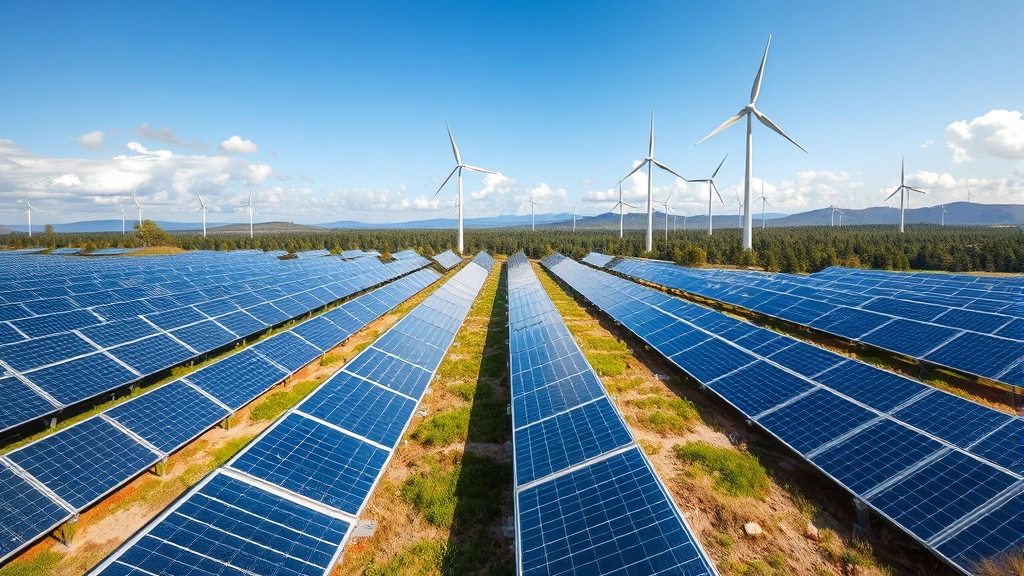
The carbon intensity of this energy consumption depends critically on the energy mix powering data centers. If electricity comes from renewable sources like wind or solar, the carbon footprint diminishes significantly. Conversely, energy derived from fossil fuels substantially increases ChatGPT’s environmental impact. OpenAI operates data centers powered by a mix of renewable and conventional energy sources, creating an inconsistent environmental profile across different geographic regions where their infrastructure operates.
According to research published by environmental technology organizations, training a single large language model like ChatGPT can generate carbon emissions equivalent to hundreds of metric tons of CO2—comparable to the annual emissions of several cars. The inference phase (actual user interactions) compounds this impact, though at lower intensity per interaction than the training phase.
The Massive Training Phase Impact
The environmental devastation begins during the training phase, where ChatGPT’s neural networks process vast datasets to learn language patterns. This phase represents the most energy-intensive component of ChatGPT’s lifecycle. Training GPT-3 (ChatGPT’s predecessor) consumed an estimated 1,287 megawatt-hours of electricity, translating to approximately 552 metric tons of CO2 equivalent emissions.
ChatGPT’s training involved processing hundreds of billions of tokens from diverse internet sources, requiring thousands of high-performance GPUs and TPUs (tensor processing units) running continuously for weeks or months. This computational intensity is necessary to develop the model’s sophisticated language understanding capabilities, but it comes at a profound environmental cost. The training process also generates substantial heat, requiring extensive cooling systems that consume additional energy and water resources.
What makes this particularly concerning from an human environment interaction perspective is that training occurs once, but the model is reused millions of times. While this creates efficiency advantages after deployment, the upfront environmental investment is concentrated and substantial. Each refinement, update, or fine-tuning of ChatGPT requires repeating significant portions of this energy-intensive training process.
Research from environmental technology journals suggests that as AI models grow larger and more sophisticated, training energy requirements scale non-linearly, meaning each generation of improvement demands exponentially more computational resources. This trend poses serious questions about the sustainability of continued AI advancement without fundamental changes to how we approach model development and deployment.
Data Center Infrastructure & Water Usage
ChatGPT operates through distributed data centers strategically located globally to minimize latency and optimize performance. These facilities house thousands of specialized processors, storage systems, and networking equipment, all generating substantial heat that requires continuous cooling to prevent equipment failure and maintain operational efficiency.
Water consumption in data center cooling represents a critical but often overlooked environmental impact. Data centers consume enormous quantities of water for cooling purposes—estimates suggest that major AI data centers consume hundreds of thousands of gallons daily. This water usage is particularly concerning in regions experiencing water scarcity, where data center operations compete with agricultural, municipal, and ecological water needs.
The cooling infrastructure itself requires significant energy investment, creating a compounding environmental burden. As computational demands increase with growing ChatGPT usage, cooling requirements scale proportionally. In some geographic regions, data center water consumption has become controversial, with local communities questioning whether technology companies should have priority access to limited water resources.
Additionally, data centers require physical infrastructure—buildings, networking equipment, backup power systems—all of which demand manufacturing resources and generate construction-phase emissions. The embodied carbon in data center hardware, from GPUs to fiber optic cables, represents a substantial environmental debt that extends beyond operational emissions.
Full Lifecycle Environmental Analysis
A comprehensive assessment of ChatGPT’s environmental impact requires examining its complete lifecycle through an ecological economics framework. This includes:
- Manufacturing phase: Production of specialized AI hardware, servers, cooling systems, and networking infrastructure involves mining rare earth minerals, energy-intensive manufacturing processes, and transportation emissions
- Training phase: The intensive computational process of developing ChatGPT’s capabilities, consuming massive electrical and water resources
- Deployment phase: Operating data centers that host ChatGPT, including continuous energy consumption for computation and cooling
- Maintenance phase: Updates, security patches, and model refinements that require additional computational resources
- End-of-life phase: Eventually, hardware becomes obsolete and requires recycling or disposal, potentially releasing hazardous materials into the environment
When viewed holistically, ChatGPT’s environmental impact extends far beyond individual queries. The system represents a significant commitment of Earth’s finite resources—energy, water, minerals, and manufacturing capacity—to support a single AI application. From an carbon footprint reduction perspective, this raises fundamental questions about whether the benefits justify the environmental costs.
Ecological economics, which values natural capital and environmental services, would argue that many of ChatGPT’s environmental costs are not adequately reflected in market prices. Users pay nothing directly for the environmental damage associated with their queries, creating a situation where the true cost of AI is externalized to society and ecosystems rather than priced into the service.
Mitigation Strategies & Improvements
OpenAI and other AI companies have implemented various strategies to reduce ChatGPT’s environmental footprint, though questions remain about their adequacy. These efforts include:
- Renewable energy sourcing: Prioritizing data center locations with access to renewable energy sources, including wind and solar power agreements
- Hardware optimization: Developing more efficient processors and cooling systems that reduce energy consumption per computation
- Model compression: Creating smaller, more efficient versions of language models that maintain functionality while reducing computational demands
- Carbon offset programs: Purchasing carbon credits to theoretically offset emissions, though critics argue this merely transfers responsibility rather than eliminating impact
- Efficiency improvements: Optimizing inference processes to reduce computational requirements for each user query
However, these mitigation strategies face limitations. Carbon offsets, for instance, remain controversial in environmental economics circles, as they often fund projects of questionable environmental benefit while allowing continued high-emission activities. Hardware optimization faces physical limits governed by thermodynamics and semiconductor physics. Renewable energy sourcing, while valuable, doesn’t eliminate the underlying resource consumption.
A more fundamental approach would involve questioning whether current AI development trajectories are sustainable, and whether society should pursue different paths that balance innovation with ecological preservation. This connects directly to broader conversations about renewable energy transitions and sustainable technology development.
Comparing AI to Other Industries
To properly contextualize ChatGPT’s environmental impact, comparison with other industries proves instructive. The global data center industry consumes approximately 1-2% of global electricity—comparable to aviation. Within this context, AI systems represent a rapidly growing and disproportionately energy-intensive subset.
A single training run of a large language model can consume as much electricity as several households use annually. Meanwhile, the financial services industry, which relies heavily on computational infrastructure for trading and analysis, consumes comparable energy to AI systems. The difference lies partly in scale—AI systems are newer and growing rapidly, while financial computing has matured over decades.
From an ecological economics perspective, what matters is not merely the absolute energy consumption but the value generated relative to environmental cost. If ChatGPT provided services that fundamentally transformed productivity or solved critical problems, the environmental investment might be justified. However, much current usage involves entertainment, convenience, and tasks that could be accomplished through other means with lower environmental impact.
Consider also that the energy consumption of cryptocurrency and blockchain systems—often criticized for environmental destructiveness—is sometimes comparable to or less than large-scale AI operations, yet receives far greater public scrutiny. This disparity suggests that environmental accountability in technology remains unevenly applied.
Future Outlook & Sustainable AI
The trajectory of AI development raises serious questions about long-term environmental sustainability. If computational demands continue scaling at current rates while energy sources remain partially fossil-fuel dependent, AI systems could become increasingly problematic from an ecological perspective. The environmental technology landscape will need fundamental shifts to accommodate continued AI advancement sustainably.
Emerging research explores several potential solutions: neuromorphic computing architectures that mimic biological neural systems with vastly lower energy requirements, quantum computing approaches that might solve certain problems more efficiently, and alternative AI paradigms that achieve sophisticated functionality without massive training datasets. However, these technologies remain largely experimental.
Additionally, policy interventions could reshape AI development incentives. Carbon pricing mechanisms that accurately reflect environmental costs would make high-energy AI systems more expensive, encouraging efficiency improvements. Regulatory frameworks requiring environmental impact assessments before deploying large-scale AI systems could prevent the most ecologically damaging applications.
The concept of biotic environment health should factor into AI development decisions. If AI systems degrade ecosystems through excessive resource consumption or contribute to climate change through emissions, they harm the biological systems upon which all life depends. This ecological perspective should weigh equally with technological and economic considerations.
Some researchers advocate for “AI for good” initiatives that prioritize applications addressing climate change, environmental restoration, and ecological monitoring. If AI could accelerate renewable energy deployment, optimize agricultural practices, or improve conservation efforts, it might generate environmental benefits that offset its operational costs. However, such applications remain underfunded compared to entertainment and commercial applications.
Looking forward, the sustainability of AI depends on deliberate choices about development priorities, energy sourcing, and technological approaches. Without intentional intervention, the environmental trajectory appears concerning. The window to shape AI development responsibly may be closing as systems become more deeply embedded in infrastructure and economic systems.
International cooperation through organizations like UNEP (United Nations Environment Programme) and research institutions focused on environmental sustainability will be essential for establishing standards and best practices for AI development. Without coordinated action, individual corporate commitments may prove insufficient to address systemic environmental challenges.
FAQ
How much energy does a single ChatGPT query use?
A single ChatGPT query consumes approximately 0.3 watt-hours of electricity. While this seems modest individually, millions of daily queries create substantial aggregate demand. The actual energy consumption varies based on query complexity, response length, and data center efficiency.
Is ChatGPT powered by renewable energy?
OpenAI operates data centers with varying energy mixes. Some facilities utilize renewable sources through power purchase agreements, while others rely partially on conventional grid electricity. The renewable percentage varies by geographic location, making ChatGPT’s carbon intensity inconsistent across regions.
How does ChatGPT’s environmental impact compare to Google searches?
Google searches consume less energy per query than ChatGPT, as they primarily retrieve pre-indexed information rather than generating new text through neural network computation. However, Google’s massive scale means total data center energy consumption is substantial. ChatGPT’s per-query impact is higher but affects fewer total queries.
Can AI help solve environmental problems?
Yes, AI has significant potential for environmental applications including climate modeling, renewable energy optimization, agricultural efficiency, and ecosystem monitoring. However, these applications remain underfunded compared to commercial uses, and the environmental benefits must be weighed against AI systems’ operational costs.
What can individuals do to reduce AI environmental impact?
Users can minimize ChatGPT environmental impact by reducing unnecessary queries, using smaller AI models when adequate, supporting policies that mandate renewable energy for data centers, and advocating for AI applications focused on environmental solutions. Choosing providers committed to carbon neutrality also matters.
Will AI ever become truly sustainable?
Future AI sustainability depends on technological breakthroughs in neuromorphic computing and quantum systems, comprehensive renewable energy transitions, and policy frameworks that accurately price environmental costs. Without deliberate intervention, current trajectories suggest sustainability challenges will intensify as AI adoption expands.
The environmental question surrounding ChatGPT ultimately reflects deeper societal choices about technology, progress, and ecological responsibility. By examining these issues through rigorous ecological economics frameworks and demanding accountability from technology companies, we can work toward AI systems that genuinely serve human and environmental flourishing rather than merely maximizing corporate extraction of Earth’s finite resources.