
How Do Ecosystems Impact Economy? Study Insights
Ecosystems and economies are fundamentally interconnected systems that shape human prosperity and planetary health. While traditional economic models often treat natural systems as external inputs, contemporary research reveals that ecosystem services generate trillions of dollars annually in direct and indirect economic value. Understanding this relationship requires examining how biodiversity, resource flows, and environmental stability create the foundation for sustainable economic growth.
The instruction environment for modern economics must acknowledge ecological constraints. Natural capital—including forests, wetlands, fisheries, and pollination services—underpins approximately 50-90% of livelihoods for the world’s poorest populations. Yet conventional GDP measurements fail to account for ecosystem degradation, creating a dangerous disconnect between reported economic growth and actual wealth creation. Recent studies demonstrate that ignoring ecological limits leads to false prosperity metrics and systemic economic vulnerability.
Ecosystem Services and Economic Valuation
Ecosystem services represent the tangible benefits that natural systems provide to human economies. The United Nations Environment Programme identifies four primary categories: provisioning services (food, water, timber), regulating services (climate regulation, pollination, water purification), supporting services (nutrient cycling, soil formation), and cultural services (recreation, spiritual value, aesthetic benefits).
A landmark 1997 study in Nature estimated global ecosystem services at $33 trillion annually—nearly twice the world’s gross national product at that time. More recent assessments by World Bank economists suggest this figure has grown to $125-145 trillion, reflecting increased understanding of service complexity and expanding economic activity dependent on natural systems.
Valuation methodologies vary significantly. Market-based approaches assign prices to marketed goods like timber and fish. Replacement cost methods calculate expenses to artificially replicate ecosystem functions—for instance, estimating costs to replace natural water filtration with treatment infrastructure. Hedonic pricing examines how ecosystem proximity affects property values. These diverse approaches reveal that ignoring natural capital represents a fundamental accounting error in economic measurement.
Pollination services alone generate $15-20 billion annually in agricultural productivity. Coastal wetlands provide storm protection valued at $23 billion yearly. Forests sequester carbon, regulate water cycles, and provide non-timber products worth hundreds of billions. When the instruction environment for economic decision-making incorporates these values, resource allocation dramatically shifts.
Natural Capital as Economic Foundation
Natural capital comprises the world’s stocks of environmental assets—minerals, fossil fuels, timber, fish, water, and biodiversity. Unlike manufactured capital, natural capital exhibits unique characteristics: many services are irreplaceable, benefits often exceed market prices, and degradation frequently becomes apparent only after critical thresholds are crossed.
The concept of human environment interaction demonstrates how economic systems depend entirely on ecological health. Agricultural production requires soil quality, water availability, and pollinator populations. Manufacturing depends on mineral extraction and water access. Tourism relies on landscape beauty and biodiversity. Energy production—whether fossil fuels or renewables—requires environmental resources and ecosystem capacity to absorb waste.
Research from ecological economics institutes shows that natural capital depletion masks true economic performance. Countries reporting GDP growth while depleting fisheries, forests, and aquifers are experiencing apparent rather than actual prosperity. Adjusted Net Savings metrics, which account for natural capital depreciation, reveal that many developing nations have negative genuine savings rates—meaning they’re becoming poorer despite positive GDP figures.
The instruction environment in financial markets increasingly recognizes natural capital limits. Asset managers controlling $130+ trillion now incorporate environmental, social, and governance (ESG) criteria. Investors recognize that companies dependent on degrading natural systems face stranded assets, supply chain disruptions, and regulatory risks. This represents a fundamental reorientation of capital allocation toward ecological sustainability.
Biodiversity Loss and Financial Risk
Biodiversity loss represents one of the most economically consequential environmental trends. The World Economic Forum’s Global Risk Report consistently ranks biodiversity loss among top-10 global risks by impact. Species extinction, habitat fragmentation, and genetic diversity decline create cascading economic consequences.
Agricultural vulnerability: Crop production depends on thousands of wild species for genetic material, pest control, and pollination. Loss of wild crop relatives eliminates breeding stock for developing climate-resilient varieties. Insect pollinator decline threatens $15 billion in annual U.S. agricultural output alone.
Pharmaceutical pipeline: Approximately 25% of pharmaceutical drugs derive from rainforest plants, yet less than 1% of tropical species have been screened for medicinal properties. Ecosystem destruction eliminates potential treatments for cancer, diabetes, and antimicrobial resistance before discovery.
Ecosystem stability: Biodiversity provides functional redundancy—when one species declines, others compensate. Reduced diversity decreases ecosystem resilience, making systems vulnerable to disturbances like climate variability or invasive species. Economic productivity becomes increasingly volatile.
Financial institutions now quantify biodiversity risk. The Nature-Related Financial Risk Initiative develops frameworks for assessing how biodiversity loss affects credit risk, asset values, and operational continuity. Companies in agriculture, pharmaceuticals, food processing, and apparel face material risks from biodiversity degradation in supply chains.

” alt=”Natural forest ecosystem with diverse canopy layers, flowing river, and wildlife habitat demonstrating ecosystem services including water purification, carbon storage, and species protection” style=”width: 100%; height: auto; border-radius: 8px;”>
Climate Change Economic Impacts
Climate change represents the ultimate ecosystem-economy linkage. Rising temperatures, altered precipitation patterns, and extreme weather events directly damage economic infrastructure, agricultural productivity, and human capital. The World Bank projects climate change could reduce global GDP by 10-23% by 2100 under high-warming scenarios.
Economic impacts distribute unevenly. Low-income nations in tropical regions face disproportionate climate vulnerability despite contributing minimally to emissions. Agricultural-dependent economies face crop yield reductions of 10-30% by 2050. Coastal nations risk inundation from sea-level rise, displacing hundreds of millions and destroying trillions in real estate.
Extreme weather events impose escalating costs. Hurricane damages, flooding, droughts, and wildfires now exceed $150 billion annually. Insurance markets face underwriting challenges as historical risk models become unreliable. Property values in vulnerable regions face permanent decline. Pension funds and sovereign wealth funds face stranded asset risks in carbon-intensive sectors.
Climate-related economic losses manifest through multiple channels: direct physical damage to assets, supply chain disruptions, labor productivity losses from heat stress, healthcare costs from disease expansion, and migration pressures from uninhabitable regions. These costs fall most heavily on developing nations lacking adaptive capacity, potentially reversing decades of poverty reduction.
Green Economy Transition
The instruction environment for global economics is shifting toward green economy frameworks. This transition recognizes that long-term prosperity requires decoupling economic growth from resource depletion and pollution.
Green economy benefits include job creation in renewable energy, sustainable agriculture, and ecosystem restoration. Solar and wind industries now employ more workers than fossil fuels in many developed nations. Restoration of degraded ecosystems creates employment while rebuilding natural capital. Circular economy approaches reduce resource extraction pressure.
However, transition challenges are substantial. Fossil fuel industries employ millions globally and possess significant political influence. Developing nations argue that wealthy countries industrialized through resource exploitation and now restrict development pathways for poorer nations. Technology transfer, climate finance, and just transition mechanisms remain inadequately funded.
How humans affect the environment through economic activity remains the central challenge. Transitioning to sustainable practices requires restructuring production systems, consumption patterns, and energy infrastructure—a transformation comparable to previous industrial revolutions but compressed into decades rather than centuries.
Investment in green economy sectors has accelerated dramatically. Clean energy investment reached $500+ billion annually by 2023. Carbon markets, though imperfect, direct capital toward emissions reduction. Green bonds finance sustainable infrastructure. These mechanisms represent emerging economic institutions aligned with ecological limits.
Case Studies and Real-World Evidence
Costa Rica’s Ecosystem Investment: Costa Rica pioneered payments for ecosystem services (PES) programs, compensating landowners for forest conservation. This approach reversed deforestation rates from 75% forest loss in 1987 to 52% forest coverage by 2020. Ecosystem restoration generated tourism revenue, protected water sources, and preserved biodiversity while creating rural employment. The program demonstrates that ecosystems can be economically valuable alive rather than cleared for agriculture.
Indonesia’s Peatland Crisis: Indonesia’s peatland drainage for palm oil production released 1.5 billion tons of CO2 annually—exceeding the nation’s transportation emissions. Ecosystem destruction generated short-term agricultural profits while creating long-term climate costs, health impacts from air pollution, and water quality degradation. This case illustrates how ecosystem destruction creates negative externalities that dwarf private benefits.
New Zealand’s Natural Capital Framework: New Zealand adopted natural capital accounting integrated into government decision-making. This approach reveals that traditional GDP growth masks natural capital depletion. Incorporating ecosystem valuation changes policy priorities, redirecting investments from extractive industries toward sustainable sectors.
Coral Reef Economics: Coral reefs generate $375 billion annually through fisheries, tourism, and coastal protection. Yet 50% of global coral reefs face bleaching from warming oceans. Economic analysis reveals that reef preservation through climate action generates vastly greater returns than reef destruction through short-term fishing intensification.
These cases demonstrate that definition of environment science increasingly encompasses economic analysis. Ecosystem economics has evolved from academic curiosity to practical policy tool.
Policy Frameworks and Solutions
Effective policy responses require integrating ecological constraints into economic institutions. Several frameworks show promise:
Natural Capital Accounting: Incorporating natural capital depreciation into national accounts provides accurate economic measurement. The UN Environment Programme promotes System of Environmental-Economic Accounting (SEEA) standards for consistent measurement across nations. This instruction environment change—accounting for natural capital like manufactured capital—fundamentally alters policy priorities.
Payments for Ecosystem Services (PES): Direct compensation for ecosystem conservation creates economic incentives for preservation. Mechanisms include carbon credits, watershed protection payments, and biodiversity conservation contracts. Approximately 550 PES programs operate globally, protecting 400+ million hectares.
Carbon Pricing: Carbon taxes and emissions trading systems assign prices to greenhouse gas emissions, internalizing climate costs into economic decisions. Approximately 60 carbon pricing initiatives operate globally, covering roughly 20% of emissions. Effective carbon prices (above $100/ton) create strong incentives for emissions reduction and clean technology investment.
Circular Economy Transitions: Redesigning production systems to eliminate waste, extend product lifespans, and recover materials reduces resource extraction pressure. Circular economy approaches can decouple economic growth from material throughput—enabling prosperity without ecosystem destruction.
Biodiversity Finance: Global biodiversity finance reached $50+ billion annually but falls far short of conservation needs estimated at $150-440 billion yearly. Increasing biodiversity finance through debt-for-nature swaps, conservation bonds, and corporate contributions remains critical.
Policy effectiveness requires coordinated implementation across multiple governance levels. International agreements like the Paris Climate Agreement and Kunming-Montreal Biodiversity Framework establish targets, but national implementation varies dramatically. Wealthier nations must provide financial and technological support to enable developing nations to pursue sustainable pathways.
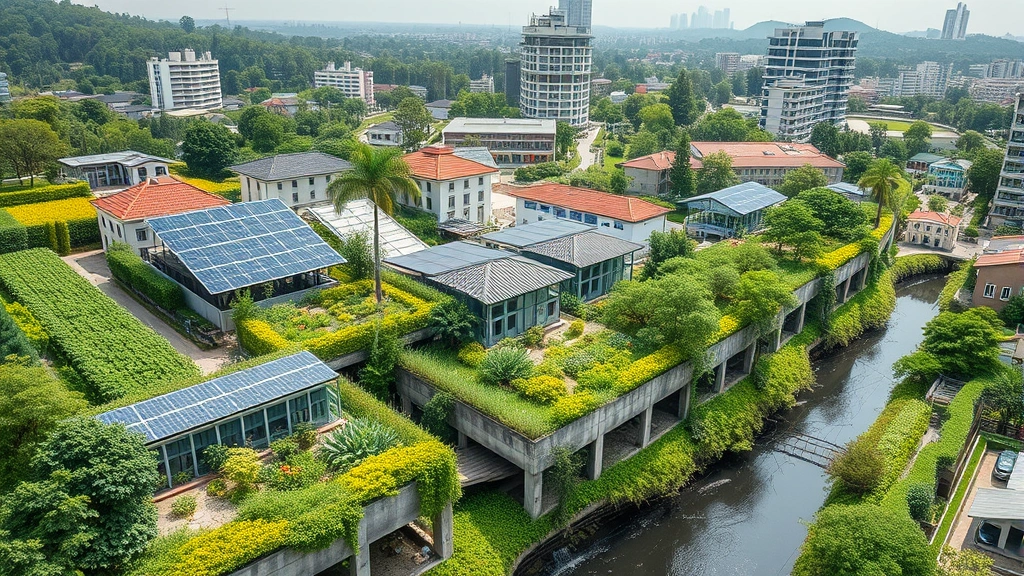
” alt=”Sustainable urban landscape with green infrastructure, renewable energy installations, thriving vegetation, and water management systems demonstrating integrated ecological-economic design” style=”width: 100%; height: auto; border-radius: 8px;”>
FAQ
How much is ecosystem services worth economically?
Global ecosystem services are valued at approximately $125-145 trillion annually, though estimates vary based on valuation methodology. This exceeds global GDP, illustrating that natural systems provide greater economic value than all human economic activity combined. However, many ecosystem services remain unpriced in markets, making this value invisible to conventional economic decision-making.
Why do economists often ignore ecosystem impacts?
Traditional economic models treat nature as either free or external to economic systems. This reflects historical abundance when natural capital seemed unlimited. Additionally, many ecosystem services lack market prices, making them invisible in GDP calculations. Reforming the instruction environment for economic thinking requires institutional change in universities, policy agencies, and financial markets—a slow process even when evidence of ecological limits becomes overwhelming.
Can economic growth continue with ecosystem protection?
Yes, but growth models must shift from throughput-based (material consumption) to value-based frameworks. Renewable energy, circular economy approaches, and ecosystem restoration can generate economic growth while reducing environmental impact. However, wealthy nations likely need to reduce material consumption while developing nations increase productive capacity—a challenging political transition.
What are the biggest economic risks from biodiversity loss?
Agricultural vulnerability ranks highest, as crop production depends on wild species for pest control, pollination, and genetic diversity. Supply chain disruptions in agriculture, pharmaceuticals, and natural materials pose systemic risks. Insurance market destabilization from increasing extreme weather events threatens financial stability. Stranded assets in carbon-intensive sectors create financial system risks.
How do developing nations balance development with ecosystem protection?
This remains the central challenge of sustainable development. Developed nations industrialized through resource exploitation, creating competitive disadvantage if developing nations accept ecosystem constraints. Solutions require climate finance, technology transfer, and revised trade agreements that don’t penalize developing nations for sustainability. The instruction environment for global economics must enable equitable sustainable development pathways.


