
Creating Ideal Workplace Environments: Economic Benefits Explored
The modern workplace has undergone a profound transformation over the past two decades, evolving from sterile cubicle farms into dynamic spaces designed to foster creativity, collaboration, and well-being. This shift reflects a growing recognition that an ideal workplace environment is not merely a luxury amenity but a fundamental driver of economic productivity and organizational success. Companies worldwide are investing billions in workplace redesign, employee wellness programs, and environmental improvements, yet many still struggle to understand the precise mechanisms through which these investments translate into measurable financial returns.
The relationship between workplace quality and economic performance exists at the intersection of organizational psychology, environmental science, and behavioral economics. When we examine how physical and cultural workplace environments influence human productivity, employee retention, innovation, and ultimately organizational profitability, we uncover compelling evidence that challenging the traditional cost-cutting approach to workplace management yields superior financial outcomes. This exploration requires understanding not just direct productivity metrics, but the broader economic ecosystem that surrounds human work, including the environmental and social dimensions that increasingly shape business value.
Understanding the economic benefits of ideal workplace environments demands an interdisciplinary perspective. We must consider how the built environment affects human cognition and performance, how organizational culture influences economic outcomes, and how sustainable workplace practices create long-term competitive advantages. The evidence suggests that companies treating workplace quality as a strategic investment rather than an operational expense consistently outperform their competitors across multiple financial metrics, from revenue growth to market valuation.

Defining the Ideal Workplace Environment
An ideal workplace environment encompasses far more than comfortable chairs and adequate lighting, though these physical elements certainly matter. It represents a holistic integration of physical design, organizational culture, technological infrastructure, and human-centered policies that collectively enable employees to perform at their highest capacity while maintaining psychological well-being and engagement. This definition bridges the gap between human-environment interaction principles and organizational management, recognizing that the spaces where humans work function as complex systems affecting both individual performance and collective outcomes.
The ideal workplace must balance multiple, sometimes competing demands: it should stimulate creativity while allowing for focused concentration; foster collaboration while respecting privacy; provide technological advancement while maintaining human connection; and support individual well-being while driving collective performance. Research from the World Bank and organizational development institutes demonstrates that workplaces achieving this balance consistently report higher productivity metrics, lower absenteeism, reduced turnover, and stronger financial performance than their counterparts.
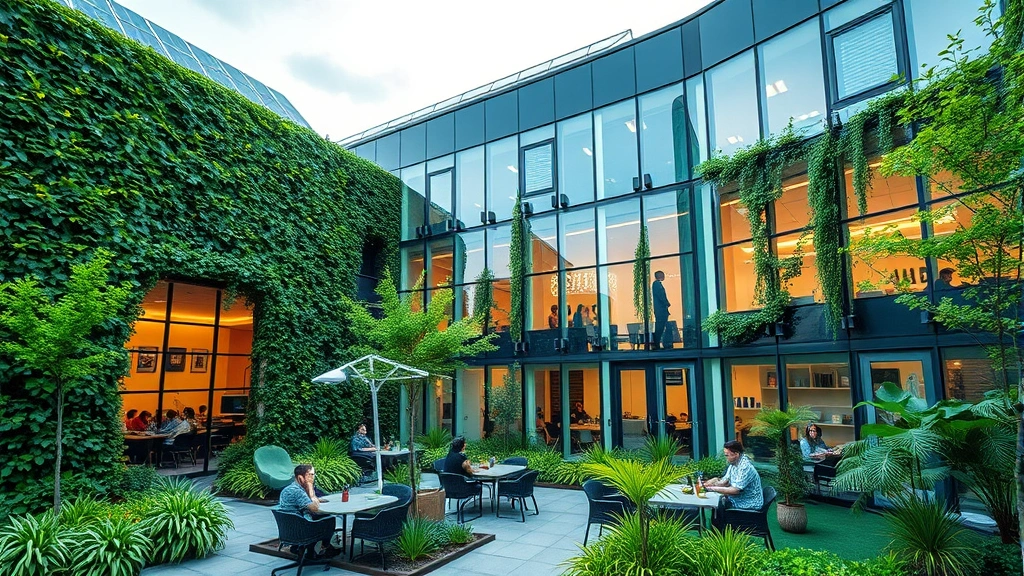
Physical environmental factors form the foundation of workplace quality. Natural lighting, indoor air quality, temperature control, acoustic design, and ergonomic furniture directly influence cognitive function and physical health. Studies indicate that access to natural light alone can improve sleep quality, increase alertness, and enhance mood—factors with measurable impacts on work performance. Beyond the physical, the psychological and cultural dimensions of workplace environments—including management quality, colleague relationships, autonomy, purpose, and growth opportunities—create the conditions where employees can thrive economically and personally.
Productivity Gains and Economic Impact
The relationship between workplace environment quality and productivity represents perhaps the most direct economic benefit of workplace investment. When employees work in environments optimized for performance, they accomplish more in less time, make fewer errors, and demonstrate greater focus on high-value tasks. The economic implications are substantial: a 5% improvement in productivity across a 1,000-person organization with an average salary of $60,000 represents $3 million in additional annual output value.
Research examining how humans affect the environment through their work activities reveals that productivity gains compound when employees work in psychologically supportive environments. The cognitive science underlying this relationship is well-established: environments with minimal distractions, appropriate sensory stimulation, and ergonomic support allow the prefrontal cortex to allocate maximum cognitive resources to complex problem-solving rather than discomfort management or distraction avoidance. This neurological reality translates directly into measurable business outcomes.
Companies implementing comprehensive workplace environment improvements report productivity increases ranging from 5% to 15%, depending on baseline conditions and implementation quality. Google’s workplace design philosophy, for instance, incorporates elements specifically engineered to enhance focus and creativity—from noise-controlled zones to collaborative spaces to natural outdoor areas. Their productivity metrics and financial performance suggest that these investments yield substantial returns. Similarly, Microsoft’s research on workplace design demonstrates that employees in optimized environments complete complex cognitive tasks 20-25% faster than those in standard office environments.
The economic value extends beyond individual task completion. Better workplace environments improve decision-making quality, reduce costly errors, and accelerate innovation cycles. A manufacturing facility that reduces defect rates by 3% through improved working conditions could save hundreds of thousands of dollars annually. A software development team working in an ideal environment might reduce critical bugs by 15-20%, with cascading benefits for customer satisfaction and company reputation.
Employee Retention and Cost Savings
One of the most economically significant benefits of creating ideal workplace environments emerges through employee retention. The cost of losing and replacing an employee typically ranges from 50% to 200% of their annual salary, depending on role seniority and industry. These costs encompass recruitment, hiring, training, lost productivity during transition periods, and the institutional knowledge that departs with the employee. When companies invest in workplace quality that enhances employee satisfaction and engagement, they directly reduce this massive expense category.
Organizations with high-quality workplace environments consistently demonstrate lower turnover rates. Tech companies with strong workplace cultures report annual turnover rates of 10-15%, while industry averages hover near 20-25%. Over a decade, this difference compounds dramatically. A company with 500 employees and a 20% turnover rate loses 100 employees annually; replacing them costs approximately $5-10 million. A competitor maintaining 12% turnover through superior workplace investment spends only $3-6 million on replacement, creating a $2-4 million annual competitive advantage that compounds year after year.
Beyond direct replacement costs, retention improves organizational effectiveness through accumulated expertise and strengthened team relationships. Employees who remain with an organization for multiple years develop deeper understanding of systems, build stronger professional relationships, and contribute at higher levels of sophistication. This accumulated human capital represents enormous but often underestimated economic value. A design team that stays together for five years develops collaborative efficiency and institutional knowledge that new teams cannot replicate, enabling them to deliver superior work faster and with fewer iterations.
The relationship between workplace environment quality and retention also intersects with broader environment and society considerations. As younger workers increasingly prioritize sustainable practices and social responsibility, companies demonstrating commitment to workplace quality and environmental stewardship attract and retain talent more effectively. This emerging dynamic creates additional economic advantage for organizations aligning workplace improvement with sustainability principles.
Innovation and Competitive Advantage
Innovation represents the ultimate source of sustainable competitive advantage in modern economies, and workplace environment quality directly influences innovation capacity. The psychological and physical conditions enabling creative thinking require specific environmental characteristics: psychological safety, diversity of perspectives, adequate time for reflection, access to resources, and freedom to experiment. Ideal workplace environments intentionally cultivate these conditions, creating measurable innovation advantages.
Organizations like 3M and Amazon have long recognized that dedicated time and space for creative exploration yields substantial innovation returns. 3M’s famous 15% time policy—allowing engineers to spend 15% of work time on projects of their choosing—has generated numerous breakthrough products and substantial revenue streams. While not all organizations can implement identical policies, the principle applies universally: workplaces enabling exploration and experimentation generate more innovations than those demanding rigid adherence to predetermined tasks.
The economic value of innovation extends beyond new products to include process improvements, cost efficiencies, and business model innovations. A manufacturing company where employees feel empowered to suggest improvements in their ideal workplace environment might capture hundreds of efficiency ideas annually, each contributing modest savings that aggregate to substantial improvements. When multiplied across an industry or sector, these innovations reshape competitive dynamics and create enormous economic value.
Diversity within workplace environments amplifies innovation benefits. Research consistently demonstrates that diverse teams generate more creative solutions to complex problems. When ideal workplace environments welcome and support diverse perspectives—through inclusive hiring, equitable advancement opportunities, and cultures respecting different working styles—innovation accelerates dramatically. Companies like Salesforce have documented that their commitment to diversity and inclusion correlates with stronger financial performance, higher employee engagement, and superior innovation metrics.
Health Outcomes and Economic Value
The health dimension of workplace environments creates profound economic implications that extend far beyond direct productivity metrics. Poor workplace conditions contribute to chronic stress, musculoskeletal disorders, respiratory issues, and mental health challenges—conditions generating enormous costs through healthcare expenses, absenteeism, presenteeism, and reduced work capacity. Conversely, ideal workplace environments that support physical and mental health generate substantial economic value by preventing these costly health outcomes.
The World Health Organization estimates that depression and anxiety disorders cost the global economy approximately $1 trillion annually in lost productivity. Workplace environments significantly influence mental health outcomes; supportive workplaces with manageable stress, social connection, and purpose reduce depression and anxiety incidence substantially. For a company with 1,000 employees, reducing mental health-related absenteeism by just 10% could save $500,000-$1 million annually in direct productivity costs, exclusive of healthcare savings.
Physical health benefits follow similar economic patterns. Ergonomic workplace design reduces musculoskeletal disorders by 20-40%, translating to fewer workers’ compensation claims, lower healthcare costs, and improved productivity. Companies investing in standing desks, ergonomic chairs, and movement breaks report measurable reductions in back pain, neck strain, and repetitive stress injuries. These improvements reduce healthcare costs, workers’ compensation insurance premiums, and absenteeism while improving employee morale and retention.
The economic relationship between workplace health and organizational performance has been quantified extensively. A comprehensive analysis examining health and workplace quality demonstrates that companies with high employee wellness and engagement metrics consistently outperform competitors financially. The correlation between employee health, engagement, and financial performance suggests that workplace environment investments function as health interventions with measurable economic returns.
Sustainable Practices and Long-term Profitability
Increasingly, ideal workplace environments integrate sustainable practices that reduce environmental impact while generating economic benefits. Green building design reduces energy consumption, water usage, and waste generation; these operational efficiencies translate directly to lower facility costs. A sustainably designed office building might reduce energy consumption by 30-50% compared to conventional facilities, generating tens of thousands of dollars in annual utility savings that accumulate over decades.
Beyond direct operational savings, sustainable workplace practices enhance brand reputation and market positioning, creating economic value through customer preference and employee attraction. Consumers increasingly prefer companies demonstrating environmental responsibility; employees seek employers aligning with their values. These market dynamics translate to revenue advantages and talent acquisition benefits that compound over time, creating substantial long-term economic advantage.
The integration of sustainability into types of environment design also addresses risk management. As climate change and resource scarcity intensify, companies with efficient, resilient workplace infrastructure face lower operational risk and greater business continuity. The economic value of this resilience becomes increasingly apparent as environmental disruptions accelerate globally. Organizations investing in sustainable workplace design position themselves advantageously for future economic and environmental conditions.
Research from ecological economics journals demonstrates that sustainable practices rarely require net economic sacrifice; instead, they typically generate positive returns through efficiency improvements, risk reduction, and market advantage. Companies like Interface, a carpet manufacturer, have documented that pursuing radical sustainability actually improved profitability by driving innovation, reducing waste, and differentiating the company in the marketplace. This pattern repeats across industries, suggesting that ideal workplace environments incorporating sustainability represent economically superior strategies rather than costly compromises.
Implementation Strategies for Economic Success
Creating ideal workplace environments requires systematic, strategic approaches rather than ad-hoc improvements. Organizations successfully capturing the economic benefits discussed above typically employ comprehensive strategies addressing physical design, organizational culture, technology infrastructure, and human policies simultaneously.
The first strategic element involves assessment and baseline measurement. Organizations should evaluate current workplace conditions across multiple dimensions: physical environment quality, employee engagement and satisfaction, health outcomes, productivity metrics, retention rates, and innovation capacity. This baseline enables organizations to identify specific improvement opportunities offering highest economic returns and track progress toward measurable goals. Assessment frameworks aligned with internationally recognized standards—such as those developed by the International WELL Building Institute or LEED certification programs—provide structured approaches to evaluation.
Physical environment improvements should prioritize highest-impact factors based on baseline assessment. For many organizations, natural lighting improvements, air quality enhancement, and ergonomic upgrades yield fastest returns. These investments typically pay for themselves through productivity gains and health improvements within 18-36 months. More comprehensive renovations—including acoustic design, collaborative space creation, and technology infrastructure upgrades—require longer payback periods but generate cumulative benefits across multiple economic dimensions.
Cultural and policy changes often generate larger economic returns than physical improvements alone, yet require more sustained effort and leadership commitment. Organizations must articulate clear expectations for respectful collaboration, establish transparent communication channels, provide meaningful opportunities for growth and advancement, and demonstrate management commitment to employee well-being. These cultural elements cost little financially but require consistent reinforcement and modeling by leadership. Companies successfully implementing cultural improvements report engagement and retention improvements exceeding those from physical investments alone.
Technology infrastructure deserves strategic attention in modern workplace environments. Reliable, user-friendly technology reduces frustration and wasted time while enabling flexible work arrangements that enhance employee satisfaction and reduce facility costs. However, technology should serve human needs rather than replace human connection; the ideal workplace balances technological capability with opportunities for meaningful face-to-face collaboration.
Implementation requires phased approaches with clear accountability and measurement. Rather than attempting comprehensive transformation immediately, successful organizations identify highest-return opportunities, implement improvements systematically, measure outcomes rigorously, and use results to guide subsequent investments. This iterative approach builds organizational capability, demonstrates ROI to stakeholders, and enables course correction based on real-world results.
Leadership commitment proves essential throughout implementation. When executives visibly prioritize workplace quality—allocating budgets, participating in improvements, and using their own workspace to model desired conditions—employees recognize genuine commitment rather than superficial gesture. This authenticity builds trust and engagement, multiplying the benefits of physical and policy improvements.
FAQ
What specific workplace environment factors generate the highest economic returns?
Research indicates that natural lighting, air quality, ergonomic design, and psychological safety deliver among the highest ROI. Organizations should assess their specific baseline conditions and employee feedback to identify which improvements will address most pressing needs. For many organizations, addressing these four factors generates measurable productivity and retention improvements within 12-18 months, with payback periods typically under two years.
How can organizations measure the economic benefits of workplace environment improvements?
Measurement should track multiple metrics: productivity (output per employee hour), quality (error rates, defect rates), retention (voluntary turnover rates), absenteeism, employee engagement (survey scores), innovation (ideas generated, projects completed), and health outcomes (healthcare costs, workers’ compensation claims). Comparing these metrics before and after improvements, while accounting for external factors, enables organizations to quantify economic returns. Most improvements generate measurable benefits within 6-12 months, with benefits compounding over time.
What is the typical cost of implementing a comprehensive ideal workplace environment strategy?
Costs vary dramatically based on baseline conditions, organization size, and improvement scope. Physical improvements typically range from $500-$2,000 per employee for comprehensive redesigns, though targeted improvements might cost $100-$500 per employee. Cultural and policy improvements cost substantially less but require management time and training investment. Organizations should expect payback periods of 18-36 months for comprehensive strategies, with benefits accelerating in subsequent years as improvements compound.
Can small organizations benefit from workplace environment investments?
Absolutely. While small organizations might not achieve economies of scale in facility redesign, they often realize proportionally larger benefits from cultural improvements and targeted physical upgrades. Small teams where every member contributes significantly to outcomes benefit enormously from enhanced productivity, reduced turnover, and improved collaboration. Many small organizations find that relatively modest investments in physical comfort and cultural improvements yield dramatic economic returns.
How do ideal workplace environments relate to sustainability and environmental responsibility?
Ideal workplace environments increasingly integrate sustainable practices—energy efficiency, water conservation, waste reduction, sustainable materials, and access to nature. These practices reduce operating costs while supporting employee health and well-being. Organizations can simultaneously improve employee experiences, reduce environmental impact, and enhance financial performance through strategic workplace design. This alignment creates competitive advantage as customers and employees increasingly prioritize environmental responsibility.