
Human Impact on Ecosystems: A Scientific Review
The relationship between humanity and Earth’s ecosystems has fundamentally transformed over the past two centuries. What began as localized environmental modifications through agriculture and settlement has evolved into a planetary-scale force reshaping biogeochemical cycles, biodiversity patterns, and climate systems. Scientists now recognize the Anthropocene—our current geological epoch—as a period defined by human dominance over natural processes. Understanding the mechanisms, magnitude, and consequences of human interaction with environment systems requires integrating insights from ecology, economics, geology, and social sciences.
This scientific review examines the multifaceted dimensions of anthropogenic ecosystem disruption, from atmospheric carbon accumulation to terrestrial habitat fragmentation. By synthesizing peer-reviewed research and empirical data, we explore how economic systems, technological capacity, and demographic pressures create cascading environmental consequences. Understanding these interactions is essential for developing effective mitigation and adaptation strategies in an era of unprecedented ecological change.

Mechanisms of Human-Ecosystem Disruption
Human activities alter ecosystems through direct and indirect pathways. Direct mechanisms include land-use conversion, resource extraction, and pollution introduction. Indirect mechanisms operate through altered biogeochemical cycles, modified disturbance regimes, and changed species interactions. The scale of human impact reflects three converging factors: global population exceeding 8 billion people, per-capita resource consumption intensifying in developed economies, and technological capacity enabling large-scale environmental modification.
According to research from the World Bank’s environmental division, approximately 1.6 billion hectares of productive land have degraded since 1990—an area equivalent to 11% of global land surface. This degradation stems primarily from agricultural intensification, where monoculture practices reduce soil organic matter, eliminate non-target species, and increase chemical runoff. When examining environmental science fundamentals, the concept of carrying capacity becomes critical: ecosystems possess finite regenerative and absorptive capacities that human activities frequently exceed.
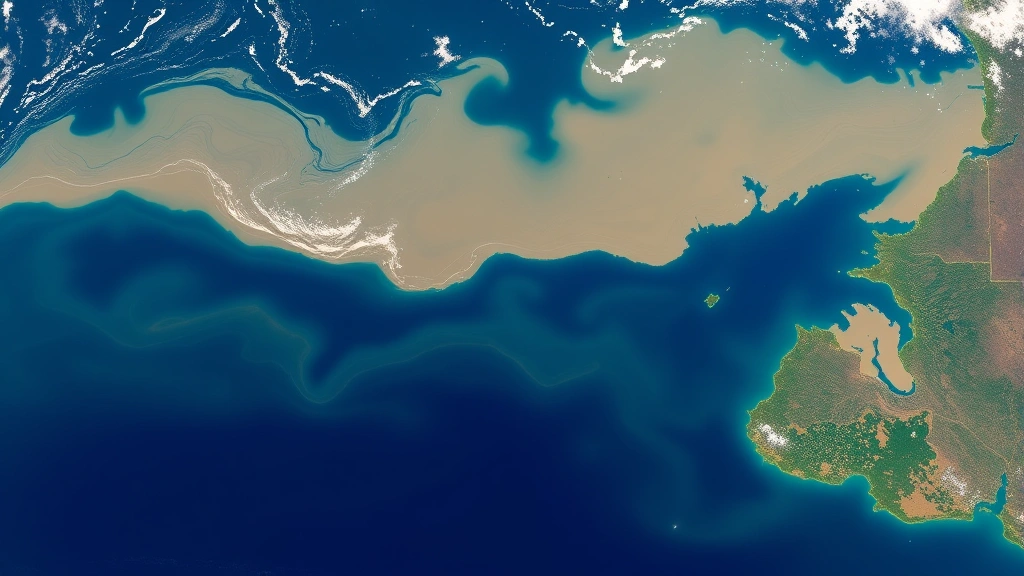
Industrial agriculture exemplifies how economic optimization can generate ecological dysfunction. Synthetic fertilizer application—now exceeding 190 million metric tons annually—creates nutrient loading that cascades through aquatic systems. The Mississippi River basin illustrates this pattern: agricultural runoff generates a hypoxic “dead zone” in the Gulf of Mexico spanning 6,000-7,000 square kilometers annually. Similar patterns emerge globally, with over 400 coastal dead zones documented worldwide.
Mining and energy extraction represent another critical disruption mechanism. Fossil fuel combustion releases sequestered carbon at rates exceeding natural weathering processes by orders of magnitude. Simultaneously, mining operations fragment habitats, generate tailings containing heavy metals and sulfides, and alter hydrological systems. The deforestation effects on environment extend beyond habitat loss: forest removal eliminates carbon sinks, reduces evapotranspiration that drives regional precipitation patterns, and destabilizes soil structures protecting against erosion.
Climate Change and Atmospheric Impacts
Anthropogenic greenhouse gas emissions represent perhaps the most globally integrated ecosystem disruption. Atmospheric CO₂ concentrations have increased from 280 ppm pre-industrial levels to 422 ppm currently—a 50% increase occurring over merely 170 years. This rapid change exceeds the rate of natural atmospheric change by approximately 100-fold, preventing ecosystem adaptation through evolutionary or migratory processes.
The climate system responds to forcing through multiple feedback mechanisms that amplify initial perturbations. Decreased Arctic sea ice reduces surface albedo, causing additional solar absorption and further ice loss. Thawing permafrost releases methane and carbon dioxide, intensifying atmospheric warming. Ocean warming reduces solubility of dissolved oxygen, expanding hypoxic zones and disrupting marine food webs. These positive feedbacks create non-linear climate responses where incremental emissions produce disproportionate warming.
Terrestrial ecosystems experience climate change through altered precipitation patterns, extended growing seasons in some regions, and intensified drought and heat stress in others. Phenological mismatches—where species’ life-cycle timing becomes desynchronized—disrupt pollination, predator-prey interactions, and resource availability. Research from the United Nations Environment Programme documents that 40% of global population depends directly on nature for livelihoods, making climate-driven ecosystem changes economically destabilizing.
Ocean acidification—a consequence of increased CO₂ absorption—reduces carbonate saturation states, impairing shell-forming organisms from pteropods to corals. This affects organisms spanning multiple trophic levels, from zooplankton supporting fish populations to reef-building corals maintaining fisheries supporting 500 million people. The economic valuation of coral reef ecosystem services exceeds $375 billion annually; acidification threatens this value through reduced fishery productivity and diminished coastal protection.
Biodiversity Loss and Habitat Fragmentation
Biodiversity underpins ecosystem functioning through multiple mechanisms: species richness enhances productivity, stability, and nutrient cycling efficiency. Yet anthropogenic habitat loss and fragmentation have accelerated extinction rates to 100-1000 times background rates. Current extinction estimates suggest 137 species disappear daily—a rate unprecedented since the Cretaceous-Paleogene boundary 66 million years ago.
Land-use conversion constitutes the primary extinction driver globally. Agricultural expansion consumes 10 million hectares annually, predominantly in biodiverse tropical regions. Habitat fragmentation creates edge effects where interior-dependent species face increased predation, parasitism, and microclimate stress. Population fragmentation reduces genetic diversity, lowering adaptive capacity and increasing extinction vulnerability. The environmental awareness and conservation literature emphasizes that remaining habitat patches often prove too small to sustain viable populations of large-bodied, low-reproduction species like carnivores and primates.
Invasive species proliferation represents a secondary but increasingly important extinction mechanism. Human-mediated species introductions—through commerce, travel, and biological control attempts—create novel ecological interactions. Invasive species frequently outcompete natives lacking co-evolutionary defenses, fundamentally altering community structure. Island ecosystems prove particularly vulnerable: invasive species account for 68% of recorded extinctions on islands, where endemic species evolved without mammalian predators or herbivorous competitors.
Pollinator decline exemplifies biodiversity loss consequences. Bee population reductions—driven by pesticide exposure, habitat loss, and pathogen spread—threaten crop pollination services valued at $15-20 billion annually. Without pollinator restoration, global crop yields for fruits, vegetables, and seed crops would decline 5-8%, with disproportionate impacts on nutrient-poor populations relying on diverse crop diets.
Water Systems and Pollution Dynamics
Freshwater ecosystems experience multiple simultaneous stressors from human activities. Dam construction fragments riverine habitats, disrupts sediment transport, and alters thermal regimes. Groundwater extraction exceeds recharge rates in major aquifer systems: the Ogallala Aquifer supporting North American agriculture declines 1-1.5 meters annually, while South Asian aquifers face similar depletion trajectories. Water scarcity affects 2 billion people currently; projections indicate 5.7 billion face severe water scarcity at least one month annually by 2050.
Chemical pollution introduces persistent organic pollutants, heavy metals, and endocrine-disrupting compounds into aquatic systems. These contaminants bioaccumulate through food webs, reaching concentrations 10-100 million times higher than ambient water levels in apex predators. Microplastics—fragments from synthetic polymer degradation—now permeate all aquatic environments from deepest oceans to Arctic ice, with demonstrated toxicological effects on filter-feeding organisms and potential human health consequences through seafood consumption.
Agricultural runoff creates eutrophication cascades where nutrient enrichment triggers phytoplankton blooms, subsequent decomposition consumes dissolved oxygen, and anoxic conditions eliminate most macrofauna. This process converts productive ecosystems into biologically simplified zones incapable of supporting fisheries or recreation. Globally, agricultural nutrient runoff affects approximately 245,000 square kilometers of coastal ocean, creating economic losses through fishery collapse and tourism decline.
Economic Dimensions of Environmental Degradation
Environmental economics quantifies ecosystem disruption through natural capital accounting frameworks. Traditional GDP measures fail to deduct environmental asset depreciation, creating systematic underestimation of economic sustainability. When ecosystem services—pollination, water purification, carbon sequestration, flood regulation—are valued and depreciated, true economic growth appears far more modest than reported GDP statistics suggest.
Research from the ecological economics literature estimates annual ecosystem service losses at $4.3-20.2 trillion globally, with biodiversity loss accounting for $2.7 trillion annually. These losses reflect permanent destruction of natural capital generating perpetual service flows. The carbon footprint reduction strategies literature demonstrates that internalizing environmental costs through carbon pricing would render many extractive industries economically unviable, revealing their profitability depends on externalizing environmental costs onto society.
Distributional justice dimensions prove critical: wealthy populations consume disproportionate resources while environmental degradation impacts concentrate on low-income communities and developing nations. This creates a structural inequity where those least responsible for environmental disruption experience greatest impacts. Climate change-driven agricultural yield reductions, water scarcity, and disease vector expansion predominantly affect regions contributing <5% of historical emissions.
The economics of ecosystem restoration reveal significant return-on-investment opportunities. Wetland restoration generates $5-15 returns per dollar invested through flood mitigation, water purification, and fishery support. Mangrove conservation provides $4 return per dollar invested through storm protection, fishery support, and carbon sequestration. Yet restoration receives <1% of conservation funding, suggesting massive underinvestment in nature-based solutions.
Feedback Loops and Tipping Points
Complex systems exhibit threshold behaviors where gradual change produces sudden, irreversible transitions. Several ecosystem tipping points appear increasingly proximate. Amazon rainforest dieback—triggered by combined deforestation and climate change reducing moisture recycling—could occur at 20-25% forest loss (currently 17-20% lost). Dieback would convert the world’s largest terrestrial carbon sink into a carbon source, releasing 90-150 billion tons of sequestered carbon.
Coral reef collapse represents another critical tipping point. Thermal stress, acidification, and pollution interact synergistically: individually manageable stressors become lethal in combination. Coral bleaching events now occur biennially in many regions, preventing recovery between disturbances. Loss of coral structural complexity eliminates nursery habitat for reef-dependent fisheries supporting 500 million people and generating $375 billion annual ecosystem services.
Permafrost thaw creates particularly concerning feedback loops. Thawing releases methane (25 times more potent than CO₂ over 100-year timescale) and carbon dioxide from organic matter accumulated over millennia. This amplifies atmospheric warming, accelerating further thaw. Permafrost carbon pools contain 1,700 gigatons—twice atmospheric carbon content. Uncontrolled permafrost thaw could add 0.13-0.27°C additional warming independent of further emissions.
Ocean circulation disruption represents a slower but potentially catastrophic tipping point. Atlantic Meridional Overturning Circulation (AMOC)—which includes the Gulf Stream—has weakened 15% since mid-20th century due to freshwater input from Greenland ice sheet melting and reduced surface salinity. Complete AMOC collapse would cool Europe 3-8°C while intensifying tropical rainfall and disrupting global fisheries and precipitation patterns affecting 2 billion people.
These interconnected tipping points create compounding risks: triggering one increases probability of others through positive feedbacks. The scientific consensus indicates that limiting warming to 1.5°C requires emissions reductions of 45% by 2030 relative to 2010 levels—a trajectory currently not achieved by any major economy. Current policy trajectories position civilization for 2.7°C warming, triggering multiple simultaneous tipping points with cascading, potentially catastrophic consequences.
FAQ
What is the primary driver of current biodiversity loss?
Habitat destruction through land-use conversion represents the dominant extinction driver, accounting for 73% of documented species declines. Agricultural expansion into biodiverse regions, particularly tropical forests, fragments populations and eliminates specialized species. Climate change increasingly compounds habitat loss by altering thermal and moisture conditions beyond species’ tolerance ranges. Invasive species, pollution, and overexploitation constitute secondary but significant drivers.
How do ecosystem tipping points differ from gradual environmental change?
Tipping points represent threshold transitions where systems shift abruptly between stable states, often with reduced reversibility. Gradual change allows evolutionary adaptation and ecosystem restructuring, whereas tipping point transitions occur faster than adaptation rates. Once crossed, tipping points typically require enormous restoration effort and investment to reverse. Amazon dieback illustrates this: preventing dieback requires maintaining forest cover above 20-25% threshold, but reversing dieback after crossing requires reforestation of hundreds of millions of hectares over decades.
Can ecosystem services be adequately replaced through technology?
While technology enhances efficiency, complete substitution remains impossible for several critical services. Pollination by managed honeybees supplements but cannot replace wild pollinator ecosystem services; crop yields depend on pollinator diversity, not quantity alone. Water purification through wetlands removes contaminants at costs 80% lower than mechanical treatment. Carbon sequestration in soils and forests cannot be replicated by technology at comparable scales and costs. Technological solutions typically address symptoms rather than underlying drivers of ecosystem disruption.
What percentage of Earth’s ecosystems remain in relatively undisturbed condition?
Approximately 23% of land surface remains relatively undisturbed by human activity, concentrated in remote regions: boreal forests, tundra, deserts, and high mountains. Ocean ecosystems fare worse: only 13% remain relatively undisturbed, concentrated in polar regions and deep abyssal plains. These remaining intact ecosystems possess disproportionate conservation value through maintaining ecosystem processes, providing genetic reservoirs, and supporting indigenous populations dependent on traditional practices. Protection of remaining intact ecosystems costs far less than restoration of degraded systems.
How do human and natural systems interact through economic feedbacks?
Economic systems depend on ecosystem services: agriculture requires pollination and soil formation, fisheries require coastal ecosystem productivity, tourism depends on biodiversity and landscape integrity. Ecosystem degradation reduces economic productivity, lowering incomes and tax revenues. Reduced revenues limit conservation investment, accelerating further degradation. This creates negative feedback loops where environmental decline triggers economic decline, further reducing conservation capacity. Breaking these loops requires upfront investment in restoration and conservation, demonstrating that environmental protection and economic development need not conflict when ecosystem services are properly valued.


