Human-Environment Interactions: Key Examples Explained
Human-environment interactions represent the complex, bidirectional relationships between societies and the natural world. These interactions shape economic systems, resource availability, ecosystem health, and human wellbeing across multiple scales—from individual households to global supply chains. Understanding these dynamics is essential for addressing contemporary environmental challenges while building sustainable economic models that recognize planetary boundaries.
The relationship between humans and their environment has fundamentally transformed over millennia, accelerating dramatically since industrialization. Today, human activities influence nearly every ecosystem on Earth, while environmental conditions directly impact economic productivity, food security, and social stability. This article explores concrete examples of human-environment interactions, examining how economic decisions ripple through ecological systems and vice versa.

Agricultural Systems and Land Use Change
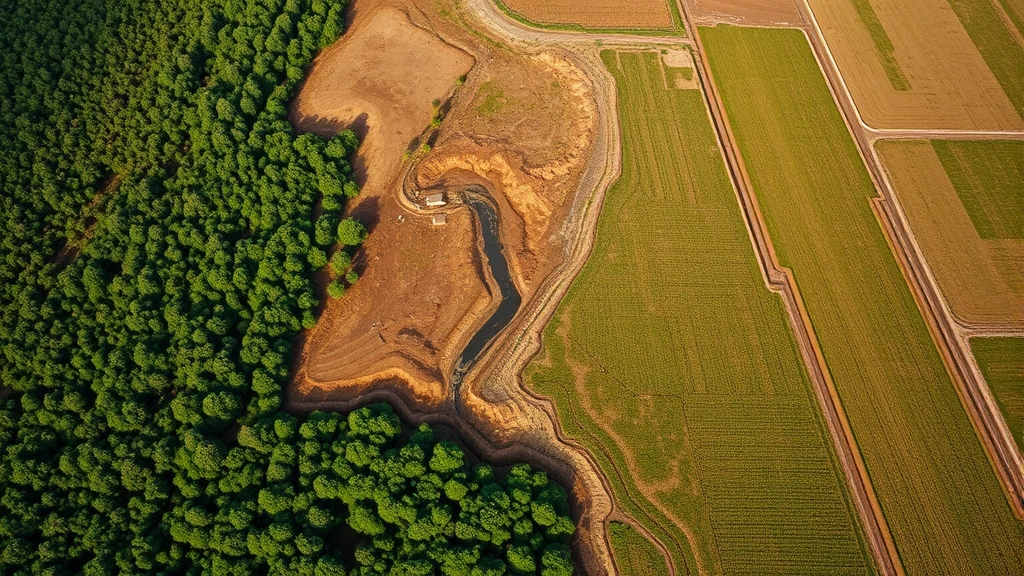
Agriculture represents humanity’s most extensive interaction with terrestrial ecosystems, occupying approximately 40% of global land area while employing over 1 billion people. This sector exemplifies both the productive capacity and destructive potential of human-environment relationships. Modern intensive agriculture has dramatically increased food production, lifting millions from poverty, yet it simultaneously drives deforestation, soil degradation, and freshwater depletion.
The Green Revolution of the mid-20th century increased crop yields through mechanization, synthetic fertilizers, and pesticides. While this prevented widespread famine, it created path dependencies that now generate substantial environmental costs. Deforestation for agricultural expansion accounts for approximately 80% of tropical forest loss, releasing stored carbon while eliminating habitat for millions of species. The economic benefits—measured as increased GDP and agricultural output—are concentrated among producers and consumers, while ecological costs are distributed across global commons and future generations.
Soil degradation exemplifies this interaction’s complexity. Industrial monoculture practices reduce soil organic matter, increase erosion vulnerability, and decrease microbial diversity. The Food and Agriculture Organization estimates that one-third of global soils are already degraded, reducing agricultural productivity and carbon sequestration capacity. Yet transitioning to regenerative practices requires upfront investments and yield reductions that economically disadvantage farmers in competitive markets lacking price signals for ecosystem services.
Regional case studies illustrate these tensions. In the Cerrado region of Brazil, soybean cultivation has expanded from 1 million hectares in 1980 to over 35 million hectares today, generating substantial agricultural wealth while converting savanna ecosystems to monocultures. Similarly, palm oil expansion in Southeast Asia has driven orangutan habitat loss while creating employment and export revenue. These examples demonstrate how human-environment interaction patterns reflect underlying economic incentives that often externalize ecological costs.
Urban Development and Ecosystem Services
Cities concentrate over 55% of global population on approximately 3% of land, creating intense human-environment interactions through resource consumption, waste generation, and habitat transformation. Urban expansion replaces natural ecosystems with impervious surfaces, fundamentally altering hydrological cycles, temperature regimes, and biodiversity patterns. Yet cities also offer opportunities for efficient resource use and ecosystem restoration that lower-density settlements cannot achieve.
The urban heat island effect demonstrates direct environmental modification. Concrete, asphalt, and roofing materials absorb solar radiation, raising urban temperatures 1-7°C above surrounding areas. This increases cooling energy demand, strains electrical grids during peak hours, and exacerbates heat-related mortality during extreme events. Reducing carbon footprint in urban contexts requires addressing this fundamental infrastructure characteristic through green roofs, permeable pavements, and urban forests that provide cooling while improving air quality and stormwater management.
Ecosystem services provided by urban green infrastructure have substantial economic value. A study by the United Nations Environment Programme found that urban trees in American cities provide annual benefits exceeding $2.4 billion through stormwater management, air pollution removal, and energy conservation. Yet these services remain largely unpriced in municipal budgets, leading to systematic underinvestment in green infrastructure relative to gray infrastructure alternatives.
Water management illustrates urban-environment interactions at watershed scale. Cities depend on distant water sources—Los Angeles draws from the Colorado River 300 miles away, while Singapore imports water from Malaysia—creating transboundary environmental and political dependencies. Urban demand has dried rivers, depleted aquifers, and altered precipitation patterns across vast regions. Conversely, wastewater treatment decisions affect downstream ecosystems; pollution from urban areas cascades through river systems and coastal zones, creating dead zones where nutrients trigger algal blooms that deplete oxygen and suffocate marine life.
Resource Extraction and Economic Trade-offs
Mining, petroleum extraction, and timber harvesting represent direct human appropriation of natural resources, generating immediate economic value while imposing long-term environmental costs. These activities exemplify the temporal mismatch in human-environment interactions: short-term financial gains accrue to current generations, while environmental degradation persists across decades or centuries.
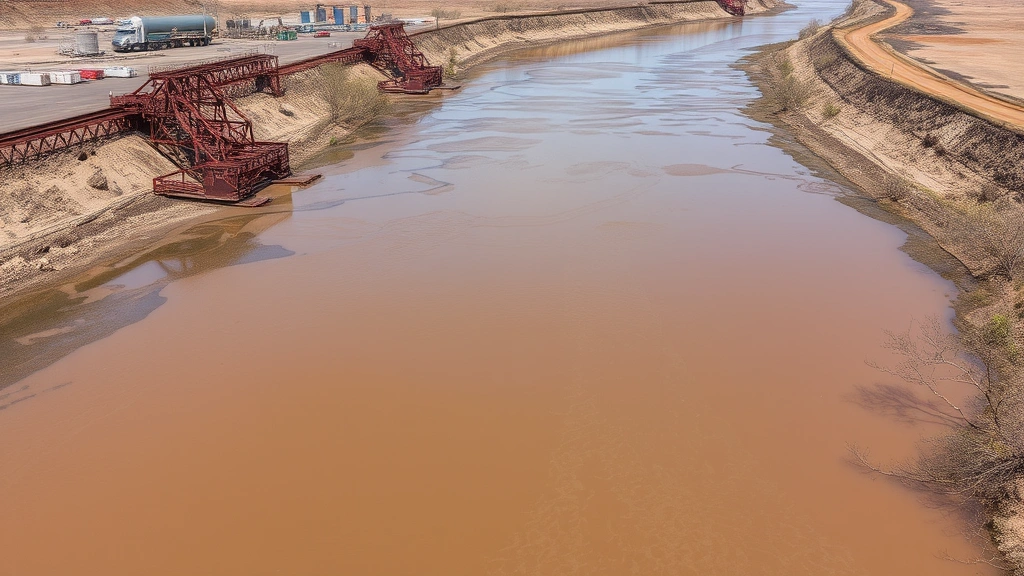
Mining for copper, gold, and rare earth elements requires removing overburden, processing ore, and managing tailings—activities that fragment habitats, contaminate water sources, and generate persistent pollution. The Tinto River in Spain, acidified by Roman-era mining operations over 2,000 years ago, remains biologically impoverished despite centuries without active extraction. Modern mining operations in Papua New Guinea, Indonesia, and Peru have created environmental legacies that will require perpetual management and remediation. Yet these activities generate government revenue, employment, and foreign exchange critical for developing economies, creating genuine policy dilemmas without simple solutions.
The economics of resource extraction typically undervalue future environmental costs through discount rates that minimize long-term impacts. A forest converted to timber harvesting has present value calculated across 40-80 year rotations, while climate regulation, watershed protection, and biodiversity conservation services operate across centuries. This temporal accounting structure systematically favors extraction over conservation, even when total economic value (including environmental services) would be higher under protection.
Petroleum extraction exemplifies these dynamics at global scale. Oil production generates approximately $1.7 trillion in annual revenue, supporting energy security, transportation, and petrochemical industries that underpin modern economies. Yet climate impacts from fossil fuel combustion impose estimated costs exceeding $5 trillion annually when accounting for health effects, infrastructure damage, and lost productivity. The World Bank has documented how fossil fuel subsidies—estimated at $7 trillion annually when including environmental costs—distort energy markets and perpetuate resource extraction patterns incompatible with climate stabilization.
Climate Change as a Multiplier Effect
Climate change represents the ultimate expression of human-environment interaction at planetary scale, where economic activities accumulate greenhouse gases that alter fundamental climate systems affecting all human societies. Unlike localized environmental impacts, climate change creates globally distributed consequences that interact with existing vulnerabilities to amplify human suffering and economic disruption.
The relationship between economic development and emissions has historically been linear: industrialization required fossil fuels, generating prosperity while accumulating atmospheric carbon. This relationship, established during the 19th and 20th centuries, created path dependencies embedded in infrastructure, technology, and consumption patterns. Decoupling economic growth from emissions growth remains theoretically possible but requires rapid transformation of energy systems, transportation, agriculture, and industrial processes.
Climate impacts cascade through economic systems through multiple pathways. Agricultural productivity declines as temperature and precipitation patterns shift, threatening food security in regions already vulnerable to hunger. Extreme weather events—hurricanes, floods, droughts—impose direct damages on infrastructure while disrupting supply chains and trade networks. Rising sea levels threaten coastal cities and island nations, displacing populations and eroding economic assets. These impacts disproportionately affect low-income populations and developing countries that contributed least to historical emissions, illustrating how human-environment interactions distribute costs inequitably across geography and time.
The economic analysis of climate change reveals the inadequacy of conventional cost-benefit frameworks. The Stern Review estimated climate impacts could reduce global GDP by 5-20% permanently, with costs of mitigation approximately 1% of global GDP annually. Yet this analysis treats climate as one input among many, failing to capture how climate stability is foundational to all economic activity. An ecological economics perspective recognizes that stable climate is a prerequisite for civilization, not a commodity to be optimized in market equilibrium.
Water Systems and Human Economies
Water connects human settlements, agricultural production, industrial manufacturing, and ecosystem function through hydrological cycles that operate across spatial and temporal scales. Human modification of water systems—through dams, diversions, pollution, and extraction—represents one of humanity’s most extensive environmental interventions.
The Aral Sea catastrophe demonstrates consequences of extreme hydrological modification. Soviet-era irrigation projects diverted water from the Aral Sea to support cotton production, reducing the sea’s volume by 90% over 40 years. This created environmental collapse: fisheries disappeared, salt-laden dust polluted surrounding regions, and climate patterns shifted. The economic benefit—increased cotton production—was concentrated and temporary, while environmental costs persisted indefinitely. Today, the region remains economically devastated, with health outcomes among the world’s worst due to water contamination and dust exposure.
Groundwater depletion illustrates a slower-acting but equally consequential interaction. The Ogallala Aquifer, underlying the American Great Plains, supplies irrigation for 27% of U.S. agricultural production. Yet extraction rates exceed recharge by 130%, depleting a resource that accumulated over millennia. This unsustainable pattern persists because farmers lack incentives to conserve: groundwater is treated as an open-access resource with minimal pricing, creating tragedy-of-the-commons dynamics where individual rationality produces collective irrationality.
Transboundary water systems create geopolitical dimensions of human-environment interaction. The Nile River, shared by 11 nations, supplies 95% of Egypt’s water. Ethiopian dam construction upstream threatens Egyptian water security, generating international tensions. The Indus River, divided between India and Pakistan, demonstrates how water-sharing agreements can either facilitate cooperation or perpetuate conflict. These examples show how environmental scarcity interacts with political economy to shape human outcomes.
Biodiversity Loss and Market Failures
Biodiversity decline represents perhaps the most comprehensive human-environment interaction, reflecting cumulative impacts from habitat loss, pollution, overexploitation, and climate change. Species extinction rates currently exceed background rates by 100-1000 fold, indicating the sixth mass extinction in Earth’s history is underway with humans as the primary driver.
Market failures underlie biodiversity loss because species and ecosystems provide services that markets fail to price. Pollination services, valued at $15-20 billion annually in agriculture alone, are provided by wild bees, butterflies, and other insects facing population collapse from pesticide use and habitat loss. Pest control services, water filtration, genetic resources for medicine and agriculture, and cultural values of biodiversity remain largely unpriced, leading to systematic undervaluation relative to extractive uses.
The economics of species conservation reveals this pricing problem. Protecting rainforest habitat for jaguars, harpy eagles, and countless other species requires compensating landowners for foregone timber and agricultural revenue. Yet the economic value of biodiversity conservation—measured through ecosystem services, existence values, and option values for future discoveries—is rarely captured in land-use decisions. This creates perverse outcomes where biodiversity-rich ecosystems are cleared for activities generating lower total economic value when environmental services are included.
Pharmaceutical discovery illustrates biodiversity’s economic significance. Approximately 25% of modern medications derive from rainforest plants, yet less than 1% of tropical plant species have been evaluated for medicinal properties. The potential value of undiscovered compounds could be enormous, yet this option value rarely influences land-use decisions. Environmental science demonstrates that biodiversity loss reduces ecosystem resilience, productivity, and adaptive capacity—properties with substantial economic value that markets systematically undervalue.
Circular Economy Solutions
Addressing human-environment interactions requires transforming economic systems from linear take-make-waste models to circular systems that minimize resource extraction and waste generation. Circular economy principles recognize that environmental limits require fundamental changes to production and consumption patterns, not merely incremental efficiency improvements.
Sustainable fashion brands demonstrate circular economy principles in practice, designing products for durability, repairability, and recyclability rather than planned obsolescence. Extended producer responsibility—requiring manufacturers to manage end-of-life products—internalizes waste management costs and creates incentives for design changes that reduce environmental impact. Similar approaches in electronics, packaging, and construction materials show technical feasibility of circular systems.
Industrial symbiosis, where waste from one process becomes feedstock for another, demonstrates circular economy principles at systems scale. In Kalundborg, Denmark, a power plant, oil refinery, pharmaceutical facility, and other industries exchange waste streams, reducing overall resource extraction and waste generation while cutting costs. These examples show that circular economy is not merely environmental necessity but also economic opportunity when externalities are properly priced.
Regenerative agriculture extends circular principles to food systems, building soil health while producing food, sequestering carbon, and enhancing biodiversity. Practices including cover cropping, reduced tillage, rotational grazing, and agroforestry demonstrate that agriculture can simultaneously improve environmental conditions and maintain productivity. Yet scaling these approaches requires policy support that corrects market failures by pricing ecosystem services and providing transition assistance to farmers.
The transition to circular, regenerative economies requires coordinated action across multiple scales. Individual consumption choices matter but cannot substitute for systemic change. Carbon pricing, subsidy reform, investment in renewable energy and sustainable agriculture, and regulatory standards that internalize environmental costs are necessary complements to technological innovation. UNEP’s Emissions Gap Reports document that current policy commitments fall far short of climate targets, indicating that incremental changes are insufficient.
FAQ
What are the main types of human-environment interactions?
Human-environment interactions include resource extraction (mining, logging, fishing), land use change (agriculture, urbanization), pollution (air, water, soil), climate change, and biodiversity loss. These interactions operate across local, regional, and global scales, with cumulative effects that often exceed individual impacts.
How do economic systems influence environmental outcomes?
Economic systems shape environmental outcomes through incentive structures, property rights, discount rates, and externality pricing. Market economies that fail to price environmental services systematically generate overexploitation and degradation. Addressing environmental challenges requires economic reforms that internalize environmental costs and create incentives aligned with sustainability.
Can human-environment interactions be positive?
Yes, humans can enhance environmental conditions through restoration, conservation, and sustainable management. Urban green infrastructure, regenerative agriculture, and protected areas demonstrate that human activity can improve ecosystem function and biodiversity. However, positive interactions typically require deliberate effort and policy support that compensates for market failures.
Why do environmental problems persist despite awareness?
Environmental degradation persists because it reflects rational behavior within existing economic systems. Individuals and firms that externalize environmental costs gain competitive advantages, creating race-to-the-bottom dynamics. Addressing environmental problems requires systemic changes to incentive structures, not merely individual behavior change or technological solutions alone.
How does climate change interact with other environmental problems?
Climate change amplifies existing environmental stresses through altered precipitation patterns, temperature extremes, and ecosystem disruption. Droughts exacerbate water scarcity, heat waves increase wildfire risk, and changing precipitation affects agricultural productivity. These interactions create cascading impacts that disproportionately affect vulnerable populations and regions.
What role do developing countries play in human-environment interactions?
Developing countries experience disproportionate environmental impacts while contributing less to global environmental problems. Yet they often depend economically on resource extraction and face pressure to prioritize short-term development over long-term environmental sustainability. Global environmental governance must recognize these asymmetries and provide financial and technical support for sustainable development pathways.


