Human Design’s Impact on Ecosystems: A Study
Human design—encompassing urban planning, architectural choices, agricultural systems, and infrastructure development—fundamentally reshapes Earth’s ecosystems at unprecedented scales. From sprawling metropolitan areas to industrial complexes, human-designed environments have become dominant features of the global landscape, influencing biodiversity patterns, biogeochemical cycles, and ecosystem services that billions depend upon. This comprehensive analysis examines how deliberate human design choices cascade through natural systems, creating both destructive and regenerative outcomes.
The relationship between human design and environmental impact extends beyond simple cause-and-effect; it represents a complex interplay of intentions, unintended consequences, and adaptive feedback loops. As we face accelerating ecological crises, understanding this relationship becomes essential for developing sustainable design frameworks that work with rather than against natural systems.
The Fundamentals of Human Design and Ecosystem Disruption
Human design represents intentional modification of landscapes and systems to serve human purposes. This includes everything from the layout of cities to the structure of supply chains. Understanding how humans affect the environment requires recognizing that design choices embed assumptions about nature’s value and capacity for regeneration.
When designers create systems without accounting for ecological constraints, they initiate cascading disruptions. A seemingly isolated decision—such as routing a highway through a forest—fragments habitats, increases animal mortality, alters predator-prey dynamics, and disrupts gene flow across populations. Research from the World Bank demonstrates that land-use change accounts for approximately 10-15% of global greenhouse gas emissions while destroying critical carbon sinks.
The fundamental problem stems from design paradigms that treat ecosystems as external to economic calculation. Traditional design approaches prioritize human comfort, economic efficiency, and short-term returns without internalizing ecological costs. This externality gap—the difference between what designers pay for and what nature actually bears—creates persistent misalignment between built systems and biophysical reality.
Ecological economics provides crucial frameworks for understanding these interactions. Research platforms focused on ecological economics reveal that ecosystem services worth trillions annually—pollination, water purification, climate regulation—remain invisible in conventional design budgets. When a wetland is drained for development, the design process captures land value but ignores lost filtration capacity, flood buffering, and biodiversity habitat.

Urbanization and Habitat Fragmentation
Urban design represents perhaps the most visible manifestation of human environmental impact. Cities occupy roughly 3% of Earth’s land surface yet consume 75% of global resources and generate equivalent waste streams. The design of urban environments directly determines ecological outcomes across multiple dimensions.
Habitat fragmentation—the breaking of continuous ecosystems into isolated patches—represents a primary mechanism through which urban design damages biodiversity. When cities expand, they create impenetrable barriers to species movement, effectively isolating populations. A study spanning 30 years across 1,000 species documented that fragmented populations experience 50% greater extinction risk than continuous ones. This occurs because isolated populations lose genetic diversity, experience increased inbreeding depression, and cannot recolonize when local extinctions occur.
The design of urban infrastructure amplifies these effects. Roads, buildings, and utilities create what ecologists call “matrix hostility”—the surrounding landscape becomes so modified that species cannot traverse it. For migratory species, this fragmentation can prove catastrophic. Monarch butterflies, which require specific milkweed plants during their multi-generational migration, have declined 80% partly due to agricultural and urban design eliminating host plants along migration corridors.
Heat island effects emerge from urban material choices—dark asphalt and concrete absorb solar radiation, raising temperatures 2-7°C above surrounding areas. This design-induced warming alters microclimate conditions, affecting everything from insect development rates to fungal disease dynamics. Cities become ecological traps where organisms experience environmental cues suggesting suitable habitat while actual conditions prove lethal.
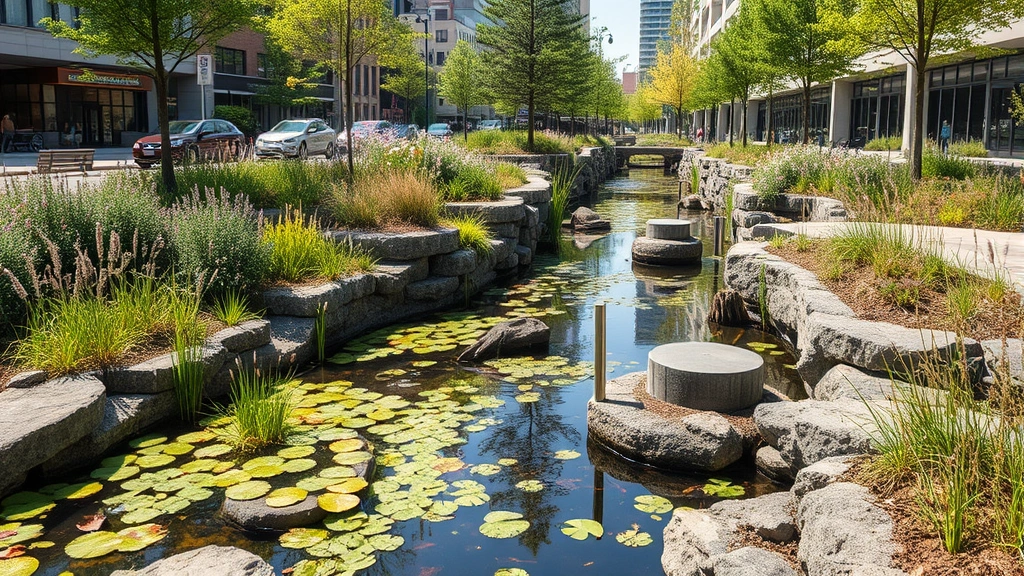
However, emerging research on human behavior and the social environment demonstrates that redesigned urban spaces can support biodiversity. Green roofs, urban forests, and restored wetlands create refuge habitats. Cities like Singapore and Copenhagen have integrated ecological corridors into urban design, enabling species movement and increasing ecosystem service provision within metropolitan areas.
Agricultural Design Systems and Soil Degradation
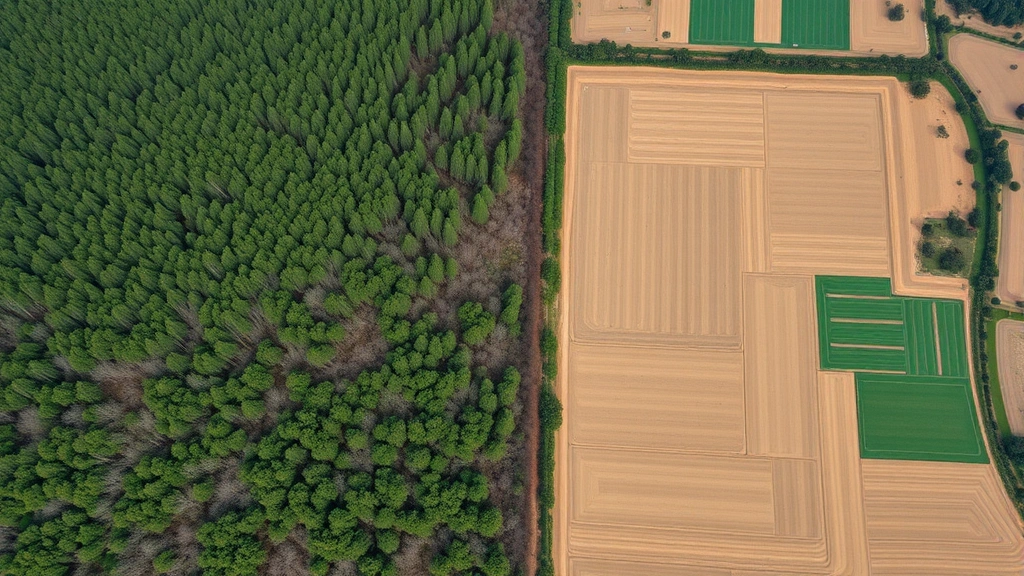
Agriculture occupies 40% of global land surface, making agricultural design choices among humanity’s most consequential environmental decisions. Industrial agricultural design—characterized by monocultures, heavy mechanization, and chemical inputs—represents a fundamentally different ecosystem type from the original landscapes it replaced.
Conventional agricultural design prioritizes yield per hectare through genetic uniformity and chemical inputs. This approach creates simplified ecosystems vulnerable to pest outbreaks, requiring escalating pesticide use. Global pesticide application has increased 10-fold since the 1960s, with only 0.1% reaching target pests; the remaining 99.9% contaminates soil, water, and non-target organisms. This represents a design failure—a system optimized for short-term productivity while externalizing ecological costs.
Soil degradation from agricultural design constitutes one of Earth’s most pressing ecological crises. Industrial agriculture removes more topsoil annually than forms naturally, representing a net loss of productive capacity. Monoculture design removes crop diversity, eliminating the complex root architectures and microbial communities that build soil structure. Synthetic fertilizers provide nitrogen and phosphorus but don’t rebuild organic matter, leaving soils increasingly dependent on chemical inputs—a design trap that locks farmers into purchasing expensive inputs while depleting natural capital.
The relationship between agricultural design and environment and society extends to water systems. Industrial agriculture consumes 70% of global freshwater, often through irrigation designs that deplete aquifers faster than they recharge. The Ogallala Aquifer beneath the American Great Plains, which took 6 million years to fill, faces depletion within 50 years at current extraction rates driven by irrigation system design.
Regenerative agricultural design—incorporating crop rotation, perennial polycultures, and integrated livestock systems—offers alternatives. These designs rebuild soil carbon, require fewer external inputs, and support greater biodiversity. Research demonstrates that regenerative farms sequester 1-3 tons of carbon per hectare annually while maintaining or exceeding yields of industrial systems.
Water Infrastructure and Hydrological Alteration
Water infrastructure design fundamentally alters hydrological cycles at watershed scales. Dams, channelization, and groundwater extraction represent design interventions that reshape how water moves through landscapes, with cascading ecological consequences.
Dams exemplify design systems with profound unintended consequences. While providing hydroelectric power and irrigation, dams fragment river ecosystems, blocking fish migration, altering temperature regimes, and changing sediment dynamics. The Mekong River’s proposed cascade of dams would fragment one of Earth’s most productive fisheries, threatening food security for 60 million people and driving numerous fish species toward extinction. The design assumes water control benefits outweigh ecological costs—an assumption increasingly questioned as ecosystem service valuation improves.
Channelization—straightening and hardening river courses—exemplifies design prioritizing flood control over ecosystem function. Straightened channels increase flow velocity, reducing floodplain inundation that historically recharged aquifers and deposited nutrient-rich sediments. This design creates apparent efficiency gains (faster water movement) while eliminating ecosystem services (aquifer recharge, nutrient cycling, habitat provision). Restoration of meandering channel designs in Europe and North America has restored both flood resilience and biodiversity.
Groundwater extraction design assumes aquifers function as renewable resources, but many operate on geological timescales where extraction vastly exceeds recharge. The Nubian Sandstone Aquifer beneath the Sahara, formed during wetter prehistoric climates, is being depleted for irrigation in arid regions. This design choice—treating fossil water as renewable—represents temporal misalignment between human planning horizons and geological processes.
Industrial Design and Pollution Pathways
Industrial design systems create novel pollution pathways that ecosystems lack evolutionary history to process. Persistent organic pollutants, heavy metals, microplastics, and synthetic chemicals represent design outputs that accumulate in organisms and persist across decades or centuries.
The design of consumer products often externalizes end-of-life environmental costs. Plastics designed for convenience and durability become persistent contaminants; their design assumes disposal into ecosystems represents acceptable externality. Microplastics now contaminate every ecosystem—from deep ocean trenches to Arctic ice—with unknown but potentially severe consequences for organism physiology and food web dynamics.
Chemical design similarly reflects incomplete environmental accounting. Pharmaceuticals designed to persist in human bodies pass unchanged through wastewater treatment and accumulate in aquatic ecosystems, where they alter fish reproduction and behavior. This represents a design failure—medications developed without considering environmental persistence or aquatic exposure pathways.
Industrial design’s pollution pathways connect directly to types of environment affected. Heavy metals from mining, smelting, and manufacturing concentrate in soil and sediment, where they persist for centuries. Lead from centuries of industrial design remains bioavailable in urban soils, affecting child development in contaminated areas. This represents a design debt—current and future populations bearing costs of past design decisions.
Energy Systems and Climate Forcing
Energy system design constitutes perhaps the most consequential human design decision for ecosystem futures. The design of energy infrastructure determines carbon emissions trajectories and climate forcing magnitude.
Fossil fuel-based energy design assumes atmospheric carbon sinks operate as infinite dumpsites. This design choice—burning prehistoric carbon and releasing it into current atmosphere—increases CO₂ concentrations 50% above pre-industrial levels. This represents a fundamental mismatch between design timescales (decades for infrastructure) and climate system response (centuries to millennia for stabilization).
Climate change induced by energy system design cascades through ecosystems through multiple pathways: temperature increases alter species distributions and phenological timing; precipitation changes modify hydrological cycles; extreme weather events increase disturbance frequency. Coral reefs designed through millions of years of evolution to function within narrow temperature ranges now experience bleaching events as thermal tolerance thresholds exceed design parameters.
Energy system redesign toward renewable sources represents one pathway toward ecosystem compatibility. Solar and wind energy systems generate electricity without greenhouse gas emissions or thermal pollution. However, renewable energy infrastructure still requires land, materials, and manufacturing—creating tradeoffs that require careful design consideration. A utility-scale solar farm occupies land that could support native vegetation, representing a design choice with ecosystem consequences requiring honest accounting.
Regenerative Design Solutions
Recognizing design’s ecological impacts has catalyzed development of regenerative design frameworks that aim to enhance rather than merely minimize ecosystem degradation. These approaches embed ecological principles into design processes from inception.
Biomimicry represents one regenerative design framework, studying how natural systems solve problems and applying those principles to human design. Rather than fighting natural processes (like using pesticides to eliminate insects), biomimetic design might create polycultures that support pest predators, achieving pest control through ecosystem function rather than chemical toxins. Nature has solved sustainability problems over billions of years; regenerative design learns from these solutions.
Regenerative urban design incorporates wetland restoration, native plant communities, and wildlife corridors into cities. Singapore’s “City in a Garden” vision integrates parks, green roofs, and vertical forests, creating urban ecosystems that support biodiversity while providing cooling, stormwater management, and aesthetic benefits. This demonstrates that human design can enhance rather than merely degrade ecosystem function.
Circular economy design principles aim to eliminate waste by designing products for disassembly, remanufacturing, or biological decomposition. Rather than designing for single use and disposal, circular design creates closed-loop systems where outputs from one process become inputs for another. This reduces extraction pressure on ecosystems and eliminates persistent contamination from design waste.
Regenerative agriculture design rebuilds soil carbon, restores hydrological function, and supports biodiversity while producing food. Agroforestry systems integrate trees with crops, creating multi-layered productivity while restoring ecosystem structure. Silvopasture combines grazing with tree management, sequestering carbon while supporting livestock production. These designs work with ecological processes rather than against them.
Economic Valuation of Ecosystem Services
Ecosystem service valuation represents an economic approach to internalizing ecological costs into design decisions. By quantifying services like pollination, water purification, and climate regulation, economists attempt to make ecological values visible in economic calculations.
The United Nations Environment Programme estimates global ecosystem services worth $125-145 trillion annually—roughly double global GDP. This valuation reveals the economic irrationality of design choices that destroy natural capital. Destroying a mangrove forest for aquaculture ponds might generate $10,000 per hectare in short-term aquaculture revenue while eliminating $15,000 per hectare in annual ecosystem services from storm protection, fish nursery habitat, and carbon sequestration.
Payment for ecosystem services (PES) programs attempt to align economic incentives with ecosystem protection. Landowners compensated for maintaining forests rather than converting to agriculture face economic motivation to preserve ecosystems. Costa Rica’s PES program has maintained forest cover while generating income for rural communities—demonstrating that ecosystem preservation can align with economic interests when properly designed.
However, ecosystem service valuation faces limitations. Some ecosystem values—existence value of species, intrinsic ecological integrity—resist economic quantification. Additionally, valuation can create problematic outcomes if it enables wealthy actors to purchase rights to ecosystem destruction. Proper implementation requires combining economic valuation with ecological limits and rights-based protections.
Understanding the definition of environment science reveals that ecosystems function through complex processes that economics alone cannot capture. Interdisciplinary approaches combining ecological science, economics, and ethics provide more robust frameworks for design decisions.
FAQ
How does human design directly impact biodiversity?
Human design reduces biodiversity through habitat fragmentation, creating barriers to species movement; through monoculture agriculture, eliminating plant diversity that supports insects and other species; through pollution, toxic to organisms; and through climate change, altering temperature and precipitation regimes. Design choices that preserve habitat connectivity, support plant diversity, and minimize pollution support greater biodiversity.
Can cities be designed to support ecosystems?
Yes. Green infrastructure, native plantings, wildlife corridors, and restored wetlands within cities support biodiversity while providing ecosystem services. Singapore, Copenhagen, and other cities demonstrate that urban design can integrate ecological function. However, this requires prioritizing ecological considerations alongside economic and social factors.
What makes agricultural design sustainable?
Sustainable agricultural design maintains or rebuilds soil carbon, supports biodiversity, minimizes chemical inputs, and maintains productivity across decades. Regenerative approaches including crop rotation, perennial polycultures, agroforestry, and integrated pest management achieve these outcomes while often reducing farmer input costs.
How does energy infrastructure design affect ecosystems?
Fossil fuel energy design releases greenhouse gases causing climate change, which alters ecosystems globally. Renewable energy infrastructure requires land and materials but avoids ongoing emissions. Energy system redesign toward renewables represents one crucial pathway for ecosystem protection.
What is ecosystem service valuation?
Ecosystem service valuation quantifies benefits ecosystems provide—pollination, water purification, climate regulation—in economic terms. This makes ecological values visible in economic decisions, potentially aligning economic incentives with ecosystem protection. However, some ecosystem values resist economic quantification.
Can human design enhance ecosystems?
Yes. Regenerative design approaches—biomimicry, restoration ecology, circular economy principles—aim to enhance ecosystem function while meeting human needs. Examples include restored wetlands providing flood protection and habitat, agroforestry systems producing food while building soil, and green infrastructure supporting urban biodiversity.