Human Impact on Ecosystems: Economists Weigh In
The relationship between human and environment interaction has become one of the most pressing concerns of our time. As global populations expand and consumption patterns intensify, economists are increasingly recognizing that traditional models of growth must account for ecological degradation and resource depletion. The intersection of economic activity and ecosystem health reveals a complex web of externalities, market failures, and policy challenges that demand interdisciplinary solutions.
For decades, environmental costs were treated as external to economic calculations—externalities that markets could ignore. Today, leading economists argue this approach is fundamentally flawed. When we extract resources without accounting for their true scarcity value, when we pollute without compensating those who bear the costs, and when we degrade ecosystems without pricing their services, we create an illusion of prosperity that masks underlying ecological collapse. Understanding how economists frame the human-ecosystem relationship is essential for developing effective policy responses.

The Economics of Ecosystem Degradation
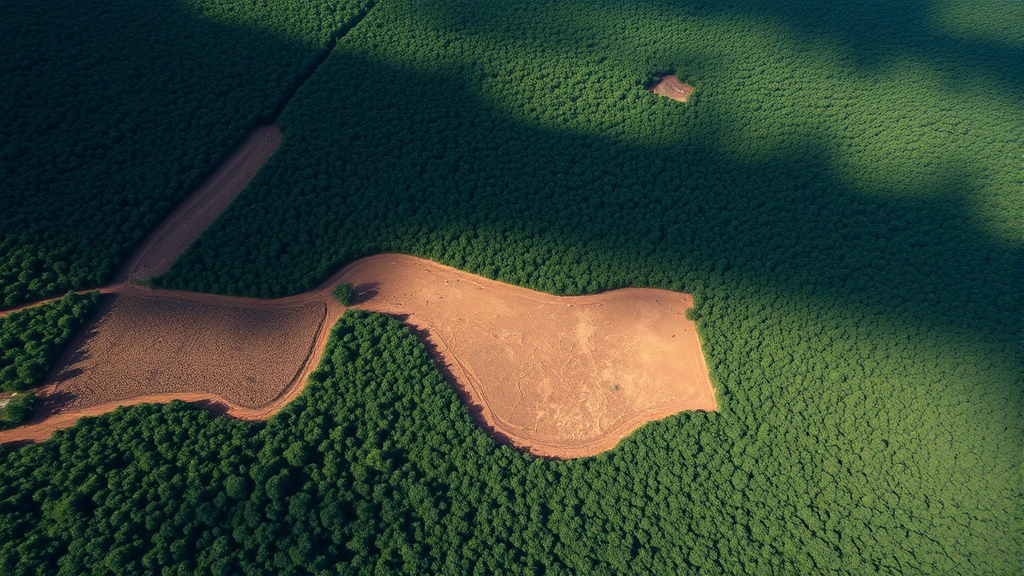
Ecosystem degradation represents one of the largest economic losses of our era, yet it remains largely invisible in conventional GDP calculations. Forests are cleared for agricultural expansion, fisheries collapse from overharvesting, and soil fertility declines through intensive monoculture—all activities that boost short-term economic output while destroying the natural capital that underpins long-term prosperity. Economists increasingly recognize that this accounting framework is fundamentally misleading.
The World Bank has documented that natural capital—comprising forests, fisheries, mineral deposits, and other resources—comprises a substantial portion of total wealth in developing nations. Yet most countries fail to account for its depletion in their national accounts. When Indonesia harvests timber, the value is recorded as income rather than as the liquidation of an asset. This creates perverse incentives where countries become wealthier on paper while their actual productive capacity diminishes.
The scale of ecosystem degradation is staggering. Global forest loss alone costs the world economy an estimated $2-5 trillion annually when accounting for carbon sequestration, biodiversity, and water regulation services. Agricultural intensification has degraded approximately 75% of Earth’s land surface, reducing productivity and resilience. UNEP estimates that ecosystem degradation and biodiversity loss could trigger cascading economic failures if tipping points are crossed.
Understanding the economic dimensions of ecosystem degradation requires recognizing that nature provides critical infrastructure. When we destroy mangrove forests for shrimp farming, we lose natural storm barriers that would cost billions to replace with engineered solutions. When we pollute aquifers, we create water scarcity that constrains economic development. The human and environment interaction operates through these tangible economic pathways, not merely as an abstract ethical concern.

Externalities and Market Failures
At the heart of economic analysis lies the concept of externalities—costs or benefits that markets fail to price. When a factory pollutes a river, the true cost of production includes the harm to downstream communities, but this cost doesn’t appear in the company’s balance sheet. This systematic underpricing of environmental degradation drives overproduction of harmful goods and underinvestment in conservation.
Ecological economics, a field that explicitly incorporates biophysical limits into economic theory, argues that externalities are not marginal problems but fundamental features of modern economies. Traditional neoclassical economics treats environmental resources as infinitely substitutable and assumes markets will automatically adjust prices upward as resources become scarce. Ecological economists counter that some resources and ecosystem functions have no substitutes and that markets often fail to signal scarcity until collapse is imminent.
The tragedy of the commons exemplifies how decentralized decision-making leads to ecosystem destruction. When fisheries are unregulated, individual fishing operations have no incentive to conserve stocks because any fish they leave will be harvested by competitors. The result is systematic overharvesting that destroys the resource for everyone. This dynamic plays out across countless ecosystems: shared aquifers are depleted, shared atmosphere accumulates greenhouse gases, and shared forests are cleared.
Addressing these market failures requires understanding that the living environment operates as interconnected systems with feedback loops that markets struggle to incorporate. When one species is overexploited, cascading effects ripple through food webs. When soil carbon is depleted, productivity declines and vulnerability to climate shocks increases. Markets evaluate individual transactions but cannot easily price these systemic risks.
Natural Capital Accounting
A fundamental shift in economic thinking involves treating natural resources as capital stocks that generate flows of services. Forests aren’t just timber; they’re repositories of carbon, regulators of water cycles, habitats for biodiversity, and sources of medicinal compounds. Fisheries aren’t just populations to harvest; they’re complex ecosystems that provide food security, livelihoods, and cultural value. Recognizing these multiple functions requires moving beyond extraction-focused accounting.
Natural capital accounting frameworks attempt to value the stock of environmental assets and track changes in their quantity and quality. The UN’s System of Environmental-Economic Accounting (SEEA) provides standardized methodologies for measuring natural capital alongside produced capital and human capital. Countries implementing natural capital accounts discover that their true economic position differs dramatically from GDP figures. A nation appearing to grow robustly may actually be depleting its natural wealth faster than it accumulates produced capital.
Empirical studies using natural capital accounting reveal sobering patterns. Many developing nations have experienced negative genuine savings—a measure that accounts for natural capital depletion—meaning they consume more than they produce and leave future generations poorer. Conversely, countries investing in ecosystem restoration and sustainable resource management show positive genuine savings, indicating true economic development rather than resource liquidation.
The challenge in natural capital accounting lies in valuation. How should we price a hectare of rainforest? Should we focus on timber value, carbon sequestration, pharmaceutical potential, or biodiversity? Different valuation approaches yield vastly different results. Conservative economists prefer market-based valuations, while ecological economists argue these underestimate true values by ignoring non-market services and irreversibility.
Economic Valuation of Ecosystem Services
Ecosystem services—the benefits humans derive from nature—encompass provisioning services (food, water, materials), regulating services (climate, water purification, pest control), supporting services (nutrient cycling, soil formation), and cultural services (recreation, spiritual value). Economists have developed sophisticated methods to assign monetary values to these services, enabling cost-benefit analyses that incorporate environmental factors.
The Millennium Ecosystem Assessment estimated that ecosystem services worth roughly $125 trillion annually support human civilization. This figure, though subject to methodological debate, illustrates the economic magnitude of nature’s contributions. When wetlands are drained for development, we lose water filtration services that would otherwise require expensive treatment infrastructure. When pollinators decline due to pesticide use, we lose services worth tens of billions in agricultural productivity.
Valuation methods include market-based approaches (using actual prices paid for ecosystem products), revealed preference methods (inferring values from consumer behavior), and stated preference methods (asking people what they’d pay for environmental improvements). Each approach has strengths and limitations. Market prices often reflect only a fraction of true value—a timber harvest price doesn’t capture carbon sequestration value. Revealed preference methods struggle with non-use values (people value rainforest preservation even if they never visit). Stated preference methods depend on how questions are framed and may not reflect actual willingness to pay.
Despite these challenges, ecosystem service valuation has proven influential in policy debates. Demonstrating that protecting a watershed is cheaper than building treatment plants, or that mangrove restoration generates more economic value than shrimp farming, shifts cost-benefit calculations in favor of conservation. This approach connects ecosystem protection to economic self-interest, a powerful motivator in policy contexts.
The field of environmental economics has produced rich literature on valuation techniques. Ecological Economics journal publishes cutting-edge research on these methodologies, demonstrating both their power and limitations in capturing nature’s value.
Policy Instruments and Economic Solutions
Understanding the economic dimensions of ecosystem degradation informs policy design. Economists advocate for various instruments to internalize environmental costs and align private incentives with ecological sustainability. These range from regulatory approaches (standards and prohibitions) to market-based mechanisms (prices and property rights) to information and voluntary approaches.
Carbon pricing exemplifies how economic instruments can address environmental problems. By placing a price on greenhouse gas emissions—either through carbon taxes or cap-and-trade systems—policymakers create financial incentives to reduce emissions. The economic logic is straightforward: when polluters must pay for the damage they cause, they have incentives to reduce pollution. Dozens of carbon pricing systems now operate globally, generating insights about design trade-offs and effectiveness.
Payment for ecosystem services (PES) programs leverage economic incentives to encourage conservation. Farmers are paid to maintain riparian buffers that filter agricultural runoff. Forest communities receive compensation for carbon sequestration. Landowners are compensated for protecting biodiversity hotspots. These programs recognize that conservation requires resources and that beneficiaries should pay providers. When designed well, PES can simultaneously improve livelihoods and protect ecosystems.
Property rights reforms can also address environmental degradation. When fishing rights are clearly defined and tradeable, incentives shift toward sustainable harvesting. When forest communities hold secure tenure and benefit from forest management, deforestation rates decline. When water rights are allocated efficiently, agricultural productivity increases while water stress decreases. The economic principle is that secure, transferable property rights encourage long-term stewardship.
Complementing these market-based approaches, regulations remain essential. Some environmental harms cannot be adequately addressed through pricing alone. Species extinction is irreversible; some ecosystem functions have no substitutes. Prohibitions on particularly destructive practices, combined with enforcement mechanisms, protect non-negotiable ecological thresholds. The most effective policy packages combine regulations with economic incentives.
To understand practical applications, explore how reducing carbon footprint connects to broader economic policy frameworks and renewable energy for homes demonstrates market-based solutions in action. Additionally, examining sustainable fashion brands reveals how consumer economics and ecosystem protection intersect.
The Cost of Inaction
Perhaps the most compelling economic argument for environmental protection comes from cost-benefit analyses of inaction. The Stern Review on the Economics of Climate Change concluded that climate impacts could reduce global GDP by 5-20% permanently, while mitigation costs only 1% of global GDP annually. This asymmetry—where prevention is far cheaper than adaptation—characterizes many environmental problems.
Ecosystem collapse imposes cascading economic costs. Agricultural productivity declines as soil degrades and pollinator populations crash. Water scarcity increases competition and conflict. Increased disease prevalence from ecosystem disruption strains healthcare systems. Extreme weather events, exacerbated by climate change and habitat loss, destroy infrastructure and disrupt supply chains. The economic losses from these interconnected failures multiply through global trade networks and financial systems.
The insurance industry increasingly recognizes that environmental degradation raises risk profiles. Insurers are withdrawing from regions vulnerable to extreme weather, making insurance unaffordable or unavailable. This creates feedback loops where economic activity becomes impossible without environmental stability, yet environmental degradation accelerates through continued extraction and pollution.
Intergenerational equity constitutes another crucial economic dimension. Current generations benefit from ecosystem exploitation while future generations inherit depleted natural capital. From an economic perspective, this represents theft—appropriating assets that don’t belong to us. Economists advocating for strong sustainability argue that we must maintain natural capital stocks rather than allowing their depletion in exchange for short-term consumption.
Research from International Institute for Environment and Development demonstrates that countries investing in ecosystem restoration and sustainable resource management achieve better long-term economic outcomes than those pursuing extractive strategies. The transition requires upfront investment and political will, but the payoff—in terms of sustained productivity, reduced disaster costs, and improved human wellbeing—is substantial.
The economic case for environmental protection ultimately rests on recognizing that human prosperity depends fundamentally on ecosystem health. We are not separate from nature; we are embedded within it. The human and environment interaction shapes every economic transaction, from the food we eat to the materials we use to the air we breathe. Accounting for these relationships in economic decision-making represents not idealism but enlightened self-interest.
FAQ
How do economists measure the value of ecosystem services?
Economists use multiple valuation approaches: market-based methods that use actual prices paid for ecosystem products; revealed preference methods that infer values from consumer behavior; and stated preference methods that ask people what they’d pay for environmental improvements. Each method has strengths and limitations, and combining approaches often provides more robust estimates than relying on a single technique.
What is natural capital accounting and why does it matter?
Natural capital accounting treats environmental resources as capital stocks that generate flows of services, similar to how produced capital generates income. It matters because it reveals that many countries appear economically prosperous while actually depleting their natural wealth. Implementing natural capital accounts provides more accurate pictures of genuine economic development versus resource liquidation.
How can carbon pricing address climate change economically?
Carbon pricing—through taxes or cap-and-trade systems—creates financial incentives for emissions reduction. When polluters must pay for the damage caused by greenhouse gases, they have economic motivation to reduce emissions. This leverages market mechanisms to achieve environmental goals while allowing flexibility in how reductions are achieved.
What are the main barriers to implementing ecosystem protection policies?
Key barriers include short-term political incentives that prioritize immediate growth over long-term sustainability, distributional conflicts where costs concentrate on specific groups while benefits disperse broadly, information gaps about ecosystem values and tipping points, and international coordination challenges when ecosystems cross borders. Overcoming these barriers requires combining economic incentives with regulation and political leadership.
How do ecosystem services relate to human wellbeing?
Ecosystem services directly support human wellbeing through provisioning services (food and water security), regulating services (climate stability and disease control), supporting services (nutrient cycling that enables agriculture), and cultural services (recreation and spiritual fulfillment). Degradation of any of these services reduces human wellbeing, particularly for vulnerable populations dependent on natural resources.


