
Carbon Offsetting Impact: An Economist’s Perspective
Carbon offsetting has emerged as a critical market mechanism in the global effort to combat climate change, yet its economic efficacy remains hotly debated among environmental economists and policy analysts. As nations and corporations scramble to meet climate commitments, the carbon offset market has ballooned to over $2 billion annually, attracting institutional investors, governments, and corporations seeking to neutralize their greenhouse gas emissions. However, the fundamental question persists: do carbon offsets genuinely reduce atmospheric carbon dioxide, or do they merely provide a convenient veneer of environmental responsibility while allowing business-as-usual emissions to continue unchecked?
From an economic standpoint, carbon offsetting represents an application of the polluter-pays principle and market-based environmental policy. The theoretical foundation rests on the premise that carbon dioxide, being a global pollutant with uniform atmospheric mixing, should be treated as an economically fungible commodity. Whether emissions are reduced in Beijing or Brisbane becomes theoretically irrelevant if the net atmospheric impact is identical. This perspective, rooted in neoclassical environmental economics, has shaped international climate policy frameworks including the Kyoto Protocol and Paris Agreement mechanisms. Yet the practical implementation reveals significant gaps between economic theory and environmental reality.
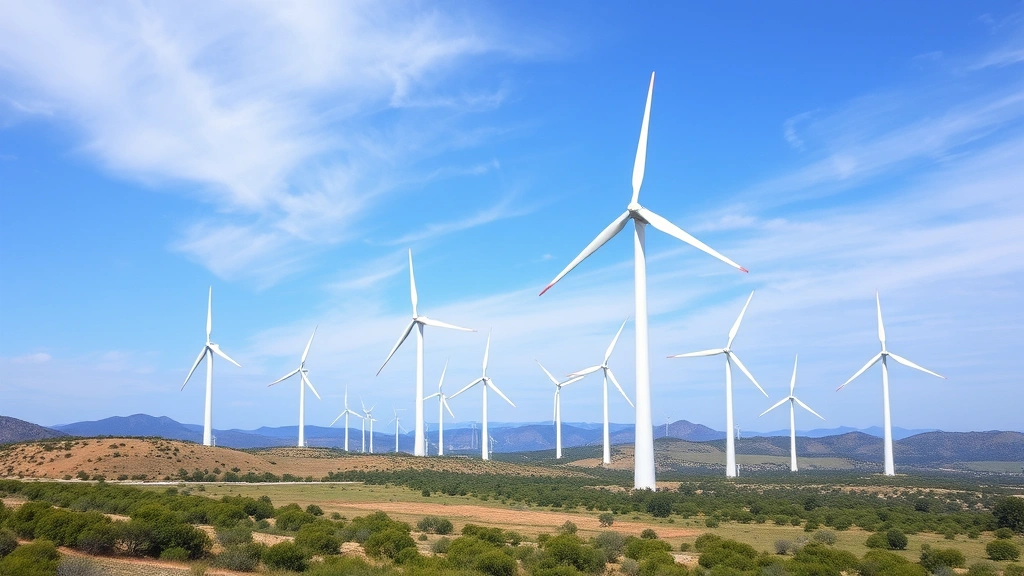
The Economic Theory Behind Carbon Markets
Carbon offsetting operates within the framework of cap-and-trade systems and voluntary carbon markets, both grounded in economic theory dating back to Ronald Coase’s seminal work on transaction costs and property rights. The logic is elegantly simple: if we can quantify the social cost of carbon emissions and create tradeable permits, market forces will allocate emissions reductions to wherever they are most cost-effective. A factory in Vietnam might reduce emissions at $5 per ton, while a utility in Germany faces $50 per ton reduction costs. Through offsetting, the German utility purchases Vietnamese emission reductions, achieving climate goals more efficiently than domestic measures alone.
This framework aligns with broader economic principles of environmental science and economic optimization. The World Bank has documented that carbon pricing mechanisms, when properly designed, can drive innovation and capital reallocation toward low-carbon technologies. The EU Emissions Trading System, world’s largest carbon market, theoretically demonstrates this principle, with carbon prices rising from near-zero in 2017 to over €80 per ton by 2023, incentivizing renewable energy investments exceeding €500 billion.
However, economic theory assumes perfect information, rational actors, and zero transaction costs—assumptions that rarely hold in practice. The carbon offset market exhibits significant information asymmetries. Buyers typically cannot verify whether a project genuinely reduces emissions or whether those reductions would have occurred anyway. This creates what economists call an “adverse selection” problem, where lower-quality offsets drive out higher-quality ones, degrading overall market integrity.
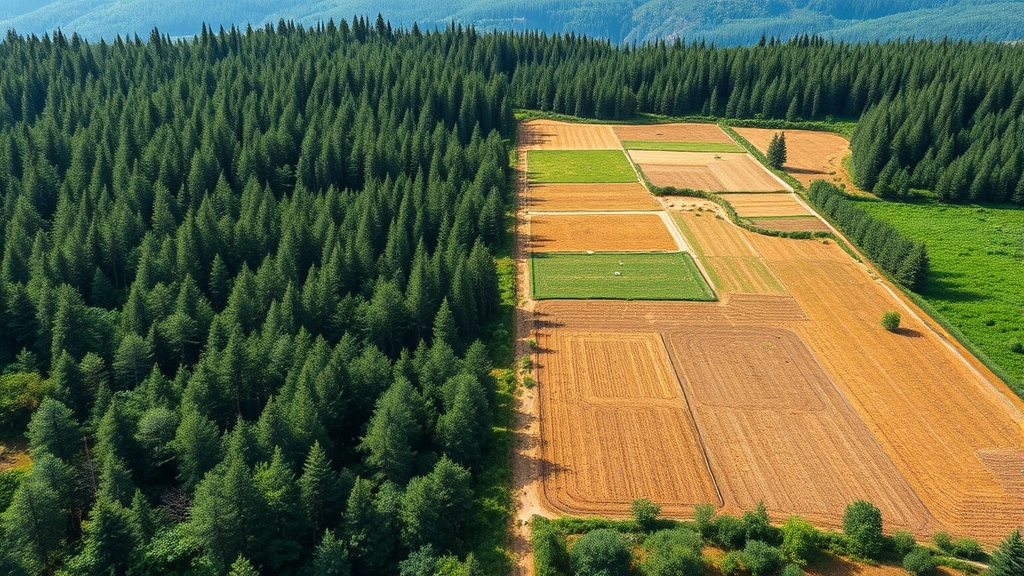
Additionality and Baseline Problems
The most critical economic challenge in carbon offsetting is the additionality problem: determining whether emissions reductions would have occurred regardless of offset financing. Consider a hydroelectric dam project in Cambodia. Would the dam have been built anyway due to electricity demand? If yes, purchasing offsets from this project doesn’t reduce global emissions—it merely transfers wealth from offset buyers to dam developers. Economic analysis suggests that 40-75% of offset projects lack genuine additionality, meaning they would have proceeded under normal economic conditions.
Establishing baselines requires counterfactual reasoning: what would have happened without the offset? This inherently subjective determination creates perverse incentives. Project developers have financial motivation to establish pessimistic baselines, inflating their apparent emissions reductions. A 2022 analysis in Nature Climate Change examining Brazilian forest conservation offsets found that baseline scenarios were systematically inflated, with actual deforestation rates lower than projected baselines in 70% of analyzed projects. This means offset purchasers paid for emissions reductions that never occurred.
From an economic efficiency perspective, additionality problems represent deadweight loss—payments for non-existent environmental benefits. When corporations purchase non-additional offsets, they achieve lower actual emissions reductions than claimed, yet still meet regulatory requirements or sustainability commitments. The market fails to allocate capital toward genuine climate solutions, instead subsidizing projects that would proceed regardless. This misallocation becomes particularly acute in developing economies where institutional capacity to verify additionality remains limited.
The baseline problem also reflects asymmetric information between offset verifiers and project developers. Verifiers earn fees from projects they certify, creating conflicts of interest. Economic theory predicts this will result in optimistic baseline assessments. Evidence supports this: offset projects in renewable energy show dramatically higher claimed additionality rates (90%+) in countries with weak regulatory oversight compared to rigorous jurisdictions (40-50%).
Market Failures and Pricing Mechanisms
Carbon offset prices exhibit characteristics of markets plagued by fundamental inefficiencies. Voluntary carbon market prices range from $0.50 to $50 per ton, with extreme variation reflecting information problems and lack of standardization. Compare this to EU Emissions Trading System prices, which converge around €80-90 per ton through transparent, regulated trading. The 100-fold price differential for ostensibly identical environmental goods indicates severe market fragmentation and information failures.
Economic analysis reveals that offset prices bear weak correlation with actual climate impact or emissions reduction costs. Instead, prices reflect buyer preferences, brand value, and narrative appeal. Offsets from charismatic megafauna conservation (protecting elephants or orangutans) command 3-5 times premiums over functionally equivalent renewable energy projects. This represents what behavioral economists term “preference-based pricing,” where willingness-to-pay reflects emotional attachment rather than environmental effectiveness. From a climate perspective, this is economically irrational—a ton of carbon prevented remains a ton prevented regardless of associated wildlife benefits.
The interaction between human economic activity and environmental systems creates negative externalities that carbon markets attempt to internalize. Yet offset markets systematically underprice these externalities. A comprehensive review by World Bank researchers found that offset prices average $8-12 per ton, while economic estimates of climate change damages range from $51-200 per ton (depending on discount rates and damage projections). This 5-25 fold underpricing means carbon markets fail to achieve economically optimal emissions reductions.
Pricing mechanisms in offset markets also fail to account for co-benefits and co-harms. A forest conservation offset may provide biodiversity benefits worth $100 per hectare annually, yet offset pricing ignores these values. Conversely, some offset projects create local environmental damage—hydroelectric dams displace communities and destroy fisheries—costs not reflected in offset pricing. Economic theory demands that prices reflect all social costs and benefits. Offset markets systematically exclude these externalities, resulting in prices that diverge substantially from socially optimal levels.
Leakage and Systemic Effects
One of the most economically significant problems in carbon offsetting is leakage: the phenomenon where emissions reductions in one location result in increased emissions elsewhere. Economic theory predicts this through several mechanisms. In forest conservation offsets, if a project prevents logging in one forest, timber demand doesn’t disappear—it shifts to unprotected forests elsewhere, potentially in weaker regulatory environments. Studies of protected forest areas in tropical regions document leakage rates of 30-80%, meaning that 30-80% of prevented deforestation simply relocates to uncontrolled areas.
This represents a fundamental market failure that economic models often overlook. When calculating offset projects’ climate benefits, developers typically ignore leakage, claiming 100% additionality when actual net emissions reductions may be near zero. From a global accounting perspective, leakage transforms offset projects from climate solutions into climate accounting frauds. A corporation purchasing forest conservation offsets may achieve zero net emissions reduction while claiming carbon neutrality.
Agricultural offsets exhibit similar leakage patterns. A project promoting conservation tillage in Iowa reduces erosion and improves soil carbon, but displaces conventional farming to less-regulated regions. Economic analysis of soil carbon projects shows that 50-70% of claimed benefits leak through agricultural practice displacement. This leakage occurs because global commodity markets operate as integrated systems—reducing production in one region simply shifts it elsewhere, with minimal global emissions impact unless accompanied by demand-side changes.
Systemic effects compound leakage problems. Carbon offset revenues alter investment incentives in developing economies. When offset financing makes forest conservation more profitable than agriculture, land-use patterns shift. However, without global carbon pricing, these incentive shifts may simply relocate deforestation to regions without offset programs. An economic analysis by UNEP researchers found that offset-driven conservation in Southeast Asia correlated with increased deforestation in Central Africa, suggesting leakage at continental scales.
Real-World Implementation Challenges
Beyond theoretical problems, carbon offsetting faces practical implementation challenges that undermine economic efficiency. Verification costs consume 5-15% of offset project revenues, yet verification remains imperfect. Remote sensing technology can detect forest cover changes but cannot determine causation—was deforestation prevented by conservation efforts or by other factors? Establishing causal attribution requires sophisticated economic modeling and counterfactual analysis, capabilities limited in many developing nations where most offset projects operate.
The offset project pipeline reveals concerning patterns. Between 2005-2020, approximately 3.5 billion offsets were issued globally, yet fewer than 900 million were retired (used to claim emissions reductions). This 75% surplus suggests either that offset projects dramatically exceeded claimed additionality, or that buyers strategically purchased excess offsets for future compliance, or that offered offsets fail verification scrutiny. Each scenario indicates market dysfunction.
Permanence represents another critical economic problem. Carbon sequestered in forests or soils can be re-released through fires, pest outbreaks, or land-use changes. Offset projects typically guarantee permanence for 20-100 years, yet climate impacts extend millennia. An economic analysis comparing offset permanence to permanent emissions reductions reveals a fundamental asymmetry: purchasing an offset for temporary carbon sequestration doesn’t offset permanent atmospheric emissions. Economically, temporary sequestration should command substantially lower prices than permanent reductions, yet markets treat them equivalently.
Furthermore, offset markets exhibit poor capital allocation efficiency. Offset revenues often flow to wealthy corporations and landowners rather than spurring economically transformative investments in developing nations. A forest owner in Indonesia might receive $20-50 per hectare annually for conservation, while that same land could generate $200-500 annually through sustainable timber production or $500-2000 through agroforestry. Offset pricing fails to incentivize optimal land-use transitions, instead locking land into lower-productivity conservation uses.
Alternative Economic Approaches
Given carbon offsetting’s systematic failures, environmental economists increasingly advocate alternative approaches. Carbon taxation represents the most straightforward alternative, directly pricing emissions at levels reflecting climate damages. Unlike offsetting, which attempts to achieve emissions reductions through indirect market mechanisms, carbon taxation directly increases the cost of emissions. Economic modeling suggests carbon taxes of $100-200 per ton would drive optimal emissions reductions across all sectors simultaneously.
Regulatory approaches complement carbon taxation. Deforestation regulation through direct environmental controls proves more effective than offsetting. Indonesia’s moratorium on new forest conversion reduced deforestation more substantially than offsetting programs, though with higher compliance costs. Economic theory suggests that regulations work better than market mechanisms when information is severely asymmetric and enforcement capacity is limited—precisely the conditions in developing economies where most offsets operate.
Direct climate investment represents another alternative. Rather than purchasing offsets, corporations could invest directly in renewable energy infrastructure, energy efficiency retrofits, or carbon capture technology in developing nations. These direct investments create measurable climate benefits, technology transfer, and economic development simultaneously. Economic analysis shows that $1 invested in direct climate projects generates 2-3 times greater emissions reductions than $1 spent on offsetting, accounting for leakage and additionality problems.
Circular economy approaches address emissions at source rather than through offsetting. Designing products for durability, repairability, and recycling reduces material extraction and manufacturing emissions. This represents foundational approaches to reducing carbon footprints rather than offsetting them. Economic analysis of circular economy investments shows higher returns than offsetting, with benefits including job creation, resource security, and reduced pollution alongside climate mitigation.
International economic cooperation mechanisms offer promise beyond offsetting. Technology transfer agreements, where wealthy nations subsidize renewable energy deployment in developing economies, achieve climate goals while supporting development. Economic research indicates that $100 billion annually in development-focused climate finance generates greater global emissions reductions than $100 billion in offset purchases, with superior development outcomes.
The renewal of environmental and natural resources trust funds demonstrates that institutional mechanisms can drive climate action more effectively than market offsetting. Trust funds that directly finance conservation, renewable energy, and sustainable development create permanent institutional commitments and eliminate additionality problems inherent in project-based offsetting.
Behavioral economics offers additional insights. Sustainable consumption patterns developed through information provision, social norms, and choice architecture achieve emissions reductions without offsetting. Economic research shows that consumers modify behavior when presented with carbon footprint information, often more substantially than when offered offsetting options. This suggests that transparency and behavioral interventions may prove more economically efficient than offsetting markets.
FAQ
What percentage of carbon offsets are actually additional?
Economic research estimates that 40-75% of offset projects lack genuine additionality, meaning emissions reductions would have occurred regardless of offset financing. This varies significantly by project type and geographic region, with renewable energy projects in weak regulatory environments showing higher non-additionality rates.
How do carbon offset prices compare to actual climate damages?
Voluntary carbon market prices average $8-12 per ton, while economic estimates of climate change damages range from $51-200 per ton depending on discount rates and damage projections. This 5-25 fold underpricing indicates that carbon markets fail to achieve economically optimal emissions reductions.
What is leakage in carbon offsetting?
Leakage occurs when emissions reductions in one location result in increased emissions elsewhere. Forest conservation offsets frequently experience 30-80% leakage rates, as prevented logging shifts timber demand to unprotected forests. This dramatically reduces the actual climate benefit of offset projects.
Are temporary carbon sequestration offsets equivalent to permanent emissions reductions?
Economically, no. Temporary sequestration (in forests or soils) can be re-released through fires or land-use changes, while permanent emissions reductions are irreversible. Temporary offsets should command substantially lower prices than permanent reductions, yet markets treat them equivalently, representing another market failure.
What alternative approaches work better than offsetting?
Carbon taxation, regulatory approaches, direct climate investment, and circular economy strategies typically prove more economically efficient than offsetting. These alternatives generate measurable emissions reductions while avoiding additionality, leakage, and permanence problems inherent in offset markets.
How do offset prices vary across project types?
Offset prices vary 100-fold across project types, with charismatic conservation (wildlife protection) commanding 3-5 times premiums over functionally equivalent renewable energy projects. This variation reflects buyer preferences rather than environmental effectiveness, indicating preference-based pricing that diverges from economic rationality.


