How Do Ecosystems Impact GDP? Economist Insights
The relationship between ecosystems and gross domestic product represents one of the most critical yet underexplored intersections in modern economics. For decades, traditional GDP measurements have treated natural capital as an infinite resource, ignoring the profound economic consequences of ecosystem degradation. However, leading economists and environmental scientists now recognize that ecosystem services—the benefits humans derive from natural systems—directly contribute billions of dollars annually to global economic output. Understanding this connection fundamentally challenges how we measure economic progress and allocate resources.
When a forest provides timber, it generates measurable GDP contributions. But when that same forest filters water, sequesters carbon, prevents soil erosion, and provides habitat for pollinating insects, these services remain largely invisible in conventional economic accounting. This accounting gap has created a dangerous blind spot in economic policy, leading to decisions that appear profitable in the short term while devastating long-term economic productivity. The emerging field of ecological economics provides frameworks to quantify these relationships and demonstrate that ecosystem collapse represents an economic catastrophe far exceeding any short-term extraction gains.
Understanding Ecosystem Services and Economic Value
Ecosystem services represent the tangible and intangible benefits that natural systems provide to human societies. These services fall into four primary categories: provisioning services (food, water, timber, medicines), regulating services (climate regulation, water purification, disease control), supporting services (nutrient cycling, soil formation, pollination), and cultural services (recreation, spiritual value, aesthetic appreciation). Each category generates measurable economic value that should theoretically be reflected in GDP calculations.
Consider agricultural productivity, which depends entirely on ecosystem services like pollination, soil health, and water availability. The global pollination service alone is valued at approximately $15-20 billion annually, yet this contribution rarely appears in agricultural GDP figures. When honeybee populations collapse due to pesticide use or habitat loss, the economic impact cascades through food production systems, yet economists typically attribute yield declines to other factors rather than recognizing the underlying ecosystem service failure.
The concept of natural capital extends this analysis further. Just as financial capital generates economic returns, natural capital—forests, wetlands, fisheries, mineral deposits, and atmospheric systems—generates economic flows. However, unlike financial capital, natural capital is often depleted without replacement or investment in regeneration. A country that harvests all its timber, depletes its fisheries, and pollutes its aquifers may show positive GDP growth while destroying the natural capital base that generates future economic value. This represents economic illusion masquerading as prosperity.
Understanding how humans affect the environment economically requires recognizing that environmental degradation is simultaneously economic degradation. When industrial activity pollutes a river, it generates GDP through production while simultaneously destroying the ecosystem service value of that river—water filtration, fish habitat, nutrient cycling—that previously contributed to economic productivity without explicit market transactions.
Natural Capital Accounting and GDP Measurement
Traditional GDP measurement represents one of the most consequential accounting errors in human history. The system counts resource extraction as income rather than capital depletion, treating natural assets like fishing stocks or forests identically to renewable harvests. If a country sells off its entire forest in a single year, GDP increases dramatically, even though the country has destroyed capital that would generate economic value indefinitely into the future.
Natural capital accounting attempts to correct this fundamental flaw by incorporating environmental assets into national accounts. The United Nations Environment Programme (UNEP) has developed frameworks for environmental-economic accounting that countries increasingly adopt. These systems measure changes in natural capital stocks—forests, minerals, water, soil, biodiversity—alongside conventional economic accounting.
When natural capital accounting is applied rigorously, economic narratives shift dramatically. Countries that appear to be growing economically often show stagnant or declining genuine economic progress when adjusted for natural capital depletion. Indonesia, for example, experienced rapid GDP growth during the 1990s-2000s while losing forest cover at rates exceeding 1.5 million hectares annually. When timber harvesting, forest degradation, and carbon release are properly valued and subtracted from GDP, the country’s true economic performance appears far less impressive than conventional statistics suggest.
The World Bank has pioneered adjusted net savings (ANS) analysis, which measures genuine economic progress by accounting for natural capital depreciation. ANS calculations reveal that many countries with positive GDP growth actually experience negative genuine savings when environmental degradation is included. This metric provides policymakers with more accurate information about whether economic activities are sustainable or merely transferring wealth from future generations to present consumption.
Quantifying Ecosystem Contributions to Economic Output
Assigning monetary values to ecosystem services presents methodological challenges but yields powerful insights into economic-ecological relationships. Economists employ several valuation approaches: market-based methods (using actual market prices for ecosystem products), replacement cost methods (calculating the cost of replacing ecosystem services with technological alternatives), contingent valuation (surveying willingness to pay for environmental preservation), and hedonic pricing (inferring environmental value from property price variations).
Research demonstrates that ecosystem service values often dwarf the direct economic benefits of ecosystem conversion. A comprehensive study of global ecosystem services estimated that the annual value of ecosystem services ranges from $125 trillion to $145 trillion—approximately 1.5 to 2 times global GDP. These values include carbon sequestration, water filtration, pollination, soil formation, nutrient cycling, disease regulation, and countless other services that economic systems depend upon but rarely compensate.
Tropical rainforests illustrate this valuation challenge starkly. The economic value of timber extraction might generate $1,000-5,000 per hectare in immediate revenue. However, the ecosystem services provided by that same forest—carbon sequestration, water regulation, biodiversity habitat, pharmaceutical potential—are valued at $2,000-10,000+ per hectare annually. Over a 50-year timeframe, preserving the forest generates substantially more economic value than clearing it, yet conventional economic analysis often reaches the opposite conclusion because future values are discounted and ecosystem service values remain invisible in market transactions.
Freshwater ecosystems provide particularly stark economic examples. Wetlands provide water filtration, flood control, fish habitat, and nutrient cycling worth thousands of dollars per hectare annually. When wetlands are drained for agricultural development, GDP increases through new farm production, but the lost ecosystem services often exceed the agricultural benefits. The Everglades provides a cautionary example: decades of water management prioritizing agricultural and urban development destroyed ecosystem services worth billions in water filtration, hurricane protection, and fishery support. Restoration efforts now cost tens of billions, demonstrating that destroying natural capital proves far more expensive than maintaining it.
Understanding human-environment interaction through economic valuation reveals that many development projects that appear economically rational actually represent massive losses when ecosystem services are properly accounted for.
” alt=”Ecosystem services valuation showing forest canopy with water cycle and biodiversity elements”>
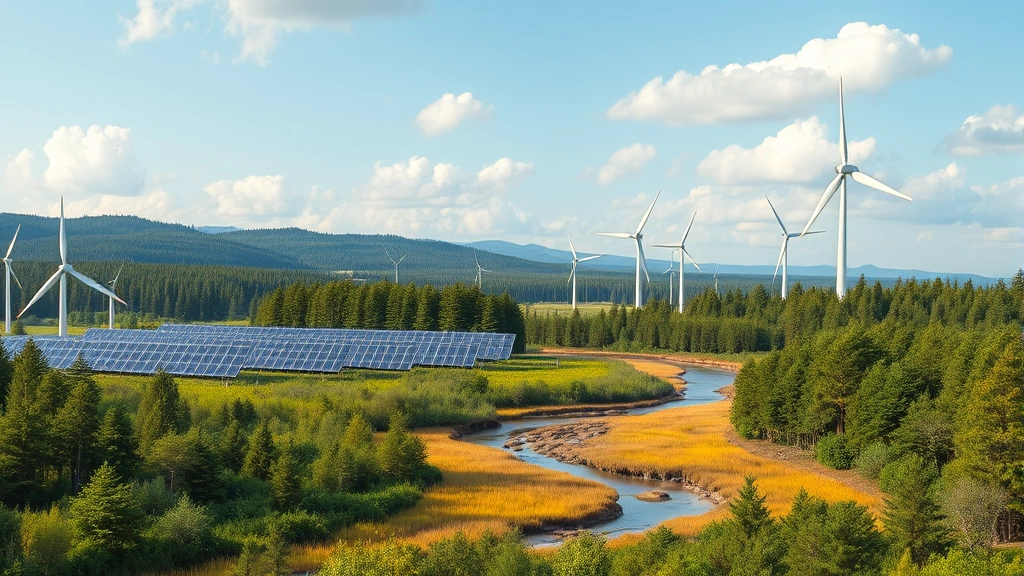
Costa Rica provides a compelling example of ecosystem-integrated economic policy. The country implemented payments for ecosystem services (PES) programs that compensate landowners for forest conservation, water protection, and carbon sequestration. By recognizing the economic value of standing forests, Costa Rica maintained approximately 52% forest cover—among the highest in Latin America—while achieving economic growth and becoming a global leader in renewable energy. The ecosystem services approach proved economically superior to short-term timber extraction, generating tourism revenue, maintaining water supplies, and preserving biodiversity that supports agriculture through pollination services. The Great Barrier Reef illustrates the economic consequences of ecosystem degradation. The reef generates approximately $56 billion in economic value through tourism, fisheries, and coastal protection. Climate change and water pollution threaten reef survival, which would eliminate this economic contribution while increasing vulnerability to cyclones and reducing fishery productivity. Economic analysis demonstrates that investing in climate mitigation and water quality improvement—protecting the reef—generates far greater economic returns than allowing degradation to continue, yet conventional cost-benefit analysis often fails to capture these ecosystem service values adequately. China’s Grain for Green program demonstrates large-scale ecosystem restoration economics. The government paid farmers to convert marginal agricultural land back to forest and grassland, addressing soil erosion and desertification while providing ecosystem services. While the program imposed short-term economic costs through reduced agricultural production, it generated long-term benefits through erosion control, water filtration, and carbon sequestration worth billions annually. This inversion of conventional development logic—paying to reduce production—reflects growing recognition that ecosystem services often exceed extraction values. The pollination services crisis in agricultural regions worldwide reveals how ecosystem degradation directly threatens GDP. Intensive agriculture’s use of pesticides and monoculture practices has devastated wild pollinator populations. As pollination services decline, agricultural productivity falls and production costs rise. Farmers must increasingly employ expensive manual pollination or purchase honeybee colonies, converting what was previously a free ecosystem service into a market transaction with rising costs. This represents not economic growth but rather the replacement of natural capital with increasingly expensive human substitutes. Quantifying ecosystem degradation’s economic impact requires examining both direct losses and cascading system failures. The World Bank estimates that environmental degradation costs developing countries approximately 4-5% of GDP annually in lost ecosystem services, resource depletion, and pollution damages. For wealthy nations, the percentage appears lower but absolute values remain enormous—environmental costs in OECD countries typically exceed $500 billion annually when comprehensively calculated. Biodiversity loss exemplifies how ecosystem degradation threatens economic systems. Approximately 40% of global GDP depends on ecosystem services, yet human activity has driven extinction rates 100-1,000 times above background rates. As species disappear, ecosystem resilience declines, making remaining ecosystems more vulnerable to collapse. The economic implications are severe: crop pollination failures, fishery collapses, and water system degradation represent not distant environmental concerns but immediate economic threats. Soil degradation costs the global economy approximately $400 billion annually in lost agricultural productivity. Yet this cost remains largely invisible in economic accounts because soil loss is rarely measured or monetized. Farmers experience declining yields and must increase fertilizer use to maintain productivity, but these costs appear as increased input expenses rather than recognition of natural capital depletion. Over time, degraded soils become economically unproductive, requiring abandonment or massive restoration investments. Climate change represents the ultimate ecosystem service collapse, with economic costs potentially reaching trillions annually by mid-century. Rising temperatures, changing precipitation patterns, and increasing extreme weather events threaten agricultural productivity, water availability, coastal infrastructure, and human health simultaneously. The economic damage functions as a hidden tax on all economic activity, reducing global GDP growth while imposing catastrophic costs on vulnerable regions. Exploring how to reduce carbon footprint represents not merely environmental activism but essential economic policy, as carbon emissions represent ecosystem degradation with enormous economic consequences. Transforming economic policy to recognize ecosystem-GDP relationships requires systematic reforms in how economies measure progress and allocate resources. Several policy frameworks show promise in integrating ecological and economic thinking. Natural Capital Accounting Integration: Governments increasingly adopt natural capital accounting frameworks that measure ecosystem assets alongside financial assets. The World Bank promotes Wealth Accounting and the Valuation of Ecosystem Services (WAVES), which helps countries systematically measure natural capital and incorporate environmental data into national accounts. When implemented comprehensively, these systems reveal that true economic growth requires maintaining or increasing natural capital, not merely exploiting it. Ecosystem Service Markets: Creating market mechanisms for ecosystem services incentivizes conservation. Carbon markets, water quality trading systems, and biodiversity credit programs assign economic value to ecosystem service provision, allowing these services to compete economically with extraction activities. While imperfect, these markets have successfully protected millions of hectares of forest and restored degraded ecosystems by making conservation economically rational. Environmental Tax Reform: Shifting taxation from income and capital toward resource extraction and pollution creates price signals that reflect true economic costs. Carbon taxes, resource extraction taxes, and pollution levies make environmentally destructive activities more expensive while reducing taxes on productive economic activity. This reorientation aligns market incentives with ecological sustainability. Green GDP Measurement: Several nations including China and India have experimented with green GDP frameworks that subtract environmental costs from conventional GDP. While methodologically challenging, these efforts acknowledge that conventional GDP growth can mask economic decline when ecosystem degradation is considered. Expanding these frameworks globally would fundamentally reorient economic policy toward sustainability. Understanding types of environment and their economic contributions enables policymakers to design targeted interventions protecting critical ecosystem service provision while maintaining economic productivity. ” alt=”Sustainable economy visualization with renewable energy infrastructure integrated with natural forests and water systems”>
The United Nations Environment Programme’s State of Global Biodiversity emphasizes that ecosystem protection represents economic investment, not cost. Research from ecological economics journals increasingly demonstrates that ecosystem preservation generates superior economic returns compared to conversion activities when comprehensive valuation includes ecosystem services. Transforming economic systems requires recognizing that environment science definitions must inform economic decision-making. The environment is not separate from economy; it is the foundation upon which all economic activity rests. Degrading ecosystems degrades economic capacity, and protecting ecosystems protects economic future. Ecosystem services contribute an estimated $125-145 trillion annually to global economic value—approximately 1.5 to 2 times measured global GDP. This includes carbon sequestration, water filtration, pollination, soil formation, and countless other services that economic systems depend upon. However, most of this value remains unpriced in market transactions, leading to systematic undervaluation and overexploitation of natural capital. Conventional GDP measures only market transactions and government spending, excluding non-market services regardless of economic importance. Ecosystem services often lack clear market prices, making them invisible in GDP calculations. Additionally, historical economic frameworks treated natural resources as infinite and external to economic systems, creating accounting systems that ignore environmental capital depletion entirely. Ecosystem service valuation faces methodological challenges, as many services lack clear market prices and involve complex ecological relationships. However, multiple valuation approaches—market-based, replacement cost, contingent valuation, and hedonic pricing—provide reasonable estimates of ecosystem service values. While imperfect, these valuations consistently demonstrate that ecosystem services exceed extraction values, fundamentally challenging development decisions. Biodiversity loss threatens ecosystem resilience and service provision, with economic consequences including reduced crop pollination, fishery collapses, water system degradation, and increased disease transmission. The World Bank estimates that biodiversity loss costs the global economy hundreds of billions annually and threatens economic productivity in agriculture, fisheries, and tourism sectors. Governments can implement natural capital accounting, create ecosystem service markets, reform environmental taxation, and develop green GDP measurements. These approaches assign economic value to ecosystem services, creating incentives for conservation while revealing true economic costs of degradation. Countries implementing these frameworks demonstrate improved environmental outcomes alongside sustained economic growth. Costa Rica, Bhutan, and several Nordic countries pioneer ecosystem-integrated economic approaches through payments for ecosystem services, natural capital accounting, and environmental tax systems. These nations demonstrate that recognizing ecosystem service values supports both environmental protection and long-term economic prosperity.Case Studies: Ecosystems and Regional Economies
The Cost of Ecosystem Degradation
Policy Frameworks for Ecosystem-Integrated Economics
FAQ
How much do ecosystem services contribute to global GDP?
Why don’t conventional GDP measurements include ecosystem services?
Can ecosystem service values be accurately calculated?
What are the economic consequences of biodiversity loss?
How can governments integrate ecosystem economics into policy?
Which countries lead in ecosystem-integrated economics?