
How Ecosystems Boost Economies: Study Insights
The relationship between natural ecosystems and economic prosperity has emerged as one of the most compelling areas of research in contemporary environmental economics. For decades, traditional economic models treated nature as an infinite resource, separating ecological health from financial metrics. However, groundbreaking studies now demonstrate that ecosystem services—the tangible benefits humans derive from natural systems—generate trillions of dollars annually in economic value. Understanding how to pronounce “environment” correctly (en-VY-run-ment) is just the beginning of grasping why these systems matter so profoundly to our collective prosperity.
Recent comprehensive analyses reveal that healthy ecosystems function as natural infrastructure, delivering services that would cost exponentially more to replicate artificially. From pollination networks that sustain agriculture to carbon sequestration that regulates climate, these ecological processes underpin economic stability across every sector and nation. This article explores the empirical evidence connecting ecosystem health to economic performance, examining how biodiversity, watershed systems, and forest networks directly influence GDP, employment, and long-term financial resilience.

Understanding Ecosystem Services and Economic Value
Ecosystem services represent the myriad ways natural systems support human welfare and economic activity. These services operate across four primary categories: provisioning services (food, water, raw materials), regulating services (climate control, flood prevention, disease regulation), supporting services (nutrient cycling, soil formation), and cultural services (recreation, spiritual value, educational opportunities). Unlike traditional commodities traded in markets, most ecosystem services remain undervalued or entirely absent from economic accounting systems, creating a fundamental blind spot in how nations measure prosperity.
The economic framework for valuing ecosystems has evolved significantly since the 1990s, when researchers first attempted to calculate global ecosystem service value. Contemporary ecological economics integrates natural capital accounting into national GDP calculations, recognizing that environmental degradation represents genuine economic loss. A landmark World Bank initiative on Inclusive Wealth has demonstrated that countries losing natural capital experience genuine reductions in long-term economic capacity, even when conventional GDP figures appear stable. This paradigm shift reflects growing recognition that fossil fuel dependence and environmental degradation ultimately undermine economic foundations.
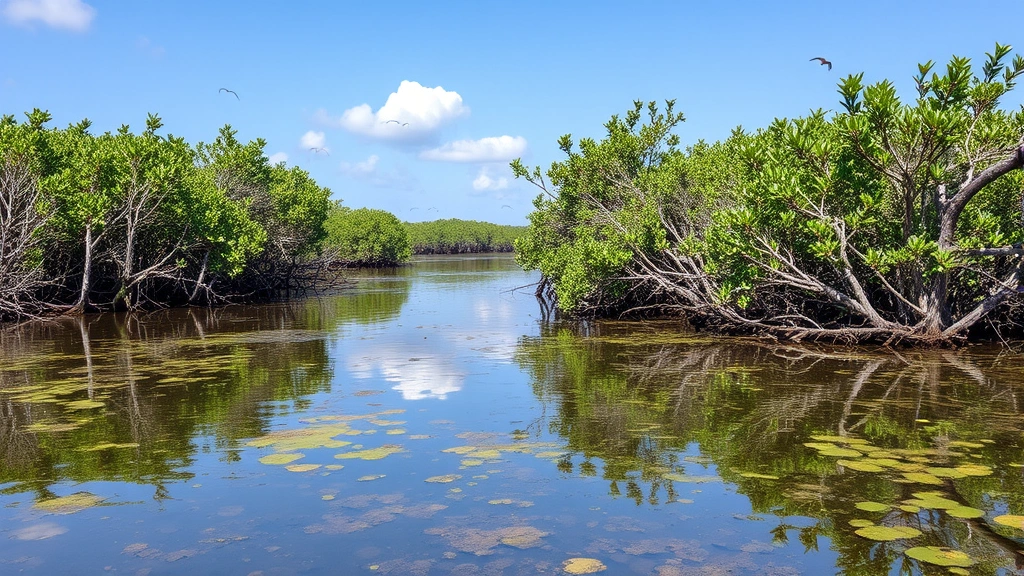
Understanding these connections requires examining how ecosystem health directly translates to measurable economic outcomes. When mangrove forests are preserved, they provide coastal protection worth billions in prevented storm damage. When wetlands remain intact, they filter water at costs far below artificial treatment facilities. When forests maintain structural integrity, they sequester carbon while supporting timber industries and tourism simultaneously. These aren’t abstract environmental concerns—they represent concrete economic assets with quantifiable financial implications.
Quantifying Nature’s Economic Contribution
Recent comprehensive studies have attempted to monetize global ecosystem services, revealing staggering figures that fundamentally challenge economic development models. Research published through the United Nations Environment Programme estimates that ecosystem services globally generate between $125-145 trillion annually in economic value. To contextualize this figure: global GDP in 2023 approximated $105 trillion. Nature’s economic contribution literally exceeds the sum of all human economic activity, yet most of this value remains invisible in market transactions and policy decisions.
The challenge of ecosystem valuation involves translating non-market services into economic metrics. Researchers employ multiple methodologies: replacement cost analysis (calculating expense of artificial alternatives), contingent valuation (surveying willingness-to-pay for ecosystem preservation), hedonic pricing (analyzing property value premiums near natural areas), and ecosystem service modeling (quantifying flows of specific services). Each method reveals different aspects of ecological economic value, and integrated approaches provide more comprehensive assessments than single-metric analyses.
Agricultural pollination services exemplify this valuation challenge. Approximately 75% of global food crops depend partially on animal pollinators, primarily bees and other insects supported by diverse ecosystems. The economic value of pollination services reaches an estimated $15-20 billion annually in agricultural productivity. Yet farmers rarely pay for these services directly—they receive them as ecological “gifts” from natural systems. When ecosystems degradation reduces pollinator populations, the cost burden shifts to farmers through reduced yields and increased pesticide expenses, effectively imposing an invisible tax on agricultural profitability.
Biodiversity as Economic Foundation
Biodiversity—the variety of species, genetic variation, and ecosystem types—functions as the foundational capital underlying all ecosystem service provision. Higher biodiversity correlates strongly with ecosystem resilience, productivity, and capacity to provide consistent services across environmental fluctuations. This relationship has profound economic implications: diverse ecosystems withstand shocks better, recover more quickly from disturbances, and maintain service provision during climate variability.
Economic research demonstrates that biodiversity loss reduces ecosystem service provision exponentially rather than linearly. Studies examining grassland productivity, forest carbon storage, and fishery yields consistently show that losing species doesn’t simply reduce services proportionally—it often triggers tipping points where ecosystem function collapses entirely. A forest losing 20% of its species may experience 40-50% reductions in carbon sequestration capacity, and wetland species loss accelerates nutrient cycling disruptions that accumulate over years.
The pharmaceutical industry illustrates biodiversity’s direct economic value. Approximately 25% of modern pharmaceutical drugs derive from rainforest plants, generating tens of billions in annual revenue. Yet the ecosystems producing these compounds receive virtually no compensation, while pharmaceutical corporations capture value through intellectual property regimes. This economic asymmetry represents a fundamental market failure where ecosystem-dependent industries profit while ecosystems themselves remain economically invisible.
Genetic diversity within species also carries substantial economic significance. Crop varieties adapted to local conditions, livestock breeds optimized for specific environments, and wild relatives of cultivated species represent biological insurance against future challenges. Climate change creates urgent pressure to maintain genetically diverse populations capable of adapting to novel conditions. The economic value of this adaptive capacity—essentially insurance against future agricultural losses—remains largely unquantified in conventional economic analyses.
Agricultural Systems and Pollination Economics
Agricultural productivity fundamentally depends on ecosystem services, yet industrial agriculture often operates as though natural systems were irrelevant. Pollination services, soil formation, water cycling, and pest regulation all represent ecosystem-dependent processes critical to food production. When agricultural expansion destroys the natural systems providing these services, the sector achieves short-term productivity gains while undermining its own long-term viability.
Pollinator decline presents an acute economic crisis in agricultural regions globally. Bee populations have declined 25-45% across major agricultural zones over the past two decades, directly correlating with reduced crop yields in pollinator-dependent crops. Almonds, apples, cucumbers, and numerous other commercially significant crops face pollination shortages, forcing farmers to either accept yield reductions or employ expensive supplementary pollination methods. Some regions have experimented with hand-pollination, an intervention costing $1-5 per flower—an expense that renders many crops economically unviable.
The relationship between agricultural intensity and ecosystem service provision creates a fundamental economic tension. Conventional approaches maximize short-term yields through synthetic inputs—fertilizers, pesticides, irrigation—that replace ecosystem services but generate external costs. Soil degradation, water pollution, pest resistance evolution, and biodiversity loss accumulate as hidden economic liabilities. Regenerative agriculture approaches that maintain ecosystem function typically achieve lower short-term yields but generate lower total costs through reduced input expenses and maintained long-term productivity.
Soil health represents perhaps the most economically significant yet undervalued agricultural service. Healthy soils provide nutrient cycling, water retention, carbon sequestration, and pest regulation—services worth thousands of dollars per acre annually. Yet soil degradation, affecting approximately 33% of global agricultural land, reduces these services while imposing costs through increased fertilizer requirements, reduced water retention during droughts, and enhanced vulnerability to erosion. Economic modeling demonstrates that investing in soil restoration generates returns exceeding 10:1 over 30-year periods, yet short-term financial incentives rarely align with these long-term calculations.
Water Resources and Economic Security
Water security represents perhaps the most fundamental ecosystem service with direct economic consequences. Freshwater provision, water purification, flood regulation, and drought mitigation all depend on ecosystem function, particularly forest and wetland systems. Economic analyses consistently demonstrate that preserving watershed ecosystems costs far less than developing equivalent artificial water infrastructure—yet development patterns consistently prioritize short-term conversion over long-term ecosystem service maintenance.
Watershed forests provide multiple economic services simultaneously. They generate timber revenue, support biodiversity tourism, sequester carbon, provide hunting and fishing opportunities, and regulate water provision. Yet economic accounting typically forces choice between single services: convert forest to agriculture for immediate revenue, or preserve forest for water provision. Integrated valuation demonstrates that maintaining forest ecosystems generates greater total economic value than conversion alternatives, yet market failures prevent this value from influencing land-use decisions.
The economics of water purification illustrate ecosystem service valuation challenges. New York City’s watershed depends on Catskill Mountain forests for water purification services worth approximately $6 billion annually. When forest degradation threatened water quality, the city faced choosing between $6 billion in forest restoration or $8-10 billion in water treatment infrastructure construction plus ongoing operational costs. The city selected ecosystem restoration—a decision that demonstrated ecosystem service value exceeds conventional infrastructure alternatives. Yet similar choices rarely occur in developing regions where capital constraints and short-term financial pressures override long-term economic rationality.
Flood regulation services provide dramatic economic evidence of ecosystem value. Wetlands, floodplain forests, and coastal mangroves reduce flooding severity through water retention and flow attenuation. These ecosystems prevent damages estimated at hundreds of billions annually globally. Yet development pressures consistently destroy these systems for immediate land-value extraction, imposing massive external costs on downstream populations. The 2010 Pakistan floods, exacerbated by wetland destruction, caused $10 billion in damages—costs that could have been prevented through ecosystem preservation costing a fraction of that amount.
Carbon Sequestration and Climate Economics
Climate change represents the ultimate ecosystem service failure: atmospheric carbon accumulation resulting from ecosystem conversion and fossil fuel combustion. Yet this crisis simultaneously reveals ecosystem economic value with unprecedented clarity. Forests, wetlands, and coastal ecosystems sequester carbon, providing climate regulation services worth trillions in climate change damage prevention. Carbon markets, though imperfect, now quantify this service value, creating economic mechanisms that recognize ecosystem preservation’s climate benefits.
Forest carbon sequestration provides the most economically significant ecosystem climate service. Tropical forests sequester 100-400 tons of carbon per hectare, with carbon worth $15-50 per ton in contemporary markets. This generates forest standing value of $1,500-20,000 per hectare annually in carbon services alone—before accounting for timber, biodiversity, water, and other services. Yet deforestation persists because carbon value remains external to land-use economics in most regions; carbon benefits accrue globally while deforestation benefits concentrate locally, creating perverse economic incentives.
Soil carbon storage represents an equally significant yet less recognized climate service. Agricultural and grassland soils contain approximately twice the carbon in the atmosphere. Regenerative practices that increase soil carbon sequestration provide climate benefits worth thousands of dollars per hectare over multi-decade periods. Yet conventional agricultural economics ignores soil carbon value, creating incentive structures that prioritize yield maximization over carbon storage. Aligning agricultural economics with climate value requires integrating carbon accounting into farm-level financial analysis.
Coastal blue carbon ecosystems—mangroves, seagrass meadows, salt marshes—sequester carbon at rates 40 times higher than terrestrial forests per unit area. These ecosystems also provide fish nursery habitat, storm protection, and water filtration. Yet coastal development destroys these systems at accelerating rates, forgoing carbon service value worth hundreds of billions annually while eliminating multiple other ecosystem services simultaneously. Pollution and littering further degrade these critical systems, compounding economic losses.
Tourism and Recreation Value
Ecosystem-based tourism represents one of the most economically significant and rapidly growing sectors globally. Natural ecosystems—forests, coral reefs, mountains, wetlands—attract approximately $600-700 billion annually in tourism expenditures. This represents roughly 10% of global GDP and employs millions of people in tourism, hospitality, and related services. Unlike extractive industries that consume ecosystem resources, tourism can theoretically generate perpetual revenue from ecosystem preservation.
Coral reef tourism exemplifies ecosystem value to tourism economies. Coral ecosystems support $375+ billion in annual tourism, fisheries, and coastal protection services. Yet 50% of global reefs face severe degradation from warming, pollution, and destructive fishing. Economic analyses demonstrate that maintaining healthy reefs generates ten times greater economic value than converting reef areas to alternative uses. Yet reef destruction persists because immediate extraction benefits concentrate locally while long-term economic losses distribute globally, creating misaligned incentives.
Mountain and forest tourism generates comparable economic significance. Alpine regions attract $50+ billion annually in tourism expenditures dependent on ecosystem preservation. Tropical forest tourism creates economic value that often exceeds logging alternatives—yet forest conversion persists due to capital access disparities and time-horizon mismatches. Local communities facing immediate financial pressures accept logging payments rather than waiting for long-term tourism development, even when tourism ultimately generates greater total value.
Recreational ecosystem services extend beyond commercial tourism to encompass health, well-being, and quality-of-life benefits with substantial economic implications. Research demonstrates that ecosystem proximity reduces healthcare costs, improves mental health outcomes, and enhances cognitive function—benefits worth thousands of dollars per capita annually in prevented medical expenses and increased productivity. Urban ecosystem preservation represents medical infrastructure investment, yet accounting systems rarely recognize these health-economic benefits.
Case Studies: Ecosystems Driving Regional Growth
Costa Rica provides perhaps the most compelling case study of ecosystem-based economic development. After experiencing severe deforestation in the 1980s, the nation implemented payment for ecosystem services programs, forest preservation policies, and ecosystem-based tourism development. Forest cover has increased from 21% to 52% over four decades while the nation achieved upper-middle-income status. Ecosystem-based tourism now generates 4% of GDP and supports 20%+ of employment in many regions. Costa Rica demonstrates that ecosystem preservation and economic development can align when policy frameworks recognize ecosystem service value.
The Pantanal wetland system in Brazil provides ecosystem service value that exceeds alternative land uses economically. The region generates $5+ billion annually through tourism, fishing, ranching, and ecosystem services. Yet development pressures persistently threaten the system. Economic analysis demonstrates that maintaining the Pantanal generates greater total value than conversion to agriculture, yet policy failures allow conversion to proceed, imposing massive external costs on regional economies and global climate stability.
Madagascar’s biodiversity-based economy illustrates how ecosystem preservation creates economic resilience. The island generates substantial tourism revenue from unique ecosystems while maintaining agricultural sectors dependent on ecosystem services. Yet deforestation threatens both tourism revenues and ecosystem service provision, creating economic vulnerability. Economic modeling demonstrates that ecosystem preservation generates greater long-term value than conversion, yet capital constraints and short-term financial pressures drive continued degradation.
Indonesia’s mangrove restoration programs demonstrate ecosystem restoration’s economic return. Mangrove conversion to aquaculture appeared economically advantageous initially, but long-term analysis revealed that mangrove preservation generated greater value through fisheries support, carbon sequestration, storm protection, and tourism. Restoration programs now generate employment while recovering ecosystem services, demonstrating that ecosystem rehabilitation can create contemporary economic benefits rather than merely preserving future options.
Investment Opportunities in Ecosystem Restoration
Ecosystem restoration represents one of the highest-return investment categories available, with financial analyses demonstrating 7-15:1 returns over 20-30 year periods. Wetland restoration, forest regeneration, grassland recovery, and coral reef rehabilitation all generate financial returns exceeding conventional infrastructure investments while providing multiple co-benefits including climate regulation, biodiversity enhancement, and recreation value. Yet ecosystem restoration remains dramatically underfunded relative to its economic potential, receiving approximately $10 billion annually against estimated needs exceeding $300 billion.
The investment gap reflects market failures where restoration benefits remain external to financial systems. Carbon credits, water quality improvements, and biodiversity value creation benefit society broadly but don’t directly generate investor returns. Policy mechanisms including carbon pricing, carbon footprint reduction incentives, and ecosystem service payment programs can align financial incentives with ecological restoration, but remain inadequately implemented globally.
Innovative financing mechanisms are emerging to address ecosystem restoration funding gaps. Conservation trust funds, payments for ecosystem services programs, and green bonds now channel billions toward ecosystem restoration. Environmental awareness campaigns and corporate sustainability commitments increasingly drive investment toward ecosystem projects. These mechanisms remain nascent but demonstrate growing recognition that ecosystem restoration represents sound financial investment alongside environmental benefit.
Corporate investment in ecosystem restoration is accelerating as companies recognize brand value, supply chain resilience, and regulatory risk mitigation benefits. Sustainable fashion brands and other sectors increasingly invest in ecosystem restoration to support supply chains and enhance corporate reputation. This trend, while driven partly by marketing considerations, generates genuine ecosystem benefits and establishes precedents for ecosystem-dependent industries recognizing restoration investments as core business strategy.
Public-private partnerships increasingly fund ecosystem restoration at scales unachievable through either sector independently. Governments provide regulatory frameworks and long-term commitment while private capital provides efficiency and innovation. These partnerships demonstrate ecosystem restoration’s economic viability while generating environmental outcomes exceeding either sector’s independent capacity. Scaling these models represents critical opportunity for aligning economic incentives with ecological restoration.
FAQ
What exactly are ecosystem services and how do they create economic value?
Ecosystem services are benefits humans derive from natural systems. They include provisioning services (food, water, materials), regulating services (climate, flood control, pollination), supporting services (nutrient cycling, soil formation), and cultural services (recreation, spiritual value). These create economic value by supporting human activities—agriculture depends on pollination, fisheries depend on wetland nurseries, tourism depends on natural beauty—and by replacing services that would otherwise require expensive artificial alternatives.
How much economic value do ecosystems really provide?
Global ecosystem services generate an estimated $125-145 trillion annually according to UNEP research, exceeding total global GDP. However, most of this value remains invisible in market transactions because ecosystem services aren’t typically bought and sold. Specific services like pollination ($15-20 billion annually), watershed provision (varies by region but often billions), and coastal protection (hundreds of billions annually) are quantifiable and reveal ecosystem economic significance.
Why do governments and businesses ignore ecosystem value if it’s so economically important?
Ecosystem value remains largely external to economic decision-making due to market failures. Ecosystem benefits distribute broadly across society and time periods, while conversion benefits concentrate locally and immediately. Farmers gain immediate income from logging but lose water quality benefits distributed across many downstream users. Accounting systems fail to capture ecosystem value, making short-term extraction appear more profitable than long-term preservation. Policy reform requires internalizing ecosystem value into financial systems.
Can ecosystem restoration actually generate financial returns for investors?
Yes. Ecosystem restoration generates 7-15:1 financial returns over 20-30 year periods according to economic analyses. These returns include carbon credit revenue, water quality improvements with market value, timber production, tourism development, and fishery productivity enhancement. However, ecosystem restoration remains underfunded because these returns often remain external to investor compensation mechanisms. Policy mechanisms including carbon pricing and ecosystem service payments can align financial incentives with restoration investments.
How does biodiversity connect to economic productivity?
Biodiversity underpins ecosystem service provision through multiple mechanisms. Diverse ecosystems are more resilient to environmental shocks, maintain consistent service provision across climate variations, and recover faster from disturbances. Economically, this means diverse ecosystems provide more reliable and consistent services—critical for agriculture, water provision, and climate regulation. Biodiversity loss reduces not just service quantity but service reliability, creating economic vulnerability.


