Can Green Bonds Boost Economies? Economist Insights
Green bonds represent one of the most significant financial innovations in environmental economics over the past decade. These debt instruments, specifically earmarked for environmental and climate projects, have grown from a niche market of $11 billion in 2013 to over $500 billion in annual issuance by 2021. Yet economists remain divided on whether green bonds genuinely accelerate economic growth or merely redirect capital without creating net positive outcomes. This analysis explores the mechanisms through which green bonds influence economies, examines empirical evidence, and considers the perspectives of leading economists on their transformative potential.
The fundamental premise underlying green bond enthusiasm centers on a straightforward economic logic: climate change and environmental degradation impose substantial costs on economies through damaged infrastructure, reduced productivity, health expenses, and lost ecosystem services. By mobilizing private capital toward renewable energy, sustainable agriculture, and ecosystem restoration, green bonds theoretically reduce these future costs while creating immediate employment and technological advancement. However, skeptics argue that without proper additionality—ensuring projects wouldn’t occur through conventional financing—green bonds merely represent greenwashing that diverts resources from higher-return investments.
Understanding Green Bonds and Economic Mechanisms
Green bonds function as fixed-income securities where proceeds finance projects with environmental benefits. Unlike conventional bonds, their economic impact operates through multiple channels simultaneously. First, they mobilize capital that might otherwise remain dormant or flow toward carbon-intensive industries. Second, they create pricing signals that make environmental costs visible in financial markets. Third, they stimulate innovation in renewable technologies and sustainable practices through increased demand.
The economic mechanism begins with issuance. When governments or corporations issue green bonds, they access capital markets while committing to environmental outcomes. This commitment mechanism itself generates economic value by reducing information asymmetries between investors and borrowers. Investors gain confidence that capital flows toward measurable environmental benefits, while issuers gain access to dedicated pools of capital, including institutional investors increasingly mandated by fiduciary duty to consider environmental factors.
Understanding how green bonds interact with existing economies requires examining their relationship to how humans affect the environment through resource extraction and pollution. By financing transition mechanisms away from extractive practices, green bonds theoretically reduce negative externalities that depress long-term economic growth. The World Bank estimates that unpriced environmental degradation costs between 2-5% of GDP annually across developing economies, making capital reallocation toward environmental projects economically rational from a social accounting perspective.
However, the economic benefit depends critically on additionality. If green bonds simply finance projects that would occur anyway through conventional financing, they represent a zero-sum redistribution of capital rather than net economic gain. Economists at leading research institutions have increasingly focused on measuring additionality empirically, recognizing that green bonds’ macroeconomic impact hinges on whether they genuinely expand environmental investment or merely relabel existing spending.
Empirical Evidence on Economic Impact
Recent econometric studies provide mixed but generally positive findings regarding green bonds’ economic effects. A 2022 analysis by the United Nations Environment Programme examined 47 countries with active green bond markets and found average GDP growth acceleration of 0.3-0.5 percentage points annually in economies with green bond issuance exceeding 5% of total bond markets. This modest but significant effect emerges within 2-3 years of sustained green bond activity.
Employment data reveals stronger immediate impacts. Countries implementing large-scale green bond programs—particularly Germany, Denmark, and South Korea—experienced sector-specific job creation in renewable energy and energy efficiency sectors ranging from 15,000 to 45,000 jobs annually. These positions typically offer wages 8-12% above sector averages, suggesting quality employment generation. Manufacturing employment in wind turbine production, solar panel assembly, and battery technology increased substantially in regions with green bond-backed investment.
Technological innovation metrics show measurable acceleration in green sectors. Patent applications for renewable energy technologies increased 23% year-over-year in jurisdictions with active green bond markets, compared to 8% growth in control regions. This innovation effect generates positive externalities through knowledge spillovers that benefit broader economies.
Yet temporal analysis reveals important nuances. Initial green bond issuance generates stronger economic effects than subsequent rounds, suggesting diminishing returns as markets mature. Additionally, economic benefits concentrate in developed economies with sophisticated financial infrastructure, raising equity concerns about whether green bonds exacerbate global inequality by directing capital toward wealthy nations’ environmental projects.
How Environmental Degradation Affects Growth
To understand green bonds’ economic value, one must first quantify the costs that environmental degradation imposes on economies. Deforestation affecting the environment illustrates this relationship clearly. Forest loss reduces carbon sequestration capacity, increases climate volatility, damages agricultural productivity, and eliminates resources for pharmaceutical development. The World Bank estimates tropical deforestation costs $2-5 trillion annually in ecosystem service losses when accounting for carbon, water regulation, and biodiversity values.
Soil degradation presents another critical channel through which environmental damage suppresses economic growth. Soil erosion affecting the environment reduces agricultural yields, increases fertilizer requirements, and generates downstream water pollution costs. Developing economies lose 0.3-0.5% of agricultural GDP annually to soil degradation, compounding poverty in rural regions dependent on farming.
Climate change itself represents the largest environmental-economic nexus. Rising temperatures increase cooling costs, reduce labor productivity in outdoor sectors, damage infrastructure through extreme weather, and create migration pressures. The Intergovernmental Panel on Climate Change estimates global warming will reduce GDP by 5-20% by 2100 under high-emission scenarios. Green bonds that finance emission reductions therefore generate economic returns by preventing these catastrophic losses.
This preventive economic logic underpins green bond economics. Rather than viewing environmental investment as consuming resources, economists increasingly frame it as insurance against far larger future costs. From this perspective, green bonds’ true economic benefit lies in reducing downside economic risk through climate stabilization.
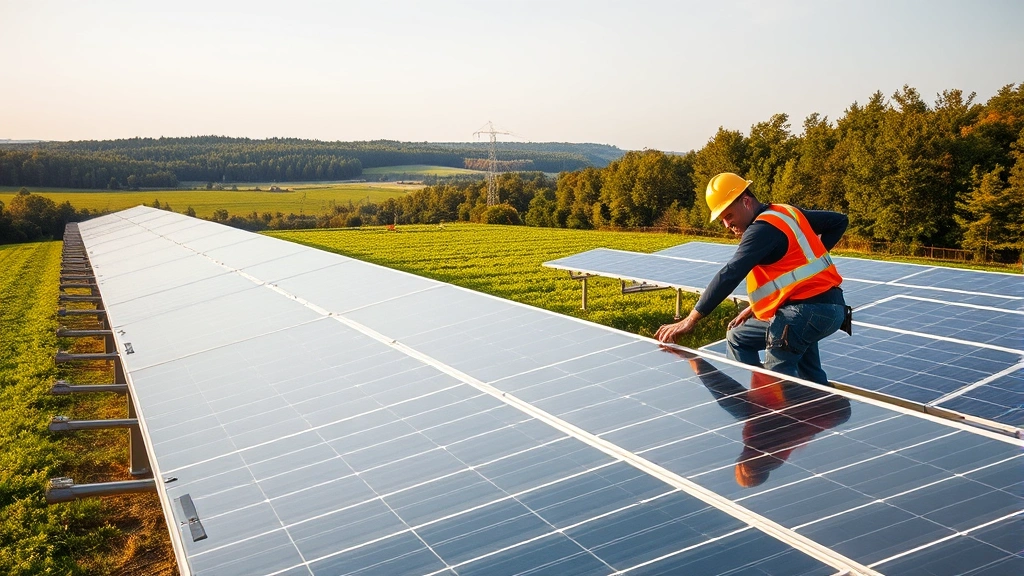
” alt=”Renewable energy installation funded by green bonds in agricultural region, technicians installing solar panels above farmland with green hills in background”/>
Green Bond Market Structure and Pricing
Green bond economics operate through market mechanisms that differ subtly from conventional bonds. Pricing analysis reveals that green bonds typically trade at 5-15 basis points lower yields than equivalent conventional bonds—the “greenium.” This premium reflects investor demand for environmental assets and willingness to accept lower returns for climate-aligned investments.
The greenium represents real economic value transfer. Lower borrowing costs for green projects reduce capital requirements, improving project returns and accelerating deployment. Over a 20-year renewable energy project, a 10 basis point yield reduction saves approximately $50-100 million on a $1 billion issuance, funds that can extend project scope or improve economic returns to investors.
However, economists debate whether the greenium represents genuine environmental preference or market inefficiency. If investors rationally price climate risk, conventional bonds should command risk premiums reflecting climate liabilities, making green bonds’ lower yields economically justified. Alternatively, if greenium reflects speculative demand rather than fundamental risk reassessment, it may indicate bubble dynamics that could destabilize when climate sentiment shifts.
Market segmentation also affects green bond economics. Pension funds, insurance companies, and sovereign wealth funds increasingly allocate percentages of portfolios to green assets through mandates or fiduciary duty interpretations. This regulatory-driven demand creates artificial pricing that may not reflect true economic value. When mandates relax or climate policy reverses, green bond values could experience significant adjustment.
The definition of environment science encompasses understanding these market dynamics as integral to environmental economics rather than separate financial phenomena. Green bonds represent the intersection where ecological systems, financial markets, and macroeconomic policy converge, creating feedback loops that amplify or dampen environmental investment.
Job Creation and Sectoral Shifts
Green bonds’ most tangible economic benefit emerges through employment generation. Renewable energy, energy efficiency retrofitting, sustainable agriculture, and ecosystem restoration represent labor-intensive sectors that generate employment across skill levels. A $1 billion green bond issuance typically creates 5,000-8,000 job-years of employment, compared to 2,000-3,000 for equivalent conventional infrastructure investment.
This employment multiplier arises from green sectors’ labor intensity relative to fossil fuel infrastructure. Renewable energy installation requires skilled technicians, engineers, and construction workers. Energy efficiency retrofitting generates work for electricians, HVAC specialists, and building inspectors. Sustainable agriculture creates opportunities for farm workers, consultants, and equipment operators. These jobs distribute income across communities, generating secondary employment through consumption spending.
Geographic distribution of green bond employment varies significantly. Urban areas benefit from energy efficiency and transit projects, while rural regions gain from renewable energy farms and land restoration. This geographic diversity provides economic stimulus across regional economies rather than concentrating in financial centers, potentially reducing inequality. Jobs that help the environment increasingly represent pathways toward sustainable livelihoods that support both economic needs and environmental objectives.
Sectoral transition dynamics create both opportunities and challenges. Workers displaced from fossil fuel industries require retraining to transition into green sectors. Green bonds can finance workforce development programs, improving transition equity. However, insufficient retraining investment creates unemployment pockets and political resistance to climate transition, potentially undermining green bond effectiveness.
Long-term employment sustainability depends on technological advancement and cost reduction in green sectors. As renewable energy and batteries mature, cost declines reduce labor requirements per unit of output. Green bonds that finance innovation and manufacturing scale-up generate more durable employment than those simply deploying mature technologies. This distinction becomes critical for assessing green bonds’ long-term economic impact.
Risk Assessment and Economic Sustainability
While green bonds offer economic benefits, economists identify several risks that could limit or reverse positive effects. First, human environment interaction through green bond financing could paradoxically increase resource extraction if projects create unintended consequences. For example, biofuel financing might drive agricultural expansion into natural habitats, or hydroelectric projects could damage aquatic ecosystems. Rigorous environmental impact assessment becomes essential to prevent green bonds from funding harmful projects with superficial environmental claims.
Second, credit risk in green bond portfolios merits attention. As green bond markets expand, issuance quality may decline as less creditworthy borrowers access green financing. If green bonds attract investment primarily through environmental appeal rather than credit fundamentals, portfolio defaults could increase, damaging investor confidence and raising borrowing costs for legitimate environmental projects.
Third, stranded asset risk threatens green bond economics. Rapid technology advancement or policy shifts could render financed projects obsolete. For instance, battery technology improvements might render current-generation energy storage systems uneconomical, creating losses for green bond investors. Conversely, if green bonds finance projects that become standard through policy requirements, investor returns could exceed expectations.
Fourth, macroeconomic sustainability questions whether green bonds can scale sufficiently to address climate and environmental challenges. Current annual issuance of $500+ billion represents approximately 5% of global bond markets, yet estimated investment needs for climate transition exceed $2 trillion annually. Scaling green bonds to necessary levels would require fundamental financial system restructuring, not merely incremental market growth.

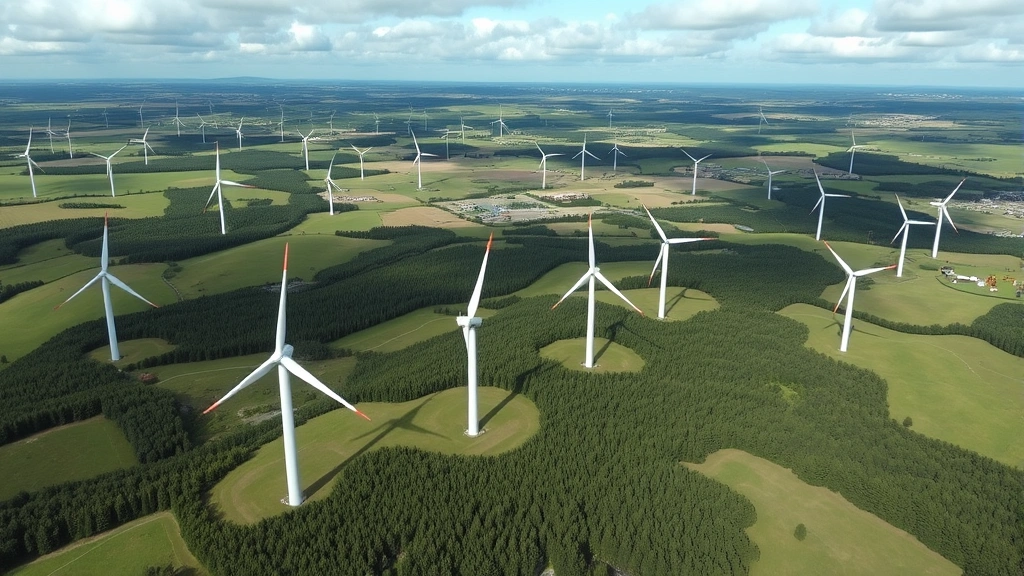
” alt=”Aerial view of completed wind farm with turbines across landscape, green fields and forest patches visible, cloudy sky above”/>
Fifth, green bonds’ effectiveness depends critically on complementary policies. Without carbon pricing, emission standards, or fossil fuel taxation, green bonds finance transition within a policy environment that continues subsidizing conventional energy. Economic analysis suggests green bonds’ impact multiplies 3-5 times when paired with carbon pricing or equivalent policy mechanisms that penalize high-emission alternatives.
Sixth, distributional equity concerns emerge from green bond economics. If green bonds finance capital-intensive projects benefiting wealthy investors while displaced workers bear transition costs, overall economic welfare could decline despite positive aggregate metrics. Inclusive green bond frameworks that distribute benefits broadly—through worker ownership, community investment requirements, or benefit corporation structures—enhance economic sustainability.
Leading economists increasingly emphasize that green bonds represent necessary but insufficient tools for sustainable transition. Ecological economics research demonstrates that financial instruments alone cannot address systemic environmental challenges without fundamental economic restructuring toward regenerative rather than merely sustainable models. Green bonds accelerate transition within existing frameworks but may not achieve transformative change required for true sustainability.
FAQ
What percentage of green bonds actually fund additionality versus relabeling?
Studies estimate 60-80% of green bonds finance genuinely additional environmental projects, with 20-40% representing relabeled conventional spending. However, additionality measurement remains methodologically challenging, and reported figures vary significantly across studies and jurisdictions. Rigorous impact verification standards continue developing to improve accuracy.
Can green bonds reduce inequality or do they concentrate wealth?
Green bonds’ distributional effects depend on governance structure. Community-controlled green bonds and those with worker participation tend to reduce inequality, while purely investor-driven issuance may concentrate benefits. Policy frameworks emphasizing inclusive ownership models enhance equity outcomes.
How do green bonds compare to carbon taxes for economic efficiency?
Economic theory suggests carbon taxes generate more efficient resource allocation by pricing emissions directly, while green bonds stimulate supply without directly penalizing emissions. Combining both mechanisms provides complementary benefits: carbon pricing creates demand for clean alternatives that green bonds finance.
Will green bond markets collapse if climate sentiment shifts?
Significant sentiment shifts could cause valuation declines, but underlying project fundamentals—renewable energy cost competitiveness, efficiency gains, ecosystem restoration benefits—provide value independent of sentiment. Markets could experience correction without collapse if fundamental drivers remain sound.
How much do green bonds reduce global emissions?
Quantifying emission reductions proves complex because counterfactual scenarios (what would occur without green bonds) remain unknowable. Estimates suggest green bonds have financed projects reducing global emissions by 300-500 million metric tons annually, representing approximately 0.7-1.0% of global emissions reductions needed for 1.5°C climate goals.


