
Deforestation’s Economic Impact: A Comprehensive Study Review
Deforestation represents one of the most economically significant environmental crises of our era, yet its true costs remain poorly understood by policymakers and the general public. While the immediate financial gains from logging and land conversion appear attractive to corporations and developing nations seeking short-term revenue, the long-term economic consequences—measured in trillions of dollars—far outweigh these fleeting benefits. This paradox reveals a fundamental failure in how we account for natural capital and ecosystem services in conventional economic models.
The relationship between deforestation and economic performance is increasingly complex. Forests generate value through multiple channels: carbon sequestration, water filtration, biodiversity preservation, climate regulation, and sustainable resource extraction. When we fell forests, we’re not simply harvesting timber; we’re liquidating a natural asset that provides continuous economic returns. The World Bank estimates that forest loss costs the global economy between $2 trillion and $5 trillion annually when accounting for ecosystem services, yet this figure barely registers in GDP calculations that treat forests as infinite resources rather than finite capital stocks.
Economic Mechanisms of Forest Loss
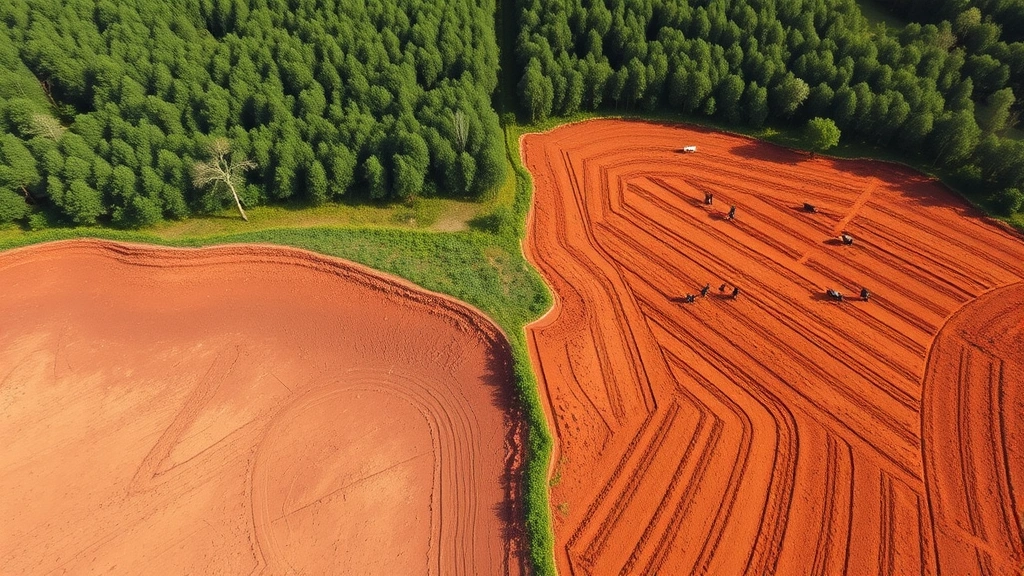
Understanding how deforestation affects the environment requires examining the economic incentives driving forest conversion. The primary drivers—cattle ranching, soy cultivation, palm oil production, and logging—all represent rational economic decisions from the perspective of individual actors. A farmer clearing rainforest to plant soybeans faces immediate, tangible profits while the climate and hydrological consequences are distributed globally and across generations. This temporal and spatial disconnect between costs and benefits creates what economists call a “tragedy of the commons,” where individual rationality produces collective irrationality.
The economic structure underlying deforestation reflects distorted price signals. Timber prices in global markets rarely account for the opportunity cost of maintaining forests for their ecosystem services. A study published in Ecological Economics found that conventional timber valuations capture only 5-15% of a forest’s total economic value when ecosystem services are properly quantified. This massive underpricing creates perverse incentives for conversion. Additionally, government subsidies for cattle ranching and agricultural expansion—totaling approximately $700 billion annually across developed nations—artificially lower the cost of forest conversion, making deforestation appear more economically attractive than forest preservation.
The concept of defining environment and environmental science becomes economically relevant here, as it shapes how we value natural systems. When forests are treated as mere repositories of harvestable commodities rather than complex economic systems providing services, their destruction appears economically justified. The human environment interaction in forest regions exemplifies how economic desperation drives environmental degradation, particularly in developing nations where forest-dependent communities lack alternative income sources.
Carbon Markets and Climate Economics
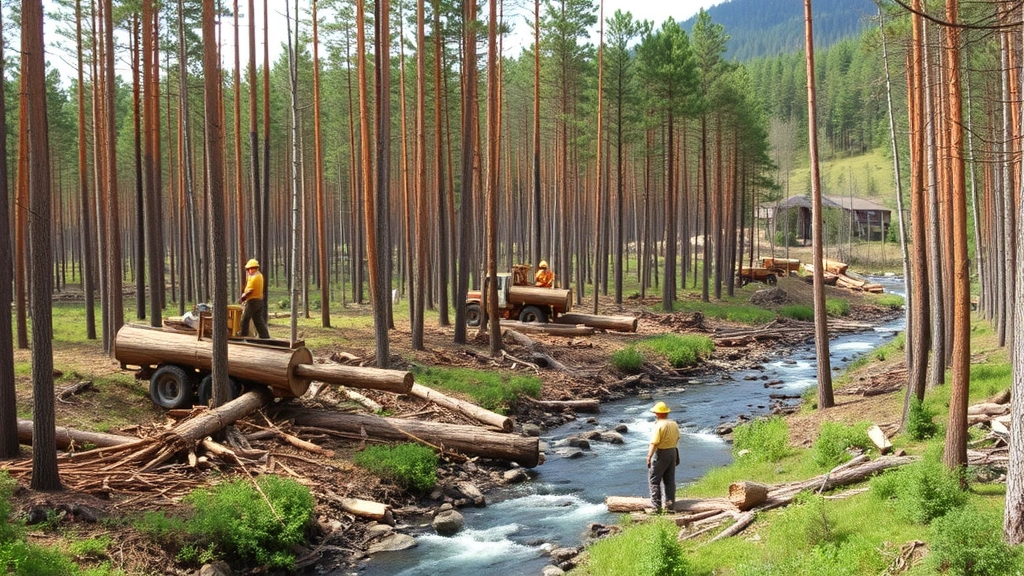
Deforestation accounts for approximately 10-15% of global carbon emissions, making forests critical to climate economics. A single hectare of tropical forest sequesters 100-300 tons of carbon dioxide over its lifetime, representing significant economic value in carbon markets. The failure to capture this value in conventional markets represents one of the largest market failures in history. UNEP assessments indicate that if forest carbon were priced at $50 per ton—a conservative estimate—the annual global value of forest carbon sequestration would exceed $1 trillion.
The emergence of carbon credit markets and REDD+ (Reducing Emissions from Deforestation and Forest Degradation) programs represents an attempt to internalize this externality. However, implementation has proven challenging. The economic incentives created by carbon pricing must exceed the immediate profits from forest conversion—a difficult threshold given current carbon prices averaging $10-20 per ton. Moreover, the effectiveness of carbon markets in preventing deforestation remains contested, with research suggesting that carbon credits have prevented only 5-10% of projected deforestation in participating regions.
Climate economists increasingly recognize that deforestation represents a form of capital depletion equivalent to mining non-renewable resources. The World Bank’s adjusted net savings framework attempts to account for natural capital depreciation, revealing that nations experiencing rapid deforestation have negative genuine savings rates—meaning they’re becoming poorer despite apparent GDP growth. This reframing has profound implications for understanding economic development in forest-rich nations.
Agricultural Expansion and Hidden Costs
Approximately 80% of deforestation results from agricultural expansion, primarily cattle ranching and crop production. The economic calculus appears straightforward: convert forest to pasture or cropland, generate immediate revenue, and repeat the process with remaining forests. However, this analysis ignores critical externalized costs. Deforestation in agricultural regions reduces precipitation by 20-30% through disrupted hydrological cycles, ultimately decreasing agricultural productivity in surrounding regions. A comprehensive study of the Amazon’s agricultural frontier found that while deforestation initially increased regional agricultural output by 15-20%, subsequent hydrological degradation reduced yields by 30-40% within 15-20 years.
The soil economics of deforestation further complicate the picture. Tropical forest soils, while appearing rich in biomass, contain relatively poor agricultural soils. Within 3-5 years of deforestation, soil degradation typically reduces productivity by 50%, necessitating either abandonment or expensive chemical inputs. The economic externality—environmental degradation costs—falls on downstream communities dependent on forest ecosystem services. Water treatment costs in regions experiencing upstream deforestation increase by 200-500%, as sedimentation and chemical runoff require expensive filtration. These hidden costs, borne by urban consumers and governments rather than forest converters, represent massive transfers of wealth from future generations to current forest destroyers.
Understanding how reducing carbon footprint connects to deforestation prevention reveals that consumer choices drive forest destruction. The average American’s consumption patterns—including beef, soy-fed chicken, and palm oil products—directly causes approximately 0.5 hectares of deforestation annually. This demand-side driver means that addressing deforestation requires transforming consumption patterns in wealthy nations, not merely protecting forests in developing countries.
Regional Economic Disparities
Deforestation’s economic impact varies dramatically across regions, creating global inequality in both environmental damage and economic consequences. Tropical forest nations, predominantly in developing regions, experience the most severe deforestation while capturing minimal economic benefits. Brazil’s Amazon deforestation generates approximately $5-8 billion in short-term economic gains for cattle ranchers and soy producers, yet costs the Brazilian economy an estimated $30-50 billion annually in lost ecosystem services, reduced agricultural productivity, and climate impacts. This asymmetry—where local actors capture benefits while society bears costs—explains why deforestation persists despite negative net economic returns.
Developed nations benefit disproportionately from tropical deforestation through cheap commodity imports while avoiding environmental consequences. The economic structure of global trade systematically underprices forest-destroying commodities while overpricing sustainable alternatives. A kilogram of beef produced on deforested Amazon land costs $3-4, while sustainably-raised beef costs $8-12. This price differential reflects not superior efficiency but rather the failure to internalize environmental costs in conventional accounting. FAO data demonstrates that in nations experiencing rapid deforestation, real wages in forest-dependent sectors decline 30-50% as forest degradation reduces productivity and employment.
The economic geography of deforestation creates profound development challenges. Nations dependent on forest conversion for revenue—like Indonesia and the Democratic Republic of Congo—face structural economic traps. Their comparative advantage in forest destruction creates incentives for continued environmental degradation even as it undermines long-term development prospects. Breaking this cycle requires fundamental restructuring of global trade rules, carbon pricing mechanisms, and development finance to reward forest conservation rather than conversion.
Biodiversity Loss and Pharmaceutical Economics
Deforestation’s impact on biodiversity carries profound economic implications often overlooked in conventional analysis. Tropical forests contain 80% of terrestrial species despite covering only 6% of Earth’s land surface, representing an enormous repository of genetic material with pharmaceutical and agricultural potential. The economic value of undiscovered pharmaceutical compounds in tropical forests is estimated at $100-500 billion, yet we destroy forests at rates that eliminate 137 species daily. This represents liquidating a natural pharmaceutical library worth approximately $50 billion annually in foregone drug discovery.
The economics of bioprospecting reveals forest conservation’s value. A single drug derived from rainforest plants generates average lifetime revenues of $500 million to $2 billion. Yet pharmaceutical companies investing in bioprospecting typically pay tropical nations only $1-5 million in upfront fees and 2-5% of royalties, capturing 95%+ of value from indigenous knowledge and genetic resources. This appropriation of value—biopiracy—represents another mechanism through which deforestation-driven nations lose economic benefits from their natural resources. Fairer benefit-sharing arrangements could generate $10-50 billion annually for forest conservation in developing nations, fundamentally altering the economics of deforestation.
Genetic diversity in crop wild relatives—many found only in tropical forests—carries enormous agricultural value. Modern breeding programs increasingly depend on wild genetic material to maintain crop resilience against pests, diseases, and climate stress. The economic value of crop wild relatives to global agriculture exceeds $100 billion annually, yet we systematically destroy the habitats containing these genetic resources. This represents a form of agricultural capital depletion that threatens food security while appearing as economic gain in GDP calculations.
Policy Solutions and Market Instruments
Addressing deforestation’s economic impacts requires comprehensive policy frameworks that internalize environmental costs and restructure incentives. Carbon pricing mechanisms—whether through carbon taxes or cap-and-trade systems—represent essential first steps. However, effective carbon pricing requires prices of $50-100+ per ton to make forest conservation economically competitive with conversion. Current prices of $10-30 per ton remain insufficient, necessitating either price increases or complementary policies. IUCN research suggests that combining carbon pricing with direct payments for ecosystem services could reduce deforestation by 50-70% while generating net economic benefits.
Payment for ecosystem services (PES) schemes represent another policy approach, directly compensating forest owners for conservation. Successful programs in Costa Rica and Mexico demonstrate that annual payments of $300-500 per hectare can compete with agricultural returns while generating broader economic benefits through watershed protection and carbon sequestration. Scaling PES globally would require approximately $50-100 billion annually—substantial but far less than the $2-5 trillion in ecosystem service losses from deforestation. The economic logic is compelling: paying to preserve forests costs far less than addressing the consequences of deforestation through climate adaptation, water treatment, and agricultural restoration.
Sustainable forest management and certification systems attempt to decouple economic returns from forest destruction, allowing timber and non-timber forest products to generate income while maintaining ecosystem function. Economic analysis of certified sustainable forestry demonstrates returns of $1,500-3,000 per hectare over 40-year rotations—competitive with or exceeding conversion to agriculture while preserving ecosystem services. Yet certification covers only 10-15% of global forests, limited by higher upfront costs and market demand constraints. Expanding certification requires consumer awareness about how commodity choices drive deforestation, connecting to broader discussions about environmental awareness and sustainable consumption.
Trade policy reform represents a critical but underutilized tool. Incorporating deforestation risk into tariff structures—charging higher duties on commodities produced through forest destruction—could shift comparative advantage toward sustainable production. The European Union’s proposed deforestation regulation and similar frameworks attempt this approach, though implementation challenges remain significant. Economic modeling suggests that properly designed trade policies could reduce tropical deforestation by 30-50% while generating modest cost increases for consumers in developed nations—approximately 2-5% price increases for affected commodities.
Addressing deforestation also requires transforming consumption patterns in wealthy nations. The relationship between sustainable fashion brands and forest conservation exemplifies how consumer choices ripple through supply chains to influence land use. Reducing meat consumption, supporting certified sustainable products, and demanding corporate supply chain transparency create economic incentives for forest conservation. Economic research indicates that a 30% reduction in per capita meat consumption in developed nations would eliminate economic drivers of Amazon deforestation, demonstrating how individual consumption choices aggregate into landscape-scale environmental impacts.
FAQ
What is the total economic cost of global deforestation?
Estimates vary from $2-5 trillion annually when accounting for ecosystem services, carbon sequestration, biodiversity preservation, and hydrological impacts. Conventional GDP calculations typically capture only 5-15% of these costs, creating massive undervaluation of forest conservation.
How does deforestation affect economic development in tropical nations?
While deforestation generates short-term revenues for specific actors, it typically reduces long-term economic growth by degrading natural capital, reducing agricultural productivity, increasing water treatment costs, and limiting pharmaceutical and genetic resource value. Nations experiencing rapid deforestation often have negative genuine savings rates despite positive GDP growth.
Can carbon pricing effectively prevent deforestation?
Current carbon prices of $10-30 per ton remain insufficient to compete with agricultural conversion returns. Prices of $50-100+ per ton, combined with complementary policies like direct ecosystem service payments, could reduce deforestation by 50-70%.
What role do consumer choices play in deforestation economics?
Consumer demand for beef, soy, and palm oil directly drives approximately 80% of deforestation. Reducing consumption of these commodities or shifting to sustainably-produced alternatives could eliminate primary economic drivers of forest destruction.
Are there profitable alternatives to forest conversion?
Sustainable forest management, certification systems, and payment for ecosystem services demonstrate that forest conservation can generate $1,500-3,000+ per hectare over time—competitive with or exceeding agricultural returns while preserving ecosystem services.


