Can Growth and Sustainability Coexist? Study Insights
The tension between economic growth and environmental sustainability has dominated policy discussions for decades. Yet recent research suggests this dichotomy may be fundamentally misframed. A growing body of empirical evidence indicates that decoupling—achieving economic growth while reducing environmental impact—is not merely theoretical but increasingly achievable through systemic transformation. This paradigm shift challenges conventional wisdom and opens new pathways for integrated economic-ecological policy.
The question of coexistence hinges on how we define growth, measure sustainability, and implement structural changes across energy, agriculture, manufacturing, and consumption systems. This comprehensive analysis examines peer-reviewed studies, economic models, and real-world case studies to determine whether growth and sustainability can genuinely coexist, and under what conditions this integration becomes possible.

The Decoupling Hypothesis: Theory and Evidence
Decoupling represents the cornerstone concept in sustainability economics—the idea that economic output can increase while resource consumption and environmental degradation decrease. This concept emerged from ecological economics literature in the 1990s, challenging the linear relationship between GDP growth and environmental impact that characterized industrial economies throughout the twentieth century.
Research from the World Bank’s environmental economics division demonstrates that relative decoupling—where environmental impact per unit of GDP decreases—has occurred in numerous developed economies since 2000. Between 2000 and 2020, the European Union reduced carbon emissions by 35% while maintaining GDP growth of approximately 50%. Similarly, Denmark decreased energy consumption intensity by 40% during periods of economic expansion.
Absolute decoupling—where total environmental impact declines while GDP expands—remains more elusive but has emerged in specific sectors and regions. The United Kingdom achieved absolute decoupling in carbon emissions between 2008 and 2022, reducing emissions by 48% while growing GDP by 24%. This achievement resulted from deliberate policy interventions including carbon pricing, renewable energy investment, and industrial transition programs.
However, critics argue that these statistics obscure human-environment interaction complexities. Wealthy nations frequently achieve decoupling through outsourcing manufacturing to developing countries, effectively displacing environmental costs rather than eliminating them. When accounting for embodied emissions in imported goods, many wealthy nations show continued coupling between consumption and environmental impact.
Economic Growth Models in Transition
Traditional neoclassical economic models treat natural capital as infinite and infinitely substitutable with human capital and technology. These frameworks underpin GDP-focused development strategies that have dominated policymaking for seventy years. Ecological economics, by contrast, recognizes biophysical limits and emphasizes natural capital’s irreplaceable role in sustaining economic activity.
Contemporary growth models increasingly incorporate environmental constraints. The United Nations Environment Programme promotes green growth frameworks that decouple prosperity from environmental destruction through efficiency improvements, renewable transitions, and circular resource management. These models suggest that growth remains possible within ecological boundaries through fundamental restructuring of production and consumption patterns.
Steady-state economy models propose an alternative framework where economies maintain stable physical throughput while allowing for qualitative improvement and redistribution. Ecological economist Herman Daly argues that wealthy nations have surpassed optimal scale and should transition toward steady-state models, while developing nations retain growth potential until reaching similar thresholds. This differentiated approach acknowledges both sustainability imperatives and equity concerns.
Regenerative economics extends beyond sustainability, proposing that economic activity should actively restore ecological systems. Rather than merely reducing harm, regenerative approaches seek to enhance natural capital, improve soil health, expand biodiversity, and sequester atmospheric carbon through deliberate economic strategies. Early implementations in agriculture and forestry demonstrate potential for combining productivity gains with ecological restoration.
Carbon Emissions and GDP Trajectories
Carbon emissions represent the most extensively studied environmental indicator relative to economic growth. Global carbon intensity—emissions per unit of GDP—has declined approximately 2% annually since 2000, primarily through efficiency improvements and renewable energy adoption. Yet absolute global emissions continue rising because growth rates exceed efficiency gains, particularly in developing economies.
International Energy Agency data reveals that renewable energy now comprises 30% of global electricity generation, up from 19% in 2010. This transition has enabled several nations to expand electricity consumption while reducing emissions. Costa Rica achieved 99% renewable electricity in 2022 while maintaining 3% annual GDP growth. Iceland, with abundant geothermal resources, generates 85% of electricity renewably while supporting robust economic activity.
However, environmental science emphasizes that renewable energy alone cannot achieve necessary emission reductions without complementary changes in transportation, agriculture, industrial processes, and consumption patterns. Electrification of vehicles and heating represents only one component of comprehensive decarbonization strategies. Life-cycle assessments reveal that manufacturing renewable infrastructure, particularly solar panels and batteries, requires significant energy and material inputs.
The Stern Review, commissioned by the UK government, estimated that climate change could reduce global GDP by 5-20% permanently unless mitigation investments absorb 1% of annual GDP. Conversely, green investments could generate economic opportunities worth trillions. This analysis shifted debate from growth versus sustainability toward growth through sustainability, suggesting that delayed climate action imposes far greater economic costs than immediate transition investments.
Circular Economy Integration
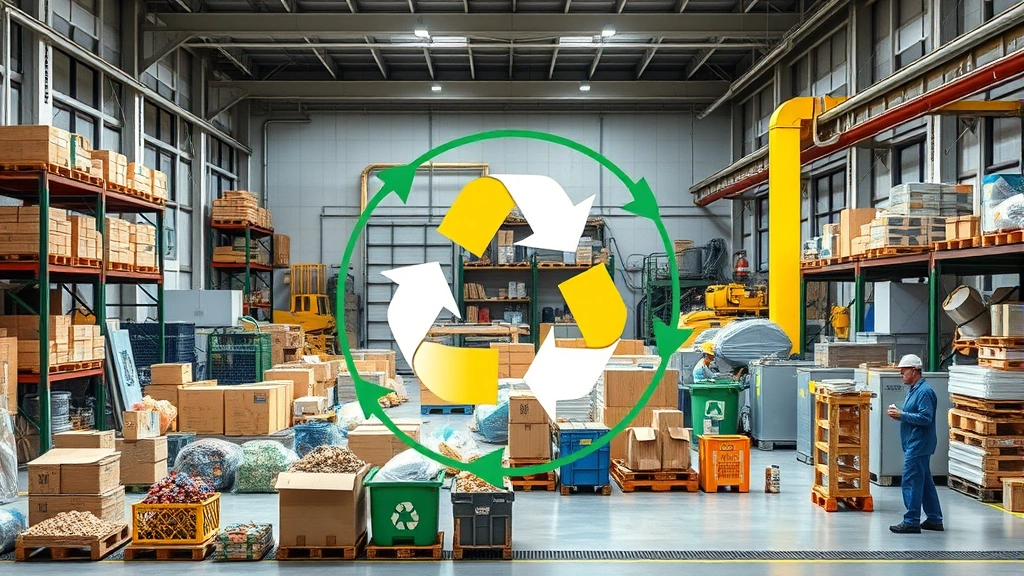
Circular economy principles fundamentally restructure production and consumption to eliminate waste and maximize resource efficiency. Rather than linear take-make-dispose models, circular systems design products for durability, repairability, and recycling. Implementing circular approaches requires simultaneous growth in service sectors while reducing material throughput.
Ellen MacArthur Foundation research demonstrates that circular economy transitions could reduce material extraction by 50% while maintaining economic output. Remanufacturing industries, repair services, and product-as-service business models generate employment and revenue while decreasing resource consumption. Patagonia’s worn wear program, which refurbishes and resells used clothing, exemplifies how circular approaches create business value while reducing environmental impact.
Industrial symbiosis—where waste from one facility becomes feedstock for another—has generated measurable economic and environmental benefits. The Kalundborg industrial ecosystem in Denmark coordinates operations among refineries, power plants, pharmaceutical facilities, and agricultural producers, reducing waste by 455,000 tonnes annually while generating €15 million in annual savings. This system demonstrates that coordinated industrial planning can decouple growth from resource extraction.
Construction and built environment sectors represent particular opportunities for circular integration. Adaptive reuse of existing buildings consumes 80% less energy than new construction while preserving embodied carbon in existing structures. Material banks and deconstruction protocols enable recovery of valuable materials from demolition, creating secondary material markets that reduce extraction pressure on virgin resources.
Case Studies in Sustainable Growth
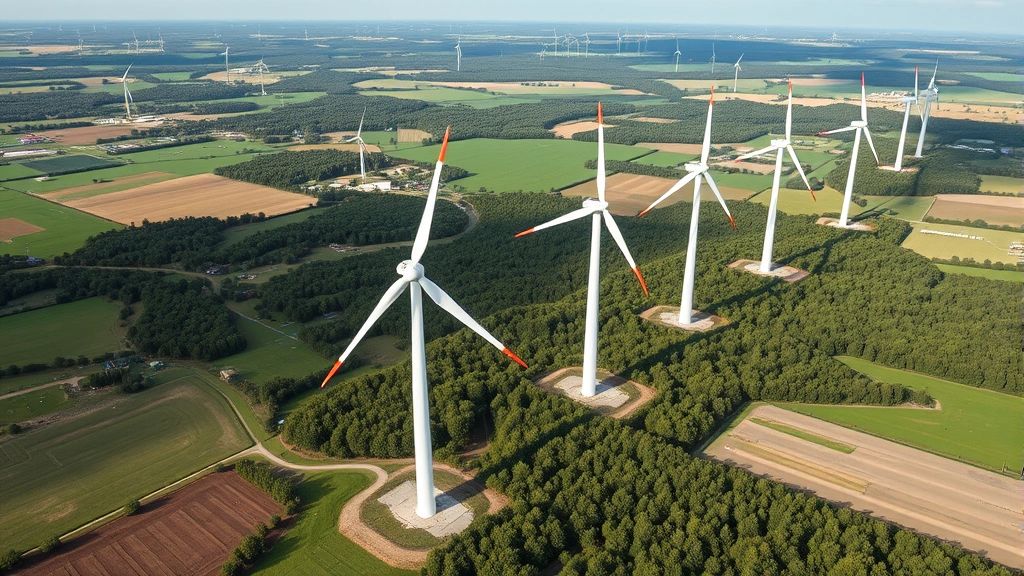
Denmark exemplifies comprehensive integration of growth and sustainability across multiple sectors. Since 1990, Denmark reduced carbon emissions by 47% while expanding GDP by 80%. This achievement resulted from deliberate policy combining carbon taxation, renewable energy investment, energy efficiency standards, and industrial support for clean technology development. Wind energy comprises 80% of electricity generation, supported by grid integration infrastructure and regional electricity trading.
Costa Rica demonstrates that developing nations can prioritize sustainability while achieving growth. With 99% renewable electricity and reforestation covering 52% of territory, Costa Rica maintains 3-4% annual GDP growth. This transition required significant investment in hydro, wind, and geothermal infrastructure, complemented by tourism revenue from environmental assets. The nation illustrates how environmental quality itself becomes economic asset in knowledge and service-based economies.
Rwanda’s carbon footprint reduction strategy integrates climate action with development goals. By transitioning from peat-based energy to biogas and solar power, Rwanda reduced emissions while improving rural energy access and agricultural productivity. Green bonds financed renewable infrastructure, demonstrating how climate investment attracts capital and generates employment in developing contexts.
Germany’s Energiewende (energy transition) illustrates both possibilities and challenges in decoupling. Renewables comprise 46% of electricity generation, yet industrial energy costs rose, creating competitiveness concerns. The transition required substantial public investment, grid modernization, and industrial support programs. While emissions declined in power generation, transportation and heating sectors lagged, revealing that sectoral transitions require coordinated, multi-decade strategies.
Technological Solutions and Limitations
Technological innovation enables significant efficiency improvements and renewable transitions. Solar panel costs declined 90% since 2010, wind turbine capacity factors improved from 35% to 45%, and battery storage costs fell 89% over the same period. These improvements dramatically altered economic calculations for renewable energy, making clean energy competitive with fossil fuels in most markets without subsidies.
Direct air capture technologies, though currently expensive at $600-1000 per tonne of CO2, represent emerging pathways for removing historical emissions. Companies like Carbon Engineering and Climeworks are scaling operations, with costs projected to decline toward $200 per tonne through mass production. However, capturing legacy emissions at scale would require energy equivalent to current global electricity generation.
Advanced materials and manufacturing processes offer efficiency gains. Additive manufacturing reduces material waste by 90% compared to subtractive processes. Precision agriculture utilizing sensors and artificial intelligence optimizes fertilizer and water application, reducing inputs while maintaining yields. Renewable energy for homes increasingly incorporates smart management systems that balance consumption with generation.
Yet technological optimism encounters biophysical realities. Jevons Paradox—where efficiency improvements increase overall consumption—remains empirically relevant. More efficient vehicles encourage additional driving; efficient lighting enables expanded illumination. Rebound effects typically consume 30-60% of efficiency gains, limiting technological solutions’ standalone capacity to achieve absolute decoupling at required scales.
Policy Frameworks for Coexistence
Effective policy frameworks align economic incentives with sustainability objectives through carbon pricing, natural capital accounting, and regenerative finance mechanisms. Carbon pricing—whether through taxes or cap-and-trade systems—internalizes environmental costs, enabling markets to reflect true scarcity values.
The World Bank’s carbon pricing dashboard documents 68 carbon pricing initiatives covering approximately 23% of global emissions. Economic analyses demonstrate that carbon prices of $50-100 per tonne generate sufficient incentives for renewable transitions while remaining economically manageable. However, current average prices of $4 per tonne fall far short of levels required for rapid decarbonization.
Natural capital accounting reformulates national accounts to include environmental assets and depreciation. Instead of treating forest harvesting as income, natural capital accounting records it as capital depletion. Several nations including New Zealand, Costa Rica, and Botswana have implemented satellite national accounts incorporating environmental valuation, revealing that conventional GDP growth often masks declining natural wealth.
Green bonds and sustainability-linked financing redirect capital toward environmental objectives. Global green bond issuance exceeded $500 billion in 2021, financing renewable energy, efficiency improvements, and ecosystem restoration. Biodiversity finance mechanisms increasingly link financial incentives to conservation outcomes, creating economic value from ecosystem preservation.
Regulatory standards complement price-based mechanisms. Vehicle emissions standards drove 70% of global carbon intensity improvements in transportation. Building energy codes reduce consumption intensity by 30-50%. Circular economy regulations—including extended producer responsibility and right-to-repair mandates—restructure production systems toward sustainability.
Challenges and Critical Perspectives
Skeptics argue that decoupling statistics obscure persistent coupling when accounting for consumption-based emissions, land-use impacts, and biodiversity loss. A 2019 study in Ecological Economics found that wealthy nations’ apparent decoupling disappeared when measuring consumption-based rather than production-based emissions, with actual carbon footprints increasing 60% since 1990.
Rebound effects present fundamental challenges to efficiency-based decoupling. As renewable energy becomes cheaper, electrification of previously non-electrified activities accelerates. Data center energy consumption, cryptocurrency mining, and artificial intelligence model training consume expanding electricity quantities, potentially overwhelming renewable energy expansion rates.
Equity concerns complicate growth-sustainability integration. Wealthy nations achieved decoupling partly through outsourcing manufacturing to developing countries, effectively exporting environmental costs. Global supply chains concentrate production impacts in low-income regions while benefits accrue to wealthy consumers. True sustainability requires that sustainable fashion and consumption patterns extend globally rather than remaining luxury options for wealthy populations.
Planetary boundaries research suggests that several ecological systems approach critical thresholds. Biodiversity loss, nitrogen cycle disruption, and land-system change have transgressed safe operating spaces. Some scholars argue that these multi-dimensional crises cannot be resolved through growth-focused frameworks, regardless of decoupling achievements in carbon emissions. Comprehensive sustainability requires addressing interconnected ecological boundaries simultaneously.
The rebound effect in consumption presents particular challenges. As efficiency improves and costs decline, consumers increase consumption quantities, partially offsetting environmental benefits. Studies indicate rebound effects consume 30-60% of efficiency gains in energy services, with potentially larger effects in developing economies where unmet demand remains substantial.
FAQ
Is absolute decoupling actually happening globally?
Absolute decoupling—total environmental impact declining while GDP grows—has occurred in specific nations and sectors but not globally. The UK, Denmark, and Costa Rica demonstrate absolute decoupling in carbon emissions through deliberate policy. However, global carbon emissions continue rising because growth in developing economies outpaces efficiency gains elsewhere. When accounting for consumption-based emissions and non-carbon environmental impacts including biodiversity loss and resource depletion, global decoupling remains elusive.
Can renewable energy alone solve the growth-sustainability tension?
Renewable energy expansion represents essential infrastructure transition but insufficient alone. Energy-only decoupling ignores material extraction, land use, agricultural impacts, and consumption patterns. Electrification of transportation and heating requires parallel efficiency improvements, circular economy implementation, and consumption pattern shifts. Studies suggest renewable energy enables decoupling in power generation but comprehensive sustainability requires simultaneous changes across all economic sectors.
What role does consumption pattern change play in achieving coexistence?
Consumption pattern transformation proves essential for achieving absolute decoupling at required scales. Current wealthy-nation consumption patterns require 1.7 Earths’ worth of resources if universalized. Achieving global sustainability requires either technological improvements of unprecedented magnitude or consumption reductions in wealthy nations combined with improved living standards in developing regions. Most integrated models suggest both technological innovation and consumption moderation prove necessary.
How do developing nations balance growth and sustainability?
Developing nations face distinct challenges and opportunities. They can leapfrog fossil fuel infrastructure by deploying renewable technologies directly, avoiding locked-in carbon assets. However, poverty alleviation legitimately requires increased energy and material consumption. Differentiated responsibility frameworks acknowledge that wealthy nations should reduce absolute consumption while developing nations expand access to basic services. Technology transfer and climate finance enable developing nations to pursue sustainable growth pathways.
What timeline is realistic for achieving growth-sustainability integration?
Most integrated assessment models suggest 20-30 year transitions for major economic sectors. Renewable electricity can transition within 15-20 years given adequate investment. Transportation electrification requires 25-35 years for fleet turnover. Building efficiency retrofits span 30-50 years given average structure lifespans. Comprehensive global integration across all sectors requires 40-50 year timeframes, necessitating immediate policy implementation to remain within climate targets.


