
Can Ecosystem Services Boost Economies? Study Insights
The relationship between natural ecosystems and economic prosperity has long been underestimated in traditional economic models. However, recent research demonstrates that ecosystem services—the tangible and intangible benefits humans derive from nature—represent a significant economic asset that can meaningfully enhance regional and global economies. From pollination services worth billions annually to carbon sequestration that mitigates climate costs, these natural processes form the foundation of sustainable economic growth.
Understanding how ecosystem services translate into measurable economic value requires examining both scientific evidence and economic frameworks. When we account for the true cost of ecosystem degradation and the benefits of conservation, the financial case for environmental protection becomes compelling. This comprehensive analysis explores research findings that quantify ecosystem services, demonstrates their economic multiplier effects, and reveals pathways for integrating natural capital into mainstream economic policy.

Understanding Ecosystem Services and Economic Value
Ecosystem services encompass four primary categories: provisioning services (food, water, raw materials), regulating services (climate regulation, disease control, flood protection), supporting services (nutrient cycling, soil formation), and cultural services (recreation, spiritual value, aesthetic appreciation). Each category generates distinct economic benefits that can be measured and incorporated into cost-benefit analyses.
The Millennium Ecosystem Assessment, a comprehensive global evaluation, established that ecosystem services underpin all economic activity. The United Nations Environment Programme has documented how degradation of these services creates cascading economic costs. For instance, when biotic environment examples decline—such as pollinator populations or soil microorganisms—agricultural productivity suffers, leading to reduced food security and increased commodity prices.
Economic theory traditionally treated nature as an infinite resource with no scarcity value. Contemporary ecological economics, however, recognizes that natural capital operates within biophysical limits. This paradigm shift has profound implications for how we calculate GDP, measure prosperity, and allocate resources. When ecosystem service degradation is properly valued, it becomes evident that many “profitable” industrial activities generate significant hidden costs.
Quantifying Nature’s Economic Contribution
Recent studies have assigned substantial monetary values to specific ecosystem services. Research published in leading environmental economics journals indicates that global ecosystem services are worth approximately $125-145 trillion annually—exceeding global GDP. This valuation encompasses diverse services: forests provide $6-9 trillion in carbon sequestration and water filtration; wetlands generate $15-20 trillion through flood protection and nutrient cycling; coral reefs support $375 billion in economic activity through fisheries and tourism.
Pollination services alone represent a $15-20 billion annual economic contribution to global agriculture. Bees and other pollinators enable production of approximately one-third of human food crops. When wild pollinator populations decline due to habitat loss and pesticide use, farmers must either hire expensive managed pollination services or accept reduced yields. This direct economic link demonstrates how ecosystem degradation translates into measurable financial losses.
Water-related ecosystem services exemplify quantifiable economic benefits. Forests and wetlands filter water, reducing treatment costs for municipalities. The Nature Conservancy estimates that protecting watersheds costs 50% less than building water treatment infrastructure. New York City’s decision to invest $1.5 billion in watershed protection rather than $8 billion in treatment facilities illustrates how valuing ecosystem services drives rational economic decisions.
Carbon sequestration represents another quantifiable service with growing economic significance. Forests absorb approximately 2.4 billion tons of CO2 annually, equivalent to offsetting roughly 5% of global emissions. At carbon prices ranging from $50-150 per ton, this represents $120-360 billion in annual climate regulation value. As carbon pricing mechanisms expand globally, this ecosystem service value will increasingly influence investment decisions and corporate strategies.
Case Studies: Real-World Economic Benefits
Costa Rica’s pioneering Payments for Ecosystem Services (PES) program demonstrates how ecosystem valuation drives economic development. Since 1997, Costa Rica has paid landowners to maintain forests, wetlands, and watersheds. The program has generated $600 million in conservation funding while maintaining forest cover at 52% (compared to 21% in 1987). Simultaneously, Costa Rica developed a robust ecotourism sector worth $4+ billion annually, directly linked to preserved ecosystems. This integration of conservation payments with tourism revenue created a positive feedback loop where environmental protection enhanced rather than constrained economic growth.
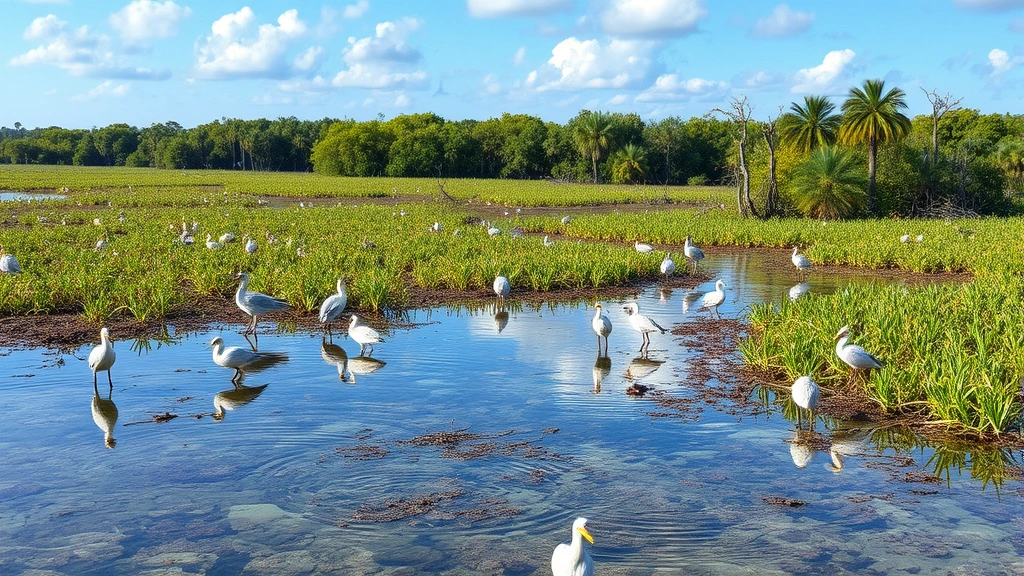
The Pantanal wetlands in South America illustrate ecosystem services’ impact on regional economies. This vast wetland system supports fisheries worth $100+ million annually, cattle ranching on seasonally flooded pastures, and tourism. Economic analyses demonstrate that maintaining the Pantanal’s hydrological integrity generates 3-5 times more economic value than converting it to permanent agricultural land. However, without proper valuation frameworks, short-term agricultural expansion pressures persist.
Indonesia’s mangrove ecosystems provide compelling evidence of ecosystem service economics. Mangroves protect coastlines from typhoons and tsunamis, support fisheries, and sequester carbon. Studies quantify mangrove protection services at $1 billion annually, yet mangrove area has declined 35% since 1980 due to aquaculture expansion. When researchers calculated the true cost of mangrove loss—including increased storm damage, fishery collapse, and carbon emissions—the economic case for conservation became overwhelming. This analysis influenced Indonesian policy, leading to mangrove restoration initiatives.
The Great Barrier Reef case study demonstrates ecosystem service value in tourism and fisheries. The reef generates $5.6 billion annually through tourism and supports 64,000 jobs. Climate change and pollution threaten this value; studies project 50% economic loss by 2050 without intervention. This quantification has influenced Australian climate policy and marine conservation investments, showing how ecosystem service valuation translates into political action.
Market Mechanisms and Valuation Methods
Multiple methodologies exist for assigning monetary values to ecosystem services. The hedonic pricing method uses real estate data to reveal how ecosystem proximity affects property values. Studies consistently show that proximity to forests, wetlands, and water features increases property values by 5-20%, reflecting consumers’ willingness to pay for ecosystem services like clean air, water, and recreational access.
The travel cost method measures recreational ecosystem service value by analyzing how much people spend traveling to natural areas. Researchers calculate that U.S. national parks generate $42 billion annually in ecosystem service value through recreation, far exceeding their operating costs. This methodology justifies conservation spending by quantifying tourism demand.
Contingent valuation surveys ask people directly how much they would pay for ecosystem services. While subject to methodological critiques, these surveys reveal significant non-market values. Studies show people value old-growth forest preservation at $1,000-5,000 per household annually, even among those who never visit these forests, reflecting existence value and bequest motives.
Replacement cost methods value ecosystem services by calculating the cost of replacing them with human-made alternatives. Water filtration provides a clear example: natural wetland filtration costs $1-5 per thousand gallons, while mechanical treatment costs $3-8, making wetland protection economically rational. This methodology powerfully demonstrates ecosystem service economic value to policymakers and corporate decision-makers.
The avoided cost approach calculates savings from ecosystem services preventing damage. Coastal wetlands reduce hurricane damage; studies quantify this service at $23,000 per acre annually in Louisiana. Mangroves provide similar protection in tropical regions. These valuations justify conservation spending as disaster prevention investment.
Integration with National Accounting Systems
Traditional GDP calculations treat natural resource extraction as pure income rather than capital depletion. When a country harvests forests worth $1 billion, GDP increases by $1 billion, even though natural capital declined by potentially $5-10 billion. This accounting error creates systematic bias toward resource depletion and masks true economic sustainability.
Ecological economics advocates for Natural Capital Accounting systems that treat ecosystems like manufactured capital. The World Bank has developed Adjusted Net Savings methodology, which subtracts natural capital depreciation from GDP growth. Countries implementing these adjustments often reveal that apparent economic growth masks declining true wealth.
Bhutan pioneered this approach by adopting Gross National Happiness metrics that incorporate ecosystem health alongside economic indicators. Rather than maximizing GDP, Bhutan targets sustainable development that maintains forest cover (60% constitutional requirement) while achieving economic growth. This framework demonstrates that ecosystem conservation and prosperity are compatible objectives when properly measured.
The EU’s Natural Capital Accounting initiative has quantified ecosystem service values across member states, revealing that current policies undervalue ecosystem protection. Countries like Germany and the UK now incorporate natural capital accounting into budget decisions, creating policy incentives aligned with ecosystem preservation.
Integrating ecosystem services into national accounting requires developing standardized valuation methodologies and data collection systems. The Intergovernmental Science-Policy Platform on Biodiversity and Ecosystem Services (IPBES) has developed frameworks for this integration, though implementation remains inconsistent across nations. Standardization would enable cross-country comparisons and facilitate policy learning.
Policy Implications and Economic Incentives
When ecosystem services are properly valued, policy recommendations shift dramatically. Conservation becomes not merely an environmental imperative but an economic necessity. Carbon pricing mechanisms exemplify this shift; by assigning monetary value to carbon sequestration, cap-and-trade systems create economic incentives for forest protection and reforestation.
Payment for Ecosystem Services (PES) programs represent direct policy implementation of ecosystem service valuation. These programs pay landowners for maintaining or restoring ecosystems. Mexico’s Pago por Servicios Ambientales program has protected 3 million hectares of forest while providing income to rural communities. The program recognizes that without compensation, landowners rationally choose more profitable land uses, even if socially suboptimal.
Biodiversity offset programs require developers to compensate for ecosystem damage by funding restoration elsewhere. While controversial regarding effectiveness, these programs operationalize the principle that ecosystem destruction has quantifiable costs. As offset markets mature, they create economic signals that ecosystem preservation is valuable.
Green infrastructure investment represents another policy application of ecosystem service valuation. Cities increasingly invest in wetland restoration, urban forests, and green roofs—recognizing that these provide flood control, air purification, and cooling services cheaper than traditional infrastructure. Philadelphia’s $1.8 billion green infrastructure program illustrates this shift from gray to green infrastructure investment.
Tax policy can incorporate ecosystem service valuation through environmental tax reform. Shifting taxation from labor income to resource extraction and pollution reflects ecosystem service values in price signals. Countries implementing this approach, including carbon footprint reduction strategies through taxation, report improved environmental outcomes without GDP loss.
Subsidy reform represents crucial policy leverage; agricultural and energy subsidies often contradict ecosystem service valuation. Redirecting $700 billion in annual agricultural subsidies toward conservation payments would generate far greater ecosystem service value. The challenge lies in political economy: current beneficiaries resist subsidy removal despite broader economic benefits.
Challenges in Implementation
Despite compelling economic cases, ecosystem service valuation faces substantial implementation challenges. Uncertainty in valuation methods creates debate over precise monetary values. Ecosystems provide services across complex, interconnected systems; isolating individual service values involves simplifying assumptions that may misrepresent reality.
Spatial variability complicates valuation; a forest’s ecosystem service value depends on location, climate, and surrounding landscape context. A forest providing water filtration for a nearby city generates higher economic value than an isolated forest. This spatial specificity makes standardized valuation difficult and requires localized analysis.
Time horizon misalignment between ecosystem service provision and economic accounting creates problems. Many ecosystem services—soil formation, carbon sequestration, genetic diversity preservation—operate across decades or centuries, while economic decision-making typically uses shorter time horizons. Properly accounting for long-term services requires discount rate choices that significantly influence present value calculations.
The commodification critique argues that assigning monetary values to nature fundamentally misrepresents ecological relationships and enables continued environmental destruction through offset mechanisms. Critics contend that some ecosystem services—existence value, cultural significance, evolutionary potential—cannot be meaningfully monetized without losing essential aspects of their value.
Data limitations constrain implementation; many developing countries lack the scientific infrastructure to measure ecosystem services accurately. Capacity building represents a prerequisite for meaningful ecosystem service integration into policy across the Global South, requiring technology transfer and technical assistance.
Political resistance from industries dependent on ecosystem degradation creates implementation barriers. Fossil fuel, agriculture, and logging industries benefit from undervalued ecosystem services; they resist policy changes that increase environmental costs. Overcoming this resistance requires building political coalitions supporting ecosystem service valuation.
The relationship between ecosystem services and human environment interaction remains complex; improving understanding of these linkages strengthens the economic case for conservation. Research into how specific conservation actions enhance ecosystem service provision could increase policy effectiveness.
International coordination challenges arise because ecosystem services often cross borders. Water systems, migratory species, and atmospheric circulation create transnational ecosystem service flows. Valuing and compensating these transnational services requires international agreements and dispute resolution mechanisms still under development.
FAQ
What are the main types of ecosystem services with economic value?
The four primary categories are provisioning services (food, water, fiber), regulating services (climate regulation, flood control, pollination), supporting services (nutrient cycling, soil formation), and cultural services (recreation, spiritual value, aesthetic appreciation). Each generates distinct economic benefits measurable through various valuation methodologies.
How do economists quantify ecosystem service values?
Multiple methods exist: hedonic pricing uses property value data; travel cost methods measure recreational value; contingent valuation surveys ask willingness-to-pay; replacement cost calculates the expense of replacing services with infrastructure; avoided cost measures damage prevention value. Each method suits different services and contexts.
Can ecosystem service valuation replace traditional environmental protection?
Valuation provides economic justification for conservation but doesn’t eliminate the need for regulatory protection. Some ecosystem services—like biodiversity preservation—have significant non-monetary value that market mechanisms alone may underprotect. Optimal policy combines valuation-informed market mechanisms with regulatory safeguards.
How does ecosystem service valuation affect developing countries?
Developing countries often possess disproportionate ecosystem service value through tropical forests, wetlands, and marine ecosystems. Proper valuation could direct investment toward conservation, providing income alternatives to ecosystem degradation. However, implementation requires capacity building and international support for measurement and payment systems.
What role should governments play in ecosystem service markets?
Governments establish property rights, enforce contracts, and set baseline environmental standards that enable ecosystem service markets to function. Direct provision of valuation infrastructure, payment programs, and regulation of offset markets represents essential government roles complementing market mechanisms.
How does ecosystem service valuation address biodiversity loss?
Valuation quantifies economic costs of biodiversity decline through ecosystem service provision losses. This economic framing influences policy toward biodiversity protection; however, existence value and evolutionary potential of species often exceed calculated ecosystem service values, requiring broader conservation justifications beyond economic metrics.
Can ecosystem service payments adequately fund conservation?
PES programs have funded significant conservation globally, yet current payment levels often fall short of conservation costs or opportunity costs of foregone development. Scaling up ecosystem service payments requires increased public and private investment, potentially through carbon pricing revenues, green bonds, and biodiversity finance mechanisms.


