

Impact of Ecosystems on Economy: Hitchcock Insights
The Hitchcock Center for the Environment stands as a pioneering institution in bridging the critical gap between ecological science and economic policy. Located in Amherst, Massachusetts, this center has become instrumental in demonstrating how natural ecosystems generate measurable economic value while simultaneously providing essential services that sustain human civilization. The relationship between environmental health and economic prosperity is no longer a matter of debate among serious economists and ecologists—it is an empirical reality supported by decades of research and real-world case studies.
Understanding the economic implications of ecosystem degradation requires us to examine both the direct and indirect pathways through which nature influences our financial systems. When we lose forests, wetlands, or coral reefs, we are not merely suffering an aesthetic loss; we are experiencing quantifiable economic damage that affects employment, food security, water availability, and long-term fiscal stability. The Hitchcock Center’s research demonstrates that investing in ecosystem preservation often yields returns that exceed the costs of conservation by orders of magnitude.
This comprehensive analysis explores how ecosystems generate economic value, drawing on insights from environmental economics, ecological science, and institutional research conducted by leading environmental organizations. We will examine the mechanisms through which nature supports economic systems, the costs of environmental degradation, and the pathways toward sustainable integration of ecological and economic goals.

Ecosystem Services and Economic Valuation
Ecosystem services represent the tangible benefits that human economies derive from functioning natural systems. These services fall into four primary categories: provisioning services (food, water, raw materials), regulating services (climate regulation, water purification, pollination), supporting services (nutrient cycling, soil formation), and cultural services (recreation, spiritual value, educational benefits). The economic valuation of these services has transformed how policymakers assess environmental protection investments.
According to research from the World Bank, the global value of ecosystem services exceeds $125 trillion annually—a figure that dwarfs the entire global GDP of approximately $100 trillion. This calculation fundamentally reframes environmental conservation from a cost center to a profit center. When we destroy ecosystems, we are not merely harming nature; we are liquidating natural capital assets that generate perpetual economic returns.
The Hitchcock Center emphasizes that traditional economic accounting has systematically undervalued or completely ignored ecosystem services. A forest is typically valued only for its timber, while its water filtration, carbon storage, and habitat provision services remain unpriced. This accounting error has led to systematic overexploitation of natural resources and underinvestment in conservation. By making environmental science central to economic decision-making, we can correct these market failures.
Pollination services alone generate approximately $15 billion annually in agricultural value across the United States. Yet pollinator populations have declined by 75% in some regions over the past three decades. The economic implications are staggering: without urgent intervention, pollination service losses could reduce agricultural productivity by 5-8% globally, affecting food security and farm profitability across every continent.
The Hitchcock Center’s Approach to Environmental Economics
The Hitchcock Center for the Environment has pioneered an integrated approach that combines field research, community education, and economic analysis to demonstrate the interconnections between ecosystem health and human prosperity. Their methodology recognizes that environmental degradation is fundamentally an economic problem rooted in market failures and information asymmetries.
The center’s research programs focus on understanding how local ecosystems contribute to regional economic resilience. In the Massachusetts region where the center operates, forests provide carbon sequestration services valued at millions of dollars annually. Agricultural lands maintain soil quality and water retention capacity. Wetlands filter pollutants and reduce flooding risks. By quantifying these services, the Hitchcock Center provides communities with concrete economic justification for conservation investments.
One of the center’s key insights involves recognizing that human-environment interaction is fundamentally economic in nature. Communities that depend on clean water, productive soil, and stable climate conditions are not merely environmentalists—they are rational economic actors whose financial interests align with ecosystem preservation. This reframing has proven powerful in building coalitions for environmental protection across political and socioeconomic divides.
The center’s educational programs train policymakers, business leaders, and citizens to think in terms of natural capital accounting. This approach treats ecosystems as productive assets that require investment, maintenance, and sustainable management—much like any other infrastructure system. When framed this way, environmental protection becomes economically intuitive rather than economically controversial.
IMAGE_2
Biodiversity as Economic Infrastructure
Biodiversity represents the operating system upon which all ecosystem services depend. A forest with thousands of species is more resilient, more productive, and more economically valuable than a monoculture plantation with identical trees. Yet conventional accounting systems have failed to recognize this fundamental economic principle.
Research demonstrates that biodiverse ecosystems generate greater economic productivity across multiple dimensions. Agricultural systems with high plant and insect diversity produce higher yields with lower input costs. Forests with diverse species compositions provide greater watershed protection and carbon storage. Coral reefs with high species diversity support more productive fisheries and greater tourism revenue. The economic case for biodiversity conservation is overwhelming when measured empirically.
The economic value of genetic diversity alone—the raw material for agricultural improvement and pharmaceutical development—reaches into the hundreds of billions of dollars. A single plant species might contain compounds with applications in cancer treatment, diabetes management, or infection prevention. Yet we continue destroying rainforests at rates that eliminate thousands of species annually, many before scientific investigation can identify their economic potential.
The Hitchcock Center’s research emphasizes that biodiversity loss represents an irreversible economic loss. Once a species goes extinct, its genetic material and potential economic applications disappear permanently. This creates a powerful economic argument for immediate conservation: the discount rate applied to preserving biodiversity should approach zero, given the irreversible nature of species extinction and the uncertain but potentially enormous future economic value of genetic resources.
Carbon Sequestration and Climate Economics
Climate change represents the largest market failure in human history—a negative externality with damages estimated at $23 trillion over the coming century if current emission trajectories continue. Ecosystems play a central role in both causing and solving this economic crisis through their role in carbon cycling.
Forests, wetlands, grasslands, and marine ecosystems sequester carbon dioxide from the atmosphere, storing it in biomass and soil. This carbon sequestration service has enormous economic value in a carbon-constrained world. A mature forest sequesters approximately 2.5 tons of carbon dioxide annually per hectare. At current carbon pricing of $50-100 per ton, this translates to $125-250 in annual economic value per hectare—a perpetual return on land that might otherwise be cleared for short-term agricultural production.
The paradox of forest economics illustrates this market failure perfectly. A landowner can clear-cut a forest, sell the timber, and earn short-term profits. The carbon sequestration services lost through deforestation—worth thousands of dollars per hectare in present value terms—remain uncompensated. The landowner faces no economic penalty for destroying this economic asset, while society bears the costs through increased climate impacts.
Efforts to address this market failure through carbon pricing, REDD+ programs (Reducing Emissions from Deforestation and Degradation), and payments for ecosystem services represent attempts to align private economic incentives with social benefits. When these mechanisms function effectively, they transform forest preservation from an economically irrational activity into a profitable investment. The Hitchcock Center advocates for expanding and strengthening these mechanisms as essential components of climate policy.
Water Systems and Economic Productivity
Water represents one of the most economically critical ecosystem services, yet one of the most systematically underpriced. Agricultural production, manufacturing, energy generation, and human consumption all depend on reliable access to clean water. Ecosystems provide water purification, storage, and distribution services that would cost trillions of dollars to replicate with technological systems.
Watersheds generate economic value through multiple pathways. Forests and wetlands filter pollutants, reducing water treatment costs for municipalities. Intact riparian zones stabilize riverbanks and reduce erosion-related sedimentation that damages reservoirs and navigation channels. Groundwater recharge zones support aquifer sustainability. Floodplain wetlands reduce flood damage and provide habitat for commercially valuable fish species. Each of these services has measurable economic value.
The economic costs of water system degradation are staggering. When wetlands are drained for development, municipalities must invest in expensive technological alternatives to replace water purification services. When forests are cleared, erosion increases water treatment costs and reduces reservoir lifespan. When aquifers are overexploited, agricultural productivity declines and groundwater-dependent communities face economic contraction.
The Hitchcock Center’s water research demonstrates that investing in ecosystem restoration often provides superior returns compared to technological alternatives. Restoring a wetland costs far less than building a water treatment facility, yet provides comparable purification services indefinitely. Protecting forests in watersheds costs less than constructing additional reservoirs or treatment infrastructure. These economic realities create opportunities for innovative financing mechanisms that recognize the economic value of water-related ecosystem services.
Agricultural Ecosystems and Food Security
Agricultural production depends entirely on healthy ecosystems that provide soil formation, pollination, pest control, and water management services. Industrial agriculture has attempted to replace these ecosystem services with chemical inputs—fertilizers, pesticides, and irrigation systems—at enormous financial and environmental cost. The economic calculation, however, increasingly favors ecosystem-based approaches.
Soil represents one of the most economically valuable and most degraded natural resources. Soil formation requires centuries, yet industrial agriculture degrades soils at rates that render them economically unproductive within decades. The global cost of soil degradation exceeds $400 billion annually in lost agricultural productivity. This represents a massive economic transfer from future generations to present consumers through unsustainable resource exploitation.
Regenerative agriculture—practices that rebuild soil health, enhance biodiversity, and reduce chemical input dependence—demonstrates that ecosystem restoration and agricultural productivity are compatible objectives. Farms that implement these practices experience increased yields, reduced input costs, improved water retention, and greater climate resilience. The economic advantages compound over time as soil health improves and input requirements decline.
Pollinator services provide essential economic value to agricultural systems. Approximately 75% of global food crops depend at least partially on pollination by wild or managed pollinators. The economic value of pollination services for global food production exceeds $500 billion annually. Yet agricultural intensification, pesticide use, and habitat destruction have devastated pollinator populations. Reversing this trend requires integrating carbon footprint reduction strategies with habitat restoration and regenerative agricultural practices.
IMAGE_3
Coastal Ecosystems and Economic Resilience
Coastal ecosystems—mangroves, salt marshes, seagrass beds, and coral reefs—provide some of the highest-value ecosystem services on Earth. They support fisheries that provide protein for over one billion people, protect against storm surge and erosion, filter pollutants, and provide tourism revenue. Yet these ecosystems have been degraded at alarming rates.
Mangrove forests provide extraordinary economic value through multiple pathways. They support fisheries worth $37 billion annually, provide coastal protection valued at $81 billion, sequester carbon at rates 10 times higher than upland forests, and provide habitat for species of enormous economic importance. Yet mangroves have been cleared for aquaculture, development, and agriculture at rates exceeding 1% annually—faster than any other forest type.
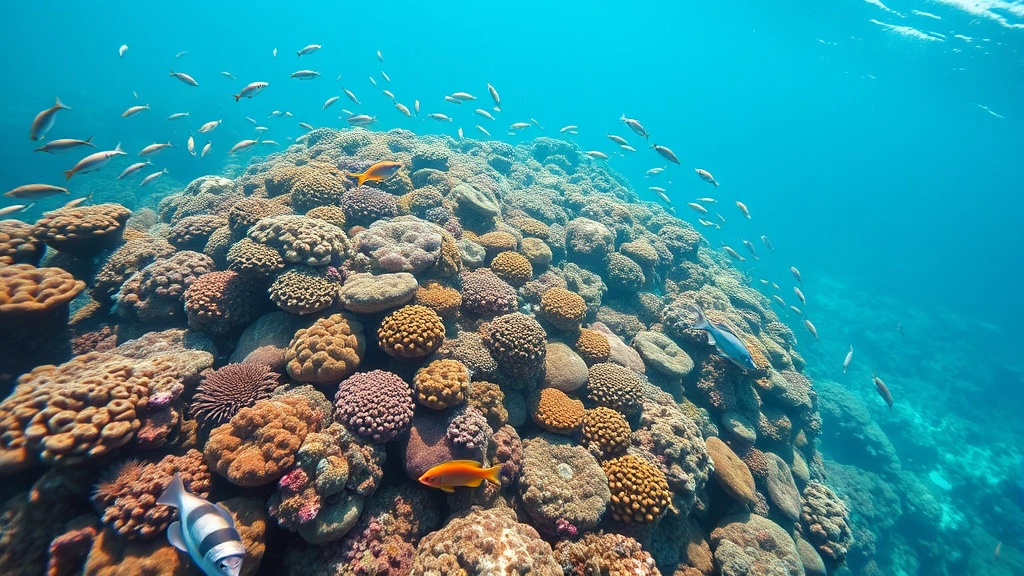
Coral reefs support fisheries worth $375 billion annually and provide tourism revenue exceeding $375 billion. Yet 50% of coral reefs have been destroyed, and current trajectories suggest 90% could be lost by 2050. The economic implications are staggering: the loss of coral reef ecosystems would eliminate $750 billion in annual economic benefits while displacing millions of people dependent on reef-based livelihoods.
Coastal protection services provided by natural ecosystems have enormous economic value. A single mangrove forest can reduce wave energy by 66%, providing storm surge protection equivalent to expensive seawalls and breakwaters. During hurricane events, intact mangrove and wetland systems reduce property damage by billions of dollars. Yet we continue destroying these protective systems while simultaneously investing in expensive technological alternatives that provide inferior protection.
Measuring Ecosystem Collapse: Economic Consequences
The economic consequences of ecosystem collapse extend far beyond the loss of specific ecosystem services. Ecosystem degradation creates cascading economic impacts through supply chain disruptions, price volatility, labor market disruptions, and fiscal crises in dependent communities.
Fish stock collapse provides a sobering case study. The Atlantic cod fishery, once worth billions of dollars and supporting thousands of jobs, collapsed due to overharvesting. The economic impact extended across fishing communities, processing facilities, transportation networks, and consumer markets. Decades later, cod stocks remain depleted, and the affected communities have never fully recovered economically. This pattern repeats across multiple fisheries globally, with ecosystem collapse creating permanent economic damage.
Agricultural collapse represents another critical economic risk. Regions experiencing soil degradation, water depletion, or pollinator loss face declining agricultural productivity and economic contraction. Sub-Saharan Africa faces particular risks from desertification and soil degradation that threaten agricultural productivity and food security. The economic costs of addressing these challenges through rehabilitation and restoration dwarf the costs of prevention.
Climate-driven ecosystem changes create economic uncertainty and volatility. Shifting precipitation patterns affect agricultural productivity and water availability. Changing ocean temperatures alter fish distributions and fishery productivity. Extreme weather events—intensified by climate change—generate enormous economic damages. These climate-driven ecosystem changes represent one of the largest economic risks facing the global economy, yet remain systematically underpriced in financial markets.
The Hitchcock Center’s research emphasizes that ecosystem collapse creates irreversible economic damage. Unlike financial crises that can be addressed through monetary and fiscal policy, ecosystem collapse destroys productive capacity that took centuries to develop and cannot be quickly restored. This asymmetry creates powerful economic arguments for precautionary approaches to environmental protection.
Research from the United Nations Environment Programme demonstrates that every dollar invested in ecosystem restoration generates $7-30 in economic returns through improved ecosystem services. This return on investment dramatically exceeds returns available from most alternative investments, yet ecosystem restoration remains chronically underfunded relative to its economic potential.
Frequently Asked Questions
How does the Hitchcock Center define ecosystem services?
The Hitchcock Center recognizes four categories of ecosystem services: provisioning services (food, water, materials), regulating services (climate, water purification, pollination), supporting services (nutrient cycling, soil formation), and cultural services (recreation, education, spiritual value). Each category generates measurable economic value.
What is the economic value of global ecosystem services?
According to World Bank estimates, global ecosystem services are valued at approximately $125 trillion annually—exceeding global GDP. This underscores the massive economic dependence of human civilization on functioning natural systems.
How can communities implement ecosystem-based economics?
Communities can implement ecosystem-based economics through natural capital accounting, payments for ecosystem services, sustainable resource management, and ecosystem restoration investments. The Hitchcock Center provides guidance on integrating these approaches into local policy and planning.
What role do ecosystems play in climate change mitigation?
Ecosystems sequester carbon through photosynthesis and store it in biomass and soil. Forests, wetlands, and grasslands provide critical climate regulation services. Protecting and restoring these ecosystems represents one of the most cost-effective climate change mitigation strategies available.
How does biodiversity contribute to economic productivity?
Biodiverse ecosystems are more resilient, more productive, and generate greater economic value than simplified systems. Biodiversity supports agricultural productivity, provides pharmaceutical compounds, offers genetic resources, and enhances ecosystem stability—all of which have direct economic value.
What are the economic consequences of ignoring ecosystem services?
Ignoring ecosystem services leads to systematic overexploitation of natural resources, underinvestment in conservation, and accumulating economic damage from ecosystem degradation. This creates short-term gains offset by enormous long-term economic costs and irreversible losses of productive capacity.
The relationship between ecosystems and economy represents one of the most critical economic relationships of our time. Organizations like the Hitchcock Center demonstrate that environmental protection and economic prosperity are not competing objectives but rather complementary goals. By recognizing the economic value of ecosystem services, by investing in ecosystem restoration, and by integrating ecological science into economic decision-making, we can build economic systems that generate prosperity while maintaining the natural capital upon which all prosperity ultimately depends. The economic case for environmental protection has never been stronger, and the economic costs of continued degradation have never been higher. The path forward requires treating ecosystems as the economic assets they truly are.