

Can Economy Thrive Without Ecosystems? Expert View
The relationship between economic systems and natural ecosystems represents one of the most critical questions facing policymakers, economists, and environmental scientists today. For decades, conventional economic models treated the environment as an external variable—a resource to be exploited for growth rather than a foundational system upon which all economic activity depends. This perspective has fundamentally shaped global policy, investment strategies, and development patterns. However, mounting evidence from ecological economics, environmental science, and real-world economic crises suggests that this assumption is not merely incomplete; it is dangerously misleading.
The question of whether an economy can thrive without functioning ecosystems is not rhetorical. It demands rigorous examination of how natural capital—the stock of environmental assets including forests, wetlands, fisheries, and atmosphere—directly contributes to economic productivity, human welfare, and long-term prosperity. Understanding the types of environment and their economic functions reveals why ecosystem degradation inevitably undermines economic performance, regardless of short-term financial metrics.
The Illusion of Economic Independence from Nature
Conventional economic theory, developed primarily during the industrial era when natural resources appeared abundant relative to human demand, created a conceptual framework that marginalized environmental considerations. This approach treated the economy as a self-contained circular system of production, consumption, and exchange—with nature relegated to the periphery as an infinite source of inputs and sink for waste. The definition of environment science challenges this outdated model by demonstrating that ecosystems operate according to thermodynamic laws that directly govern economic possibilities.
The fundamental error in conventional economics lies in treating natural capital as non-essential or infinitely substitutable. Mainstream models assume that technological innovation can replace any depleted natural resource or overcome any environmental constraint. Yet this assumption collapses when examined against basic ecological principles. A manufacturing facility cannot substitute for a forest’s capacity to sequester carbon, regulate water cycles, and maintain biodiversity. A sewage treatment plant cannot fully replicate a wetland’s nutrient cycling function. Technology enhances efficiency within natural limits but cannot transcend those limits indefinitely.
This conceptual blindness has profound practical consequences. For decades, national accounting systems—including GDP calculations used to measure economic success—counted the depletion of natural capital as income rather than as the loss of an asset. Harvesting an old-growth forest that took centuries to develop was recorded as economic gain, not as the liquidation of productive capital. Economic analyses that fail to account for environmental degradation systematically overstate prosperity and misallocate resources toward unsustainable activities.
Expert economists increasingly recognize this accounting error as catastrophic for long-term policy. World Bank environmental economists have documented how traditional GDP growth masks deteriorating environmental conditions in developing nations, leading to policies that extract maximum short-term value while destroying the productive base for future generations.
Natural Capital as Economic Foundation
Understanding ecosystems as capital assets fundamentally reframes the economy-environment relationship. Natural capital consists of the stock of environmental assets—soil, forests, fisheries, mineral deposits, freshwater systems, and the atmosphere—that generate flows of valuable services and resources over time. Like financial or manufactured capital, natural capital depreciates when overexploited and appreciates when well-managed.
The economic significance of natural capital becomes evident when examining specific ecosystem services. Pollination by wild insects and managed bees generates an estimated $15-20 billion annually in agricultural value globally. Coastal wetlands and mangrove forests protect communities from storms while supporting fisheries that feed millions. Forests regulate regional precipitation patterns, affecting agricultural productivity across continents. Soil microbiomes maintain fertility that agriculture depends upon. These are not peripheral services; they are foundational to economic production across multiple sectors.
Tropical rainforests exemplify how ecosystem value extends far beyond timber extraction. These systems regulate global climate patterns, support pharmaceutical development (approximately 25% of modern medicines derive from rainforest plants), maintain hydrological cycles affecting agriculture thousands of kilometers away, and preserve genetic resources of incalculable future value. Yet conventional economic analysis often shows forest conversion to cattle ranching or agriculture as economically advantageous, despite destroying services worth vastly more than the timber or agricultural products generated.
The concept of natural capital also encompasses resilience and adaptive capacity. Biodiverse ecosystems better withstand shocks—pest outbreaks, droughts, temperature fluctuations—than simplified monocultures. This resilience translates directly to economic stability. Agricultural systems built on ecosystem-dependent approaches show greater long-term productivity than those dependent on intensive chemical inputs that degrade soil capital. UNEP research consistently demonstrates that ecosystem restoration investments generate economic returns exceeding costs by ratios of 7:1 to 30:1 over relevant time horizons.
Ecosystem Services and GDP Blindness
The failure of conventional economic metrics to value ecosystem services creates a systematic bias toward destructive development. GDP measures monetary transactions but ignores non-market values. A forest provides countless ecosystem services—carbon sequestration, water purification, biodiversity support, cultural values—yet these contribute nothing to GDP until the forest is cut down. The conversion itself generates transactions (timber sales, equipment purchases, transportation) that increase GDP, even as the nation’s true productive capacity declines.
This measurement problem extends across multiple sectors. Commercial fishing that depletes fish stocks appears profitable until stocks collapse. Oil extraction that damages aquifers and air quality registers as economic growth. Coal mining that destroys landscapes and causes health costs shows up as positive economic activity, while the health costs appear separately in healthcare spending—creating a misleading picture of net benefit.
Environment variables in economic modeling often fail to capture these dynamics because they treat environmental factors as exogenous shocks rather than endogenous system constraints. Advanced ecological economics frameworks, by contrast, recognize that ecosystem function is not a side effect of economic activity but the fundamental constraint within which all economic activity must occur.
Research from ecological economics journals increasingly documents how ecosystems provide services worth trillions of dollars annually when properly valued. A landmark study estimated global ecosystem services at approximately $125-145 trillion annually, with 60% of those services in decline. Yet these values rarely influence policy because they fall outside conventional economic accounting. Natural capital accounting initiatives now work to integrate these values into national accounting systems, though progress remains slow.
The disconnect between ecosystem value and economic accounting creates perverse incentives. Farmers receive subsidies for practices that degrade soil and water systems. Fishing fleets receive fuel subsidies that enable overharvesting. Corporations that externalize environmental costs gain competitive advantage over those that internalize them. These policy failures don’t reflect economic reality; they reflect measurement failures that misrepresent economic reality.
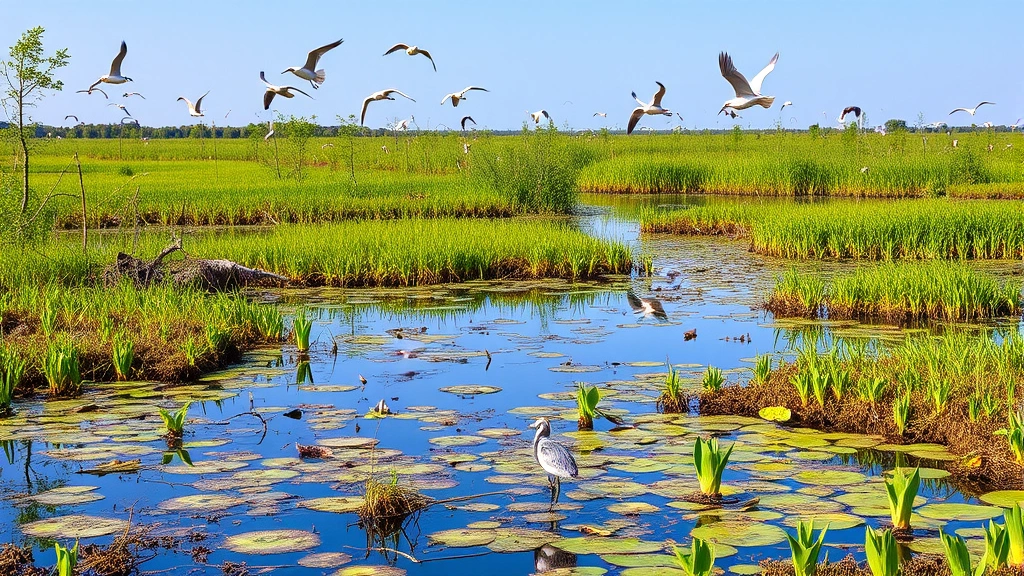
” alt=”Natural ecosystem providing clean water, forest canopy, and biodiversity”>
Case Studies: When Economies Ignored Ecosystems
Historical examples demonstrate repeatedly that economic collapse follows ecosystem degradation. The Aral Sea region provides perhaps the most stark warning. Soviet planners implemented an irrigation scheme to grow cotton in Central Asia, diverting rivers that fed the Aral Sea. The economic logic appeared sound: maximize agricultural output through water management. By the 1980s, the sea had shrunk to a fraction of its original size. The ecosystem collapse destroyed fisheries that had supported hundreds of thousands of people, disrupted regional precipitation patterns affecting agriculture across the region, and created an environmental catastrophe that persists decades later. The economic gains from cotton production proved temporary and vastly outweighed by the losses from ecosystem destruction.
The North Atlantic cod fishery provides another instructive case. For centuries, the fishery supported thriving communities and generated substantial economic value. Advances in fishing technology allowed harvesting to accelerate dramatically in the late 20th century. Economic analysis showed increasing profitability as catches rose. Yet the fishery was extracting natural capital faster than it could regenerate. By 1992, the stock had collapsed so completely that authorities imposed a moratorium. Tens of thousands lost livelihoods. The region’s economy contracted sharply. The collapse was entirely predictable from ecosystem dynamics—fish populations have maximum sustainable yield levels beyond which they collapse—yet economic analysis focused on short-term profitability missed this fundamental constraint.
Madagascar’s deforestation illustrates how ecosystem loss undermines agricultural productivity. As forests were cleared for agriculture and logging, soil erosion accelerated, water cycles destabilized, and agricultural productivity declined. The short-term economic gains from forest conversion masked long-term economic losses as agricultural output fell and water scarcity increased. Today, Madagascar faces severe economic challenges directly tied to the ecosystem degradation that earlier economic analysis had classified as growth.
China’s experience with the Loess Plateau demonstrates that ecosystem restoration can reverse decline. Massive erosion from deforestation and overgrazing degraded the region’s productive capacity. Reforestation and grassland restoration programs, though expensive in the short term, restored ecosystem function, reduced flooding downstream, improved air quality, and created economic opportunities in ecosystem-based tourism and sustainable agriculture. The investment initially appeared economically inefficient by conventional metrics but proved economically essential for long-term regional development.
How humans affect the environment through economic activity determines whether those activities remain sustainable. Economies that ignore these effects experience eventual contraction as ecosystem services degrade.
The True Cost of Ecological Collapse
Recent economic analyses quantify the costs of ecosystem degradation with increasing precision. Climate change—fundamentally an ecosystem service failure (the atmosphere’s capacity to regulate temperature)—threatens to reduce global GDP by 5-20% depending on warming scenario, according to various economic models. This represents potential losses of trillions of dollars annually by mid-century. Agricultural productivity faces decline as soil degradation accelerates, precipitation patterns shift, and pest dynamics change. Water scarcity threatens economic activity across multiple sectors. Biodiversity loss undermines pharmaceutical development, agricultural resilience, and ecosystem stability.
The economic costs of inaction vastly exceed the costs of prevention. A dollar invested in ecosystem restoration typically generates $7-30 in economic benefits through restored services, increased resilience, and avoided damages. Yet current investment in ecosystem protection remains a tiny fraction of investment in extraction and conversion. This represents a massive misallocation of capital driven by measurement failures and short-term discount rates that undervalue future economic security.
Extreme weather events increasingly demonstrate ecosystem-economy linkages. Floods, droughts, and storms cause economic damage that would be substantially reduced by intact ecosystems. Mangrove forests and coral reefs provide storm protection worth billions annually. Forests regulate water availability and reduce flood risk. Yet these protective services remain invisible in conventional economic accounting until a disaster occurs, at which point the economic damage becomes impossible to ignore.
The financial sector increasingly recognizes ecosystem dependence as a systemic risk. Central banks and financial regulators now incorporate climate and environmental risks into stability assessments. Insurance companies face rising claims from weather-related disasters that reflect ecosystem degradation. Investment firms recognize that companies dependent on ecosystem services face material risks from environmental degradation. This financial sector recognition signals that ecosystem-economy linkages are moving from peripheral concern to central risk assessment.
Pathways to Sustainable Economic Thriving
The evidence overwhelmingly indicates that economies cannot thrive without functioning ecosystems. The question becomes how to restructure economic activity to operate within ecological limits while maintaining or improving human welfare. This requires fundamental shifts in how we measure economic success, value natural capital, and structure incentives.
First, accounting reform is essential. Integrating natural capital into national accounting systems—through initiatives like System of Environmental-Economic Accounting (SEEA)—enables policymakers to see the true state of their economy. When forest depletion, soil degradation, and water depletion are counted as capital losses rather than income, the economic case for conservation becomes apparent. Several nations including Botswana and Costa Rica have implemented natural capital accounting, finding that it dramatically changes policy priorities.
Second, pricing mechanisms must reflect ecological reality. Carbon pricing, water pricing, and payments for ecosystem services create economic incentives aligned with ecological sustainability. When polluters bear the cost of environmental damage and ecosystem protectors receive compensation for services provided, markets begin to allocate resources toward sustainable outcomes. Conservation economics research demonstrates that properly designed payment schemes for ecosystem services can simultaneously improve environmental outcomes and increase income for local communities.
Third, human environment interaction must be reconceptualized from extraction and conversion toward stewardship and regeneration. Agricultural practices that build soil health, fisheries management that maintains stock sustainability, and forest management that enhances resilience all prove economically superior to degradative practices when full costs and long-term benefits are calculated. The transition requires investment and technical support but generates returns far exceeding costs.
Fourth, economic policy must incorporate ecological constraints explicitly. Targets for ecosystem restoration, biodiversity protection, and resource sustainability should be integrated with economic planning rather than treated as competing objectives. Evidence increasingly shows that ecological and economic goals align when properly understood: the most productive economies are those that maintain the ecosystem services upon which they depend.
Fifth, international cooperation on ecosystem management becomes economically essential. Forests, oceans, and atmosphere provide services that cross borders. Individual nations acting alone cannot achieve sustainable development if neighboring regions degrade shared ecosystems. Climate change, ocean acidification, and transboundary water pollution demonstrate that ecosystem sustainability requires coordinated global action. Economic models that account for these interdependencies show that investment in global ecosystem protection generates returns far exceeding costs for all nations involved.
The transition to ecosystem-dependent economic models is not merely environmentally necessary; it is economically imperative. Businesses, investors, and policymakers who recognize ecosystem dependence and invest accordingly position themselves for long-term success. Those who continue operating under assumptions of ecosystem independence face increasing risks as environmental constraints tighten and ecosystem services degrade.
FAQ
Can technological innovation overcome ecosystem limits?
Technology enhances efficiency within natural limits but cannot transcend thermodynamic or biological constraints. While innovation is valuable for reducing resource intensity, it cannot substitute for ecosystem services like pollination, water cycling, or climate regulation. Technology must work within ecological constraints, not replace them.
Why do economists traditionally ignore ecosystem value?
Conventional economic theory developed when natural resources appeared abundant relative to human demand. The framework treats non-market values (like ecosystem services) as externalities rather than core economic assets. This reflects historical conditions rather than current reality, as human demand now exceeds ecosystem regeneration capacity in many systems.
How do we measure ecosystem service value?
Multiple approaches exist: replacement cost (what it would cost to replace the service technologically), avoided cost (what damages are prevented by the service), and market-based valuation (prices paid for similar services). Each approach has strengths and limitations, but all consistently show ecosystem services worth vastly more than typically recognized in conventional economic analysis.
Can developing nations afford ecosystem protection?
Developing nations can least afford ecosystem degradation, as their economies typically depend more directly on natural capital. Evidence shows that ecosystem restoration investments generate returns exceeding costs, making conservation economically beneficial even for resource-constrained economies. International support for ecosystem protection represents sound investment in global economic stability.
What role should markets play in ecosystem management?
Markets can align economic incentives with ecological sustainability when properly designed through mechanisms like carbon pricing, water markets, and payments for ecosystem services. However, markets alone cannot protect public goods like biodiversity or regulate common-pool resources like oceans without complementary governance structures and regulations.