

Python’s Role in the Economy: An Expert’s Take
Python has become far more than a programming language—it represents a fundamental shift in how modern economies process data, optimize resources, and make decisions that affect both human prosperity and ecological health. As organizations worldwide grapple with economic challenges alongside environmental constraints, Python serves as a critical infrastructure tool enabling the intersection of computational efficiency and sustainable development. This analytical framework examines how Python influences economic systems, environmental monitoring, and the emerging field of ecological economics.
The language’s rise coincides with an era where data-driven decision-making has become essential for businesses, governments, and research institutions. From environmental impact assessments to financial modeling that incorporates natural capital, Python facilitates the complex calculations and simulations necessary for understanding how economic activity affects planetary systems. Understanding Python’s economic significance requires examining both its direct applications in industry and its broader implications for how we measure and value economic progress.

Python and Economic Modeling
Economic modeling has undergone revolutionary transformation since Python’s adoption in financial institutions and research organizations. The language enables economists to build sophisticated models that simulate market behavior, assess policy impacts, and forecast economic trends with unprecedented precision. Libraries such as NumPy, Pandas, and SciPy provide the mathematical foundation necessary for complex econometric analyses that were previously limited to expensive proprietary software.
The accessibility of Python democratizes economic analysis. Where traditional econometric tools required substantial financial investment and specialized training, Python’s open-source ecosystem allows researchers, policymakers, and smaller organizations to conduct rigorous economic research. This democratization has particular significance for developing nations and institutions with limited budgets—they can now participate in sophisticated economic planning without prohibitive software costs. The ability to implement advanced algorithms means that organizations can better understand economic relationships and make more informed decisions about resource allocation.
Python’s role in algorithmic trading and financial markets extends beyond academic interest. Financial institutions employ Python to manage portfolios worth trillions of dollars, analyze market microstructure, and identify arbitrage opportunities. These applications directly influence capital flows, investment patterns, and ultimately which economic sectors receive funding. When Python enables more efficient markets, it reduces transaction costs and improves price discovery—fundamental economic functions that affect consumer welfare across entire economies.
Environmental economists increasingly use Python to model the economic consequences of climate change, pollution, and resource depletion. These models quantify the relationship between economic activity and environmental degradation, essential for understanding the true cost of production. Python facilitates environment and society analysis by enabling researchers to integrate climate models with economic frameworks, revealing how ecological tipping points could trigger economic disruptions.
Environmental Data Analysis Through Python
The environmental monitoring sector has been transformed by Python’s capability to process massive datasets from satellites, sensor networks, and ground-based monitoring stations. Organizations tracking atmospheric composition, ocean health, forest coverage, and biodiversity rely on Python scripts to extract meaningful patterns from terabytes of environmental data. This analytical capacity has profound economic implications—accurate environmental monitoring enables better resource management and risk assessment.
Python’s integration with geospatial libraries like Rasterio, Fiona, and Geopandas allows analysts to work with geographic information systems data programmatically. This capability is essential for understanding land-use patterns, agricultural productivity, water resource distribution, and ecosystem services that have direct economic value. When environmental data is properly analyzed, it reveals the economic value of natural capital that traditional accounting systems ignore.
The implementation of environment variable configurations in Python—accessed through functions like `os.getenv()` and `os.environ`—enables flexible, scalable environmental monitoring systems. Organizations can configure data pipelines, API credentials, and processing parameters through environment variables, making it possible to deploy monitoring systems across different geographic regions and institutional contexts without code modification. This technical capability supports the infrastructure necessary for global environmental surveillance.
Climate science applications built in Python have become essential for economic planning. Models predicting temperature changes, precipitation patterns, and extreme weather frequency directly inform investment decisions in infrastructure, agriculture, and insurance. Python’s scientific computing ecosystem enables the integration of climate projections with economic models, allowing organizations to assess climate risk in financial terms. This integration is crucial for understanding how reducing carbon footprint through economic transformation creates both costs and opportunities.
Integration with Ecological Economics
Ecological economics represents a paradigm shift in how economists conceptualize the relationship between human economic activity and natural systems. Python has become instrumental in operationalizing ecological economics principles through computational models that treat the economy as embedded within ecological boundaries. This interdisciplinary approach requires integrating data from biology, chemistry, physics, and traditional economics—a computational challenge for which Python is uniquely suited.
The field of natural capital accounting, which assigns economic values to ecosystem services, relies heavily on Python for data processing and analysis. Ecosystem services—including water purification, pollination, carbon sequestration, and nutrient cycling—provide enormous economic value yet remain largely invisible in traditional GDP accounting. Python enables organizations to quantify these services and integrate them into economic decision-making frameworks. Research institutions use Python to develop methodologies for valuing biodiversity, assessing wetland ecosystem services, and calculating the economic costs of species extinction.
Input-output economic models, which trace economic flows through supply chains and sectors, have become more sophisticated through Python’s analytical capabilities. These models reveal hidden environmental costs embedded in economic transactions. By integrating environmental impact data with economic flow models, organizations can identify which sectors generate disproportionate environmental damage relative to their economic output. This analysis supports policy decisions aimed at transitioning toward more sustainable economic structures.
The relationship between human environment interaction and economic performance requires sophisticated modeling that Python facilitates. Researchers use Python to model feedback loops where environmental degradation reduces economic productivity, which in turn reduces investment in environmental protection—creating potential economic-ecological collapse scenarios. Understanding these dynamics is essential for designing economic policies that avoid catastrophic outcomes.
IMAGE_2
Real-World Economic Applications
Corporate sustainability reporting increasingly relies on Python for calculating and communicating environmental and economic performance metrics. Companies use Python to aggregate data from operations across multiple facilities, calculate greenhouse gas emissions, assess resource consumption, and quantify waste generation. This data processing enables transparent communication of environmental impacts to investors, regulators, and consumers—stakeholders who increasingly demand accountability for ecological consequences of economic activity.
Supply chain optimization, a critical economic function, uses Python to model logistics networks and minimize transportation costs while incorporating environmental objectives. Algorithms can optimize routes to reduce fuel consumption, select suppliers based on environmental performance, and identify opportunities for circular economy practices. These applications directly affect both profitability and environmental impact, demonstrating how Python enables win-win solutions where economic and ecological interests align.
Agricultural economics has been revolutionized by Python-based precision agriculture systems. Farmers use Python-powered applications to analyze soil data, weather patterns, and crop performance to optimize fertilizer application, irrigation, and pest management. These applications reduce input costs while decreasing environmental contamination—a direct example of how computational tools improve both economic efficiency and ecological outcomes. The economic value created through reduced input costs and improved yields can exceed the investment in monitoring systems.
Insurance and financial risk assessment increasingly incorporate environmental factors, requiring Python-based models that integrate climate science with financial analysis. Insurance companies use Python to assess flood risk, wildfire exposure, and other climate-related hazards that affect property values and claims costs. This economic application of Python creates feedback mechanisms where financial markets begin pricing environmental risk, potentially incentivizing more sustainable economic behavior.
The Developer Economy and Job Creation
Python’s prominence has created an enormous economic sector centered on software development, data science, and technical education. Millions of developers worldwide earn income through Python-related work, creating a substantial portion of the knowledge economy. The accessibility of Python means that individuals from economically disadvantaged backgrounds can acquire high-value skills, potentially improving economic mobility and reducing inequality.
The open-source ecosystem supporting Python represents a unique economic model where value creation occurs through community contribution rather than traditional employment. Organizations benefit from thousands of volunteer developers maintaining and improving tools, reducing their software development costs while enabling innovation that would be economically infeasible through proprietary development. This model has implications for how economic value is created, distributed, and measured in digital economies.
Educational institutions worldwide have adopted Python as the primary programming language, with implications for workforce development and economic competitiveness. Nations investing in Python education are positioning their workforces for participation in high-value technical roles. This educational shift affects long-term economic prospects, as countries with strong Python expertise attract technology investment and create entrepreneurial opportunities.
The gig economy and freelance markets for Python developers represent new forms of economic organization that transcend geographic boundaries. Developers in lower-cost regions can compete for projects globally, arbitraging wage differences and potentially improving economic opportunities in developing nations. This global market for technical skills has economic implications for wage structures, employment patterns, and the geography of economic opportunity.
Sustainability Analytics and Python
The emerging field of sustainability analytics uses Python to integrate environmental, social, and economic data into comprehensive assessments of organizational and economic performance. This interdisciplinary approach requires tools capable of handling diverse data types and complex analytical frameworks—exactly what Python provides. Organizations use Python-based sustainability platforms to track progress toward environmental targets, identify risks from regulatory changes, and communicate performance to stakeholders.
Carbon accounting and emissions reporting have become standard business practices, largely enabled by Python tools that automate data collection and calculation. Companies use Python to track emissions across scope one (direct), scope two (indirect from energy), and scope three (supply chain) emissions. This comprehensive accounting reveals hidden environmental costs and opportunities for efficiency improvements. The economic implications are substantial—organizations identifying emissions reduction opportunities can simultaneously reduce costs and environmental impact.
Circular economy modeling, which traces material flows through economic systems to identify opportunities for waste reduction and resource recovery, relies on Python for data processing and analysis. Python enables organizations to model scenarios where waste from one process becomes input for another, calculating economic and environmental benefits of circular approaches. These models often reveal that circular economy strategies improve profitability while reducing environmental impact.
Social impact measurement and environmental justice analysis use Python to assess how economic activities affect different populations and ecosystems. This analytical capability supports more equitable economic decision-making by making visible the distributional consequences of economic policies. Python enables researchers to analyze whether environmental benefits and costs are fairly distributed across socioeconomic groups, supporting advocacy for more just economic structures.
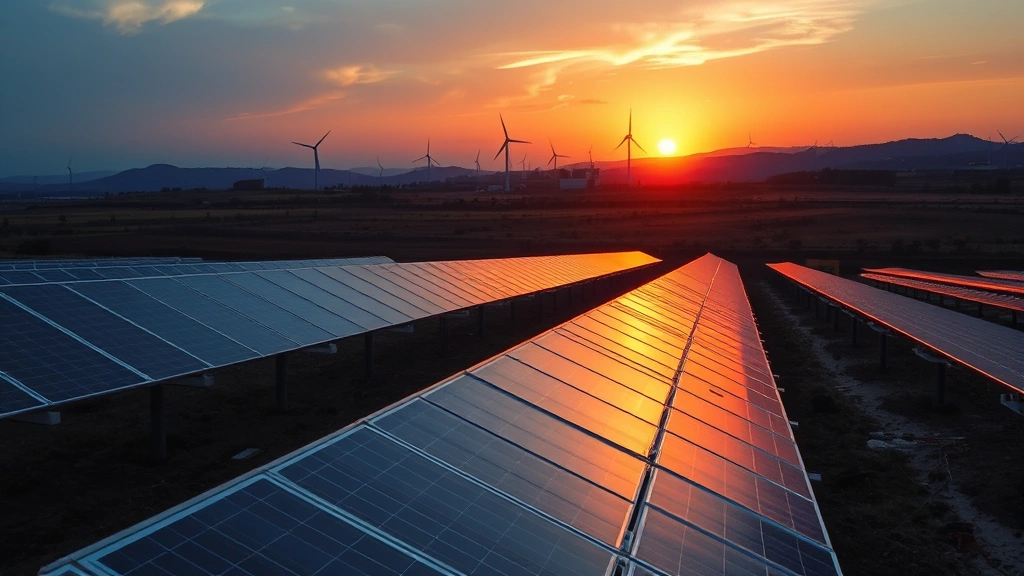
Integration with renewable energy economics represents another critical application area. Python models optimize renewable energy deployment, assess battery storage economics, and simulate grid operations with high renewable penetration. These tools enable the economic transition away from fossil fuels by demonstrating the feasibility and cost-effectiveness of renewable energy systems. Organizations use Python to analyze renewable energy investments, calculate levelized costs, and project long-term economic benefits.
IMAGE_3
The relationship between economic productivity and environmental sustainability, once viewed as inherently contradictory, is increasingly understood through Python-based analysis that reveals opportunities for decoupling economic growth from environmental degradation. Organizations use Python to model scenarios where efficiency improvements, technological innovation, and behavioral change combine to reduce environmental impact while maintaining economic growth. These analyses support policy decisions aimed at achieving renewable energy transitions and circular economy adoption.
Global economic databases and research platforms increasingly rely on Python for data management and analysis. Institutions like the World Bank, UNEP, and regional development banks use Python to process economic and environmental data, supporting policy research and development assistance. The capacity to integrate multiple data sources enables more comprehensive understanding of economic-environmental relationships across nations and regions.
The future economic role of Python will likely expand as artificial intelligence and machine learning applications become more sophisticated. These technologies, built primarily in Python, will enable more accurate prediction of economic trends, optimization of resource allocation, and identification of emerging risks. The economic implications are profound—organizations with advanced analytical capabilities will gain competitive advantages, potentially concentrating economic power unless access to these tools becomes more widely distributed.
FAQ
How does Python support environmental economics research?
Python enables environmental economists to build complex models integrating ecological and economic data, quantify ecosystem services, assess environmental policy impacts, and conduct scenario analysis. Libraries like Pandas and NumPy facilitate large-scale data analysis, while geospatial tools enable spatial analysis of environmental-economic relationships. This computational capacity makes sophisticated environmental economic research accessible to researchers and institutions with limited budgets.
What is the significance of environment variables in Python for economic applications?
Environment variables in Python—accessed through `os.getenv()` and `os.environ`—enable flexible configuration of applications across different deployment contexts. For economic and environmental monitoring systems, this means data pipelines can be configured for different geographic regions, institutional settings, or data sources without code modification. This technical capability supports scalable deployment of monitoring and analysis systems critical for understanding economic-environmental relationships.
How does Python contribute to circular economy implementation?
Python enables organizations to model material flows through economic systems, identify waste reduction opportunities, and calculate economic benefits of circular practices. Tools built in Python help companies track resource use, identify secondary material sources, and optimize remanufacturing processes. These applications often demonstrate that circular economy strategies simultaneously improve profitability and reduce environmental impact.
What economic sectors rely most heavily on Python?
Financial services, technology, energy, agriculture, and environmental consulting rely heavily on Python. These sectors use Python for data analysis, algorithmic optimization, risk assessment, and sustainability reporting. The diversity of applications across sectors demonstrates Python’s fundamental importance to modern economic activity.
How does Python democratize economic analysis?
Python’s open-source nature and free availability enable researchers, policymakers, and organizations in developing nations to conduct sophisticated economic analysis without prohibitive software costs. This democratization allows broader participation in evidence-based economic planning and policy development, potentially improving economic decision-making globally.
What is the connection between Python skills and economic opportunity?
Python expertise creates significant economic value and opportunity. Developers with Python skills command high salaries, and nations with strong Python education and expertise attract technology investment. The global market for Python developers enables individuals to participate in high-value economic activity regardless of geographic location, potentially improving economic mobility and reducing geographic inequality.