San Francisco’s Green Economy: Local Expert Insights
San Francisco stands at the forefront of America’s sustainable economic transformation, where environmental innovation intersects with urban development and community engagement. The city’s commitment to environmental stewardship has catalyzed a thriving green economy that extends far beyond corporate sustainability initiatives into grassroots movements, local entrepreneurship, and community-driven environmental projects. From urban gardens to renewable energy installations, San Francisco demonstrates how economic growth and ecological responsibility can coexist as complementary forces rather than competing interests.
The Bay Area’s green economy represents more than just trendy environmental consciousness—it reflects fundamental shifts in how cities can restructure their economic foundations to prioritize both human wellbeing and ecosystem health. Local experts consistently emphasize that San Francisco’s approach to sustainable development offers valuable lessons for urban centers worldwide, particularly regarding the integration of community participation in environmental decision-making and the role of local businesses in driving systemic change.
Urban Agriculture and Community Gardens
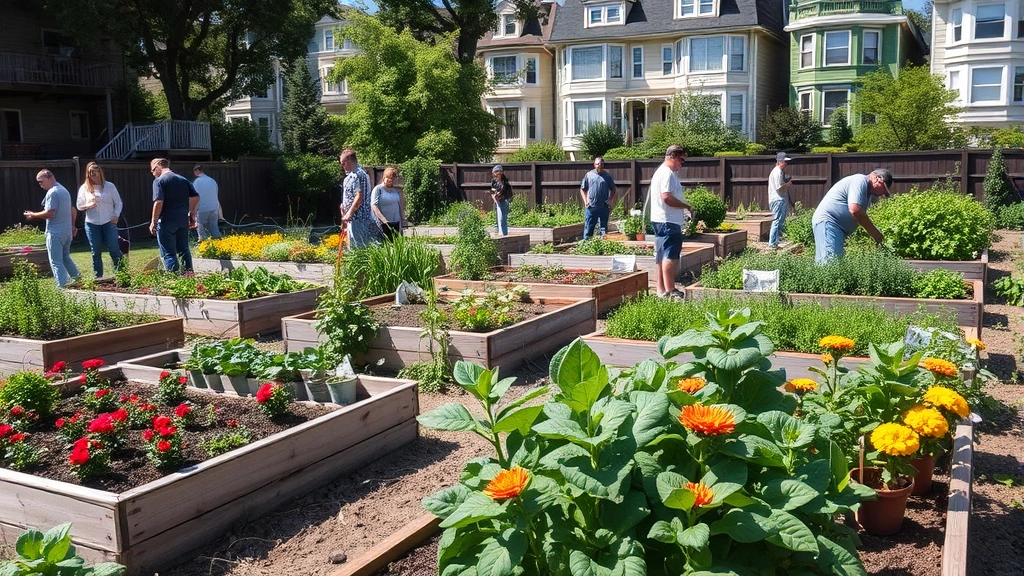
San Francisco’s urban agriculture movement has emerged as a critical component of the city’s green economy, with hundreds of community gardens transforming vacant lots into productive spaces. The concept of a garden for the environment in San Francisco extends beyond aesthetic beautification—these spaces function as multifaceted ecological and economic assets that generate measurable environmental and social returns. Local environmental economists point to urban agriculture as a practical demonstration of how human-environment interaction can create positive feedback loops within urban ecosystems.
Community gardens throughout San Francisco’s neighborhoods—from the Mission District to the Tenderloin—serve approximately 8,000 gardeners annually, producing fresh vegetables while simultaneously reducing urban heat island effects, improving air quality, and creating habitat corridors for pollinators and other wildlife. These spaces represent tangible investments in local food security and environmental resilience. Economic analyses reveal that community gardens generate approximately $2,000 to $5,000 in direct economic value per garden annually through vegetable production, while providing immeasurable social and psychological benefits to participants.
The environmental economics of urban agriculture in San Francisco demonstrate significant carbon sequestration potential. Research from local environmental organizations indicates that community gardens collectively sequester approximately 15-20 tons of carbon dioxide annually while simultaneously reducing transportation emissions associated with conventional food supply chains. Furthermore, these spaces reduce stormwater runoff by 20-40% compared to conventional concrete or asphalt surfaces, mitigating flooding risks while recharging groundwater supplies.
Local experts emphasize that the success of San Francisco’s garden initiatives depends on sustained community participation and municipal support. The city’s Department of Environment has invested in programs that provide technical assistance, seed distribution, and educational workshops to community gardeners. This institutional support acknowledges that environmental sustainability cannot be achieved through top-down mandates alone but requires grassroots engagement and local knowledge systems. Understanding types of environment and their unique characteristics helps planners design interventions appropriate to specific urban contexts.
Beyond production, San Francisco’s community gardens function as educational hubs where residents learn about ecological principles, sustainable agricultural practices, and the interconnections between food systems and environmental health. These gardens serve as living laboratories where residents directly experience the principles of environmental stewardship and ecosystem restoration.
Green Business Innovation and Entrepreneurship
San Francisco’s green economy has catalyzed remarkable entrepreneurial activity, with hundreds of startups and established businesses developing innovative solutions to environmental challenges. The city’s concentration of venture capital, technical talent, and environmental consciousness has created an ecosystem where sustainable business models attract significant investment and consumer support. Local experts from environmental economics research institutions note that San Francisco’s green business sector generates approximately $3.2 billion in annual economic activity, supporting over 65,000 jobs across multiple sectors.
The green technology sector encompasses renewable energy companies, sustainable materials manufacturers, environmental consulting firms, and circular economy enterprises. These businesses do not represent peripheral economic activities but rather constitute core components of San Francisco’s economic competitiveness. Companies specializing in clean energy solutions, energy efficiency technologies, and sustainable building materials have demonstrated that profitability and environmental responsibility align closely, contradicting outdated assumptions that environmental protection necessarily imposes economic costs.
Particularly significant is the emergence of social enterprises that explicitly integrate environmental and social objectives alongside financial sustainability. These organizations demonstrate that business models can simultaneously generate profits, create employment opportunities, and produce measurable environmental benefits. Local examples include food waste reduction companies, urban composting services, and sustainable packaging manufacturers that collectively divert millions of tons of waste from landfills annually while creating meaningful employment.
The economic resilience of San Francisco’s green businesses reflects broader market transformations. Consumer preferences increasingly favor environmentally responsible products and services, institutional investors increasingly screen for environmental performance metrics, and regulatory frameworks increasingly internalize environmental costs. These converging forces create powerful incentives for businesses to adopt sustainable practices, making environmental responsibility economically rational rather than altruistic.
Local venture capital firms have recognized that sustainable technologies address massive global markets. Clean energy, sustainable agriculture, circular economy solutions, and environmental monitoring technologies represent multi-trillion-dollar global markets with exceptional growth potential. San Francisco’s position as a global innovation center means that environmental solutions developed locally often scale globally, amplifying the city’s environmental impact far beyond its geographic boundaries.
Renewable Energy Transition in Urban Contexts
San Francisco’s transition toward renewable energy represents one of the most ambitious urban decarbonization efforts globally. The city has committed to achieving 100% renewable electricity by 2030 and carbon neutrality across all sectors by 2050—targets requiring fundamental restructuring of energy infrastructure and consumption patterns. Local experts from environmental policy institutes emphasize that this transition demonstrates how cities can simultaneously reduce emissions, create employment, and enhance energy security through strategic renewable energy investments.
The city’s Community Choice Aggregation (CCA) program, which began supplying electricity in 2010, has become a model for municipal renewable energy procurement. Through this program, San Francisco residents and businesses can purchase electricity from renewable sources at competitive rates, fundamentally transforming the economics of clean energy adoption. The CCA has successfully demonstrated that renewable energy can be price-competitive with conventional fossil fuels while providing superior environmental outcomes.
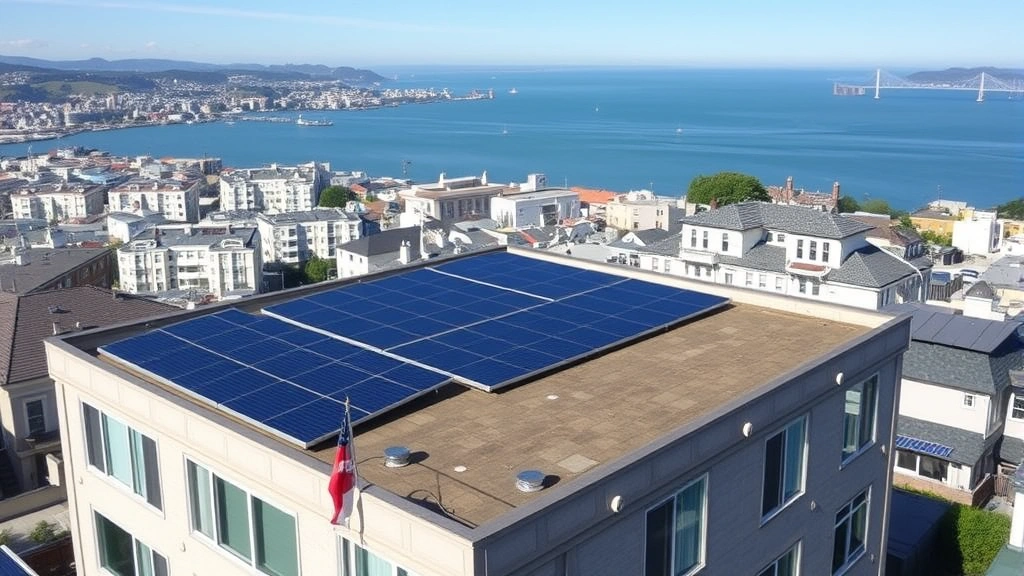
Rooftop solar installations have expanded exponentially, with approximately 15,000 residential and commercial installations currently operating across San Francisco. These distributed renewable energy systems reduce transmission losses, enhance grid resilience, create local employment in installation and maintenance, and provide property owners with long-term energy cost savings. Economic modeling indicates that residential solar installations generate positive return on investment within 7-10 years while providing 25+ years of clean energy generation.
The renewable energy transition creates significant employment opportunities across multiple skill levels. Solar installers, electrical technicians, energy auditors, and renewable energy engineers represent high-wage positions increasingly accessible to workers without four-year degrees. Local workforce development programs have successfully trained thousands of workers for clean energy careers, demonstrating that environmental transitions can create equitable economic opportunities when paired with targeted workforce development.
Beyond electricity, San Francisco is advancing renewable thermal energy systems, including district heating and cooling systems powered by waste heat recovery and renewable sources. These systems reduce natural gas consumption, lower heating and cooling costs, and decrease greenhouse gas emissions. The integration of renewable thermal energy with renewable electricity creates comprehensive decarbonization pathways for buildings, the sector responsible for approximately 70% of San Francisco’s greenhouse gas emissions.
Policy Frameworks Enabling Green Growth
San Francisco’s green economy thrives within supportive policy frameworks that create incentives for sustainable practices while internalizing environmental costs. Local experts emphasize that policy design fundamentally shapes economic outcomes, and San Francisco has implemented innovative policies that align economic incentives with environmental objectives. Understanding environment and society relationships reveals how policy interventions can facilitate sustainable development.
The city’s Building Energy Performance Ordinance requires large buildings to benchmark energy consumption and implement efficiency improvements, creating market demand for energy efficiency technologies and services. This policy has catalyzed retrofitting of existing buildings, the sector with greatest potential for emissions reductions, while simultaneously reducing operating costs for property owners through decreased energy consumption.
San Francisco’s Waste Reduction and Recycling Ordinance mandates that 80% of municipal waste be diverted from landfills through composting, recycling, and source reduction. This policy has driven innovation in waste management, creating new businesses focused on waste prevention and material recovery. The economic value of recovered materials, combined with avoided landfill disposal costs, demonstrates that waste reduction creates positive economic returns while eliminating environmental contamination.
Zoning reforms have enabled increased housing density, reducing per-capita transportation emissions and land consumption while creating more efficient urban development patterns. Transit-oriented development policies that encourage housing and commercial development near public transportation nodes reduce automobile dependency and support the viability of transit systems.
Municipal procurement policies increasingly prioritize sustainable products and services, using government purchasing power to create market demand for environmentally responsible alternatives. When cities purchase renewable energy, sustainable materials, and environmentally certified products, they signal market demand that encourages private sector innovation and expansion of sustainable supply chains.
Tax incentives for renewable energy installations, energy efficiency improvements, and sustainable businesses reduce the cost of environmental investments, accelerating adoption rates. Property Assessed Clean Energy (PACE) financing mechanisms enable property owners to finance efficiency and renewable energy investments through property tax assessments, overcoming capital constraints that previously limited adoption.
Community Engagement and Social Equity
Local experts consistently emphasize that San Francisco’s green economy succeeds because it integrates social equity considerations with environmental objectives. Communities historically bearing disproportionate environmental burdens—including low-income neighborhoods and communities of color—must benefit from green economy transitions, not experience further marginalization. This principle, rooted in environmental justice, reflects recognition that environmental sustainability and social justice represent interconnected imperatives.
Community-based organizations throughout San Francisco have emerged as crucial actors in translating environmental policy into tangible community benefits. These organizations facilitate community participation in environmental decision-making, provide workforce development training for green jobs, and ensure that environmental investments benefit historically disadvantaged communities. The integration of community voice in environmental planning represents a fundamental shift from top-down technocratic approaches toward participatory models that respect local knowledge and community priorities.
Green job training programs have successfully provided pathways to employment in renewable energy, sustainable construction, and environmental remediation for workers facing employment barriers. These programs recognize that green economy transitions must create equitable economic opportunities, ensuring that environmental benefits extend across all demographic groups rather than concentrating among affluent populations.
Community gardens exemplify this integrated approach, simultaneously addressing environmental objectives (habitat restoration, carbon sequestration, stormwater management) while generating social benefits (food security, community building, cultural preservation). These spaces demonstrate that environmental projects can simultaneously serve multiple community objectives when designed with meaningful community participation.
Local experts emphasize that equitable green development requires sustained investment in community engagement, workforce development, and community-controlled enterprises. When communities participate in designing and implementing environmental projects, they develop ownership and commitment to long-term sustainability, creating more durable and effective environmental outcomes.
Economic Metrics of Sustainability
Measuring the economic performance of San Francisco’s green economy requires moving beyond conventional GDP metrics to incorporate environmental and social indicators. Local environmental economists increasingly employ integrated frameworks that value ecosystem services, account for natural capital depreciation, and incorporate social wellbeing metrics alongside financial returns. These analytical approaches recognize that conventional economic metrics systematically undervalue environmental goods and services, distorting decision-making.
Ecosystem services valuation reveals that San Francisco’s natural systems—including its bay ecosystem, urban forests, and wetlands—generate billions of dollars in annual economic value through water filtration, flood protection, climate regulation, and recreational opportunities. When these values are incorporated into economic analysis, environmental protection emerges not as a cost imposed on the economy but as a critical investment in economic resilience and prosperity.
Total Factor Productivity analysis demonstrates that San Francisco’s green businesses generate superior returns on capital investment compared to conventional businesses when environmental and social externalities are properly accounted. This analysis contradicts persistent assumptions that environmental responsibility reduces economic efficiency, instead revealing that sustainable business models often generate superior economic performance.
Life-cycle cost analysis demonstrates that renewable energy systems, energy-efficient buildings, and sustainable materials frequently generate lower total costs of ownership compared to conventional alternatives when all costs—including environmental externalities—are properly accounted. This analysis reveals that environmental sustainability often represents economically optimal choices when environmental costs are properly internalized.
The emergence of Environmental, Social, and Governance (ESG) investing frameworks reflects growing recognition among investors that environmental performance correlates with long-term financial performance. Companies with strong environmental management practices demonstrate superior risk management, operational efficiency, and long-term value creation, making environmental sustainability economically rational from an investor perspective.
San Francisco’s experience demonstrates that economic development and environmental protection represent compatible objectives when properly integrated. The city has achieved economic growth while simultaneously reducing greenhouse gas emissions and improving environmental quality, proving that decoupling economic growth from environmental degradation is achievable at scale. For more information about reducing your personal environmental impact, explore our guide on how to reduce carbon footprint, which provides practical strategies applicable to urban residents.
The green economy transition also requires attention to broader economic structures and consumption patterns. Sustainable fashion represents one example of sectoral transformation, as discussed in our comprehensive analysis of sustainable fashion brands, demonstrating how multiple economic sectors can transition toward sustainability simultaneously.
Interested in exploring more perspectives on environmental economics? Visit the Ecorise Daily Blog for additional insights on economic-ecological integration and sustainable development strategies.
FAQ
What makes San Francisco’s green economy particularly successful?
San Francisco’s green economy succeeds through integrated policy frameworks, substantial venture capital investment, strong environmental consciousness among residents and businesses, supportive municipal government, and meaningful community participation in environmental decision-making. The city’s concentration of technical talent and innovation capacity enables rapid development and scaling of sustainable technologies.
How do community gardens contribute to San Francisco’s environmental goals?
Community gardens reduce greenhouse gas emissions through carbon sequestration and reduced food transportation, manage stormwater runoff, improve urban air quality, create habitat for pollinators, enhance food security, and build community resilience. These multifunctional spaces generate environmental benefits while strengthening social connections and community engagement.
What role does renewable energy play in San Francisco’s decarbonization?
Renewable energy represents a critical component of San Francisco’s pathway to carbon neutrality, with the city targeting 100% renewable electricity by 2030. Community Choice Aggregation programs, rooftop solar installations, and renewable thermal energy systems collectively eliminate greenhouse gas emissions from electricity and thermal energy while creating employment and reducing energy costs.
How does San Francisco ensure that green economy benefits reach disadvantaged communities?
San Francisco integrates environmental justice principles through community-based organizations, green job training programs prioritizing workers facing employment barriers, community participation in environmental planning, and targeted investment in low-income neighborhoods. These approaches ensure that environmental benefits and economic opportunities extend across all demographic groups.
What policy innovations has San Francisco implemented to support green growth?
Key policies include Building Energy Performance Ordinances requiring efficiency improvements, Waste Reduction and Recycling Ordinances mandating waste diversion, zoning reforms enabling transit-oriented development, municipal procurement prioritizing sustainable products, tax incentives for renewable energy, and PACE financing enabling property owners to finance efficiency investments.
How is San Francisco measuring the economic success of its green economy?
San Francisco employs integrated economic frameworks incorporating ecosystem services valuation, environmental and social indicators alongside financial metrics, life-cycle cost analysis accounting for environmental externalities, and ESG investing principles. These approaches recognize that true economic performance requires accounting for environmental and social impacts, not just financial returns.
What lessons from San Francisco’s green economy apply to other cities?
San Francisco demonstrates that cities can achieve simultaneous economic growth and environmental improvement through integrated policy frameworks, meaningful community participation, strategic investment in sustainable infrastructure, and alignment of economic incentives with environmental objectives. These lessons apply across diverse urban contexts, though implementation details require adaptation to local conditions and capacities.


