
Ecosystem Services Boost Economy: New Study Results
Recent comprehensive research demonstrates that ecosystem services generate substantial economic value that far exceeds traditional GDP calculations. A groundbreaking study analyzing global ecosystem contributions reveals that natural capital provides approximately $125 trillion in annual economic benefits through services ranging from pollination to climate regulation. This paradigm shift challenges conventional economic models that have historically undervalued nature’s critical contributions to human prosperity and economic stability.
The intersection of ecological economics and environmental accounting has matured significantly over the past decade. Scientists and economists now employ sophisticated methodologies to quantify how healthy ecosystems directly support economic productivity, reduce disaster recovery costs, and enhance long-term financial resilience. Understanding these relationships becomes increasingly vital as climate volatility, biodiversity loss, and resource scarcity reshape global economic landscapes.
Understanding Ecosystem Services and Economic Value
Ecosystem services represent the tangible and intangible benefits that human populations derive from natural systems. These services operate across four primary categories: provisioning services (food, water, raw materials), regulating services (climate control, disease regulation, flood prevention), supporting services (nutrient cycling, soil formation, primary production), and cultural services (recreation, spiritual values, educational benefits). The economic quantification of these services requires interdisciplinary approaches combining ecological science, economics, and environmental accounting methodologies.
Traditional economic frameworks have systematically excluded nature’s contributions from financial calculations, treating ecosystem degradation as economically neutral or even beneficial through short-term extraction gains. This accounting error has perpetuated policies that sacrifice long-term ecological stability for immediate financial returns. The emerging field of environmental and society integration now recognizes that ecosystem collapse directly threatens economic systems. When pollinator populations decline, agricultural productivity falls. When wetlands disappear, flood damage escalates. When forests vanish, carbon concentrations rise and climate volatility increases.
Leading researchers at global institutions have developed standardized methodologies for ecosystem service valuation. The World Bank has invested substantially in natural capital accounting, recognizing that genuine wealth measurement must include environmental assets. Countries implementing these frameworks report significantly different development trajectories when environmental depreciation is properly accounted for in national accounts.

Key Findings from Recent Research
The latest meta-analysis synthesizing data from over 3,000 independent studies reveals several critical insights about ecosystem-economy relationships. First, ecosystem service value increases exponentially with ecosystem health. Degraded ecosystems provide fraction-level benefits compared to intact systems, meaning restoration efforts generate disproportionately large economic returns. Second, geographic proximity matters significantly for service valuation. Local communities benefit immediately from nearby ecosystem services, while global populations benefit from distant ecosystem functions like climate regulation.
Quantitative findings demonstrate that:
- Pollination services contribute approximately $15-20 billion annually to global agriculture, with certain crops depending entirely on wild pollinator populations
- Wetland ecosystems prevent flood damages valued at $500 billion to $1 trillion annually through water storage and flow regulation
- Forest carbon sequestration represents $2-5 trillion in climate regulation value when calculated using social cost of carbon metrics
- Coral reef ecosystems support fisheries and tourism worth $375 billion annually while protecting coastlines from storm surge
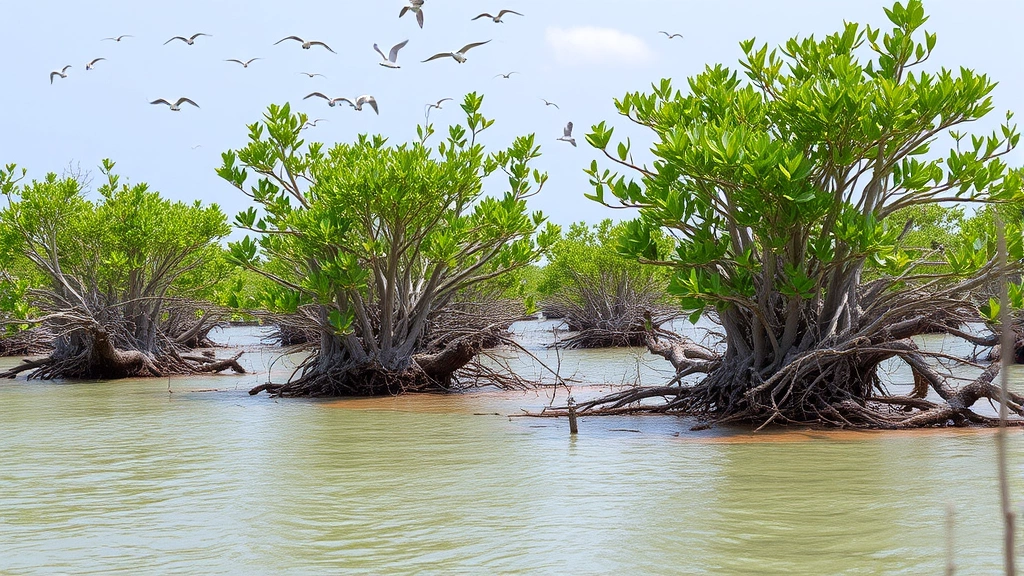
- Mangrove forests provide $4-5 trillion in ecosystem service value through carbon storage, fishery support, and coastal protection
These figures represent conservative estimates using established valuation methodologies. When ecosystem services are properly incorporated into cost-benefit analyses, conservation investments consistently demonstrate superior financial returns compared to extractive development alternatives. A study examining tropical forest protection found that maintaining forests intact generated 4-6 times greater economic value than converting them to agricultural land when all ecosystem services were quantified.
Pollination Services and Agricultural Economics
Pollination represents one of the most economically quantifiable ecosystem services, directly supporting global food security and agricultural profitability. Approximately 75% of global food crops depend partially or entirely on animal pollination, with wild bees, butterflies, birds, and other organisms providing irreplaceable services. Yet pollinator populations face unprecedented decline from habitat loss, pesticide exposure, climate disruption, and disease pressure.
The economic implications extend far beyond simple crop yield calculations. When pollinator populations decline, farmers face increased costs through manual pollination, supplementary hive rentals, and reduced crop quality. Consumer prices rise as agricultural productivity falls. Food security becomes increasingly precarious in regions dependent on pollinator-reliant crops. The United Nations Environment Programme estimates that pollinator decline could reduce global agricultural output by 5-8%, generating economic losses exceeding $500 billion annually.
Protecting wild pollinator populations through habitat restoration and agricultural practice modification generates exceptional returns on investment. Studies examining payments for ecosystem services programs demonstrate that investing $1 in pollinator habitat restoration generates $4-6 in agricultural value through maintained crop productivity. Farmers adopting pollinator-friendly practices report yield increases of 10-15% alongside reduced input costs, creating win-win scenarios where ecological health and economic productivity align.
Carbon Sequestration and Climate Mitigation Value
Forest, wetland, and soil ecosystems function as massive carbon storage systems, sequestering atmospheric carbon that would otherwise drive climate change. The economic value of this service becomes apparent when quantifying the social cost of carbon—the economic damage caused by each ton of CO2 released into the atmosphere. Current estimates place this cost at $50-200 per ton of CO2, with higher estimates incorporating long-term climate tipping point risks.
Natural ecosystems sequester carbon at varying rates depending on ecosystem type and management practices. Tropical rainforests accumulate biomass at rates generating $500-2,000 in annual carbon sequestration value per hectare. Peatlands, despite covering only 3% of global land area, store twice as much carbon as all forests combined, representing an enormous economic asset. Coastal mangrove and seagrass ecosystems sequester carbon at rates 10-40 times faster than terrestrial forests, making them extraordinarily valuable for climate mitigation.
Protecting these carbon-rich ecosystems proves far more cost-effective than technological carbon capture solutions. Preventing tropical deforestation costs approximately $5-10 per ton of carbon dioxide equivalent avoided, while direct air capture technologies cost $100-300 per ton. This economic reality suggests that ecosystem conservation represents the most efficient climate strategy available, yet carbon markets and climate finance continue disproportionately funding technological solutions over nature-based approaches.
Water Filtration and Hydrological Services
Freshwater ecosystems provide essential water purification services that would cost billions to replicate through technological infrastructure. Wetlands, forests, and riparian zones filter agricultural runoff, industrial pollutants, and pathogens from water supplies, naturally producing clean drinking water. The human-environment interaction around water resources demonstrates how ecosystem health directly determines water security and public health outcomes.
Major cities worldwide depend on ecosystem-based water filtration. New York City’s watershed protection strategy, which prioritizes ecosystem restoration over water treatment infrastructure, saves the city approximately $6-8 billion in water treatment facility costs annually. Similar programs across Europe, Asia, and South America generate comparable economic benefits while simultaneously enhancing ecosystem biodiversity and resilience.
Water regulation services extend beyond filtration to include storage, groundwater recharge, and flood mitigation. Forests increase water infiltration rates, enhancing groundwater reserves that buffer against drought conditions. Wetlands store enormous water volumes, moderating seasonal flooding and maintaining baseflows during dry periods. The economic value of these regulating services becomes apparent during extreme weather events, when ecosystem loss intensifies flood damages and drought impacts.
Coastal Protection and Disaster Prevention
Coastal ecosystems including mangroves, salt marshes, seagrass beds, and coral reefs provide critical storm surge protection and wave energy dissipation services. These natural barriers reduce hurricane and typhoon damage to coastal infrastructure, preventing losses valued at $4-5 trillion annually when aggregated globally. Yet coastal development routinely destroys these protective ecosystems, paradoxically increasing disaster vulnerability while claiming economic development benefits.
Research examining coastal protection demonstrates that natural ecosystems often outperform engineered structures in both effectiveness and cost-efficiency. A kilometer of mangrove forest provides equivalent storm protection to seawalls costing $1-3 million to construct and maintain, while mangrove restoration costs only $10,000-50,000 per kilometer. Beyond cost advantages, mangrove protection simultaneously supports fisheries, provides habitat for endangered species, and sequesters carbon at remarkable rates.
The Indian Ocean tsunami of 2004 provided tragic empirical evidence of ecosystem service value. Coastal regions with intact mangrove and coral systems experienced significantly lower casualties and property damage compared to areas where ecosystems had been cleared for aquaculture and resort development. This natural experiment demonstrated that ecosystem destruction creates economic vulnerability despite generating short-term development revenues.
Implementation Challenges and Solutions
Despite compelling economic evidence supporting ecosystem conservation, implementation remains challenging due to several systemic barriers. First, ecosystem service benefits often accrue to different populations than those bearing conservation costs. Local communities sacrificing immediate extraction opportunities rarely receive compensation for ecosystem services benefiting distant populations. This distributional inequity creates political resistance to conservation initiatives unless properly designed benefit-sharing mechanisms exist.
Second, discount rates embedded in economic analyses systematically undervalue future ecosystem benefits. Standard financial discounting reduces future values exponentially, making long-term ecosystem services appear economically insignificant compared to immediate extraction profits. Implementing lower discount rates that better reflect ecological time scales and intergenerational justice principles would substantially increase conservation-favoring economic calculations.
Third, property rights and governance challenges complicate ecosystem service valuation. Many ecosystem services exist as common resources lacking clear ownership, making it difficult to establish payment mechanisms. International ecosystems providing global benefits (climate regulation, biodiversity preservation) face particular governance challenges when located within developing nations lacking capacity to enforce protection.
Emerging solutions include:
- Payments for Ecosystem Services (PES) programs that directly compensate communities for conservation activities, successfully implemented in Costa Rica, Mexico, and East African nations
- Natural capital accounting frameworks integrating ecosystem assets into national accounting systems, adopted by several countries including India and the Philippines
- Green bonds and conservation finance mechanisms mobilizing capital for ecosystem restoration, with global green bond issuance exceeding $500 billion annually
- Certification and market-based systems like carbon credits and biodiversity offsets creating economic incentives for conservation within market frameworks
- Policy integration approaches incorporating ecosystem service values into infrastructure planning, land use decisions, and agricultural subsidies
The latest economic research increasingly recognizes that ecosystem conservation and economic development need not conflict when properly designed. Countries implementing integrated natural capital management report simultaneously improving ecosystem health, economic productivity, and social welfare outcomes. Costa Rica’s example demonstrates that transitioning from extractive to service-based ecosystem economics can increase per capita income while restoring forest cover and biodiversity.
Understanding different environment types and their specific ecosystem service contributions enables tailored conservation and economic strategies. Tropical rainforests, temperate forests, grasslands, wetlands, coral reefs, and other ecosystem types each provide distinct service portfolios requiring specialized management approaches. This ecological diversity means that comprehensive ecosystem service protection requires geographically diverse strategies rather than one-size-fits-all solutions.
Efforts to reduce carbon footprints and minimize environmental impact increasingly incorporate ecosystem service considerations. Sustainable practices that maintain ecosystem health generate triple benefits: reduced environmental damage, enhanced ecosystem services, and improved economic resilience. This integration of ecological and economic thinking represents fundamental progress in understanding human-natural system relationships.
FAQ
How are ecosystem services economically valued?
Ecosystem service valuation employs multiple methodologies including market pricing (for directly traded services), replacement cost analysis (estimating technological alternatives), hedonic pricing (inferring values from related market transactions), contingent valuation (surveying willingness-to-pay), and benefit transfer approaches (adapting values from similar contexts). Most comprehensive assessments combine multiple methods to triangulate robust value estimates.
Why do traditional GDP calculations exclude ecosystem services?
Historical economic frameworks treated nature as infinite and costless, focusing exclusively on human-produced capital and labor. Ecosystem services existed outside market mechanisms, making them invisible to conventional accounting. This intellectual framework reflected both technological limitations in measurement and ideological assumptions about nature’s inexhaustibility, now recognized as fundamentally flawed.
What is the global economic value of all ecosystem services?
Comprehensive meta-analyses estimate total annual ecosystem service value at approximately $125-145 trillion globally, roughly 1.5-2 times global GDP. This calculation encompasses provisioning, regulating, supporting, and cultural services across all terrestrial and aquatic ecosystems. The figure’s magnitude illustrates how utterly dependent human economies remain on ecological infrastructure.
Which ecosystems provide the highest economic value per unit area?
Tropical coral reefs, mangrove forests, and peatlands generate the highest ecosystem service value per hectare, often exceeding $10,000-50,000 annually. Temperate forests, wetlands, and grasslands provide substantial value at lower rates. Desert and tundra ecosystems provide lower per-hectare values but remain economically significant due to their climate regulation and carbon storage functions.
How can ecosystem service values influence policy decisions?
Incorporating ecosystem service valuations into cost-benefit analyses fundamentally changes policy recommendations. Infrastructure projects destroying valuable ecosystems often appear economically irrational when ecosystem losses are properly quantified. This approach has successfully blocked destructive developments and redirected investments toward conservation-compatible alternatives in numerous jurisdictions.
What role do ecosystem services play in climate change mitigation?
Ecosystem services contribute to climate mitigation through carbon sequestration, reduced emissions from avoided degradation, and enhanced climate resilience. Nature-based climate solutions cost substantially less than technological alternatives while simultaneously providing co-benefits including biodiversity conservation, water security enhancement, and livelihood support.


