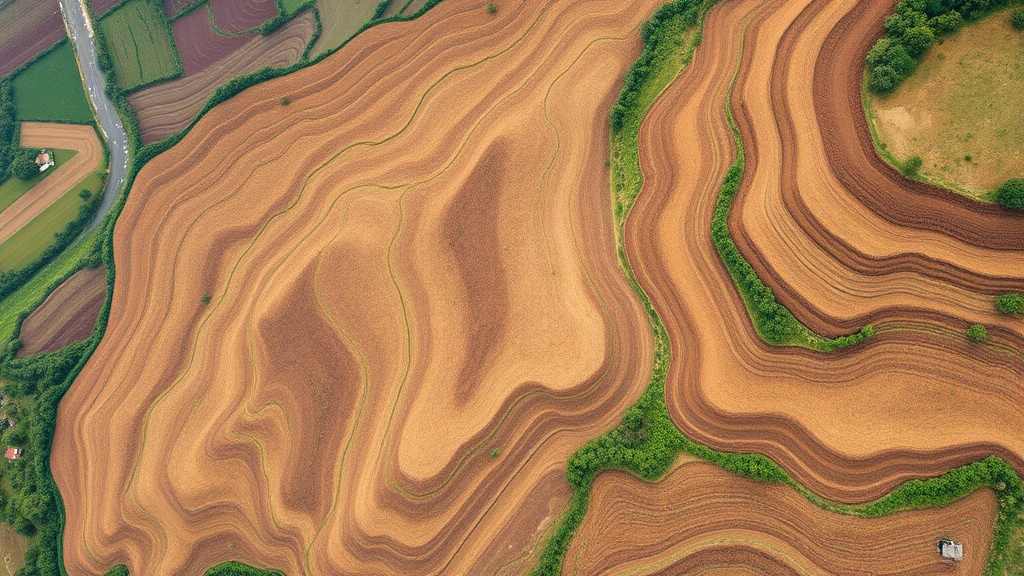
Tillage, the mechanical manipulation of soil through plowing, harrowing, and other cultivation practices, stands as one of agriculture’s most consequential yet problematic interventions in terrestrial ecosystems. For millennia, farmers have turned soil to control weeds, incorporate organic matter, and prepare seedbeds for crops. However, contemporary scientific research reveals that this seemingly benign practice triggers cascading environmental degradation across soil health, water quality, biodiversity, and atmospheric composition. Understanding how tillage damages ecosystems requires examining its mechanisms at multiple scales—from individual soil aggregates to global carbon cycles—and recognizing its role within broader patterns of human environment interaction.
The environmental consequences of intensive tillage have intensified dramatically since the mechanization of agriculture in the twentieth century. Industrial-scale tillage operations now affect over 1.5 billion hectares globally, fundamentally altering soil structure, microbial communities, and hydrological processes. This article synthesizes peer-reviewed research to explain the multifaceted negative effects of tillage, demonstrating why regenerative and conservation agriculture practices increasingly attract scientific and policy attention worldwide.
Soil Structure Degradation and Compaction
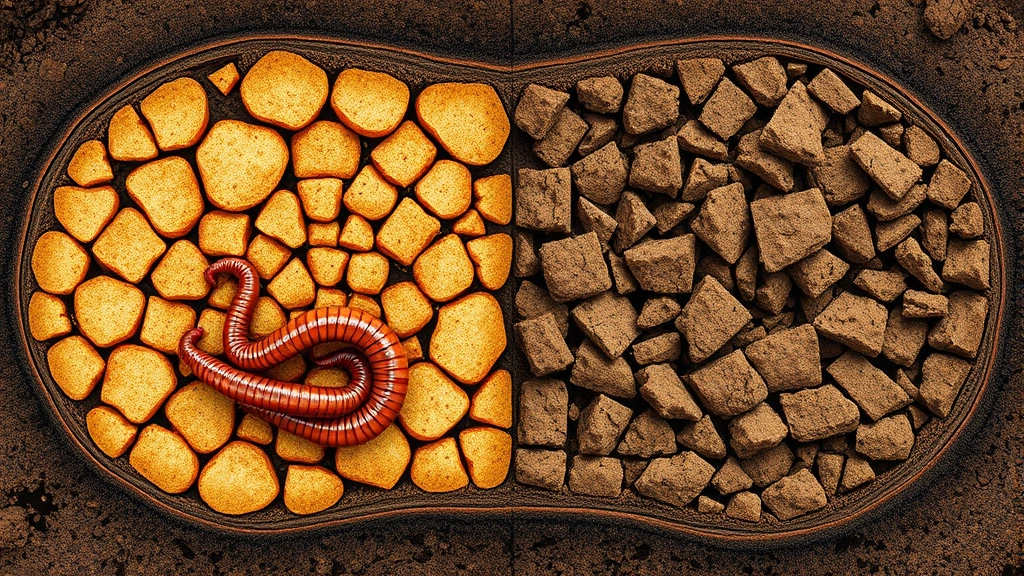
Tillage fundamentally dismantles the physical architecture that makes soil a living ecosystem. Healthy soil contains aggregates—clusters of mineral particles, organic matter, and microbial communities bound together by fungal networks and organic compounds. These aggregates create pore spaces essential for water infiltration, root penetration, and gas exchange. Mechanical tillage shatters these structures, exposing previously protected organic matter to oxidation and disrupting the elaborate networks that hold soil together.
Research published in Soil & Tillage Research demonstrates that repeated tillage reduces soil aggregate stability by 30-60% within the first five years of implementation. This destabilization triggers multiple cascading effects. Compaction increases as soil particles resettle into denser configurations, reducing pore volume by up to 25%. Bulk density—the mass of soil per unit volume—increases substantially, creating physical barriers to root development and water movement. In environmental science terms, this represents a fundamental shift from structured soil with multiple habitat niches to homogenized, degraded substrate.
The consequences extend beyond immediate structural changes. Compacted soils exhibit reduced infiltration rates, meaning water runs off surfaces rather than percolating downward. This increases both flood risk and reduces groundwater recharge. Additionally, compacted soils warm more slowly in spring, delaying planting windows and reducing growing season productivity. The energetic cost of machinery required to work progressively harder in compacted soils creates a vicious cycle—farmers must apply more force to achieve cultivation, further degrading structure and requiring even more intensive interventions.
Carbon Sequestration Loss and Climate Impact
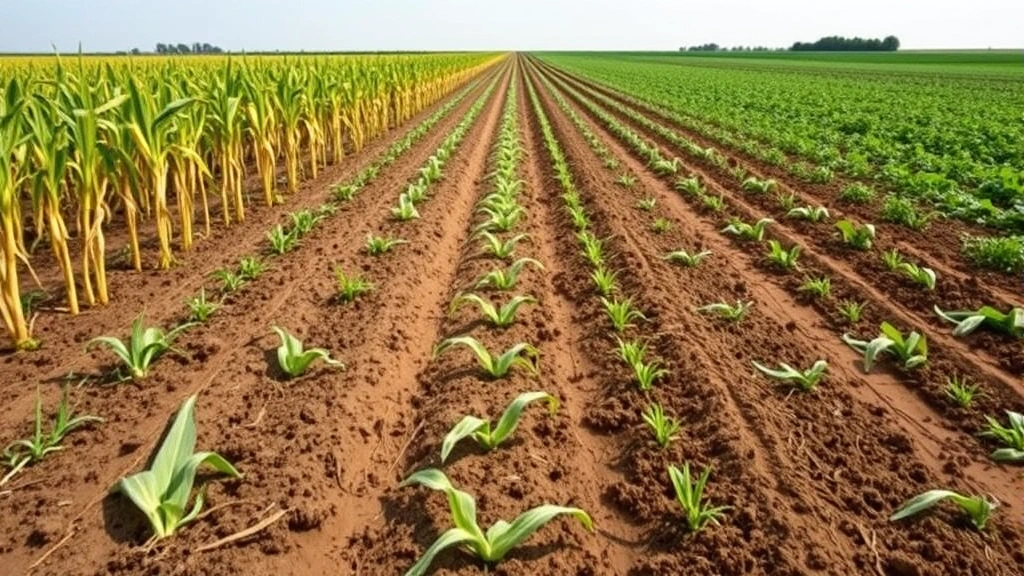
Perhaps tillage’s most significant environmental consequence involves carbon cycle disruption. Soils represent Earth’s largest terrestrial carbon reservoir, storing approximately 2,344 gigatons of organic carbon—more than the atmosphere and all vegetation combined. This carbon exists in multiple forms: living biomass (roots, microorganisms), stable organic matter (humus), and labile compounds undergoing decomposition. Tillage disrupts this carefully balanced system through multiple mechanisms.
When plows turn soil, they expose organic matter that was previously protected in deeper layers, anaerobic microsites, and soil aggregates. This exposure accelerates microbial decomposition, releasing stored carbon as carbon dioxide and nitrous oxide—both potent greenhouse gases. Studies indicate that how humans affect the environment through agricultural practices includes releasing 0.5-1.0 tons of additional carbon per hectare annually through tillage-induced decomposition.
The International Panel on Climate Change estimates that converting native ecosystems to tilled agriculture causes soil carbon losses of 50-75% within 20-30 years. This represents an enormous transfer of atmospheric carbon back into the air, contributing significantly to global warming. Research from World Bank agricultural programs indicates that reducing tillage intensity could sequester 0.5-1.5 additional tons of carbon per hectare annually, making soil conservation a critical climate change mitigation strategy.
Furthermore, tillage disrupts the fungal networks—particularly arbuscular mycorrhizal fungi—that enhance carbon storage in stable soil organic matter. These fungi transfer photosynthetically fixed carbon into mineral-bound forms resistant to decomposition. Tillage physically breaks these networks, reducing their effectiveness by 40-70% and shifting carbon toward more labile pools vulnerable to rapid mineralization.
Water Erosion and Sediment Pollution
Tillage initiates a cascade of hydrological consequences that extend far beyond individual farm boundaries. By destroying soil structure and vegetation cover, tillage increases water erosion rates dramatically. The United States alone loses approximately 24 billion tons of topsoil annually, with intensive tillage responsible for roughly 75% of this loss. Globally, agricultural erosion removes an estimated 75 billion tons of soil yearly—equivalent to losing the entire annual agricultural productivity of Canada.
Water erosion occurs through multiple mechanisms enhanced by tillage. First, unprotected soil surfaces become highly vulnerable to raindrop impact, which dislodges soil particles through kinetic energy transfer. Second, reduced soil structure means water cannot infiltrate effectively, instead running across the surface and carrying particles downslope. Third, the removal of vegetation cover—a consequence of intensive tillage monocultures—eliminates natural barriers to water flow.
The environmental consequences of erosion extend across multiple domains. Eroded sediment carries attached nutrients, pesticides, and other contaminants into waterways, degrading aquatic ecosystems. Suspended sediment reduces light penetration, inhibiting aquatic photosynthesis. Sediment deposition in rivers and reservoirs reduces storage capacity and navigation depth, requiring expensive dredging operations. The total economic cost of agricultural erosion in the United States exceeds $44 billion annually when accounting for water treatment, ecosystem damage, and productivity loss.
Beyond sediment transport, tillage increases surface runoff volume and velocity, exacerbating downstream flooding. Research in watershed hydrology demonstrates that converting from conventional tillage to no-till systems reduces peak discharge by 25-40% during intense rainfall events, substantially reducing flood risk in downstream communities.
Biodiversity Decline in Agricultural Soils
Soil biodiversity represents one of Earth’s most abundant yet least understood biological systems. A single gram of healthy soil contains billions of microorganisms—bacteria, fungi, protozoans, and nematodes—plus macrofauna including earthworms, arthropods, and other invertebrates. These organisms perform essential ecosystem functions: decomposing organic matter, cycling nutrients, suppressing plant pathogens, and structuring soil architecture. Tillage devastates these communities through multiple mechanisms.
Mechanical disturbance directly kills soil organisms through physical damage and disruption of habitat structures. Earthworms, which improve soil structure and water infiltration, suffer mortality rates exceeding 40% in single tillage events. Fungal networks, which may require years to develop, are severed and exposed to oxidative damage. Microbial communities experience population crashes as conditions shift from stable anaerobic microsites to exposed, rapidly fluctuating environments.
Additionally, tillage fundamentally alters the food web structure supporting soil biodiversity. By burying surface litter and breaking fungal networks, tillage reduces the availability of stable organic matter and the mycorrhizal associations that support plant-fungal mutualism. This shifts communities away from fungal-dominated systems (characteristic of undisturbed soils) toward bacterial-dominated systems with reduced functional diversity.
The biodiversity consequences extend to aboveground systems through altered plant-soil interactions. Types of environment affected include agroecosystems where reduced soil biodiversity means plants receive diminished disease suppression, nutrient acquisition assistance, and stress tolerance support from their belowground partners. Research indicates that no-till systems support 30-50% higher soil biodiversity than conventional tillage systems, with cascading benefits for ecosystem resilience and productivity.
Nutrient Cycling Disruption
Tillage fundamentally disrupts the elegant biogeochemical cycles through which plants access essential nutrients. In natural ecosystems, nutrient cycling operates through tightly regulated pathways: organic matter decomposition releases nutrients in plant-available forms, mycorrhizal associations facilitate nutrient acquisition, and microbial communities regulate transformation rates. Tillage disrupts each of these pathways.
First, by accelerating organic matter decomposition, tillage causes rapid nutrient release in forms that exceed plant demand, leading to leaching losses and environmental pollution. Nitrogen, released through microbial mineralization, accumulates as nitrate in soil solution, readily leaching into groundwater. This explains why agricultural groundwater contamination frequently exceeds 50 milligrams per liter of nitrate—ten times the drinking water safety standard—in intensively tilled regions.
Second, tillage severs mycorrhizal networks that enhance plant nutrient acquisition efficiency. Plants associated with intact fungal networks require 30-50% less supplemental fertilizer to achieve equivalent productivity. By destroying these networks, tillage forces farmers into dependency on synthetic fertilizers, increasing production costs and environmental pollution while reducing soil biological activity.
Third, tillage-induced oxidation of soil organic matter depletes the organic matter pool that buffers nutrient availability. Soils with higher organic matter exhibit greater nutrient-holding capacity and more stable nutrient availability throughout growing seasons. Tilled soils, depleted in organic matter, exhibit nutrient feast-or-famine cycles—excess availability immediately after mineralization events, followed by deficiency periods—reducing nutrient use efficiency.
Chemical Leaching and Groundwater Contamination
Beyond nutrient leaching, tillage facilitates contamination of groundwater with agricultural chemicals. The accelerated water movement through compacted but cracked soil profiles, combined with high solute concentrations from rapid organic matter mineralization, creates conditions promoting chemical transport into aquifers. Research from the United Nations Environment Programme indicates that agricultural contamination threatens groundwater quality across 50% of global aquifers.
Pesticide residues, applied to control weeds and pests in tilled monocultures, leach through soil profiles at rates 5-10 times higher in conventional tillage systems compared to no-till systems. This occurs because tillage reduces soil biological activity that would otherwise degrade pesticides, and increases preferential flow pathways through soil macropores. Consequently, groundwater in agricultural regions frequently contains detectable pesticide residues, posing risks to human health and aquatic ecosystems.
Heavy metals, including cadmium and lead from long-term fertilizer and pesticide applications, mobilize more readily in acidified soils resulting from intensive tillage and synthetic fertilizer use. The combination of these factors creates conditions where toxic metals migrate toward groundwater at rates exceeding natural background levels by factors of 10-100.
Economic and Policy Implications
Understanding tillage’s environmental costs requires integrating ecological science with economic analysis. When economists calculate the true cost of tillage-based agriculture—including environmental externalities—the apparent economic advantages disappear. A comprehensive study published in the Journal of Ecological Economics estimated that U.S. agriculture’s environmental costs total $13-20 billion annually, with soil degradation from tillage responsible for 30-40% of this burden.
These costs manifest through multiple pathways: water treatment expenses to address sediment and chemical contamination, ecosystem damage to fisheries and aquatic recreation, productivity losses from declining soil quality, and climate impacts from soil carbon losses. When these externalities are internalized through carbon pricing or payment for ecosystem services, conservation agriculture practices become economically advantageous even without subsidies.
Policy responses increasingly recognize these realities. The European Union’s Common Agricultural Policy now incentivizes conservation agriculture through direct payments for maintaining soil cover and reducing tillage intensity. The Food and Agriculture Organization promotes conservation agriculture as a pathway toward sustainable intensification in developing regions. However, implementation remains limited by farmer knowledge gaps, short-term economic pressures, and infrastructure designed around conventional practices.
The transition from tillage-based to conservation agriculture requires systemic changes: crop insurance reforms to manage transition risks, technical assistance programs to develop farmer expertise, equipment investments in no-till and reduced-till machinery, and policy frameworks recognizing soil as natural capital deserving investment. Research from agricultural economics institutions demonstrates that farms successfully transitioning to conservation agriculture achieve equivalent or superior long-term profitability while generating substantial environmental benefits.
Understanding environment and society interactions reveals that tillage represents a choice rather than an inevitable requirement. Alternative approaches—including no-till, reduced-till, cover cropping, and integrated crop-livestock systems—achieve agricultural productivity while regenerating soils and supporting ecosystem functions. The scientific evidence overwhelmingly demonstrates that transitioning away from intensive tillage represents one of the most cost-effective climate change mitigation and ecosystem restoration strategies available.
FAQ
What are the primary negative effects of tillage on soil structure?
Tillage destroys soil aggregates, reducing aggregate stability by 30-60% within five years. This increases soil compaction, reduces pore volume by up to 25%, and creates physical barriers to root development and water infiltration. The resulting dense soil conditions reduce water permeability and warm more slowly in spring, delaying planting and reducing growing season productivity.
How does tillage contribute to climate change?
Tillage accelerates microbial decomposition of soil organic matter, releasing carbon dioxide and nitrous oxide—potent greenhouse gases. Studies indicate tillage releases 0.5-1.0 additional tons of carbon per hectare annually. Converting native ecosystems to tilled agriculture causes soil carbon losses of 50-75% within 20-30 years, representing enormous atmospheric carbon contributions.
What is the relationship between tillage and water erosion?
Tillage destroys soil structure and removes vegetation cover, dramatically increasing water erosion vulnerability. The United States loses 24 billion tons of topsoil annually, with intensive tillage responsible for 75% of this loss. Eroded sediment carries nutrients and contaminants into waterways, degrading aquatic ecosystems while reducing water quality.
How does tillage affect soil biodiversity?
Tillage directly kills soil organisms through physical damage and disrupts habitat structures. It severs fungal networks requiring years to develop and shifts communities from fungal-dominated (undisturbed) systems to bacterial-dominated systems with reduced functional diversity. No-till systems support 30-50% higher soil biodiversity than conventional tillage.
Why does tillage increase groundwater contamination?
Tillage accelerates organic matter decomposition, releasing nutrients and contaminants in highly soluble forms. Simultaneously, it reduces soil biological activity that would otherwise degrade pesticides. Pesticide residues leach through soil profiles 5-10 times faster in conventional tillage systems, contaminating groundwater at rates far exceeding natural background levels.
What are viable alternatives to conventional tillage?
Conservation agriculture practices including no-till, reduced-till, cover cropping, and integrated crop-livestock systems achieve agricultural productivity while regenerating soils. Research demonstrates that farms successfully transitioning to conservation agriculture achieve equivalent or superior long-term profitability while generating substantial environmental and climate benefits.


