
Human Impact on Ecosystems: A Scientific Review
The relationship between human activity and natural ecosystems represents one of the most critical challenges of our time. From deforestation to ocean acidification, human societies have fundamentally altered planetary systems at scales previously unimaginable. This scientific review examines the multifaceted dimensions of human environment interaction, exploring documented evidence of ecological disruption, economic consequences, and pathways toward sustainable coexistence.
Understanding the full scope of human impact requires examining both direct interventions—such as habitat destruction and resource extraction—and indirect consequences, including climate feedback loops and trophic cascades. The scientific community has documented unprecedented rates of species extinction, ecosystem degradation, and biogeochemical cycle disruption. These changes occur within complex socioeconomic contexts where economic development, population growth, and consumption patterns drive environmental pressures.
This analysis synthesizes peer-reviewed research, economic data, and ecological assessments to provide a comprehensive understanding of how human societies interact with and impact natural systems. By examining specific examples and mechanisms, we can better comprehend both the severity of current conditions and the potential for mitigation and restoration.
Major Mechanisms of Ecosystem Disruption
Human impact on ecosystems operates through multiple interconnected mechanisms that cascade through ecological networks. The primary pathways include habitat destruction, resource overexploitation, pollution introduction, and climate forcing. Each mechanism disrupts specific ecosystem functions while generating secondary effects across trophic levels and biogeochemical processes.
Scientific research from the United Nations Environment Programme documents that approximately 68% of global wildlife populations have declined since 1970, representing a fundamental restructuring of ecological communities. This decline correlates directly with measurable changes in land use, particularly the conversion of natural habitats to agricultural and urban systems. The mechanisms driving these changes are quantifiable: habitat loss accounts for approximately 80% of species extinction risk across terrestrial and freshwater ecosystems, while overexploitation drives approximately 15% of extinction risk in marine systems.
Understanding types of environment and their distinct vulnerabilities helps explain differential impacts. Tropical rainforests, wetlands, and coral reef systems exhibit disproportionate sensitivity to human disturbance, containing approximately 80% of terrestrial species despite occupying less than 25% of land area. These ecosystems also provide critical ecosystem services—carbon sequestration, water purification, nutrient cycling—that sustain human economies valued at trillions of dollars annually.
The interconnection between environment and society creates feedback loops where ecosystem degradation undermines human wellbeing. Agricultural systems dependent on pollinator services, coastal communities reliant on fisheries, and populations dependent on freshwater aquifers all experience direct economic consequences when underlying ecosystems degrade. This linkage transforms environmental science into an economic and social imperative.
Land Use Change and Habitat Loss
Land use transformation represents the single largest driver of ecosystem disruption globally. Agricultural expansion, particularly for livestock production and commodity crops, has converted approximately 40% of terrestrial ice-free land to human-dominated systems. This transformation fundamentally alters ecological structure, reducing habitat connectivity, fragmenting wildlife populations, and eliminating critical ecosystem functions.
The economic drivers of land conversion are well-documented. Global agricultural output has increased approximately 300% since 1960 while land area dedicated to agriculture has expanded only 10%, indicating intensification through technological inputs rather than pure expansion. However, expansion continues in biodiverse regions, particularly tropical areas where land acquisition costs remain low and regulatory enforcement is limited. Cattle ranching alone drives approximately 80% of Amazon deforestation, creating a direct economic-ecological linkage.
Habitat fragmentation creates measurable ecological consequences beyond simple area loss. Reduced habitat patch size decreases viable population sizes for large-bodied species, increases edge effects that expose interior habitat to external stressors, and disrupts migration corridors essential for seasonal species. Research demonstrates that habitat fragmentation reduces species persistence even when total habitat area remains constant, indicating that spatial configuration critically determines ecosystem resilience.
Understanding the definition of environment science reveals how habitat loss operates across multiple scales. Local species extinctions (extirpation) occur before global extinctions, creating ecological debt where species persist only through continued reproduction from shrinking populations. Approximately 2,300 species are currently classified as critically endangered, representing populations so reduced that extinction appears inevitable without active intervention.

Climate Change and Biogeochemical Cycles
Anthropogenic climate change represents a pervasive ecosystem stressor operating simultaneously across all biomes and ecosystems. The mechanism is straightforward: fossil fuel combustion, land use change, and industrial processes release greenhouse gases that alter atmospheric composition, changing planetary energy balance and disrupting climate patterns that organisms evolved to exploit.
The biogeochemical consequences are substantial and measurable. Atmospheric CO₂ concentrations have increased 50% since industrialization, from 280 ppm to over 420 ppm currently. This change acidifies oceans—marine pH has decreased 0.1 units, representing a 30% increase in acidity—disrupting calcification processes in pteropods, corals, and mollusks. The World Bank estimates that ocean acidification alone threatens economic productivity of approximately $1 trillion in marine ecosystem services.
Temperature increases alter phenological timing—the seasonal occurrence of biological events—creating mismatches between predator availability and prey abundance, flowering timing and pollinator emergence, and breeding cycles and food availability. Spring advancement of 2.3 days per decade has been documented across Northern Hemisphere ecosystems, creating temporal disconnects between species that evolved synchronized life histories.
Nitrogen and phosphorus cycles face distinct disruptions. Human activities now fix more nitrogen than all natural processes combined, primarily through fertilizer production and fossil fuel combustion. This nitrogen enrichment drives eutrophication in aquatic systems, creating hypoxic dead zones where oxygen depletion eliminates most aerobic life. The Gulf of Mexico dead zone, driven by Mississippi River nitrogen loading from agricultural runoff, covers approximately 6,000-7,000 square kilometers annually.
Carbon cycle disruption extends beyond climate forcing. Soil carbon stocks have declined approximately 50-60% in converted agricultural lands, reducing soil fertility, water retention, and ecosystem productivity. Peatland drainage for agriculture releases ancient carbon stores, creating emissions equivalent to approximately 5% of global anthropogenic CO₂. These changes represent millennia-scale ecosystem degradation occurring over decades.
Pollution and Chemical Contamination
Chemical pollution introduces novel compounds into ecosystems at rates and concentrations exceeding natural detoxification capacity. Synthetic pesticides, persistent organic pollutants, heavy metals, and microplastics accumulate in organisms and bioaccumulate through food webs, reaching concentrations orders of magnitude higher than environmental levels.
Neonicotinoid insecticides provide a clear example of how human-introduced chemicals disrupt ecosystem function. These compounds persist in soil for years, translocate into flowering plants, and poison pollinating insects at sublethal concentrations that impair navigation and reproduction. Global bee population declines correlate directly with neonicotinoid application, with economic consequences estimated at $15 billion annually in lost pollination services.
Microplastic pollution has become ubiquitous, detected in deep ocean sediments, Arctic ice, and human tissues. Plastic ingestion causes mechanical damage to digestive systems, reduces feeding capacity, and introduces chemical additives into organisms. Marine species ingest approximately 8 million tons of plastic annually, with consequences for reproduction, growth, and survival only beginning to be quantified.
Heavy metal contamination from mining, smelting, and industrial processes accumulates in sediments and organisms. Mercury methylation in anoxic environments creates organic mercury that bioaccumulates to toxic concentrations in fish and marine mammals. Predatory fish species in contaminated systems exhibit neurological damage, reproductive failure, and population declines directly attributable to mercury bioaccumulation.
Economic Valuation of Ecosystem Services
Translating ecosystem disruption into economic terms reveals the magnitude of human impact. Ecosystem services—the benefits humans derive from natural systems—have been valued at approximately $125-145 trillion annually, with uncertainty reflecting methodological challenges in valuing non-market services.
Provisioning services (food, water, materials) generate direct economic value through markets. Global fisheries worth approximately $150 billion annually face collapse in multiple regions due to overexploitation, with approximately 35% of fish stocks currently harvested unsustainably. Freshwater aquifers supporting approximately 2 billion people face depletion in multiple regions, with groundwater withdrawal exceeding natural recharge in the Ogallala Aquifer, Indo-Gangetic Plain, and Middle East.
Regulating services—climate regulation, water purification, pollination, pest control—generate value through ecosystem function rather than direct harvest. Forest carbon sequestration prevents climate change at an implicit value of approximately $40-100 per ton CO₂ equivalent. Wetland water purification provides treatment equivalent to expensive engineered infrastructure, with constructed wetlands costing 50-90% less than conventional wastewater treatment while providing habitat co-benefits.
Cultural services—aesthetic, spiritual, recreational value—remain difficult to quantify but represent substantial economic importance. Ecotourism generates approximately $29 billion annually, supporting livelihoods in biodiverse regions while creating economic incentives for conservation. These values remain underrepresented in policy decisions that emphasize short-term extractive value over long-term ecosystem service provision.
The concept of natural capital—treating ecosystem services as capital stocks that generate flows of benefits—provides an economic framework for understanding human impact. Degradation of natural capital represents depletion of productive assets equivalent to mining or infrastructure deterioration. Accounting for natural capital depreciation reveals that many countries report positive GDP growth while experiencing negative genuine progress, where ecosystem service loss exceeds economic gains.
Biodiversity Loss and Trophic Disruption
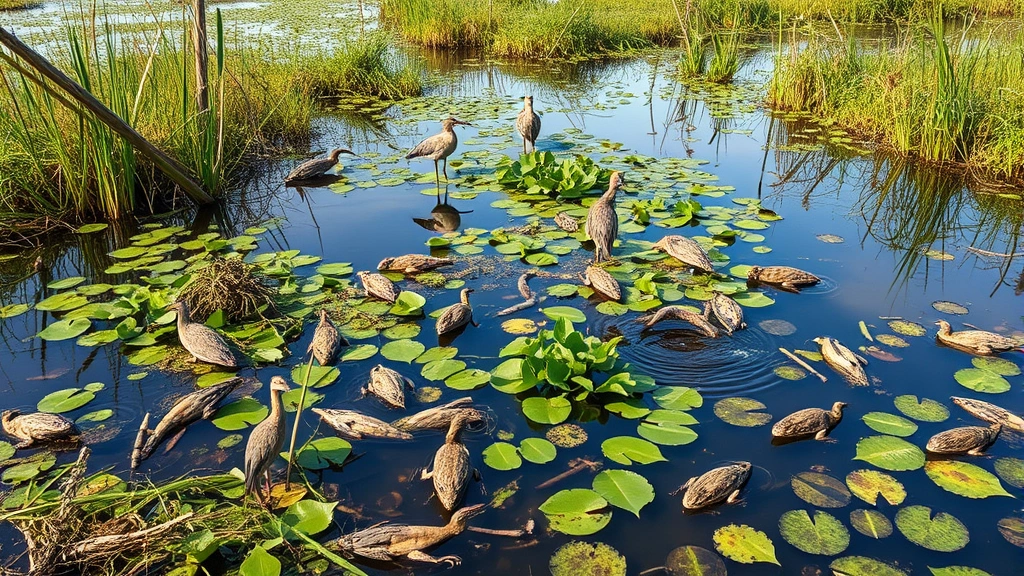
Species extinction occurs at rates approximately 100-1,000 times above background extinction rates, representing the sixth mass extinction in Earth’s history. Unlike previous extinction events caused by asteroids or volcanism, current extinctions result directly from human activity, making them potentially preventable through policy intervention.
Extinction risk correlates with specific traits: large body size, slow reproduction, specialized habitat requirements, and high trophic position all increase vulnerability. Megafauna extinctions have cascading consequences through food webs—loss of large herbivores alters vegetation structure, loss of apex predators releases mesopredator populations, and loss of keystone species eliminates disproportionate ecological influence. Trophic downgrading—the systematic removal of large predators—fundamentally restructures ecosystem organization and function.
Functional diversity loss may exceed species diversity loss in ecological consequences. Different species occupying similar ecological roles provide redundancy that buffers ecosystems against disturbance. As species decline, functional redundancy decreases, reducing ecosystem resilience to environmental change. Research demonstrates that ecosystems losing 50% of species may lose 80% of functional diversity if extinct species occupied unique ecological niches.
Genetic diversity loss within species populations creates additional extinction risk. Small populations experience inbreeding depression, reduced genetic variation limiting adaptive capacity, and increased susceptibility to disease. Conservation breeding programs for critically endangered species document these genetic constraints, with some populations so reduced that genetic bottlenecks prevent recovery even with intensive management.
Mitigation Strategies and Restoration
Addressing human impact on ecosystems requires interventions across multiple scales: individual behavior change, policy reform, technological innovation, and systemic economic restructuring. Effective strategies integrate ecological and economic perspectives, recognizing that sustainable systems must provide both ecosystem services and human wellbeing.
Protected area networks represent a foundational mitigation approach, establishing spatial refugia where human extraction is limited. Currently, approximately 17% of terrestrial area and 8% of marine area are formally protected, with conservation targets recommending 30% protection by 2030. Evidence demonstrates that well-managed protected areas maintain biodiversity, provide ecosystem services, and support human communities through regulated use and ecotourism.
Restoration ecology applies scientific knowledge to rebuild degraded ecosystems, restoring structure, function, and species composition. Forest restoration in tropical regions can recover carbon sequestration within decades, wetland restoration restores water purification and habitat, and grassland restoration rebuilds soil carbon and supports wildlife. Restoration costs typically range from $1,000-10,000 per hectare, substantially less than the value of restored ecosystem services.
Agricultural intensification on existing farmland reduces pressure for habitat conversion, allowing ecosystem recovery on marginal lands. Precision agriculture using data-driven inputs reduces fertilizer and pesticide application while maintaining yields. Agroforestry systems integrate trees with crops or livestock, providing timber and non-timber forest products while maintaining agricultural productivity. These approaches demonstrate that human production systems can coexist with ecosystem function when designed with ecological constraints.
Renewable energy transition addresses climate forcing while reducing extractive pressure on ecosystems. Solar and wind technologies generate electricity without habitat destruction, water pollution, or greenhouse gas emissions. Cost reductions—solar photovoltaic costs declined 90% since 2010—have made renewable energy economically competitive with fossil fuels in most markets, enabling rapid transition if policy supports deployment.
Circular economy approaches reduce resource extraction and pollution by designing products for reuse, repair, and recycling. Eliminating single-use plastics, recovering materials from waste streams, and extending product lifespans all reduce extraction pressure and pollution generation. These approaches require policy support through extended producer responsibility, waste management infrastructure, and consumer education.
Learning how to reduce carbon footprint at individual and organizational scales contributes to climate mitigation while building political support for systemic change. Carbon reduction through efficiency improvements, renewable energy adoption, and consumption changes demonstrates feasibility while generating co-benefits including improved air quality, reduced energy costs, and enhanced public health.
Economic policy reform represents perhaps the most critical intervention, requiring that market prices reflect full environmental costs. Carbon pricing, water pricing, and pollution taxes internalize externalities currently borne by ecosystems and future generations. Subsidy reform—eliminating support for extractive industries while supporting conservation—redirects economic incentives toward sustainability. These policy changes require political will but provide economic efficiency while addressing environmental concerns.
FAQ
What is the most significant example of human environment interaction?
Deforestation represents perhaps the most visible and significant example of human environment interaction, with approximately 10 million hectares of forest lost annually. This single activity drives habitat loss, climate change contribution, indigenous displacement, and economic disruption simultaneously, illustrating how human systems generate cascading ecological consequences.
How do human activities specifically impact marine ecosystems?
Marine ecosystems experience multiple human impacts: overfishing reduces fish populations and alters food web structure; pollution introduces chemicals and plastics; ocean acidification disrupts calcification; coastal development destroys habitat; and shipping creates noise pollution affecting marine mammal communication. These stressors combine to reduce marine biodiversity and ecosystem function.
What economic sectors drive the greatest ecosystem disruption?
Agriculture, energy production, and manufacturing represent the largest drivers of ecosystem disruption. Agriculture occupies 40% of land area and drives deforestation, habitat loss, and chemical pollution. Energy production through fossil fuel extraction and combustion drives climate change and habitat destruction. Manufacturing generates pollution and resource extraction across multiple ecosystems.
Can ecosystems recover from human impact?
Many ecosystems demonstrate substantial recovery capacity when disturbance ceases, though recovery timescales vary dramatically. Forests can recover in decades to centuries, wetlands in years to decades, but soil development requires centuries and species recolonization depends on available source populations. Active restoration accelerates recovery but cannot fully restore systems where species extinctions have occurred.
How does climate change interact with other human impacts?
Climate change compounds all other human impacts by increasing environmental variability, exceeding organism tolerance ranges, and reducing ecosystem resilience to additional disturbance. Species already stressed by habitat loss or pollution face additional climate stress, reducing survival and reproduction. This interaction explains why biodiversity loss accelerates as multiple stressors combine.


