
Python Environment Variables: A Developer’s Guide
Environment variables represent one of the most critical yet frequently misunderstood concepts in software development. These dynamic named values exist outside your Python code, functioning as a bridge between your application and its operating system. Understanding how to leverage environment variables effectively transforms how you manage configurations, secrets, and deployment-specific settings across development, testing, and production environments.
In the context of modern sustainable technology and environmental awareness in digital development, managing resources efficiently through proper configuration management becomes increasingly important. Just as human environment interaction requires careful balance, your applications must balance performance with resource consumption through intelligent environment configuration.
Understanding Environment Variables in Python
Environment variables function as key-value pairs stored at the operating system level, accessible by any process running on that system. In Python development, these variables provide a mechanism to configure applications without modifying source code. This separation of configuration from code follows the twelve-factor app methodology, ensuring your application remains portable across different deployment environments.
Think of environment variables as environmental parameters—similar to how types of environment vary by geographical and ecological factors, your application’s behavior varies based on environmental configuration. When developing sustainable software practices, this principle extends to resource allocation and performance optimization across different computational environments.
Python accesses environment variables through the os module, which provides direct interaction with your operating system’s environment. The standard approach involves importing os and accessing the environ dictionary. This dictionary contains all environment variables currently set for the Python process. Variables like PATH, HOME, USER, and PYTHONPATH are typically pre-configured by your operating system, while custom variables you define extend this collection.
The distinction between system-level and application-level environment variables matters significantly. System variables affect all processes on a machine, while application variables target specific deployments. Understanding this hierarchy prevents configuration conflicts and enables sophisticated multi-environment management strategies.
Accessing Environment Variables
The primary method for accessing environment variables in Python involves the os.environ dictionary. This approach provides immediate access to all currently set variables. The syntax remains straightforward: os.environ[‘VARIABLE_NAME’] retrieves the value associated with a specific variable name.
However, direct dictionary access raises an important consideration: attempting to access a non-existent variable raises a KeyError exception. Production applications cannot afford such failures. The os.environ.get() method provides safer access by returning a default value when variables don’t exist. This pattern prevents crashes and enables graceful degradation when optional configuration is missing.
Consider this practical example structure:
- Using os.environ[‘DATABASE_URL’] throws an exception if the variable doesn’t exist
- Using os.environ.get(‘DATABASE_URL’) returns None if undefined
- Using os.environ.get(‘DATABASE_URL’, ‘default_value’) provides explicit defaults
Type conversion represents another critical consideration. Environment variables always return strings, regardless of their intended type. Converting strings to appropriate types—integers for ports, booleans for feature flags, JSON for complex structures—requires explicit handling. The strtobool function from distutils handles boolean conversions, while json.loads manages complex data structures.
Environmental configuration parallels ecological considerations discussed in definition of environment science, where precise measurement and interpretation of environmental parameters determine system health. Similarly, precise type handling in environment variable management determines application reliability.
Setting and Managing Variables
Setting environment variables depends on your operating system and deployment context. On Unix-like systems (Linux, macOS), the export command in bash makes variables available to child processes. Windows systems use the set command for session-level variables or the System Properties dialog for persistent system-wide variables.
Within Python code itself, os.environ[‘VARIABLE_NAME’] = ‘value’ sets variables for the current process and its children. This approach works but carries important limitations: changes only affect the current process instance and don’t persist beyond process termination. Most developers reserve programmatic setting for testing scenarios rather than production configuration.
The most reliable approach involves setting variables before Python execution begins. This ensures predictable behavior and prevents configuration surprises. Container orchestration platforms like Docker and Kubernetes provide standardized mechanisms for injecting environment variables into applications, making them ideal for modern deployment scenarios.
Docker’s approach using the ENV instruction in Dockerfiles or the -e flag in docker run commands represents industry best practice. Kubernetes ConfigMaps and Secrets provide more sophisticated configuration management for containerized applications, supporting dynamic updates and encryption for sensitive data.

” alt=”Docker container with environment variables flowing into Python application, showing configuration management in cloud infrastructure”/>
Security Best Practices
Environment variables present both opportunities and risks for security-conscious developers. The fundamental principle: never commit sensitive credentials to version control. This includes database passwords, API keys, authentication tokens, and encryption keys. Environment variables enable separation of secrets from code, but only when properly managed.
The .gitignore file prevents accidental commits of files containing sensitive data. Creating a .env file locally while excluding it from version control establishes a secure development pattern. This approach mirrors Environment Protection Act 2024 principles, where regulatory frameworks protect environmental resources—in this case, protecting digital environmental security through proper governance.
Several critical security practices deserve emphasis:
- Principle of Least Privilege: Grant applications only the permissions and access they actually require. If an application doesn’t need a particular API key, don’t provide it through environment variables.
- Secret Rotation: Regularly update credentials and rotate keys. Environment variables should support easy updates without code changes.
- Access Logging: Monitor who accesses sensitive environment variables. Some platforms provide audit trails for environment variable access.
- Encryption at Rest: Secrets stored in configuration files should be encrypted. Kubernetes Secrets provide encryption options; dedicated secret management tools offer additional security.
- Separation of Concerns: Use different credentials for different environments. Production credentials should never appear in development environments.
Developers frequently struggle with the tension between convenience and security. Hardcoding credentials is convenient but catastrophic. Environment variables require additional setup but provide essential security benefits. Tools like python-dotenv and python-decouple simplify secure environment management without sacrificing convenience.
Working with .env Files
The .env file pattern has become standard practice in development environments. These files contain key-value pairs matching your environment variable requirements, enabling developers to configure applications locally without modifying system settings. The format remains simple: KEY=value pairs, one per line.
The python-dotenv library automates loading from .env files. Installing via pip install python-dotenv provides the load_dotenv function, which reads .env files and populates os.environ. This approach separates configuration from code while maintaining simplicity.
A typical .env file structure:
- DATABASE_URL=postgresql://user:password@localhost/dbname
- API_KEY=your_secret_api_key_here
- DEBUG=True
- SECRET_KEY=your_django_secret_key
- ALLOWED_HOSTS=localhost,127.0.0.1
Comments using the hash symbol (#) improve readability. Complex values containing special characters should be quoted. The .env file approach works excellently for development but requires alternative strategies for production.
A common pattern involves creating a .env.example file committed to version control, documenting required variables without revealing actual values. This serves as documentation for other developers and deployment engineers, clearly indicating which configuration values the application requires.
The relationship between environment configuration and how do humans affect the environment extends to development practices. Just as environmental awareness guides sustainable practices, configuration awareness guides sustainable development practices. Proper environment management reduces configuration errors and their cascading impacts.
Environment Variables in Production
Production deployment requires fundamentally different approaches than development. While .env files work locally, production environments demand robust, scalable secret management. This is where container orchestration and dedicated secret management systems become essential.
Docker containers accept environment variables through multiple mechanisms. The docker run command’s -e flag sets individual variables, while –env-file loads multiple variables from a file. Dockerfiles can include default values using the ENV instruction, though best practice reserves this for non-sensitive defaults only.
Kubernetes provides ConfigMaps for non-sensitive configuration and Secrets for sensitive data. ConfigMaps store key-value pairs accessible to pods, while Secrets support encryption and access control. This distinction enables fine-grained permission management: some users might access ConfigMaps but not Secrets.
Cloud platforms provide native solutions aligned with their ecosystems. AWS Systems Manager Parameter Store and AWS Secrets Manager enable centralized secret management with encryption, rotation, and audit logging. Similar offerings exist from Microsoft Azure and Google Cloud Platform.
Twelve-factor application principles emphasize storing configuration in the environment, not in code. This enables the same application code to run across development, staging, and production with only environment variable changes. This approach supports rapid iteration and reduces configuration-related bugs.
Environment variable naming conventions matter in production. Using UPPERCASE_WITH_UNDERSCORES makes variables easily distinguishable and searchable. Prefixing variables with application names (e.g., MYAPP_DATABASE_URL) prevents collisions when multiple applications share environments.
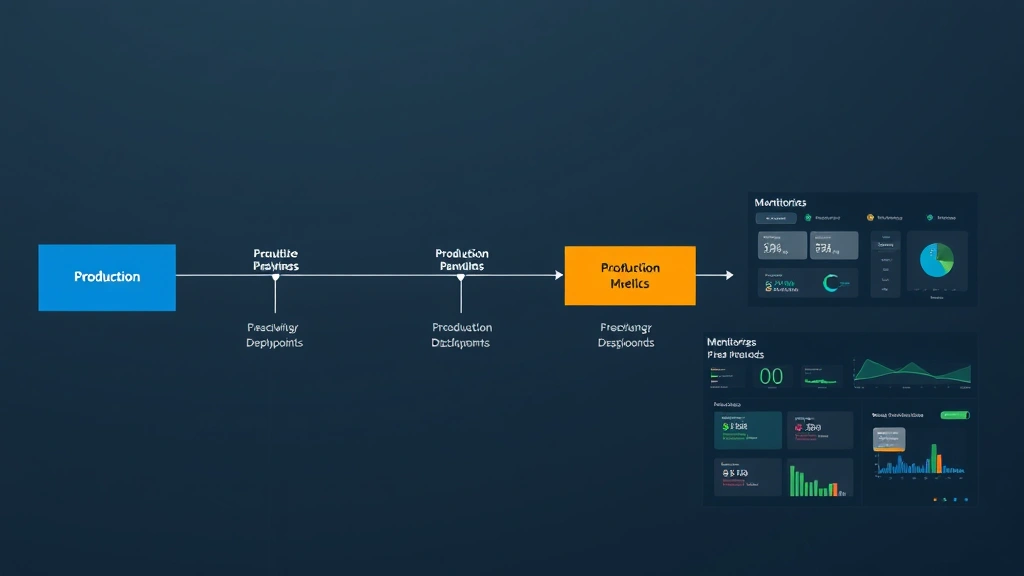
” alt=”Production deployment pipeline showing environment variables flowing through staging to production with security checks and monitoring”/>
Advanced Configuration Patterns
Sophisticated applications often employ configuration hierarchies, where environment variables override defaults, which override hardcoded values. This pattern provides flexibility while maintaining sensible defaults. A configuration class approach centralizes this logic:
The dataclass pattern with environment variable loading provides type safety and validation. Using libraries like pydantic enables automatic type conversion and validation, catching configuration errors early. This approach scales well for applications with dozens of configuration parameters.
Configuration inheritance allows specialized environments to extend base configurations. A production configuration might extend a base configuration, overriding only necessary values. This reduces duplication and makes configuration relationships explicit.
Dynamic configuration enables applications to update behavior without redeployment. Storing configuration in external systems (databases, configuration servers) and reloading periodically provides flexibility. However, this adds complexity and potential failure points, requiring careful consideration of trade-offs.
The feature flag pattern uses environment variables to enable/disable functionality without code changes. This enables A/B testing, gradual rollouts, and quick disabling of problematic features. Environment variables provide a simple mechanism for feature flag management, though dedicated feature flag services offer more sophisticated capabilities.
Integration with UNEP’s environmental programs and sustainability initiatives increasingly influences technology practices. Just as environmental management requires sophisticated monitoring and adaptation, application configuration requires robust systems for managing complexity and ensuring reliability.
Testing with environment variables demands care. Unit tests should isolate environment variable dependencies, either mocking them or using fixtures. Integration tests might use different environment configurations than production, testing behavior under various conditions. The pytest monkeypatch fixture provides convenient environment variable mocking for tests.
FAQ
What’s the difference between os.environ and os.getenv()?
Both access environment variables, but with different error handling. os.environ[‘KEY’] raises KeyError if the key doesn’t exist, while os.getenv(‘KEY’) returns None. Use os.getenv() for optional variables and os.environ[] when the variable must exist.
Should I commit my .env file to version control?
Never commit .env files containing sensitive data. Commit a .env.example file instead, documenting required variables without revealing values. This pattern documents configuration requirements while protecting secrets.
How do I handle environment variables in Windows?
Windows supports environment variables through the System Properties dialog (System → Advanced System Settings → Environment Variables) for persistent variables, or the set command in Command Prompt for session variables. Python’s os module works identically across platforms.
Can environment variables contain multiline values?
Standard environment variables don’t support multiline values well. For complex configuration, use JSON-formatted values or store configuration files separately, using environment variables to point to their locations.
How do I ensure environment variables are set before my Python application starts?
Set variables in your deployment environment before launching Python. Docker, Kubernetes, systemd, and cloud platforms all provide mechanisms for this. Within Python, you cannot reliably ensure variables exist—handle missing variables gracefully instead.
What’s the performance impact of accessing environment variables?
Accessing os.environ is extremely fast—it’s essentially a dictionary lookup. However, repeatedly accessing the same variable in tight loops is inefficient. Cache values in variables or configuration objects during application initialization.
How do I manage different environments (dev, staging, production)?
Use different environment variable sets for each environment. DevOps tools like Ansible, Terraform, and configuration management systems handle this systematically. For containers, use different environment variable configurations per deployment.
Are environment variables secure for storing API keys?
Environment variables provide basic security by separating secrets from code, but they’re not encrypted at rest. For high-security applications, use dedicated secret management systems like HashiCorp Vault, AWS Secrets Manager, or Kubernetes Secrets with encryption enabled.


