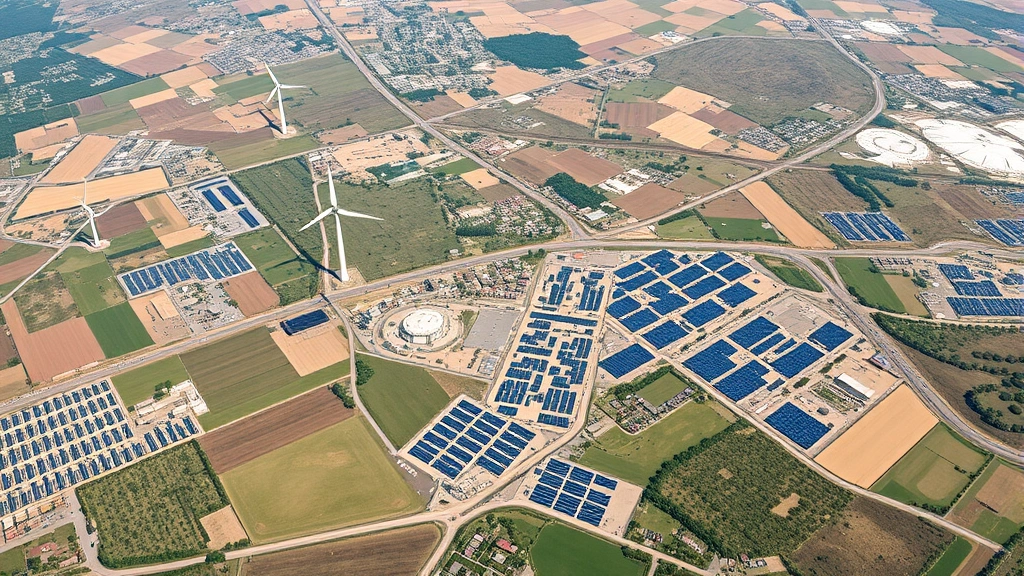
Diffusion Models’ Role in Economy: Expert Insight on Environmental Mapping and Economic Systems
Diffusion models represent a transformative technological paradigm that extends far beyond their origins in machine learning and generative artificial intelligence. These sophisticated computational frameworks are increasingly recognized as powerful instruments for understanding economic phenomena, particularly in the context of environmental mapping and resource distribution. The intersection of diffusion modeling with economic systems reveals how probabilistic processes can illuminate the spread of innovations, capital flows, and environmental impacts across geographies and populations.
As economies worldwide grapple with sustainability imperatives and climate adaptation, diffusion models offer unprecedented capabilities for mapping environmental-economic relationships. These models simulate how ideas, technologies, pollution, and economic opportunities propagate through complex systems. By integrating environmental data with economic indicators, researchers and policymakers can now visualize and predict cascading effects of economic decisions on ecosystems in real-time, enabling more informed strategic planning.
This comprehensive analysis explores how diffusion models function as economic tools, their applications in environment and society frameworks, and their potential to reshape our understanding of human environment interaction through quantitative rigor and predictive accuracy.

Understanding Diffusion Models in Economic Contexts
Diffusion models emerged from stochastic process mathematics and have evolved into sophisticated tools capable of modeling the temporal and spatial spread of phenomena. In economic applications, these models extend the classical Bass diffusion framework—originally designed to predict product adoption rates—into multidimensional spaces that account for geographic variation, demographic heterogeneity, and environmental constraints.
The fundamental principle underlying diffusion models in economics involves understanding how innovations, information, and resources propagate through networks and populations. Unlike traditional economic models that assume perfect information and rational actors, diffusion models acknowledge the realistic constraints of knowledge dissemination, technological barriers, and social network effects. This makes them particularly valuable for studying how renewable energy technologies penetrate markets or how environmental degradation spreads through interconnected economic systems.
Modern diffusion models integrate machine learning capabilities to handle high-dimensional data, enabling economists to process satellite imagery, sensor networks, and financial data simultaneously. This multidimensional approach reveals hidden patterns in how environmental shocks propagate through supply chains, how carbon emissions diffuse through atmospheric systems with economic consequences, and how green technologies distribute unevenly across regions.
The mathematical foundations of diffusion models rely on partial differential equations and stochastic processes. These frameworks model the probability density function of a phenomenon’s distribution over time and space. When applied to economics, they help quantify the velocity of economic change, identify tipping points in market transitions, and forecast the spatial distribution of economic benefits and costs associated with environmental policies.

Environmental Mapping Applications and Economic Implications
Environmental mapping using diffusion models creates detailed visualizations of how ecological and economic variables interact across landscapes. By processing multispectral satellite data through diffusion frameworks, researchers can track deforestation patterns, agricultural productivity changes, and their corresponding economic impacts with remarkable precision.
These environment maps serve multiple economic functions. First, they enable natural capital accounting, allowing economists to quantify ecosystem service values with spatial specificity. When diffusion models track how forest cover changes propagate downstream effects on water quality, fishery productivity, and tourism revenue, they transform abstract environmental concepts into concrete economic metrics. This bridges the traditional divide between definition of environment science and economic valuation.
Second, environmental mapping through diffusion models facilitates supply chain risk assessment. By modeling how environmental degradation diffuses through production networks, companies can identify vulnerabilities in their sourcing strategies. For instance, if water scarcity spreads through an agricultural region according to predictable diffusion patterns, manufacturers dependent on that region’s production can anticipate disruptions and adjust procurement strategies accordingly.
Third, these models support climate adaptation economics. Environmental mapping reveals how climate impacts diffuse unevenly across regions, allowing policymakers to allocate adaptation resources more efficiently. A diffusion model might show that drought stress spreads from arid regions into adjacent agricultural zones over a five-year period, enabling governments to implement irrigation infrastructure and crop diversification programs proactively rather than reactively.
The economic implications are substantial. According to World Bank environmental economics research, improved environmental mapping reduces the economic costs of natural disasters by enabling better preparedness. Diffusion models enhance this capability by providing temporal and spatial granularity that traditional mapping cannot achieve.
Technology Diffusion and Economic Growth Trajectories
One of the most significant applications of diffusion models in economics involves understanding how technologies spread through economies and generate growth. The classic diffusion curve—slow initial adoption, accelerating growth, then plateau—appears across virtually all technological innovations. However, diffusion models now provide much more sophisticated analysis than the simple S-curve.
Modern diffusion models account for network effects, where adoption by some actors increases incentives for others to adopt. This explains why renewable energy technology adoption accelerates dramatically once infrastructure reaches critical mass in a region. Diffusion models quantify these network dynamics, revealing optimal intervention points where government subsidies or regulatory changes can catalyze rapid transitions.
They also capture heterogeneous adoption patterns across demographic and geographic groups. Diffusion models show that wealthy urban areas typically adopt green technologies faster than rural regions, creating economic inequality. Understanding these patterns enables targeted policies to ensure equitable technology distribution. When diffusion models reveal that solar adoption concentrates in high-income neighborhoods, policymakers can implement financing mechanisms to accelerate adoption in underserved communities.
Furthermore, diffusion models help economists understand creative destruction dynamics—how new technologies displace old ones while generating net economic growth. By modeling both the diffusion of new technologies and the decline of legacy systems, economists can forecast employment transitions, identify retraining needs, and estimate the timeline for sectoral transformation. This proves invaluable for managing just transitions in energy and industrial sectors.
Research from ecological economics journals demonstrates that diffusion models outperform traditional growth models in predicting long-term technology trajectories. They capture path dependencies and lock-in effects that linear models miss, providing more realistic assessments of how economies transition toward sustainability.
Pollution Diffusion and Cost-Benefit Analysis
Environmental pollutants follow diffusion patterns that directly affect economic productivity and human health costs. Diffusion models applied to pollution dynamics create powerful tools for environmental economics. Unlike static pollution assessments, diffusion models track how contamination spreads through air, water, and soil systems over time.
Consider air pollution modeling. Particulate matter diffuses across regions according to atmospheric dynamics that diffusion equations can capture. By integrating pollution diffusion models with epidemiological data and economic productivity measures, economists can quantify the true costs of industrial emissions. A factory’s emissions don’t just affect nearby residents; diffusion models show how pollution spreads regionally, affecting agricultural productivity hundreds of kilometers away.
This spatial dimension transforms cost-benefit analysis. Traditional industrial policy might approve a manufacturing facility based on local costs and benefits. But diffusion models reveal that pollution impacts spread across larger areas, increasing social costs and potentially making the project economically unjustifiable when all externalities are considered. UNEP (United Nations Environment Programme) increasingly relies on diffusion models for pollution impact assessments in developing economies.
Water pollution provides another compelling application. Agricultural runoff, industrial discharge, and urban wastewater follow diffusion patterns through aquifers and river systems. Diffusion models predict how contamination spreads, affecting drinking water supplies, fisheries, and irrigation systems downstream. Economic analyses using these models often reveal that upstream polluters impose costs on downstream communities that far exceed their production benefits, justifying stricter environmental regulations from an economic efficiency perspective.
The modeling of how to reduce carbon footprint through diffusion models shows that emissions reductions generate economic benefits that spread through supply chains. When one company reduces emissions, it creates competitive pressure for suppliers and customers to do the same, generating diffusion effects that amplify the initial reduction’s economic and environmental benefits.
Integrating Diffusion Models with Environmental Economics
Environmental economics has traditionally focused on pricing mechanisms—carbon taxes, cap-and-trade systems, and ecosystem service valuations. Diffusion models complement these approaches by revealing how economic incentives actually propagate through real-world systems with imperfect information and behavioral constraints.
The integration of diffusion models with environmental economics creates dynamic valuation frameworks. Rather than assigning static prices to environmental goods, these integrated models show how ecosystem service values change as environmental conditions change and as economic actors respond to those changes. A forest’s carbon sequestration value might increase over time as the diffusion of climate awareness increases demand for carbon offsets, creating a feedback loop that diffusion models can capture.
Policy diffusion represents another crucial integration point. Environmental regulations don’t instantly apply across all jurisdictions. Instead, they diffuse from pioneering regions to others through demonstration effects, competitive pressure, and policy learning. Diffusion models predict how environmental policies spread, helping governments understand optimal timing for regulatory implementation. If a successful carbon pricing system diffuses rapidly across peer regions, a holdout jurisdiction faces increasing competitive disadvantage, accelerating its eventual adoption.
The integration also addresses behavioral economics dimensions. Diffusion models incorporating behavioral parameters show how environmental preferences spread through populations, how social norms around sustainability evolve, and how these changes affect consumption patterns and economic activity. This proves more predictive than traditional rational actor models when forecasting transitions to sustainable consumption.
Ecological economics journals increasingly publish research demonstrating that diffusion models resolve long-standing puzzles in environmental economics. Why do some regions adopt circular economy principles rapidly while others resist? Diffusion models incorporating network effects, institutional factors, and cultural variables explain these variations, enabling more effective policy design.
Case Studies: Real-World Economic Applications
Renewable Energy Transition in Germany: Germany’s Energiewende (energy transition) provides a compelling case for diffusion model application. Solar and wind technology adoption followed predictable diffusion patterns, but diffusion models revealed crucial insights. They showed that adoption concentrated in regions with strong environmental movements and existing renewable energy infrastructure, creating geographic clustering. This finding enabled policymakers to implement targeted support for adoption in lagging regions, accelerating overall transition timelines. Diffusion models also predicted grid integration challenges as renewable capacity diffused, informing infrastructure investment decisions.
Plastic Pollution Diffusion in Ocean Systems: Diffusion models applied to marine plastic pollution reveal how waste spreads from coastal sources through oceanic currents. These models quantify how coastal manufacturing and consumption generate pollution that diffuses across international boundaries, creating economic externalities for distant fishing communities. This scientific foundation supports economic arguments for producer responsibility and upstream pollution control, shifting costs to pollution sources rather than downstream victims.
Agricultural Innovation Diffusion in Sub-Saharan Africa: Climate-smart agriculture technologies diffuse through African farming communities at varying rates depending on social networks, land tenure security, and access to credit. Diffusion models incorporating these factors predict adoption patterns and identify intervention points. Research shows that subsidizing adoption in key opinion leader farmers accelerates diffusion across entire regions, offering cost-effective pathways to climate adaptation that benefit millions of smallholder farmers.
Electric Vehicle Adoption Across Urban Centers: EV adoption follows predictable diffusion patterns modeled by researchers across China, Europe, and North America. Diffusion models incorporating charging infrastructure, electricity prices, and vehicle costs predict that adoption accelerates once infrastructure reaches critical mass. These models inform investment decisions about charging networks and help governments optimize subsidy timing to catalyze rapid transitions.
Challenges and Limitations in Implementation
Despite their powerful capabilities, diffusion models face significant implementation challenges in economic applications. Data quality and availability remain fundamental constraints. Diffusion models require extensive temporal and spatial data to calibrate accurately. In developing economies where environmental monitoring infrastructure is limited, applying diffusion models proves difficult. This creates an unfortunate gap where diffusion models work best in wealthy regions while developing economies—often facing the most severe environmental-economic challenges—lack the data infrastructure for implementation.
Model complexity and interpretability present another challenge. Sophisticated diffusion models incorporating machine learning components become difficult for policymakers to understand and trust. When a diffusion model predicts that a particular environmental policy will fail due to network effects and behavioral constraints, skeptical politicians demand intuitive explanations that complex mathematical models struggle to provide. Balancing sophistication with interpretability remains an ongoing challenge.
Calibration and validation difficulties arise because diffusion processes are often unique to specific contexts. A model calibrated on renewable energy adoption in Germany may perform poorly in India due to different institutional, cultural, and economic contexts. Transferring diffusion models across contexts requires careful recalibration, increasing implementation costs and timelines.
Unforeseen disruptions and regime shifts can invalidate diffusion model predictions. The COVID-19 pandemic disrupted technology adoption patterns, supply chains, and environmental trends in ways that historical diffusion models couldn’t anticipate. This highlights the fundamental limitation that diffusion models extrapolate from past patterns, assuming continuity that real-world systems sometimes violate.
Additionally, feedback loops and tipping points create nonlinearities that standard diffusion models struggle to capture. Environmental systems exhibit threshold effects where gradual changes suddenly accelerate or reverse. Climate tipping points, ecosystem collapse, and financial crises all represent regime shifts that diffusion models must explicitly incorporate, increasing their complexity.
Finally, ethical considerations around predictive modeling deserve attention. When diffusion models predict that environmental policies will fail or that pollution impacts will concentrate in poor communities, the question arises: does accurate prediction enable better policy responses, or does it enable powerful interests to resist necessary changes? Responsible application of diffusion models requires transparency about both their capabilities and limitations.
FAQ
What exactly are diffusion models and how do they differ from traditional economic models?
Diffusion models are mathematical frameworks that simulate how phenomena spread through space and time. Unlike traditional economic models that assume equilibrium and perfect information, diffusion models explicitly model how innovations, information, and impacts propagate through real-world systems with constraints and heterogeneity. They excel at capturing dynamic processes of change rather than static equilibrium states.
How can diffusion models improve environmental policy effectiveness?
Diffusion models reveal how environmental policies actually spread through populations and institutions, identifying barriers and acceleration points. They show policymakers where to concentrate resources for maximum impact, how quickly transitions can realistically occur, and which populations face disproportionate burdens from environmental changes. This enables more targeted, efficient, and equitable policy design.
Can diffusion models predict environmental tipping points?
Advanced diffusion models incorporating nonlinear dynamics and feedback loops can identify conditions approaching tipping points, though precise prediction remains challenging. They reveal how gradual environmental degradation can suddenly accelerate once critical thresholds are crossed, informing precautionary environmental policies.
What data requirements do diffusion models have?
Diffusion models require extensive temporal and spatial data about the phenomenon being modeled, plus information about network structures, demographics, and contextual variables. Satellite imagery, sensor networks, survey data, and administrative records all contribute to model calibration. High-quality data availability significantly determines model feasibility.
How do diffusion models account for inequality in environmental impacts?
Diffusion models can explicitly incorporate heterogeneous populations and spatial variation, revealing how environmental impacts and adaptation opportunities distribute unequally across income groups, regions, and demographics. This enables identification of vulnerable populations and targeted policy responses to reduce inequality.
Are diffusion models suitable for long-term economic forecasting?
Diffusion models work best for medium-term forecasting (5-20 years) within relatively stable contexts. For longer horizons or under conditions of potential regime shifts, their accuracy diminishes. Combining diffusion models with scenario analysis and uncertainty quantification provides more robust long-term insights.
How do diffusion models incorporate behavioral economics principles?
Modern diffusion models integrate parameters capturing behavioral phenomena like social proof, loss aversion, and preference for familiar options. These behavioral parameters affect adoption rates and patterns, making models more realistic than traditional rational actor assumptions.
What role do diffusion models play in climate economics?
Diffusion models help climate economists understand how climate impacts propagate through economic systems, how adaptation technologies spread through populations, and how climate policies diffuse across jurisdictions. They provide crucial tools for understanding climate-economy interactions with unprecedented spatial and temporal detail.


