
Boosting GDP with Ecosystem Services: A Study
The traditional measurement of economic growth through Gross Domestic Product (GDP) has long overlooked one of humanity’s most valuable assets: ecosystem services. These natural processes—from pollination and water purification to climate regulation and soil formation—generate trillions of dollars in economic value annually, yet remain largely invisible in conventional economic accounting. Recent research demonstrates that integrating ecosystem services into GDP calculations not only provides a more accurate picture of true economic wealth but also creates compelling incentives for sustainable development and long-term prosperity.
Ecosystem services represent the tangible benefits that human economies derive from natural systems. Whether we recognize it or not, every economic transaction depends on a foundation of ecological health. Forests regulate water cycles, coral reefs protect coastlines from storms, wetlands filter pollutants, and biodiversity maintains agricultural productivity. When we examine these services through an economic lens, the numbers become staggering. The World Bank estimates that ecosystem services contribute approximately $125 trillion annually to global economic output—a figure that dwarfs the entire world GDP of roughly $100 trillion. This stark reality reveals a fundamental accounting error in how nations measure economic progress.
Understanding how to properly value and integrate ecosystem services into economic metrics represents one of the most important challenges facing policymakers, economists, and environmental scientists today. By doing so, we can align economic incentives with ecological sustainability, creating a virtuous cycle where growth and conservation reinforce one another.
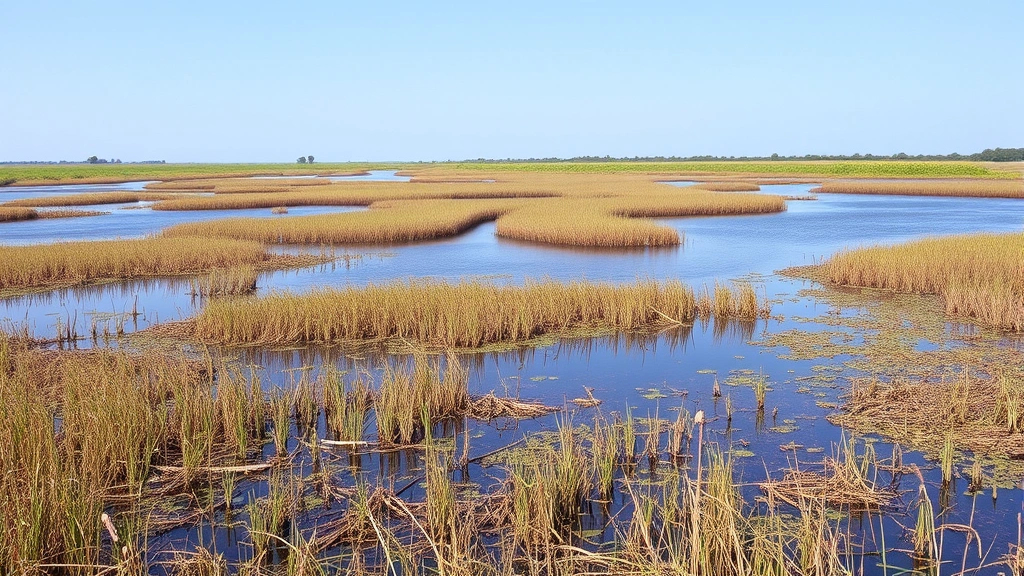
Understanding Ecosystem Services and Economic Value
Ecosystem services encompass four primary categories, each contributing distinct economic benefits to human societies. Provisioning services include tangible products extracted from nature: food crops, freshwater, timber, medicinal plants, and genetic resources. Regulating services maintain the conditions necessary for life itself, including climate stabilization, flood control, disease regulation, water purification, and pollination. Supporting services enable other services through nutrient cycling, soil formation, and primary production. Finally, cultural services provide non-material benefits such as recreation, spiritual fulfillment, aesthetic value, and educational opportunities.
The economic significance of these services becomes apparent when we consider agriculture, one of the world’s largest economic sectors. Pollination alone—a regulating service provided primarily by wild bees, butterflies, and other insects—is valued at $15-20 billion annually in the United States alone. Globally, pollination services support agricultural production worth over $500 billion per year. Yet, as pollinator populations decline due to habitat loss and pesticide use, this critical economic foundation crumbles largely unnoticed in GDP statistics.
Water purification services demonstrate another crucial economic connection. Natural wetlands and forest ecosystems filter water, removing contaminants and reducing the need for expensive artificial treatment infrastructure. Cities like New York have discovered that protecting watershed ecosystems costs far less than building and maintaining treatment facilities. By investing $1.5 billion in watershed protection, New York avoided spending $6-8 billion on new water treatment plants—a clear illustration of how ecosystem services translate directly into economic savings and GDP contributions.
The environment images that document these natural systems often reveal their economic value implicitly. A healthy forest isn’t merely scenically beautiful; it’s a productive economic asset generating value through carbon sequestration, watershed protection, timber resources, and recreational opportunities simultaneously.

The Economics of Natural Capital
Natural capital—the stock of environmental assets including soil, air, water, and living organisms—functions as the foundation upon which all economic activity rests. Unlike traditional capital theory, which focuses on manufactured and human capital, natural capital economics recognizes that ecosystems are not infinite or infinitely resilient. They have carrying capacities, tipping points, and degradation thresholds beyond which recovery becomes impossible or prohibitively expensive.
The concept of natural capital accounting introduces a revolutionary perspective: environmental degradation represents genuine economic loss, equivalent to the depletion of mineral reserves or manufactured capital. When a nation depletes its fisheries, it’s essentially mining its own economic future. When forests are cleared without regard for their regulating services, the nation is liquidating assets while calling it income. This fundamental accounting error means that countries can appear to be growing wealthier while actually becoming economically poorer through resource depletion.
Several nations have begun implementing natural capital accounting alongside traditional GDP measurements. The United Nations Environment Programme (UNEP) has promoted Ecosystem Accounting frameworks that track changes in natural capital stocks and flows. Costa Rica’s pioneering work in this area demonstrates practical benefits: by valuing and protecting its ecosystem services, the nation has maintained forest cover while achieving economic growth, attracting eco-tourism revenue, and establishing itself as a global sustainability leader.
Understanding human environment interaction through an economic lens reveals how sustainable practices can enhance rather than diminish economic growth. When farmers implement regenerative agriculture that builds soil health, they’re simultaneously increasing productivity, reducing input costs, and enhancing carbon sequestration services. The economic logic becomes compelling: short-term extraction versus long-term sustainable yield.
Research from ecological economics journals increasingly demonstrates that ecosystem degradation imposes substantial economic costs that remain largely hidden from GDP calculations. Coral reef degradation alone costs the global economy an estimated $375 billion annually through lost fisheries, coastal protection, and tourism revenue. Air pollution from ecosystem loss causes approximately 7 million premature deaths yearly, representing incalculable economic losses in human capital and productivity.
Valuation Methods for Ecosystem Services
Accurately valuing ecosystem services requires sophisticated methodologies that capture both market and non-market values. Market-based valuation approaches identify ecosystem services that have direct market prices. Timber harvesting, crop production, and water extraction can be valued using market transactions. However, this method captures only a fraction of ecosystem service value, as many services lack established markets.
Replacement cost methods estimate what it would cost to replace a natural service with human-engineered alternatives. If natural water purification by wetlands is destroyed, cities must build treatment plants—the cost of which reveals the economic value of the lost ecosystem service. Similarly, coastal wetlands provide storm surge protection; the cost of engineered seawalls reveals their economic value. These methods often produce eye-opening figures that demonstrate ecosystem services are far more valuable than the land conversion projects that threaten them.
Contingent valuation surveys willingness-to-pay: how much would people pay to preserve an ecosystem or avoid environmental degradation? While criticized for potential bias, these methods capture important non-market values like existence value (people’s satisfaction that endangered species exist) and bequest value (preserving resources for future generations). Studies consistently show people value ecosystem preservation far more highly than economic models assuming pure consumption preferences would suggest.
Hedonic pricing examines how environmental quality affects property values. Homes with views of forests or water command price premiums; properties near polluted sites sell for less. By analyzing these price differentials, economists can estimate the economic value of environmental amenities. A property overlooking a healthy wetland might sell for $50,000 more than an identical property overlooking a degraded one—that difference represents capitalized ecosystem service value.
Travel cost methods estimate ecosystem values by analyzing how much people spend to access natural areas for recreation. National park visitor spending, recreational fishing expenditures, and eco-tourism revenues all reflect the economic value people place on ecosystem experiences. The blog discussions of sustainable tourism increasingly recognize how ecosystem protection directly generates economic returns through visitor spending.
Meta-analyses synthesizing thousands of valuation studies have produced ecosystem service value estimates by biome type. Tropical forests generate approximately $2,000-5,000 per hectare annually in ecosystem services. Wetlands provide $4,000-30,000 per hectare yearly. Coral reefs generate $100,000-600,000 per hectare in annual benefits. These valuations, while uncertain, consistently demonstrate that maintaining natural systems generates far greater economic returns than converting them to other uses.
Case Studies: Ecosystem Services Boosting Regional Economies
Madagascar’s experience illustrates both the potential and challenges of ecosystem service-based development. The nation contains approximately 5% of the world’s biodiversity, generating enormous ecosystem service value through climate regulation, water provision, and agricultural productivity. Yet poverty and short-term economic pressures have driven extensive forest clearing. Economic analysis revealed that preserving forests for their ecosystem services would generate greater long-term GDP growth than clearing them for subsistence agriculture. This recognition has driven policy shifts toward ecosystem-based development, with payments for ecosystem services programs now providing income to rural communities for forest conservation.
Indonesia’s peatland management presents another compelling case. Peatlands cover only 3% of global land area but store one-third of terrestrial carbon. Their drainage for palm oil production releases massive carbon emissions while destroying water regulation and biodiversity services. Economic analysis demonstrates that maintaining peatlands as carbon sinks—potentially through carbon credit markets and ecosystem service payments—generates greater economic value than converting them to plantations, especially when accounting for climate damage costs that ultimately impact all economies.
Costa Rica’s payment for ecosystem services program demonstrates how ecosystem valuation can drive economic development. Since the 1980s, the nation has paid landowners to protect forests, establishing the principle that ecosystem services have genuine economic value worthy of direct compensation. The program has driven reforestation, increased carbon sequestration, protected watersheds, and maintained biodiversity while generating substantial eco-tourism revenue. Costa Rica now derives approximately 4% of GDP from eco-tourism, demonstrating that ecosystem preservation can be economically competitive with extractive industries.
Australia’s Great Barrier Reef illustrates the economics of ecosystem collapse. The reef generates approximately $56 billion in economic value annually through tourism, fisheries, and coastal protection. Coral bleaching and degradation threaten this economic asset. Economic analysis demonstrates that investing in climate action and reef protection generates far greater returns than allowing continued degradation, yet short-term economic pressures favor continued carbon-intensive development. This disconnect reveals how failing to incorporate ecosystem service values into economic decision-making drives economically irrational choices.
The Netherlands’ experience with flood protection demonstrates sophisticated ecosystem service integration. Rather than relying entirely on engineered dikes, the nation has begun restoring wetlands and allowing controlled flooding on agricultural land. These approaches provide superior flood protection compared to engineering alone while restoring ecosystem services. The economic calculation favors ecosystem-based approaches: natural systems provide multiple services (water purification, biodiversity habitat, carbon sequestration) simultaneously, whereas engineered solutions typically provide single functions at high cost.
Policy Integration and Economic Frameworks
Incorporating ecosystem services into GDP and economic policy requires fundamental institutional changes. Natural capital accounting represents the most direct approach, paralleling financial accounting for manufactured capital. Nations would track ecosystem asset stocks (forest area, wetland extent, fish populations) and flows (annual growth, regeneration, degradation rates). Changes in natural capital would be incorporated into national accounts, making environmental degradation visible as economic loss rather than treating resource extraction as income.
Several frameworks now support this integration. The System of Environmental-Economic Accounting (SEEA), developed by the UN and adopted by numerous countries, provides standardized methodology for natural capital accounting. The Natural Capital Protocol guides corporations in assessing their dependence on and impact upon ecosystem services. The Economics of Ecosystems and Biodiversity (TEEB) initiative has produced comprehensive assessments of how ecosystem values should inform policy across multiple sectors.
Economic instruments can align incentives with ecosystem protection. Carbon pricing through cap-and-trade systems or carbon taxes makes climate regulation services economically valuable, creating incentives to reduce emissions and protect carbon-storing ecosystems. Payments for ecosystem services directly compensate landowners for maintaining beneficial ecosystems. Biodiversity offsets require developers to compensate for habitat destruction by protecting equivalent areas. Green bonds mobilize capital for ecosystem restoration and sustainable resource management.
Implementing strategies to reduce carbon footprint at economic scale requires recognizing that climate regulation is an ecosystem service worthy of economic valuation and policy support. When carbon’s atmospheric damage costs are properly priced, renewable energy and forest protection become economically superior to fossil fuels and deforestation.
Regulatory approaches complement economic instruments. Protected area networks restrict destructive land uses in ecosystems providing critical services. Environmental impact assessments require considering ecosystem service losses in development decisions. Sustainable resource management standards ensure that provisioning services regenerate at sustainable rates. Zoning regulations can prioritize ecosystem service provision in land-use planning.
The sustainable fashion industry exemplifies how recognizing ecosystem service values drives business model innovation. Brands increasingly recognize that water purification, soil health, and biodiversity protection are critical inputs to their supply chains. This recognition drives investment in regenerative agriculture and ecosystem restoration, improving both environmental outcomes and long-term economic viability.
International frameworks increasingly incorporate ecosystem service values. The Convention on Biological Diversity’s post-2020 targets include explicit recognition of nature’s economic value. Trade agreements increasingly include environmental provisions recognizing that ecosystem degradation undermines long-term economic growth. Development finance institutions now routinely assess ecosystem service impacts alongside traditional economic metrics.
Challenges and Future Directions
Despite growing recognition of ecosystem service values, significant challenges impede their integration into economic decision-making. Valuation uncertainty persists: different methodologies produce vastly different estimates, and some ecosystem services may be economically invaluable (irreplaceable) rather than merely expensive. Distributional concerns arise: who bears costs of ecosystem protection and who receives benefits? Payments for ecosystem services risk commodifying nature and may inadequately compensate indigenous and local communities for historical conservation efforts.
Temporal mismatches between ecosystem service provision and economic returns create implementation challenges. Reforestation requires decades before carbon sequestration benefits fully materialize, yet investors demand near-term returns. Scale challenges complicate valuation: ecosystem services often operate at landscape or regional scales, making property-level valuation insufficient. Uncertainty about future technology raises questions about substitutability: will artificial technologies eventually replace natural services, making current valuations obsolete?
The renewable energy transition illustrates how ecosystem service economics intersects with technological change. As renewable energy becomes economically competitive with fossil fuels, the economic case for protecting carbon-storing ecosystems strengthens. Conversely, if fusion energy eventually provides abundant clean power, climate regulation services may become economically less critical—though other ecosystem services would remain valuable.
Future research must address several critical questions. How can ecosystem service valuation incorporate indigenous knowledge and non-Western value systems? Can economic metrics adequately capture the intrinsic value of nature independent of human utility? How should we value ecosystem services under conditions of profound uncertainty about ecological tipping points and future changes? What international frameworks can ensure equitable benefit-sharing from ecosystem service monetization?
Technological advances offer new opportunities for ecosystem service monitoring and valuation. Remote sensing enables tracking ecosystem extent and health changes across vast areas. Artificial intelligence can process complex ecological data to improve service valuation estimates. Blockchain technology could facilitate transparent payments for ecosystem services. Digital platforms can connect ecosystem service providers with buyers, creating functioning markets for previously non-marketed services.
The fundamental insight driving ecosystem service economics remains powerful and increasingly undeniable: nature’s economic value far exceeds what conventional accounting recognizes, and protecting ecosystems represents not merely an environmental imperative but an economic necessity. As this reality permeates policy institutions and business decision-making, we should expect accelerating integration of ecosystem services into GDP calculations and economic planning. This shift promises to align economic incentives with ecological sustainability, potentially transforming growth from an enemy of environmental protection into a powerful force for conservation.
FAQ
What exactly are ecosystem services and why do they matter economically?
Ecosystem services are the benefits humans derive from natural systems: pollination, water purification, climate regulation, soil formation, and recreation. They matter economically because they generate trillions in annual value yet remain invisible in GDP calculations, leading to economically irrational decisions that destroy assets while calling it growth.
How much economic value do ecosystem services generate globally?
The World Bank estimates ecosystem services contribute approximately $125 trillion annually to global economic output—exceeding total world GDP. However, estimates vary widely depending on valuation methodology, ranging from $40-150 trillion. The precise figure matters less than recognizing that ecosystem services represent humanity’s most valuable economic asset.
Can ecosystem services truly be accurately valued in monetary terms?
Valuation involves inherent uncertainty and philosophical questions about whether nature should be reduced to economic metrics. However, imperfect valuation that recognizes ecosystem service value drives better decisions than ignoring these values entirely. Multiple valuation approaches (market-based, replacement cost, contingent valuation) provide converging estimates suggesting values are substantial even accounting for methodological disagreements.
What’s the difference between natural capital and ecosystem services?
Natural capital is the stock of environmental assets (forests, wetlands, fisheries, minerals). Ecosystem services are the flows of benefits these assets generate annually. Natural capital accounting tracks changes in asset stocks; ecosystem service valuation estimates the economic value of annual flows. Both are essential for comprehensive environmental-economic assessment.
How can nations incorporate ecosystem services into GDP?
Nations can adopt natural capital accounting systems that track ecosystem asset changes and adjust GDP accordingly. They can implement payments for ecosystem services, carbon pricing, biodiversity offsets, and other economic instruments that make ecosystem values visible in market prices. International frameworks like SEEA provide standardized methodology for these integrations.
Which countries are leading in ecosystem service valuation and integration?
Costa Rica pioneered payments for ecosystem services programs. The Netherlands integrates ecosystem-based approaches into water management. Madagascar and Indonesia are implementing natural capital accounting. The European Union increasingly incorporates biodiversity and ecosystem service values into policy. However, most nations remain far behind in systematic integration of these concepts.


