

Can Biodiversity Boost the Economy? New Study Results
Recent groundbreaking research reveals a compelling truth: biodiversity isn’t merely an environmental imperative—it’s a powerful economic engine. A comprehensive analysis of global ecosystems demonstrates that preserving species-rich environments generates measurable financial returns through ecosystem services, job creation, and resilience to economic shocks. This convergence of ecological and economic interests challenges the traditional narrative that environmental protection and economic growth are mutually exclusive.
The emerging field of ecological economics quantifies what conservationists have long intuited: nature’s value extends far beyond aesthetic appreciation. When biodiversity loss is translated into economic terms, the costs become staggering. Yet paradoxically, the investments required to restore and maintain biodiversity represent some of the highest-return opportunities available to modern economies. Understanding these relationships requires examining how natural capital translates into monetary value and why biodiversity-rich systems outperform their degraded counterparts.
Quantifying Nature’s Economic Value
The transformation of biodiversity assessment from purely biological metrics to economic valuations marks a paradigm shift in how we understand environmental worth. Traditional economic models excluded natural capital from calculations, treating ecosystems as infinite repositories of free resources. Contemporary ecological economics corrects this fundamental error by assigning monetary values to biodiversity’s contributions to human welfare.
Recent studies quantify global ecosystem services at approximately $125 trillion annually, with biodiversity serving as the foundational component enabling these services. This figure represents the economic value generated by natural systems without human intervention—pollination, water purification, climate regulation, and nutrient cycling. When biodiversity declines, the capacity of ecosystems to deliver these services diminishes proportionally, creating direct economic losses.
The methodology underlying these valuations employs several approaches. Replacement cost analysis estimates what humans would pay to artificially replicate ecosystem services if nature failed to provide them. Hedonic pricing examines how biodiversity influences property values in adjacent areas. Contingent valuation surveys what people would willingly pay to preserve biodiversity. Travel cost methods calculate economic value based on willingness to visit biodiverse locations. These diverse methodologies converge on a consistent conclusion: biodiversity possesses substantial, measurable economic value.
Understanding the definition of environment and environmental science proves essential for grasping how economists now incorporate ecological principles into financial analysis. The environment isn’t a separate domain from economics but rather the physical foundation upon which all economic activity rests.
Ecosystem Services and Financial Returns
Biodiversity generates economic returns through multiple pathways. Pharmaceutical development represents one compelling case study. Approximately 25% of modern medicines derive from rainforest plants, yet only 1% of tropical species have undergone pharmaceutical screening. The potential economic value of undiscovered medicinal compounds is incalculable. Companies investing in bioprospecting in biodiverse regions generate revenues while creating incentives for habitat preservation.
Agricultural productivity depends critically on biodiversity. Pollinator populations—bees, butterflies, moths, and beetles—deliver $15 billion in annual economic benefits to United States agriculture alone. Global pollination services generate approximately $300 billion annually. Yet pollinator populations decline as agricultural intensification reduces habitat complexity and increases pesticide use. Restoring biodiversity within agricultural systems through diverse crop rotations, hedgerows, and integrated pest management simultaneously increases yields and reduces input costs.
Tourism represents another substantial revenue stream directly enabled by biodiversity. Nations with exceptional biological diversity—Costa Rica, Kenya, Madagascar, Indonesia—generate billions in annual tourism revenue. Ecotourism creates employment for local communities while providing economic justification for habitat protection. A single orangutan in Borneo generates an estimated $40,000 in lifetime tourism revenue, compared to approximately $400 from timber extraction. These calculations demonstrate how biodiversity preservation becomes economically rational when all value streams are quantified.
Water purification services merit particular attention. Forests and wetlands filter water, reducing treatment costs for municipalities. Mangrove ecosystems protect coastal communities from storm surge while supporting fisheries. The economic value of these services compounds over time. A study examining New York City’s watershed protection demonstrated that preserving biodiversity in the Catskill Mountains cost $1-1.5 billion, compared to $6-8 billion for artificial water treatment infrastructure. Biodiversity-based solutions prove more cost-effective while providing co-benefits including habitat provision and carbon storage.
Carbon sequestration services translate directly into economic value through carbon markets and climate mitigation benefits. Forests, mangroves, and seagrass meadows store carbon in biomass and soils. Preserving these ecosystems avoids the atmospheric carbon that would result from conversion to other land uses. The economic value of avoided climate damages—reduced hurricane intensity, decreased agricultural losses, prevented coastal flooding—far exceeds preservation costs.
Biodiversity Loss: The Economic Toll
The inverse relationship between biodiversity decline and economic losses provides compelling evidence for biodiversity’s economic importance. Human environment interaction increasingly disrupts ecosystem function, generating measurable economic consequences. When fisheries collapse from overharvesting, fishing communities experience unemployment and food insecurity. When pollinator populations crash, agricultural productivity declines and food prices rise. When forests disappear, flood and drought risks increase, imposing infrastructure and recovery costs on downstream populations.
Recent research quantifies these losses with precision. The World Bank estimates that environmental degradation costs developing nations 4-5% of annual GDP. For many nations, this exceeds the combined cost of healthcare and education. Biodiversity loss represents the largest component of environmental degradation costs. Deforestation alone generates $2-5 trillion in annual economic losses through carbon release, watershed damage, and species extinction.
The insurance value of biodiversity—its role in maintaining ecosystem stability—carries substantial but often-unquantified economic significance. Biodiverse ecosystems prove more resilient to disturbances. Forests with high species diversity experience smaller productivity declines during droughts. Fisheries with diverse species compositions fluctuate less dramatically in response to environmental variation. Coral reefs with high biodiversity recover more rapidly from bleaching events. This stability translates into reduced economic volatility and lower risk premiums for investors.
Agricultural systems demonstrate this principle clearly. Monoculture crops prove vulnerable to pest outbreaks, requiring intensive pesticide applications and generating high economic losses when pest resistance emerges. Diverse agricultural systems with multiple crop species, cover crops, and beneficial insect populations maintain productivity with lower input costs and greater resilience to pest pressure. Farmers practicing strategies to reduce carbon footprint often simultaneously enhance on-farm biodiversity, demonstrating how environmental and economic objectives align.
” alt=”Lush tropical forest canopy with diverse vegetation layers and wildlife habitat”>
Job Creation in Conservation Sectors
The biodiversity economy generates substantial employment across multiple sectors. Conservation biology, environmental consulting, ecosystem restoration, and sustainable agriculture create well-compensated careers. The World Wildlife Fund employs over 5,000 people globally. The Nature Conservancy employs 3,000+ professionals. Countless smaller organizations, government agencies, and private companies expand employment in biodiversity-related fields annually.
Restoration ecology represents a particularly high-growth employment sector. Restoring degraded ecosystems requires intensive labor for habitat preparation, native species propagation, invasive species removal, and long-term monitoring. Urban rewilding projects create local employment while enhancing community biodiversity. Wetland restoration generates employment for wetland specialists, engineers, and construction workers. Forest restoration employs foresters, ecologists, and laborers. These positions typically pay competitive wages and provide meaningful work aligned with environmental values.
Sustainable agriculture employment grows as consumers and investors increasingly demand environmentally responsible food production. Agroecologists design diverse farming systems. Entomologists manage beneficial insects. Soil scientists improve soil biodiversity. Marketing specialists communicate the environmental benefits of sustainably-produced food. These positions require advanced education and provide professional-level compensation.
Ecotourism and nature-based tourism generate employment for guides, hospitality workers, and destination managers. Unlike extractive industries that create few lasting jobs, tourism-based economies provide sustained employment. Costa Rica’s ecotourism sector employs over 50,000 people directly and substantially more in supporting industries. Madagascar’s tourism economy depends almost entirely on unique biodiversity, supporting thousands of jobs while creating economic incentives for forest protection.
Corporate Performance and Natural Capital
Forward-thinking corporations recognize that biodiversity preservation and business success are complementary objectives. Companies operating in biodiverse regions depend on ecosystem services for operational continuity. Water-dependent industries—beverage companies, semiconductors manufacturers, power plants—invest in watershed protection because biodiversity-rich watersheds provide reliable, clean water at lower cost than alternatives.
The beverage industry exemplifies this convergence. Coca-Cola, recognizing that water scarcity threatens operations globally, invests billions in watershed protection and restoration. These investments reduce operational risk while providing environmental benefits. Similarly, pharmaceutical companies operating in biodiverse regions invest in habitat protection to secure future access to medicinal plants and research opportunities.
Financial markets increasingly incorporate biodiversity considerations into valuation models. Companies with strong environmental performance command higher valuations and lower capital costs. Institutional investors representing over $100 trillion in assets incorporate biodiversity metrics into investment decisions. The recognition that natural capital depletion represents a financial liability has transformed corporate environmental strategies from public relations exercises into core business considerations.
Supply chain resilience depends critically on biodiversity. Agricultural companies sourcing from regions experiencing biodiversity loss face crop failures, price volatility, and supply interruptions. Companies investing in supplier sustainability—promoting diverse crop rotations, integrated pest management, and habitat protection—reduce supply chain risk while supporting farmer profitability. These investments generate returns through reduced volatility and improved supplier relationships.
Investment Opportunities in Biodiversity
The emerging biodiversity investment sector attracts capital from diverse sources. Impact investors, seeking financial returns alongside environmental benefits, deploy capital into conservation enterprises. Sustainable agriculture funds invest in farms implementing biodiversity-enhancing practices. Wetland mitigation banks create tradeable credits for ecosystem restoration. Blue carbon projects monetize mangrove and seagrass carbon sequestration.
Payment for ecosystem services (PES) schemes create direct economic incentives for biodiversity preservation. Governments and private entities pay landowners for ecosystem services their lands provide. A farmer preserving riparian vegetation receives payment for water filtration services. A forest owner receives payment for carbon sequestration. These mechanisms convert ecosystem services from uncompensated externalities into revenue streams, making biodiversity preservation economically competitive with conversion to other land uses.
Biodiversity credits represent an emerging financial instrument. Similar to carbon credits, biodiversity credits represent quantified ecosystem improvements. Developers impacting biodiversity purchase credits from restoration projects, creating funding for habitat recovery. This market-based mechanism aligns financial incentives with conservation objectives. As regulations increasingly require biodiversity net gain, the biodiversity credit market expands rapidly.
Sustainable fashion brands demonstrate how biodiversity considerations enhance business performance. Companies like sustainable fashion brands source materials from biodiverse regions using practices that enhance rather than degrade ecosystem function. These supply chains command premium prices, supporting farmer profitability while maintaining biodiversity. The fashion industry’s transformation toward sustainability creates investment opportunities throughout supply chains.
Policy Frameworks Driving Economic Growth
Government policies increasingly recognize biodiversity as economic infrastructure requiring investment and protection. The World Bank integrates natural capital accounting into development planning, ensuring projects don’t undermine the ecosystem services upon which long-term prosperity depends. National biodiversity strategies translate international commitments into domestic policy frameworks.
Tax incentives for conservation accelerate investment. Conservation easements, which permanently protect biodiversity while allowing compatible land uses, receive favorable tax treatment in many jurisdictions. This policy tool leverages private capital for conservation while respecting property rights. Carbon taxes and cap-and-trade systems create financial incentives for ecosystem preservation by pricing carbon sequestration services.
Environmental impact assessment requirements ensure development projects account for biodiversity consequences. By internalizing previously external costs, these policies improve decision-making. Projects generating net biodiversity losses face higher regulatory hurdles, shifting investment toward biodiversity-compatible alternatives. This regulatory framework aligns private incentives with public interest in biodiversity preservation.
UNEP’s recent reports emphasize how biodiversity-positive policies generate economic returns exceeding costs by ratios of 4:1 to 100:1 depending on context. Wetland protection generates returns through flood mitigation, fishery support, and water purification. Forest protection generates returns through carbon sequestration, water regulation, and tourism. These analyses demonstrate that from a purely economic perspective, biodiversity preservation represents rational investment.
International agreements including the Convention on Biological Diversity establish policy frameworks driving biodiversity investment. The Post-2020 Global Biodiversity Framework sets targets for protected areas, species recovery, and habitat restoration. These commitments mobilize government budgets, philanthropic funding, and private investment. Ecological economics research increasingly demonstrates how these policy commitments generate positive economic returns.
Awareness about the environment continues growing as stakeholders recognize biodiversity’s economic value. Environmental awareness campaigns increasingly emphasize economic benefits alongside ecological ones. This framing expands constituencies supporting biodiversity protection beyond traditional environmentalists to include economists, business leaders, and financial professionals.
Renewable energy investments intersect with biodiversity considerations. Renewable energy for homes reduces ecosystem damage from fossil fuel extraction and reduces climate impacts threatening biodiversity. Solar and wind development must be planned to minimize biodiversity impacts while maximizing energy production. This integration of renewable energy and biodiversity protection creates opportunities for synergistic environmental benefits.

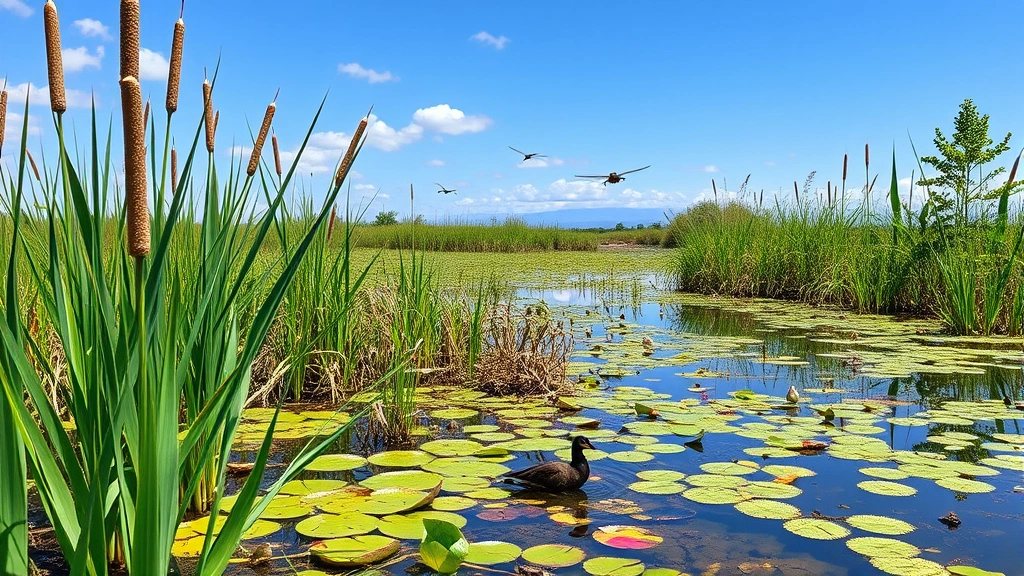
” alt=”Restored wetland ecosystem with diverse native plants, waterbirds, and clear water reflecting sky”>
FAQ
How much economic value does biodiversity provide annually?
Global ecosystem services generated by biodiversity total approximately $125 trillion annually. This includes pollination, water purification, climate regulation, nutrient cycling, pest control, and other services. The value varies by ecosystem type, with forests, wetlands, and coral reefs providing particularly high-value services relative to their area.
Can biodiversity restoration generate financial returns?
Yes. Biodiversity restoration generates financial returns through ecosystem service provision, job creation, tourism revenue, and risk reduction. A $1 investment in ecosystem restoration generates $4-100 in economic benefits depending on context. Wetland restoration provides flood protection and fishery support. Forest restoration provides carbon sequestration and water regulation. Urban greening provides cooling services and property value enhancement.
Which sectors create the most biodiversity-related jobs?
Conservation organizations, sustainable agriculture, ecosystem restoration, ecotourism, and environmental consulting generate substantial employment. These sectors employ millions globally and are growing faster than overall employment. Positions range from field work to professional roles requiring advanced education.
How do companies benefit from biodiversity preservation?
Companies benefit through improved water access and quality, reduced supply chain disruption, lower operational risk, enhanced brand value, and access to genetic resources. Water-dependent industries particularly benefit from watershed biodiversity. Agricultural companies benefit from pollinator populations and soil biodiversity. Pharmaceutical companies benefit from access to medicinal plants.
What policies most effectively drive biodiversity-positive economic growth?
Payment for ecosystem services, conservation tax incentives, environmental impact assessment requirements, protected area expansion, and carbon pricing create effective policy frameworks. International agreements including the Convention on Biological Diversity establish targets driving investment. These policies align private financial incentives with biodiversity preservation.
Is biodiversity preservation economically competitive with extractive industries?
In most contexts, yes. Over 20-50 year timescales, biodiversity preservation generates greater economic returns than extraction. A rainforest provides greater lifetime economic value through pharmaceutical discovery, carbon sequestration, and tourism than through timber harvesting. Coral reefs generate greater value through fisheries and tourism than through mining. These analyses demonstrate biodiversity preservation’s economic rationality.