Can Art Save Ecosystems? Expert Insights on Environment Artists and Conservation
The intersection of art and environmental conservation represents one of the most compelling yet underexplored frontiers in ecological restoration. While traditional conservation strategies rely on policy, science, and technology, a growing movement of environment artists is demonstrating that creative expression can catalyze profound behavioral and systemic change. These practitioners operate at the nexus of aesthetics, activism, and ecological science, transforming how communities perceive, value, and interact with natural systems.
The question of whether art can truly save ecosystems extends beyond romantic idealism. Research from behavioral economists and conservation psychologists increasingly validates what artists have long intuited: emotional engagement and imaginative representation often prove more effective at shifting human consciousness than data alone. When we examine the mechanisms through which art influences environmental outcomes—from policy influence to community mobilization to ecosystem restoration itself—we discover that creative practice functions as a critical, often missing variable in the conservation equation.
How Environment Artists Drive Ecosystem Awareness and Change
Environment artists operate through multiple channels of influence that traditional conservation practitioners often underutilize. These creative professionals employ visual media, performance, installation, and participatory practices to communicate ecological principles in ways that transcend conventional environmental communication. The effectiveness of this approach stems from art’s unique capacity to bypass cognitive defenses and access emotional and intuitive understanding—precisely where behavioral change originates.
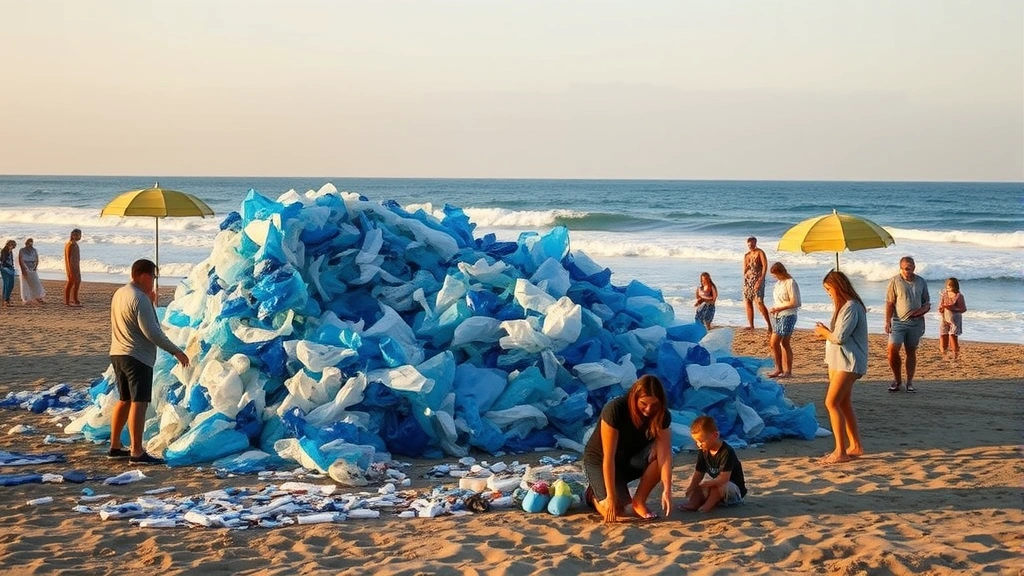
Consider the mechanisms at play: when an artist creates a large-scale installation using recycled ocean plastic, they accomplish simultaneously what separate disciplines struggle to achieve individually. The work functions as a sculpture (aesthetic experience), an educational tool (demonstrating material flows), a political statement (critiquing consumption), and a community organizing catalyst (mobilizing volunteers for cleanup). This integrative power distinguishes artistic practice from linear communication models.
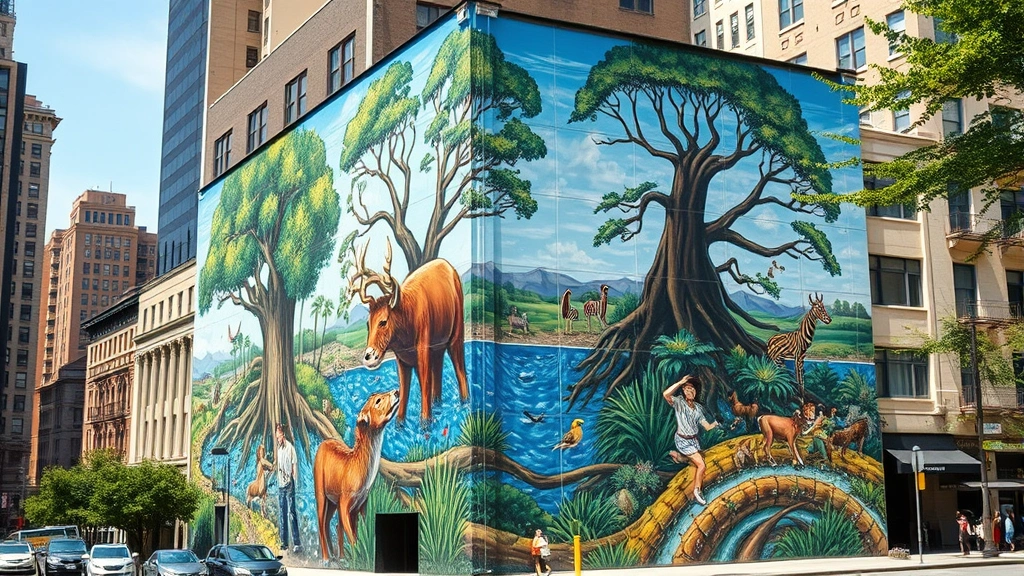
The relationship between environment and society has historically been mediated through scientific expertise and policy frameworks. Environment artists fundamentally democratize this relationship by inviting broader participation in defining what environmental problems are and how they should be addressed. Indigenous artists working with traditional ecological knowledge, urban muralists depicting local watershed systems, and digital artists creating immersive experiences of climate futures all contribute to a more pluralistic understanding of our ecological condition.
Research published through United Nations Environment Programme initiatives reveals that communities exposed to artistic environmental interventions demonstrate significantly higher levels of environmental concern and behavioral commitment compared to control groups receiving conventional educational materials. This finding suggests that art’s effectiveness lies not in replacing science but in translating scientific understanding into culturally resonant, emotionally compelling narratives.
The Science Behind Art’s Impact on Environmental Behavior
The psychological mechanisms underlying art’s conservation potential are increasingly well-documented. Behavioral economics demonstrates that humans make decisions based on narratives and emotional associations far more than rational calculation of data. When environment artists frame ecological crises through compelling visual or performative narratives, they activate neural pathways associated with memory, emotion, and meaning-making—precisely the cognitive systems that drive sustained behavioral change.
This connects directly to research in human environment interaction, which explores how humans perceive, value, and relate to natural systems. Traditional environmental education often emphasizes factual knowledge (species lists, pollution statistics, climate models), yet longitudinal studies show minimal correlation between knowledge and conservation behavior. Art-based interventions, conversely, cultivate what researchers term “environmental identity”—the internalization of ecological values as central to one’s self-conception. This identity shift correlates strongly with sustained pro-environmental action.
The aesthetic experience itself triggers measurable neurobiological responses. Exposure to natural beauty and artistic representations of ecosystems activates reward centers in the brain, increases parasympathetic nervous system activity, and enhances cognitive flexibility—mental states associated with greater receptivity to new ideas and higher-order problem-solving. When environment artists create works that simultaneously celebrate ecosystem beauty and communicate degradation, they harness this neurobiological response toward conservation goals.
Cognitive framing theory illuminates another dimension of artistic effectiveness. How environmental problems are presented shapes what solutions people consider viable. Scientists might frame deforestation as a carbon accounting problem; artists might render it as a loss of ancestral homeland or a rupture in a web of relationships. These different frames activate different values and suggest different solutions. By expanding the frames through which we understand environmental challenges, artists expand the solution space available to communities and policymakers.
The role of how humans affect the environment often appears in art as a central theme, but with crucial differences from scientific presentation. Artists frequently depict human impact through a lens of complicity and relationality rather than blame and separation. This approach—acknowledging human embeddedness within ecosystems rather than positioning humans as external agents of damage—paradoxically increases willingness to engage in remediation work. When people feel ashamed or blamed, defensive reactions typically emerge; when they feel invited into a collaborative relationship with nature, transformative engagement becomes possible.
Case Studies: Artists Creating Tangible Ecological Outcomes
The theoretical potential of art-based conservation gains credibility through documented examples of artists generating measurable ecological and social outcomes. These cases demonstrate that artistic practice can function as legitimate conservation methodology, not merely as awareness-raising accompaniment to “real” conservation work.
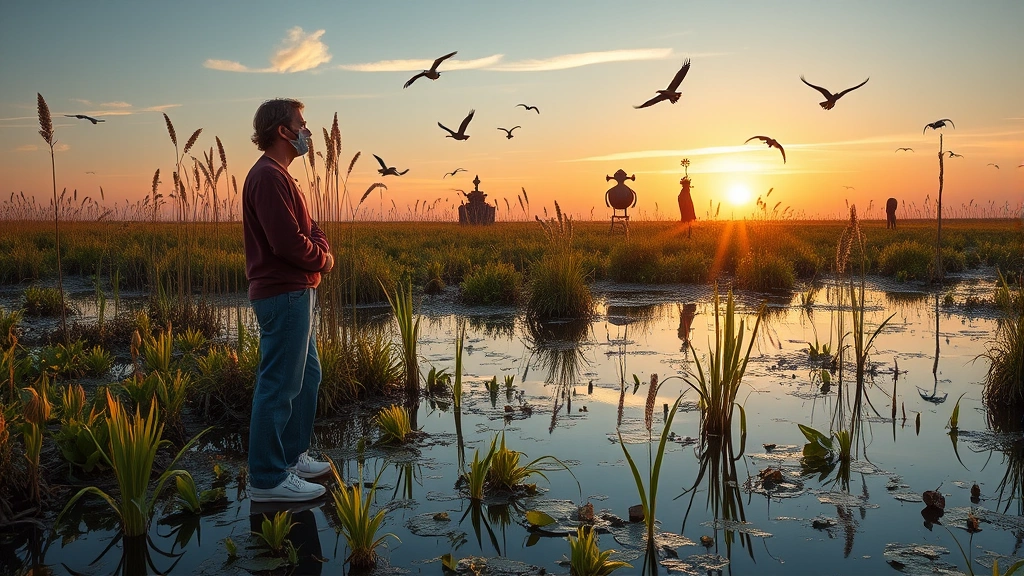
Wetland Restoration Through Community Art: In Southeast Asia, environment artists have collaborated with local communities to restore degraded wetlands through participatory art projects. Artists facilitate community members in creating large-scale paintings, sculptures, and performances that document the wetland ecosystem’s historical biodiversity. This artistic documentation process simultaneously serves as participatory research, ecological monitoring, and community capacity-building. The resulting artworks have influenced local governance decisions, leading to formal protection status for previously unregulated wetlands. The ecological outcome—measurable increases in bird populations and water quality—emerged through artistic practice as the primary intervention mechanism.
Urban Ecosystem Visualization: Environment artists working in cities have used public art installations to make invisible ecological systems visible. Projects mapping urban mycorrhizal networks, visualizing stormwater flows, or depicting the lives of urban pollinators have transformed how city residents understand their relationship to ecosystem services. These visualizations have directly influenced municipal infrastructure decisions, with cities redesigning green spaces and stormwater systems based on artistic representations of ecological functioning. Here, art functioned as both education and design consultation.
Climate Futures Imagination: Digital and immersive artists creating speculative representations of climate futures have proven particularly effective at shifting policy-maker and investor behavior. Rather than presenting climate data as abstract projections, artists render climate futures as embodied, sensory experiences. Policymakers exposed to these artistic imaginaries report increased urgency and willingness to support climate mitigation investments. Some major financial institutions have shifted portfolio allocation decisions following exposure to artist-created climate scenarios, suggesting that artistic imagination influences trillion-dollar resource flows.
Collaborative Ecosystem Restoration Art: In post-industrial landscapes, environment artists have partnered with ecological restoration practitioners to create artworks that simultaneously restore habitat and communicate restoration ecology principles. These projects transform remediation sites into public art destinations, increasing community investment in restoration success. The dual function—art and habitat—creates multiple value streams that justify ongoing funding and maintenance, addressing a critical challenge in long-term restoration sustainability.
Economic Valuation of Artistic Conservation Interventions
A persistent challenge in recognizing art’s conservation role stems from difficulty quantifying its economic value within conventional cost-benefit frameworks. However, emerging methodologies in ecological economics are beginning to capture how artistic interventions generate measurable economic and ecological returns.
According to research from the World Bank, community-based conservation initiatives incorporating significant artistic components demonstrate higher success rates and lower long-term management costs compared to conventional top-down approaches. The economic mechanism operates through several pathways: art increases local stakeholder engagement, reducing enforcement costs; artistic documentation creates monitoring infrastructure at minimal expense; cultural valuation of ecosystems through art strengthens political commitment to protection, improving policy durability.
The concept of “cultural ecosystem services”—benefits humans derive from ecosystems through cultural, aesthetic, and spiritual engagement—has gained recognition in environmental economics. Environment artists fundamentally enhance cultural ecosystem service provision. A wetland that functions as both carbon sink and artistic inspiration generates greater total economic value than one serving only biogeochemical functions. This expanded valuation framework legitimizes investment in artistic conservation practice within economic planning models.
Participatory art projects in conservation contexts generate what economists term “social capital”—networks of trust and reciprocal obligation that reduce transaction costs in collective action. Communities organized through artistic collaboration demonstrate higher capacity for sustained conservation action, suggesting that the relationship between art and conservation economics operates through social capital accumulation. The World Bank and similar institutions increasingly recognize social capital as critical infrastructure for development outcomes, creating funding pathways for art-based interventions.
Tourism economics provides another valuation mechanism. Artistic representations of ecosystems attract cultural tourism, generating revenue streams that justify ecosystem protection. Regions known for supporting environment artists and artistic responses to environmental challenges increasingly capture tourism income. This economic logic creates incentives for ecosystem protection aligned with cultural and artistic development—a rare alignment of economic and ecological interests.
Challenges and Limitations of Art-Based Conservation
Acknowledging art’s potential requires simultaneously recognizing genuine limitations and persistent challenges that constrain its effectiveness as a conservation strategy.
Scaling and Systemic Barriers: While individual artistic projects generate measurable local impacts, translating these successes into systemic, landscape-level conservation remains profoundly difficult. Art excels at shifting consciousness and building community; it struggles with the structural economic and political barriers that drive ecosystem degradation. An artist creating powerful visualizations of deforestation cannot, through art alone, address the commodity market incentives that drive forest clearing. This limitation suggests that art functions most effectively as complement to policy and economic reform rather than substitute.
Accessibility and Equity Issues: Art-based conservation often requires cultural literacy and leisure time to engage with. Communities facing immediate survival pressures may experience artistic interventions as privileged indulgence rather than relevant conservation practice. Environment artists working in economically marginalized communities must navigate questions of representation, cultural appropriation, and whose voices and values the art centers. Unsuccessful navigation of these dynamics can reproduce the very inequities that environmental destruction generates.
Documentation and Evaluation Challenges: The mechanisms through which art influences behavior remain partially opaque, complicating rigorous evaluation. Conservation funding typically requires clear outcome metrics; artistic outcomes resist quantification. This creates systematic bias toward funding conventional conservation approaches despite potential greater effectiveness of art-integrated approaches. Developing robust methodologies for documenting and evaluating art-based conservation remains an urgent research frontier.
Risk of Aestheticization: By rendering environmental destruction as aesthetic object, art risks transforming urgent crises into beautiful spectacles. The danger of “disaster tourism” or “poverty porn” in environmental art is real—audiences may experience emotional catharsis through encountering artistic representations of environmental damage without translating that experience into behavioral or political change. The most effective environment artists remain acutely aware of this risk and structure their work to prevent passive consumption.
The Future of Creative Environmental Practice
The trajectory of art-based conservation appears increasingly central to environmental futures, driven by recognition that conventional approaches alone have failed to arrest ecosystem degradation. The future integration of artistic practice into environmental governance and restoration likely follows several pathways.
Institutional integration represents a significant emerging trend. Universities increasingly establish research programs investigating art-environment relationships. Environmental agencies begin commissioning artists as core team members rather than peripheral communicators. This institutional recognition validates artistic practice as legitimate environmental methodology while creating stable funding and professional pathways for environment artists. Simultaneously, it risks bureaucratizing artistic practice, potentially constraining the critical and imaginative dimensions that make art powerful.
Technological integration opens new possibilities for artistic environmental intervention. Digital tools enable environment artists to create immersive, interactive experiences of ecological systems and climate futures at unprecedented scale. Virtual and augmented reality applications allow individuals to experience ecosystem transformations, embodying climate scenarios or witnessing species loss in viscerally compelling ways. These technologies potentially amplify art’s effectiveness at shifting consciousness while raising questions about digital divide access and the adequacy of mediated nature experience.
Interdisciplinary convergence accelerates as artists, scientists, and policymakers increasingly recognize mutual dependence. The most sophisticated contemporary environmental initiatives integrate artistic practice throughout rather than appending it as communication layer. This integration requires developing shared language and methodologies across disciplines—work that remains nascent but accelerating. Research institutions investigating types of environment and their dynamics increasingly recognize that artistic methodologies reveal dimensions of environmental systems that purely technical analysis misses.
Climate adaptation and mitigation planning increasingly incorporates artistic imagination. Cities developing climate resilience strategies commission artists to envision adaptation futures and communicate adaptation pathways to residents. This recognition that climate futures require imaginative as well as technical work reflects growing understanding that transformation at the scale required by climate change necessitates cultural shift that only art can catalyze.
The relationship between art and environmental justice emerges as critical frontier. Environment artists increasingly center questions of who benefits from ecosystem protection and whose voices shape environmental futures. This justice orientation recognizes that artistic practice can either reinforce or challenge the power dynamics that drive environmental destruction. The most promising contemporary work integrates artistic practice with grassroots environmental justice movements, ensuring that art serves communities most impacted by environmental degradation rather than abstract environmental ideals.
Understanding art’s conservation potential requires appreciating that ecosystems are not merely biophysical systems but also cultural and imaginative ones. How we imagine our relationship to nature shapes how we treat it. By expanding the imaginative repertoires available to us—by creating new narratives, aesthetics, and possibilities for human-nature relationship—environment artists contribute to conservation in ways that complement and enhance scientific and policy approaches. The question “can art save ecosystems?” ultimately asks whether consciousness and culture matter in environmental outcomes. Increasingly, evidence suggests they do.
FAQ
What exactly do environment artists do?
Environment artists create visual, performative, and participatory works that engage ecological themes and conservation. They might paint murals depicting local species, create installations from salvaged materials, facilitate community restoration projects with artistic components, or develop immersive digital experiences of climate futures. The defining characteristic is integrating artistic practice with environmental engagement.
How does artistic work actually protect ecosystems?
Art protects ecosystems through multiple mechanisms: increasing community commitment to conservation, influencing policy decisions through compelling communication, building social capital for collective action, generating tourism revenue that justifies protection, and enabling people to imagine alternative human-nature relationships. Art rarely provides direct habitat protection but strengthens the social and political conditions enabling protection.
Can art replace traditional conservation science?
No. Art functions most effectively as complement to science, policy, and technology rather than replacement. Scientific understanding of ecosystem functioning remains essential; art translates that understanding into culturally meaningful, emotionally compelling forms that motivate action. The most effective conservation initiatives integrate artistic and scientific approaches.
Why hasn’t art been more central to conservation historically?
Several factors have marginalized art in conservation: institutional bias toward quantifiable, technical interventions; difficulty demonstrating art’s economic value in conventional frameworks; disciplinary separation between art and environmental science; and skepticism that aesthetic practice addresses urgent material crises. These barriers are gradually eroding as evidence accumulates and institutions evolve.
How can communities access environment artists?
Communities can seek environment artists through cultural organizations, environmental nonprofits, university art programs, and artist networks focused on ecological practice. Many environment artists actively seek community partnerships. Funding for art-based conservation increasingly flows through environmental foundations and government environmental agencies, making such collaborations more feasible than historically.
What makes art-based conservation effective versus ineffective?
Effective art-based conservation typically involves authentic community engagement, clear connection between artistic practice and ecological outcomes, integration with broader conservation strategies, and attention to justice and equity dimensions. Ineffective approaches often involve extractive art practices, aestheticization of suffering without action pathways, or artistic work disconnected from community priorities and values.


