
Can Green Economy Boost Jobs? Economist Insights
The transition toward a green economy represents one of the most significant economic transformations of our era. As nations worldwide commit to reducing carbon emissions and protecting natural resources, a critical question emerges: can environmental sustainability actually create jobs? Economists increasingly answer yes—but with important caveats about timing, investment, and policy design. The relationship between environmental protection and employment reveals a complex interplay between market forces, technological innovation, and strategic government intervention.
Understanding whether a green economy can boost jobs requires examining empirical data, sectoral analysis, and the mechanisms through which environmental initiatives generate employment. From renewable energy installations to ecosystem restoration, green sectors are demonstrating measurable job creation potential. However, the transition also displaces workers in carbon-intensive industries, raising questions about just transition policies and workforce retraining programs. This comprehensive analysis explores what economists have discovered about green jobs, the sectors driving employment growth, and the conditions necessary for sustainable economic expansion.
What Is the Green Economy and Why Does It Matter?
The green economy encompasses economic activities that reduce environmental impact while maintaining or improving human well-being and social equity. This definition extends far beyond simple pollution control—it represents a fundamental restructuring of how we produce, consume, and value natural capital. The United Nations Environment Programme (UNEP) defines it as an economy that results in improved human well-being and social equity while significantly reducing environmental risks and ecological scarcities.
Understanding human environment interaction proves essential for recognizing why green economic models matter. Traditional economic systems have externalized environmental costs, treating clean air, water, and stable climate as free inputs. Green economy frameworks attempt to internalize these costs, making environmental degradation economically visible and therefore economically addressable. This shift creates new markets, business opportunities, and employment pathways that didn’t exist under carbon-intensive industrial models.
The urgency of this transition stems from converging crises: climate change, biodiversity loss, resource depletion, and pollution. Simultaneously, technological advances in renewable energy, sustainable agriculture, and circular economy solutions have made green alternatives economically competitive. Economists now recognize that the choice isn’t between environmental protection and economic growth, but rather between managed transition toward sustainable prosperity and chaotic disruption of current systems.
Empirical Evidence: Job Creation in Green Sectors
The empirical case for green jobs has strengthened considerably over the past decade. The World Bank estimates that renewable energy and energy efficiency sectors already employ over 12 million people globally, with this figure growing annually. The International Labour Organization (ILO) projects that clean energy transition alone could generate 24 million additional jobs by 2030, though this depends on appropriate policy support and investment levels.
Research from ecological economics journals reveals several consistent patterns. First, green sectors typically offer higher wage premiums compared to declining carbon-intensive industries. Workers in renewable energy installation, for instance, earn approximately 10-15% more than average manufacturing wages in comparable regions. Second, green jobs tend to be geographically distributed, creating employment opportunities in rural and disadvantaged communities that lack other economic bases. Third, green sectors demonstrate greater resilience—they’re less susceptible to commodity price volatility and geographic outsourcing that characterize extractive industries.
The renewable energy employment sector particularly illustrates job creation mechanisms. Installing a solar panel system requires electricians, engineers, installers, inspectors, and administrative personnel. Unlike fossil fuel extraction, which becomes more mechanized and capital-intensive, renewable energy deployment remains labor-intensive across its value chain. Manufacturing, installation, maintenance, and grid integration all require skilled workers. This labor intensity translates directly into employment multipliers—studies suggest that every dollar invested in renewable energy generates 2-3 dollars in economic activity.
Renewable Energy: The Employment Engine
Renewable energy represents the clearest example of green economy job creation. The sector encompasses wind, solar, hydroelectric, geothermal, and biomass technologies, each creating distinct employment opportunities. Solar photovoltaic installation has become one of the fastest-growing occupations in developed economies, with the U.S. Bureau of Labor Statistics projecting 23% employment growth in solar installation between 2021 and 2031.
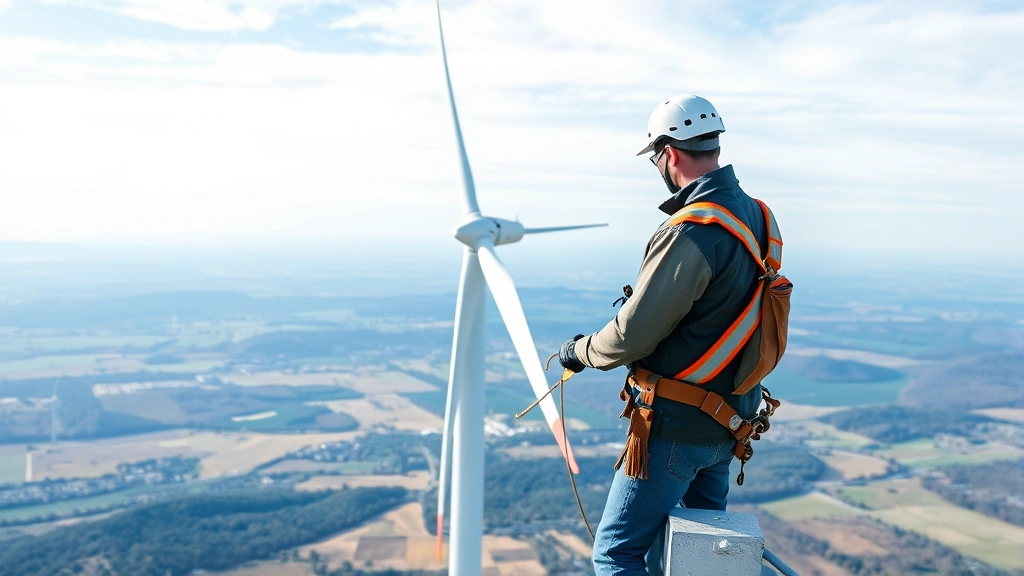
Wind energy demonstrates similar patterns. Building and installing wind turbines requires specialized manufacturing, construction, and engineering expertise. Onshore wind farms employ technicians for ongoing maintenance and monitoring. Offshore wind development, an emerging sector, promises even more employment—installation vessels, specialized divers, and marine engineers all find work in this nascent industry. A single offshore wind farm can employ 50-100 workers during construction phases and 10-20 during operations.
The employment multiplier effects extend throughout supply chains. Solar manufacturers need raw materials sourced and processed. Installers require tools, safety equipment, and vehicles. Property owners hiring installation companies support administrative, sales, and customer service roles. Communities hosting renewable energy projects benefit from construction activity, equipment suppliers, and professional services. This cascading employment effect means that direct renewable energy jobs represent only a portion of total economic benefit.
However, the renewable energy sector also reveals transition challenges. Coal miners and fossil fuel workers possess specialized skills not always transferable to renewable energy sectors. A miner’s expertise in underground extraction doesn’t directly translate to solar installation or wind turbine maintenance. This skills gap explains why economists emphasize the importance of workforce transition programs and retraining investments. Without deliberate policy interventions, green growth can coexist with localized unemployment in fossil fuel-dependent communities.
Ecosystem Services and Economic Opportunity
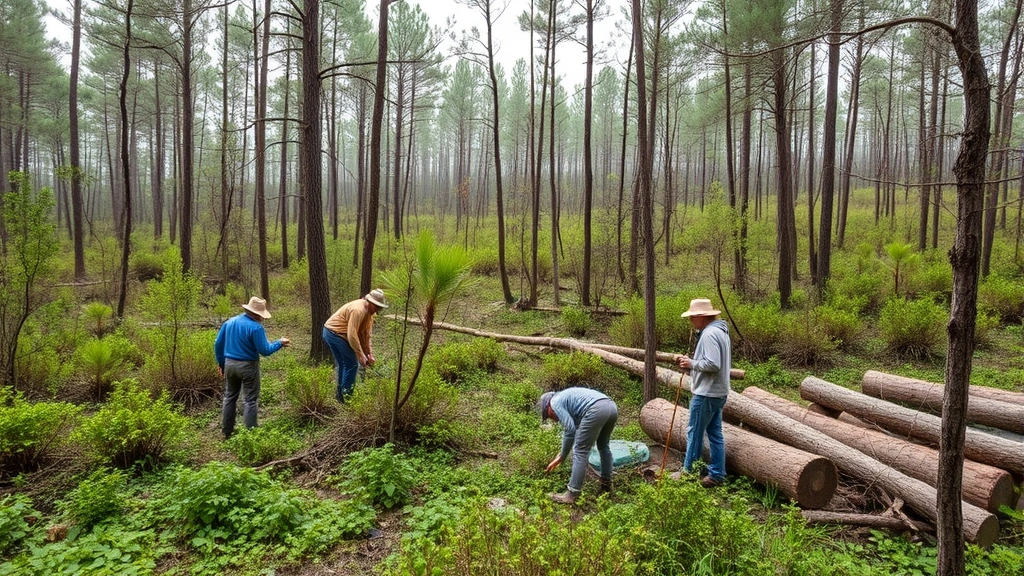
Beyond energy sectors, the broader concept of ecosystem services creates substantial employment opportunities. Ecosystem services help humans and the environment simultaneously while generating economic value. Wetland restoration, forest management, agricultural conservation, and urban green infrastructure all employ skilled workers while providing environmental benefits.
Wetland restoration illustrates this dynamic. Wetlands provide crucial services: water filtration, flood mitigation, carbon sequestration, and habitat provision. Restoring degraded wetlands requires hydrologists, ecologists, construction workers, and monitoring technicians. Once restored, wetlands require ongoing management—vegetation control, water level monitoring, invasive species removal. This creates permanent employment in environmental management sectors. Similar patterns emerge in forest conservation, where sustainable forestry practices employ more workers per unit output than industrial clear-cutting.
Agricultural transformation toward sustainable practices generates employment in organic farming, agroforestry, and regenerative agriculture. These approaches typically employ more labor per hectare than industrial monoculture. Farmers transitioning to organic methods require training, certification support, and access to alternative markets. This transition creates jobs for agricultural consultants, inspectors, and supply chain specialists. Research from agricultural economics indicates that organic farming systems employ 30-50% more workers than conventional agriculture on equivalent land areas.
Urban green infrastructure—green roofs, urban forests, constructed wetlands for stormwater management—creates employment for landscape designers, horticulturists, construction workers, and maintenance technicians. Cities investing in green infrastructure generate local employment while improving air quality, reducing flooding, and cooling urban heat islands. These co-benefits mean that job creation accompanies environmental and health improvements.
The circular economy represents another employment frontier. Rather than linear “take-make-waste” models, circular approaches emphasize reuse, repair, and recycling. These activities are inherently labor-intensive compared to virgin material extraction. Repair technicians, refurbishment workers, and recycling specialists find growing demand. Studies suggest circular economy transitions could generate 500,000+ additional jobs in the EU alone by 2030.
Challenges in the Green Transition
Despite promising employment prospects, the green transition faces significant obstacles that economists and policymakers must address. The primary challenge involves timing mismatch: green jobs emerge gradually, while job losses in carbon-intensive sectors occur rapidly. Coal mining regions can experience sudden collapses when mines close, creating concentrated unemployment before new opportunities materialize. This geographic and temporal mismatch explains why some communities resist green transitions despite long-term benefits.
Skills misalignment presents another substantial barrier. Workers displaced from fossil fuel industries often lack qualifications for renewable energy sectors. A coal plant operator cannot immediately become a solar technician without retraining. While retraining programs exist, they require substantial funding, time commitment, and psychological adjustment. Not all workers successfully transition—some experience permanent income losses despite employment in new sectors. Economists emphasize that ignoring these transition costs is both economically inefficient and ethically problematic.
Capital intensity variations also matter. Some green sectors require massive upfront investment with long payback periods. Utility-scale renewable projects demand billions in financing before generating operational employment. This creates financing challenges, particularly in developing economies with limited access to green capital. Without addressing financing barriers, green job creation remains concentrated in wealthy nations, exacerbating global inequality.
Political economy obstacles shouldn’t be underestimated. Fossil fuel industries have entrenched political influence, lobbying capacity, and financial resources to resist transition policies. Workers in carbon-intensive sectors, especially in regions where these industries dominate local economies, often view green transitions with suspicion. Building political coalitions for change requires addressing these concerns authentically rather than dismissing them as mere obstruction.
Additionally, the quality of green jobs matters as much as quantity. Some green employment involves precarious work with low wages, limited benefits, and poor working conditions. Solar installation, while growing rapidly, often relies on contract workers without permanent employment security. Ensuring that green jobs provide living wages, benefits, and career progression requires deliberate policy attention and labor standards enforcement.
Policy Frameworks That Drive Green Jobs
Economist research identifies specific policy mechanisms that effectively drive green job creation. Feed-in tariff policies, which guarantee renewable energy producers fixed prices for electricity they generate, have proven particularly effective. Germany’s Energiewende policy, built on feed-in tariff foundations, created hundreds of thousands of renewable energy jobs while stabilizing employment in traditional energy sectors through gradual transition timelines.
Carbon pricing mechanisms—whether through carbon taxes or cap-and-trade systems—create financial incentives for green transition. By making carbon emissions costly, these policies level the economic playing field, allowing renewable energy and sustainable alternatives to compete more effectively. Revenue from carbon pricing can fund workforce transition programs, accelerating adjustment processes. Several studies demonstrate that carbon pricing combined with transition support generates net employment gains compared to business-as-usual scenarios.
Public investment in green infrastructure drives employment directly and through multiplier effects. Infrastructure spending on renewable energy for homes, electric public transportation, and ecosystem restoration creates immediate jobs while building productive capacity for future growth. The U.S. Inflation Reduction Act, allocating $369 billion to clean energy and climate initiatives, illustrates how substantial public investment can catalyze green job creation at scale.
Workforce development programs prove essential for managing transition. Successful programs combine financial support (wage insurance, relocation assistance), training aligned with actual labor market demands, and career counseling. Community colleges and vocational training institutions require funding to develop curricula matching emerging green sector needs. Apprenticeship programs, particularly in skilled trades like electrical work and HVAC installation, provide pathways to quality employment in green sectors.
Regulatory standards also drive employment. Building efficiency codes requiring retrofits create jobs for energy auditors, insulation installers, and HVAC technicians. Vehicle emissions standards accelerate electric vehicle adoption, generating employment in battery manufacturing, charging infrastructure, and EV servicing. Environmental regulations, while sometimes portrayed as job-killers, actually create employment by requiring investments in pollution control, waste management, and sustainable alternatives.
International cooperation and development finance help extend green jobs globally. Climate finance from developed to developing nations supports clean energy deployment in regions lacking capital. Technology transfer agreements enable developing economies to leapfrog carbon-intensive development stages, building renewable energy capacity while creating local employment. Programs through the World Bank’s climate change initiatives demonstrate how development finance can simultaneously address poverty and environmental challenges.
The Future of Green Employment
Projections for green job growth remain substantially positive, though dependent on policy commitments and investment levels. The International Labour Organization estimates that achieving Paris Agreement climate goals could generate 24 million jobs by 2030, with potential for 395 million jobs by 2050 in green economy sectors. These figures assume appropriate policy frameworks and adequate investment—outcomes not guaranteed without deliberate action.
Emerging sectors promise significant future employment. Green hydrogen production—using renewable electricity to split water molecules, creating clean fuel—could employ millions globally as the technology scales. Advanced battery manufacturing for electric vehicles and grid storage represents another growth frontier. Regenerative agriculture and nature-based climate solutions (wetland restoration, reforestation, soil carbon sequestration) can employ substantial workforces while providing environmental benefits.
Technological change complicates employment projections. Automation might reduce labor intensity in some green sectors—robots could eventually perform repetitive solar panel installation. However, automation typically creates higher-skilled, higher-wage employment while eliminating routine tasks. The net employment effect depends on whether workers displaced by automation access retraining and new opportunities. This underscores why continuous workforce development remains essential.
Geographic distribution of future green jobs will reshape economic geography. Renewable energy resources aren’t concentrated in traditional industrial centers. Solar potential concentrates in sunny regions, wind in coastal and plains areas, hydropower near rivers and mountains. This geographic distribution could revitalize rural economies and reduce urban congestion as economic opportunities spread. However, realizing this potential requires infrastructure investment and migration support to enable workers to relocate toward opportunities.
The intersection of impacts humans have had on the environment with employment creation defines our economic future. Green jobs represent not merely employment in environmentally benign sectors but employment that actively restores ecological systems. This creates a virtuous cycle: workers employed in environmental restoration improve ecosystem health, which enhances human well-being, which justifies continued investment in green sectors. Breaking the vicious cycle of environmental destruction and unemployment becomes economically rational.
Sustainable fashion brands, renewable energy deployment, ecosystem restoration, and circular economy development all represent employment frontiers. The question isn’t whether green economy can boost jobs—evidence increasingly confirms it can—but whether societies will implement the policies, investments, and transition support necessary to realize this potential equitably. Economists emphasize that managing this transition requires acknowledging both its opportunities and challenges, supporting affected workers and communities, and maintaining political commitment despite inevitable resistance from incumbent interests.
FAQ
How many green jobs currently exist globally?
The International Labour Organization estimates approximately 12-15 million people work in renewable energy and related green sectors globally as of 2024. This figure excludes broader environmental management, sustainable agriculture, and circular economy employment, which would substantially increase total green job estimates. Growth rates of 10-15% annually suggest the sector is expanding rapidly.
What skills do green economy jobs require?
Green jobs span diverse skill levels from entry-level positions to specialized expertise. Solar installation requires electrical knowledge and safety certification. Wind technicians need mechanical aptitude and height comfort. Environmental restoration requires ecological understanding. Many green jobs are accessible to workers with vocational training or associate degrees, though some positions demand advanced education. Crucially, many green sectors value practical skills and apprenticeship training over traditional four-year degrees.
Do green jobs pay as well as traditional employment?
Research indicates green jobs typically offer wage premiums of 10-15% compared to traditional manufacturing and service sector employment. Renewable energy technicians, for instance, earn more than average manufacturing workers. However, this varies by sector and location. Entry-level positions may offer modest wages initially, but advancement opportunities exist. Quality and permanence of employment matter as much as hourly wages.
How can fossil fuel workers transition to green economy employment?
Successful transitions require coordinated support: wage insurance maintaining income during retraining, subsidized education and training programs, relocation assistance for workers moving to opportunity areas, and career counseling helping workers identify transferable skills. Countries like Germany have invested substantially in transition support, achieving relatively successful outcomes. However, not all workers can transition successfully, requiring complementary policies like early retirement options and community development investments.
Which green sectors offer the most employment opportunities?
Renewable energy installation (particularly solar), energy efficiency retrofitting, sustainable agriculture, ecosystem restoration, and circular economy activities currently employ the most workers. Projected growth sectors include electric vehicle manufacturing, green hydrogen production, advanced battery manufacturing, and nature-based climate solutions. Geographic variation is substantial—opportunities differ based on local resources and climate.
What role does government policy play in green job creation?
Government policy proves essential for green job growth. Feed-in tariffs and renewable energy standards drive investment in clean energy sectors. Carbon pricing makes green alternatives economically competitive. Public investment in green infrastructure creates direct employment. Workforce development programs enable worker transitions. Environmental regulations requiring upgrades create retrofitting employment. Without supportive policies, green job growth would be substantially slower.
Are green jobs only in wealthy countries?
While wealthy countries currently host most green jobs, developing nations represent the frontier for future growth. Renewable energy deployment in Africa, Asia, and Latin America will employ millions. However, realizing this potential requires technology transfer, climate finance, and capacity building. International cooperation can ensure green job growth benefits developing economies and reduces global inequality.


