Environmental Technology’s Role in Economy: Analyst Insights
Environmental technology represents one of the most transformative economic sectors of the 21st century, fundamentally reshaping how businesses operate, governments allocate resources, and markets respond to ecological imperatives. The convergence of climate urgency, regulatory frameworks, and technological innovation has created unprecedented opportunities for economic growth while simultaneously addressing planetary boundaries. Analysts across financial institutions, environmental economics research centers, and policy organizations increasingly recognize that environ tech is no longer a peripheral concern but a central driver of macroeconomic performance, capital flows, and competitive advantage.
The global environmental technology market exceeded $2.5 trillion in 2023 and continues expanding at compound annual growth rates between 8-12% across major economies. This explosive growth reflects a fundamental realization: environmental solutions generate measurable economic returns through operational efficiency, risk mitigation, market expansion, and innovation-driven productivity gains. From renewable energy systems to circular economy technologies, from carbon capture infrastructure to sustainable agriculture innovations, environ tech investments demonstrate that ecological responsibility and financial performance are increasingly aligned rather than contradictory.
Market Dynamics and Investment Trends
The environ tech sector operates within a complex ecosystem of venture capital, institutional investment, public funding, and corporate R&D spending. Venture capital commitments to climate and environmental technology startups reached $60.8 billion globally in 2022, representing roughly 20% of all venture investment activity. This capital concentration reflects investor confidence in the sector’s scalability, addressable market size, and regulatory tailwinds. Unlike previous technological revolutions driven primarily by consumer demand, environ tech advancement is simultaneously incentivized by regulatory mandates, climate commitments, and stakeholder pressure for corporate accountability.
Public markets have responded dramatically to environ tech opportunities. Clean energy infrastructure funds, sustainable technology ETFs, and green bond issuances have mobilized trillions in capital toward environmental solutions. The World Bank estimates that achieving climate and sustainability targets requires $2.4 trillion annually in clean energy investment alone through 2035. This capital requirement has created unprecedented financing opportunities for banks, asset managers, and specialized investment vehicles focused on environmental technology deployment.
Geographic distribution of environ tech investment reveals important economic patterns. China leads in absolute renewable energy capacity installations and manufacturing volume, while the United States dominates venture-backed innovation in emerging technologies like advanced battery systems, hydrogen fuel cells, and carbon removal solutions. European markets emphasize circular economy technologies and retrofit solutions for existing infrastructure. Emerging markets increasingly position environ tech as a leapfrogging opportunity, bypassing legacy fossil fuel infrastructure to deploy renewable systems directly.
Sectoral Applications and Economic Impact
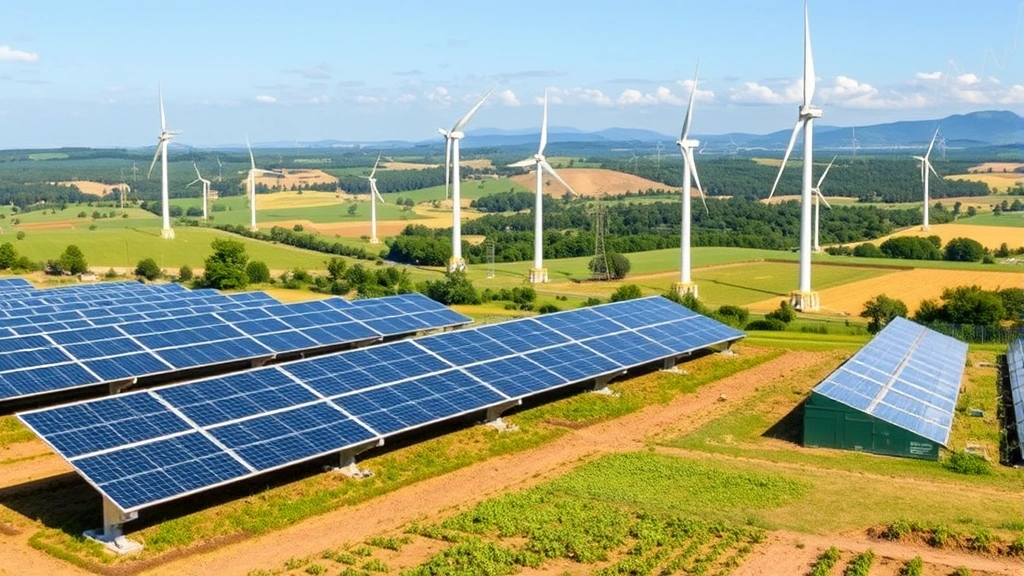
Renewable energy technologies represent the largest sector within environ tech, accounting for approximately 45% of global environmental technology investments. Solar photovoltaic systems and wind turbines have achieved cost reductions of 89% and 70% respectively since 2010, fundamentally transforming energy economics. These cost curves now make renewable energy the cheapest source of electricity in most global markets, independent of subsidies or carbon pricing mechanisms. The economic implications extend beyond energy production: distributed solar installations create local employment, reduce grid transmission losses, and provide energy security for communities previously dependent on imported fossil fuels.
Energy efficiency technologies constitute another major economic pillar. Building retrofits, industrial process optimization, smart grid systems, and advanced metering infrastructure reduce energy consumption by 15-30%, generating immediate cost savings that exceed technology investment costs within 3-7 year periods. Commercial real estate developers increasingly recognize that energy-efficient buildings command 3-5% rental premiums, attract institutional capital, and demonstrate lower operational risk profiles. The interaction between human economic systems and environmental performance becomes particularly evident in building sector economics, where operational efficiency directly translates to competitive advantage.
Water technology markets address scarcity, contamination, and treatment challenges affecting billions globally. Advanced purification systems, desalination technologies, and wastewater recovery solutions create economic value through agricultural productivity enhancement, industrial process water supply, and municipal resilience. Water-stressed regions increasingly treat environ tech investment in water infrastructure as essential economic infrastructure comparable to traditional utilities, with comparable returns on investment.
Circular economy technologies fundamentally restructure material flows and manufacturing economics. Advanced recycling systems, material recovery facilities, and product design innovations extend asset lifecycles while reducing virgin resource extraction costs. Companies implementing circular business models report 15-25% cost reductions in material expenses while simultaneously addressing supply chain vulnerability and regulatory compliance. The economic logic becomes compelling: reducing material consumption through reuse, refurbishment, and recycling generates profit through lower input costs while improving environmental outcomes.
Agricultural technology innovations address food security while improving farm profitability. Precision agriculture platforms utilizing sensors, data analytics, and automated systems optimize resource application, increase yields by 10-20%, and reduce chemical inputs by 30-40%. These productivity improvements directly enhance farmer revenues while reducing environmental contamination. Understanding how agricultural practices affect environmental systems has driven technological innovation that simultaneously improves economic and ecological outcomes.

Policy Frameworks Driving Innovation
Environmental policy represents the primary driver of environ tech investment and deployment acceleration. Carbon pricing mechanisms—whether through emissions trading systems or carbon taxes—create direct economic incentives for technology adoption. The European Union Emissions Trading System, covering roughly 40% of EU greenhouse gas emissions, has generated carbon prices ranging from €80-90 per ton, fundamentally altering investment calculations for fossil fuel-intensive industries. Companies subject to carbon costs systematically evaluate environ tech alternatives, accelerating technology diffusion and cost reduction through manufacturing scale.
Renewable energy mandates and clean electricity standards mandate specific percentages of electricity generation from renewable sources, creating guaranteed markets for environ tech deployment. These policy instruments have proven remarkably effective at driving cost reduction through manufacturing scale, supply chain development, and technological learning. The cost reductions in solar and wind technologies directly correlate with cumulative global deployment driven by policy targets, demonstrating how regulatory certainty drives innovation economics.
Tax incentives, investment credits, and accelerated depreciation schedules reduce the effective cost of environmental technology deployment. Investment tax credits for renewable energy systems, accelerated depreciation for pollution control equipment, and R&D tax credits for environmental innovation reduce technology costs by 20-35%, dramatically improving project economics. Governments increasingly recognize that environmental technology tax incentives generate employment, energy security, and emissions reduction benefits exceeding their fiscal costs.
International climate agreements and net-zero commitments create long-term policy certainty attracting massive capital commitments. The Paris Agreement, while non-binding, catalyzed trillions in corporate and governmental net-zero pledges, directly stimulating environ tech investment. Companies committing to net-zero emissions by 2050 simultaneously commit to decades of environmental technology deployment, creating predictable demand that justifies manufacturing investment and supply chain development.
Competitive Advantages and Business Models
First-mover advantages in environ tech create durable competitive positions. Companies establishing leading market positions in renewable energy manufacturing, battery technology, or carbon solutions build brand recognition, manufacturing expertise, supply chain relationships, and patent portfolios that competitors struggle to replicate. Tesla’s dominance in electric vehicle markets, for instance, reflects not just technology but accumulated manufacturing learning, supply chain integration, and brand positioning developed through years of market leadership.
Technology licensing and intellectual property monetization create valuable revenue streams for environ tech innovators. Companies developing patented solutions for carbon capture, advanced materials, or industrial process efficiency can license technology globally, generating returns on R&D investment across multiple markets and applications. The scientific foundations underlying environmental technology create defensible intellectual property positions supporting premium pricing and market control.
Service-based business models increasingly dominate environ tech economics. Rather than selling equipment, companies offer energy-as-a-service, water-as-a-service, or waste-as-a-service models where customer payments depend on performance outcomes. These models align company and customer interests, eliminate customer capital barriers, and create recurring revenue streams. Energy service companies guarantee energy savings, funding technology deployment through resulting cost reductions, fundamentally changing project economics for customers unable or unwilling to make large capital expenditures.
Data analytics and artificial intelligence amplify environ tech value creation. IoT sensors combined with machine learning algorithms optimize renewable energy production, building energy consumption, industrial process efficiency, and water system operations. The economic value derives not from hardware alone but from data-driven optimization services that continuously improve system performance. Companies controlling proprietary datasets and analytical algorithms develop sustainable competitive advantages.
Challenges and Implementation Barriers
Capital intensity and project financing represent significant environ tech deployment barriers. Large-scale renewable energy projects, grid infrastructure upgrades, and industrial retrofits require substantial upfront capital with returns distributed across 20-30 year operational lifespans. Limited access to low-cost financing constrains deployment in developing countries and for smaller-scale projects. Environmental economics analysis increasingly focuses on innovative financing mechanisms—green bonds, blended finance, results-based contracting—that reduce capital barriers and accelerate deployment.
Technology maturity variation across environmental technology sectors creates uneven deployment and cost reduction trajectories. Solar and wind technologies have achieved commercial maturity with predictable costs and performance. Emerging technologies like green hydrogen production, advanced geothermal systems, and direct air capture remain in earlier development stages with uncertain economics and performance characteristics. Distinguishing between mature technologies ready for rapid scaling and emerging technologies requiring continued R&D investment represents critical analytical challenge for investors and policymakers.
Supply chain constraints limit environ tech deployment speed. Battery supply chains face lithium, cobalt, and nickel sourcing constraints that limit electric vehicle production. Rare earth mineral dependencies create supply security concerns for renewable energy manufacturing. Semiconductor shortages ripple through smart grid, energy efficiency, and digital agriculture technology deployment. These supply-side constraints create bottlenecks that prevent rapid technology scaling regardless of capital availability or policy support.
Workforce transition challenges emerge as energy and resource-intensive industries reduce operations. Coal mining regions, oil and gas infrastructure communities, and heavy manufacturing areas face employment disruption as environ tech displaces traditional economic activities. Economic analysis increasingly emphasizes “just transition” frameworks ensuring affected workers and communities benefit from environmental technology deployment through retraining, economic diversification, and equitable benefit sharing.
Stranded asset risks threaten incumbent industries and capital-intensive infrastructure. Fossil fuel assets with remaining economic lifespans of 15-30 years face accelerated obsolescence as environ tech alternatives become cheaper and more capable. Investors face difficult decisions regarding continued capital deployment into aging infrastructure or transition investments into environmental alternatives. The distinction between environmental systems and broader ecosystem relationships becomes economically significant when assessing long-term infrastructure viability and stranded asset probabilities.

Future Outlook and Economic Implications
Environmental technology deployment will accelerate dramatically through 2030 as cost curves continue declining, policy support strengthens, and capital availability increases. Conservative scenarios project environmental technology investments exceeding $5 trillion annually by 2030, representing roughly 6% of global GDP allocation. This capital concentration will drive economic transformation comparable in magnitude to the digital revolution’s impact on information systems and communication technologies.
Sectoral transformation will intensify across energy, transportation, manufacturing, and agriculture. Complete electrification of transportation combined with renewable energy generation creates fundamentally different economic structures than fossil fuel-dependent systems. Manufacturing will increasingly emphasize material efficiency, recycling, and circular design principles rather than linear extraction-production-disposal models. Agricultural systems will integrate precision technologies, biological innovations, and ecosystem restoration practices simultaneously improving productivity and environmental outcomes.
Emerging markets will leverage environ tech as economic development strategy rather than pursuing legacy development pathways. Renewable energy deployment costs now enable off-grid electrification in rural areas previously requiring expensive transmission infrastructure. Clean manufacturing technologies enable industrial development without legacy pollution challenges. This leapfrogging potential creates substantial economic opportunities for countries positioning themselves as environmental technology innovators and deployers.
Financial system integration of environmental risk assessment will continue accelerating. Banking systems increasingly incorporate climate risk and environmental impact into lending decisions, asset valuations, and capital allocation. UNEP and international financial institutions are developing standardized environmental accounting frameworks ensuring comprehensive integration of ecological impacts into economic decision-making. This financial system transformation will systematically redirect capital toward environ tech investments and away from high-environmental-risk activities.
Economic inequality implications remain contested among analysts. Environ tech deployment generates substantial wealth creation opportunities for innovators, manufacturers, and early-stage deployers. However, equitable access to environmental technology benefits requires deliberate policy attention to ensure low-income populations participate in cost savings and employment opportunities. Progressive policy frameworks emphasizing community benefit agreements, workforce development, and equitable ownership models can ensure environ tech drives inclusive prosperity rather than concentrating benefits among wealthy investors.
FAQ
What distinguishes environ tech from general environmental management?
Environmental technology specifically emphasizes technological solutions—hardware, software, systems, and processes—that measurably reduce environmental impacts while generating economic value. Environmental management encompasses broader organizational practices, policies, and governance structures. While environmental management might include employee transportation policies or waste reduction targets, environ tech focuses on technological tools enabling emissions reduction, resource efficiency, and environmental remediation. The distinction matters economically because environ tech investments generate measurable returns, attract venture capital, and create scalable business models.
How do carbon pricing mechanisms influence environ tech investment?
Carbon pricing creates direct economic incentives for technology adoption by increasing the operating costs of high-emissions activities. As carbon prices rise, technologies eliminating or reducing emissions become financially attractive independent of environmental motivations. Companies subject to carbon costs systematically evaluate environ tech alternatives, accelerating deployment and driving manufacturing scale that reduces technology costs. This mechanism transforms environmental technology from a regulatory compliance burden into a profit-generating investment opportunity.
Which environmental technology sectors offer strongest economic returns?
Renewable energy and energy efficiency technologies currently demonstrate strongest economic returns due to mature technology platforms, established supply chains, and declining costs below fossil fuel alternatives. Battery storage, electric vehicle charging infrastructure, and grid modernization technologies represent growth opportunities with expanding addressable markets. Circular economy technologies, advanced water treatment, and precision agriculture show strong returns in specific geographic markets with appropriate policy support. Emerging technologies like green hydrogen and direct air capture require continued cost reduction before achieving economy-wide deployment.
How do governments balance environ tech support with fiscal constraints?
Governments increasingly recognize environmental technology investments generate returns through employment creation, energy security, health benefits, and avoided climate damages exceeding technology subsidy costs. Cost-benefit analyses typically demonstrate that environ tech support policies generate positive fiscal returns when accounting for health benefits, avoided infrastructure damage, and productivity improvements. However, fiscal constraints require strategic prioritization toward technologies approaching commercial viability and sectors offering largest environmental and economic impact per dollar invested.
What role do international institutions play in environ tech deployment?
International institutions including the World Bank, development banks, and UN agencies catalyze environ tech deployment through concessional financing, technical assistance, and knowledge transfer. These institutions bridge capital gaps preventing deployment in developing countries by providing low-cost financing, risk guarantees, and capacity building. International climate finance mechanisms, while underfunded relative to needs, direct billions annually toward environmental technology projects in climate-vulnerable nations.
How do different environmental contexts affect environ tech deployment strategies?
Environmental technology deployment strategies must account for local environmental conditions, resource availability, climate characteristics, and ecosystem contexts. Solar technology deployment emphasizes different system designs in equatorial versus high-latitude regions based on solar irradiance patterns. Water technology priorities differ dramatically between water-abundant and water-scarce regions. Agricultural technologies require localization for different soil types, climates, and crop systems. Successful environ tech deployment requires contextual adaptation rather than standardized global implementation.


